
AC Service in OSU, OH
Reliable air conditioning service in OSU, OH with diagnostics, maintenance, and repairs. Learn more and schedule your service today.

Air Conditioning Service in OSU, OH
Keeping your home comfortable through hot, humid Ohio summers and unpredictable shoulder seasons requires reliable air conditioning service in OSU, OH. Whether you live in student housing, a historic Bexley-adjacent home, or a modern condo near campus, timely diagnostics, maintenance, and repairs reduce breakdown risk, lower energy bills, and extend equipment life.
Why location matters: OSU, OH conditions that affect AC systems
- Hot, humid summers increase runtime and place extra stress on compressors and coils.
- Spring pollen and fall leaf debris contribute to filter load and clogged condensate drains.
- Older homes near campus often have legacy ductwork or tight mechanical spaces that require special attention during installation or repair.
- High-occupancy rentals and student housing see heavier on/off cycling and thermostat misuse, accelerating wear.
Common air conditioning issues in OSU, OH homes
Most calls for AC service in OSU fall into a few predictable categories:
- Weak or inconsistent cooling due to low refrigerant, dirty coils, or airflow restrictions.
- Unit not running: electrical faults, failed capacitors, or thermostat problems.
- Short cycling from improper sizing, refrigerant issues, or blocked airflow.
- Loud or unusual noises caused by failing motors, loose components, or compressor problems.
- Frozen evaporator coils from airflow problems or refrigerant imbalance.
- Water leaks and clogged condensate lines, especially in humid months.
- Duct leaks and poor balancing in older homes that reduce efficiency and comfort.
Types of air conditioning services offered
- Diagnostic evaluations and system troubleshooting
- Routine maintenance and tune-ups (spring and fall recommended)
- Component repairs: capacitors, contactors, motors, compressors, thermostats
- Refrigerant leak detection and recharge (EPA-compliant handling)
- Coil cleaning, condensate drain clearing, and airflow restoration
- Full system replacement and new installations, including ductless mini-splits
- Duct inspection, sealing, and balancing
- Emergency response for system failures during heat events
Typical diagnostic and service workflow
- Arrival and safety check: technician confirms access, turns off power, and verifies equipment and thermostat settings.
- System history and symptoms: technician asks about runtime, noises, and any recent changes.
- Visual inspection: outdoor unit, indoor air handler, filters, ducts, and condensate system.
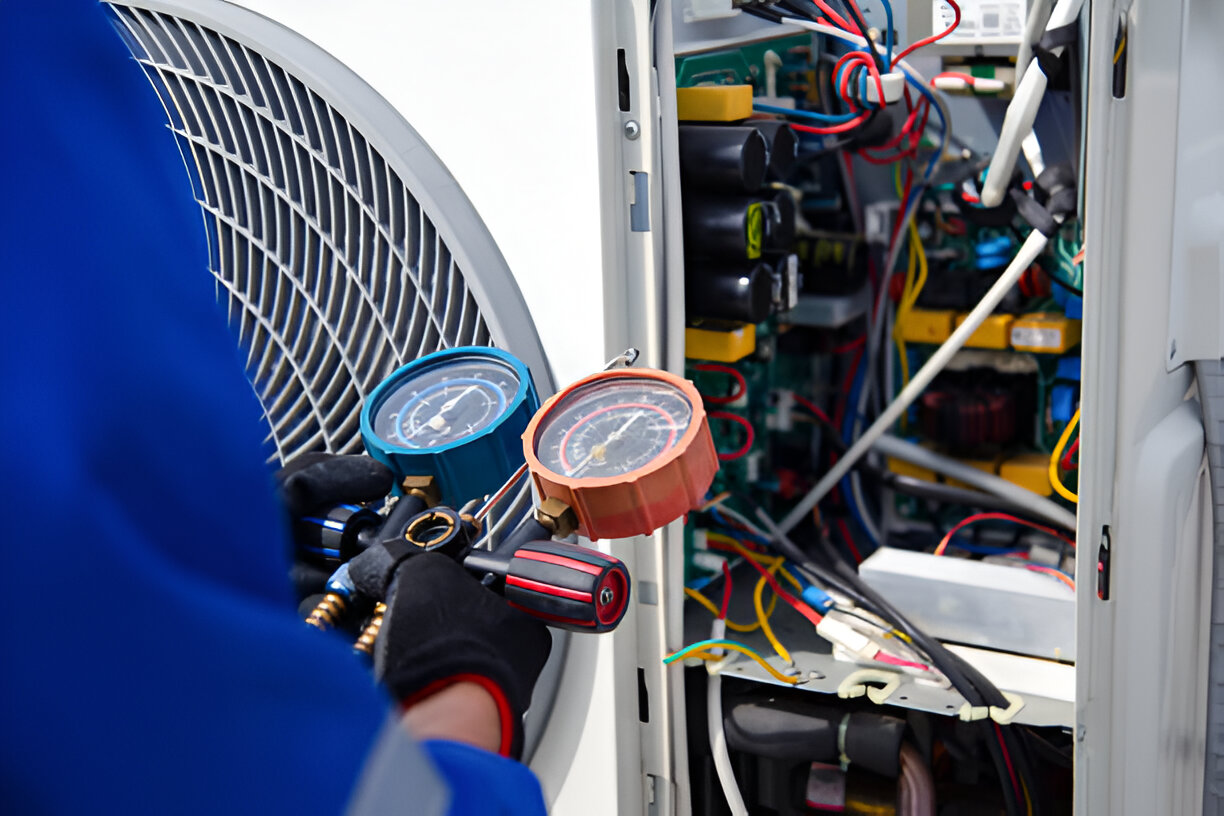
- Operational testing: temperature split, refrigerant pressures, amperage draw, and electrical component tests.
- Airflow assessment: blower inspection, return and supply registers, and static pressure if needed.
- Report and options: clear explanation of findings, repair options, estimated timeline, and warranty implications.
- Authorized repairs or scheduled installation: parts procurement, repair, or installation following an agreed plan.
- Post-service verification: performance testing, safety checks, and homeowner education on operation and maintenance.
Repairs, replacements, and installations explained
- Repairs: Many common issues can be resolved the same day—capacitor or contactor replacement, blower motor repair, condensate clearing, and refrigerant top-off when permissible. Technicians prioritize repairs that restore safe, efficient operation.
- Replacements: Replacement is recommended when the compressor fails, refrigerant leak is extensive, repair costs exceed expected remaining life, or the unit is older than 12-15 years. Proper replacement includes load calculation, duct assessment, and correct sizing to avoid short cycling.
- Installations: New system installs follow a Manual J load calculation, proper refrigerant line sizing, matched refrigerant charge, and professional ductwork or mini-split placement. For homes near OSU with limited attic or closet space, options such as high-efficiency condensing units or ductless systems are often ideal.
- Ductless systems: A strong solution for room additions, historic homes with no ductwork, or zoning needs in multi-occupant houses.
Emergency response and seasonal priorities
Emergency service during heat waves is common in OSU. Emergency response focuses on restoring cooling quickly and safely—temporary fixes to get a home comfortable and a plan for permanent repair. Seasonal priorities include spring tune-ups to prepare for summer load, and fall checks for heat pump systems before winter.
Technician qualifications and workmanship standards
Qualified technicians typically hold:
- NATE certification or equivalent HVAC credentials
- EPA Section 608 certification for refrigerant handling
- Ongoing manufacturer training for installation and warranty compliance
- Background-checked and insured status for in-home serviceTechnicians use diagnostic tools, follow code and safety standards, and document work performed. Clear explanations and written estimates help you make an informed decision.
Brands and equipment commonly serviced
Common, reliable brands supported in the OSU area include:
- Carrier
- Trane
- Lennox
- Rheem
- Goodman
- Daikin
- Mitsubishi ElectricTechnicians can service most makes and models and install new systems from major manufacturers to match your efficiency, noise, and budget preferences.
Financing, warranties, and maintenance plans
- Financing: Many homeowners use financing to spread installation costs. Typical options include fixed-term loans and deferred-interest plans through third-party lenders. Qualifying terms vary by provider and credit.
- Manufacturer warranties: New equipment generally carries manufacturer warranties on major components; proper installation and registration preserve coverage.
- Labor warranties: Check for labor and workmanship guarantees after installation or major repairs.
- Maintenance plans: Regular preventive maintenance (recommended twice per year) extends equipment life, improves efficiency, and often includes priority scheduling, discounted service calls, and inspection reports. In OSU-area homes, a maintenance plan is particularly valuable due to heavy summer use and seasonal debris exposure.
What to expect when scheduling service (preparation and during the visit)
- Before the appointment: Clear access to the outdoor unit and indoor air handler, note recent issues, and locate system documentation if available.
- During service: The technician will inspect, test, explain findings, and provide options. Routine maintenance usually takes 45 to 90 minutes; complex repairs or installations take longer and may require return visits for parts.
- After service: Expect a report of work done, any recommendations, and advice on filters, thermostat settings, and next maintenance interval.
Preventive tips for OSU homeowners
- Replace standard filters every 1-3 months; high-efficiency filters may need monthly checks during heavy pollen or high occupancy.
- Keep outdoor unit clear of debris, mulch, and vegetation to maintain airflow.
- Program thermostats for steady settings; avoid extreme setpoint swings in multi-occupant homes.
- Schedule a spring AC tune-up to ensure peak performance before summer heat.
Quality air conditioning service in OSU, OH minimizes downtime, enhances comfort, and protects your HVAC investment. Clear diagnostics, certified technicians, and thoughtful options—repair, replacement, or installation—help you choose the best path for your home and budget given local climate and housing needs.
Hot Deals & Cool Savings

.webp)
New Service Agreement Membership
.webp)
Any New Client Service
Next Service for Referring a New Client
New Service Agreement Membership
Any New Client Service
Next Service for Referring a New Client
.webp)
.webp)

Service Areas
