
Water Heater Repair in Blacklick, OH
Water heater repair in Blacklick, OH: expert diagnosis, safe replacement, and rapid service to restore hot water. Schedule your repair today.

Water Heater Repair in Blacklick, OH
Reliable water heater performance is essential for comfort and safety in Blacklick, OH, where cold winters and mineral-rich local water increase wear on heating systems. Whether your home has a gas tank, electric tank, or tankless unit, timely diagnosis and proper repairs keep hot water available, prevent property damage from leaks, and reduce energy waste.
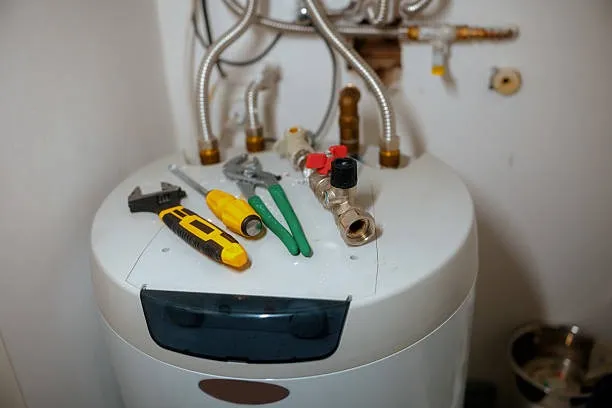
Common water heater issues in Blacklick, OH
Blacklick homeowners frequently report these symptoms. Each points to different causes and repair approaches:
- No hot water or inconsistent temperature — often due to failed heating elements (electric), a broken thermostat, tripped breakers, or gas control/ignition faults on gas units. Cold-weather demand spikes can make weaknesses apparent.
- Leaks or pooling water — caused by corroded tanks, loose fittings, failed temperature and pressure relief (TPR) valves, or leaking plumbing connections.
- Strange noises (rumbling, popping) — sediment buildup from hard local water creating noise as hot water passes through a coated heating surface.
- Pilot light or ignition problems (gas units) — dirty burners, faulty thermocouples, or control valve issues.
- Slow recovery or inadequate flow — reduced element efficiency, scaling, clogged dip tubes, or undersized equipment for household demands.
- Foul odor or cloudy water — bacterial growth or reactions with anode rods in tanks, often linked to aged units.
Inspection and troubleshooting process
A structured diagnostic approach ensures accurate repairs without unnecessary parts replacement. Typical on-site steps include:
- Visual safety check — inspect for active leaks, rust, standing water, gas odors, and proper ventilation. For gas units, technicians check for the smell of natural gas and the integrity of vents and flues.
- System history review — note age, last maintenance, and any recent issues reported by the homeowner to prioritize likely causes.
- Electrical and ignition testing — verify breakers, wiring, and heating element continuity on electric units; test pilot assembly, igniter, valve, and gas pressure on gas units.
- Component-specific testing — measure water temperature, check thermostats and temperature sensors, test TPR valve operation, and inspect anode rod condition.
- Tank and sediment assessment — drain a portion of the tank to check for sediment, which indicates the need for flushing or more extensive cleaning.
- Combustion and CO assessment (gas units) — measure draft and combustion efficiency and verify carbon monoxide monitoring is functioning properly.
Technicians document findings and recommend repairs grounded in the inspection results and the unit’s condition.
Typical repair procedures and parts replaced
Common, reliable repairs in Blacklick include targeted replacements and restorative tasks that extend service life:
- Heating elements and thermostats (electric) — replace failed elements, clean connections, and recalibrate thermostat settings.
- Ignition assemblies, thermocouples, and gas control valves (gas) — replace worn or faulty parts to restore consistent ignition and safe gas control.
- Anode rod replacement — swap corroded anode rods to slow tank deterioration and reduce metallic odors.
- TPR valve and drain valve replacement — install new safety valves when original components fail or leak.
- Sediment removal and tank flushing — professional flush to remove mineral deposits, sometimes combined with descaling treatments for heavy buildup.
- Dip tube replacement and inlet/outlet fitting repairs — restore stratification and water flow where parts have cracked or clogged.
- Minor tank repairs or external leaks — tighten connections or replace accessible fittings; note that significant tank corrosion typically requires full replacement.
All repairs include post-work checks to confirm proper operation and safety.
Emergency response and repair timelines
Urgent water heater problems demand quick, safe action—especially during Blacklick’s cold months:
- Immediate hazards (gas smell, major leak, visible structural tank failure) — treat as emergency situations. Shut off gas or power if safe to do so, and isolate water supply to limit damage.
- No hot water in winter with dependent households — technicians often prioritize rapid diagnosis and same-day repairs when possible.
- Typical repair timelines — minor component replacements (elements, thermostats, valves) are often completed in a few hours. Moderate work (flushing, anode rod replacement, burner cleaning) usually takes half to a full day. Extensive repairs or replacement recommendations depend on tank condition and parts availability.
Expect clear communication about estimated timelines after the initial diagnostic inspection.
Pricing guidelines and transparency expectations
Costs vary based on the root cause, replacement parts, unit accessibility, and whether service is scheduled or emergency. Factors that influence repair scope and cost:
- Unit type and age (tank versus tankless, gas versus electric)
- Parts required and whether they are OEM or aftermarket
- Labor complexity and time onsite
- Emergency or weekend service needs
- Extent of sediment or corrosion requiring additional work
Homeowners should expect a transparent estimate that lists required parts, labor considerations, and any recommended follow-up actions. Reliable service providers document findings before proceeding with repairs.
Safety checks and post-repair testing
After any repair, thorough testing confirms both performance and safety:
- Verify hot water production and thermostat accuracy at multiple taps
- Pressure test plumbing and the TPR valve operation
- Check electrical connections and grounding (for electric units)
- For gas units, confirm proper burner operation, safe gas control function, draft, and absence of combustion byproduct leaks
- Ensure carbon monoxide detectors are present and operational when gas appliances are on site
Technicians should provide a summary of tests performed and any warranty on parts or labor.
Warranty coverage and service assurances
Typical warranty elements homeowners should understand:
- Manufacturer warranties — cover certain internal components or the tank for defined periods; these vary by model and installation history.
- Parts warranties — new components usually carry manufacturer-backed warranties that vary by part.
- Service or labor warranties — professional repairs often include a limited labor warranty for a set period after completion.
Ask for details on what each warranty covers, exclusions (such as damage from lack of maintenance), and how claims are handled.
Preventative maintenance tips for Blacklick homes
Routine maintenance reduces breakdown risk and extends system life in our climate and mineral conditions:
- Annual inspection and flush — schedule an annual flushing to remove sediment and inspect anode rods and valves.
- Monitor temperature setting — keep thermostat at around 120F to limit scaling and reduce scald risk while improving efficiency.
- Check TPR valve annually — lift and reseat to ensure proper operation.
- Replace anode rod every few years — frequency depends on water chemistry; local hard water accelerates rod consumption.
- Consider water treatment — a water softener or point-of-use filters reduce mineral buildup that causes sediment and noise.
- Insulate older tanks and pipes — improves recovery time and energy efficiency during cold months.
Consistent maintenance is the most cost-effective way to avoid emergency repairs and premature replacement.
Hot Deals & Cool Savings

.webp)
New Service Agreement Membership
.webp)
Any New Client Service
Next Service for Referring a New Client
New Service Agreement Membership
Any New Client Service
Next Service for Referring a New Client
.webp)
.webp)

Service Areas
