
IAQ Products in Amlin, OH
IAQ products for Amlin, OH homes and businesses. Learn how to improve indoor air quality and plan installation.

IAQ Products in Amlin, OH
Good indoor air quality is essential for comfort, health, and productivity in Amlin, OH homes and businesses. Amlin’s humid summers, cool winters, seasonal pollen, and older homes with basements and varied ventilation can create a range of indoor air challenges: airborne allergens, mold growth during humid months, dry indoor air in winter, and trapped particulate matter from outdoor agricultural dust or road dust.
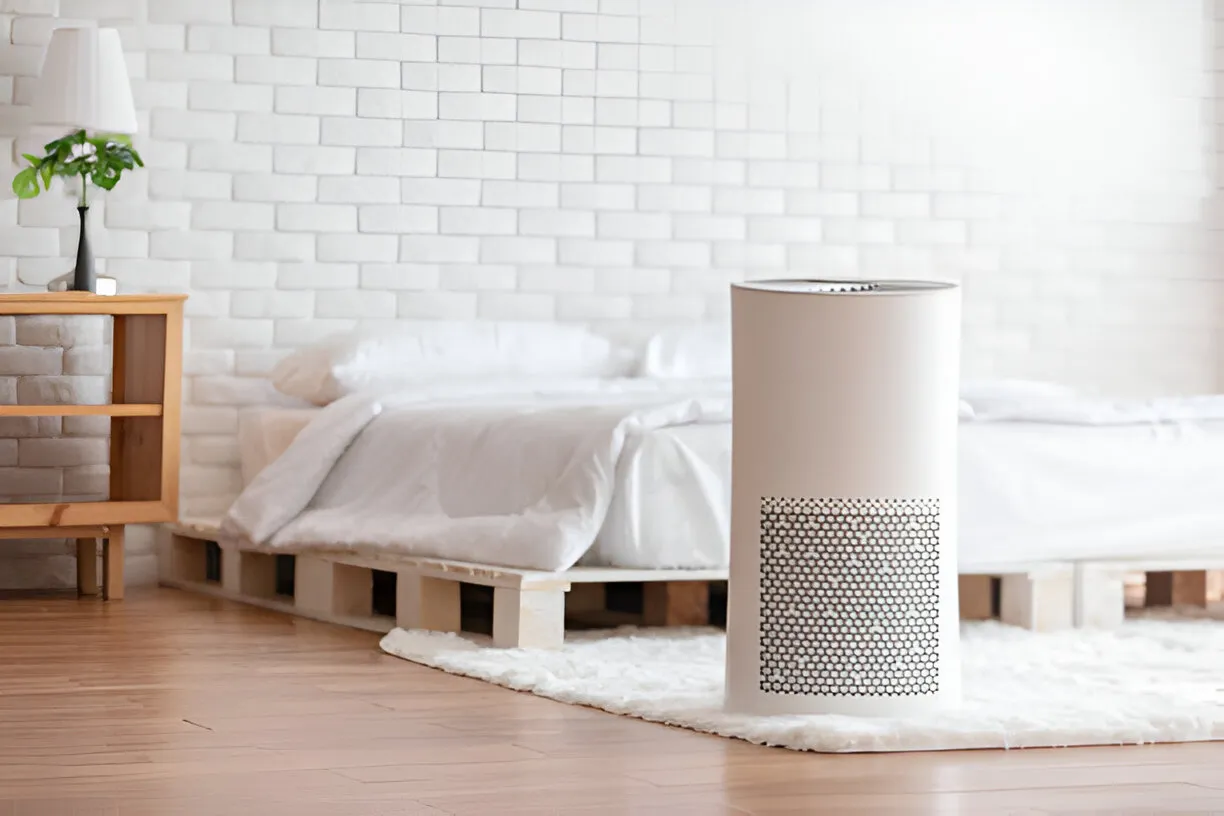
Common IAQ product categories and how they help
- Air purifiers (portable and whole-house)
- What they do: remove airborne particles such as dust, pollen, pet dander, smoke, and some bacteria and viruses depending on filtration and technology.
- Key features: true HEPA filtration, CADR ratings (Clean Air Delivery Rate), multi-stage filters with prefilters and activated carbon for odors and VOCs.
- Best for: allergy sufferers, homes near busy roads or farms, rooms with poor ventilation.
- HVAC filters and filter upgrades
- What they do: trap particles as air circulates through HVAC systems; MERV ratings indicate efficiency for particle capture.
- Key features: MERV 8 to 13 is common for residential upgrades; MERV 13 captures smaller particles but may require compatible HVAC fan capacity.
- Best for: whole-house particle reduction with minimal equipment change.
- Humidifiers (whole-home and portable)
- What they do: add moisture to indoor air to relieve dry skin, static, sore throats, and premature wood cracking during cold, dry Ohio winters.
- Key features: steam, evaporative, or bypass whole-home humidifiers; automatic humidity control is important to avoid over-humidification.
- Best for: homes with low winter indoor humidity, occupants with respiratory irritation from dry air.
- Dehumidifiers (portable and whole-house)
- What they do: remove excess moisture to reduce mold, mildew, and dust mites—common risks during Amlin’s muggy summer months and in basements.
- Key features: capacity (pints/day), auto-defrost, built-in pumps for basements, integrated humidistat.
- Best for: finished basements, damp crawlspaces, and homes with chronic high humidity.
- Ventilation equipment (ERVs and HRVs, exhaust fans)
- What they do: exchange stale indoor air with fresh outdoor air while recovering heat or humidity depending on type—important in tightly sealed modern homes.
- Key features: ERV (energy recovery ventilator) helps maintain humidity balance; HRV (heat recovery ventilator) is focused on temperature recovery.
- Best for: tightly built homes, commercial spaces, schools, and offices needing controlled fresh air without energy loss.
- Specialty technologies (UV germicidal lights, activated carbon, photocatalytic oxidizers)
- What they do: UV lights reduce microbial growth in HVAC systems; activated carbon removes odors and many VOCs.
- Key cautions: avoid ozone-producing devices in occupied spaces; select CARB-compliant or ozone-free products.
How to choose the right IAQ solution for Amlin homes and businesses
- Start with a simple assessment
- Identify symptoms: allergies, musty smells, condensation, visible mold, dusty surfaces, or dry air in winter.
- Check basic indicators: indoor humidity (ideal 40-50%), recent renovations that may release VOCs, and HVAC filter condition.
- Match products to problems
- Allergies or seasonal pollen: HEPA air purifiers plus upgraded HVAC filtration (MERV 11-13).
- Mold or chronic dampness: dehumidifier for basements, moisture control, and targeted mold remediation if present.
- Dry winter air: whole-home or room humidifiers with automatic control.
- Stale or stuffy indoor air in tightly sealed homes: ERV/HRV or properly balanced mechanical ventilation.
- Consider space, occupancy, and use
- Square footage and ceiling height determine purifier CADR and HVAC filter sizing.
- Businesses such as restaurants or offices need higher ventilation rates and may be subject to building codes or health guidelines.
- Basements, workshops, or areas with combustion appliances need both ventilation and carbon monoxide awareness.
Specifications and certifications to look for
- HEPA or True HEPA labeling for particulate removal down to 0.3 microns
- MERV rating for HVAC filters (MERV 8-13 common for improved residential filtration)
- CADR ratings for portable air purifiers (look for room-appropriate CADR for smoke, dust, and pollen)
- AHAM Verifide or similar performance verification for purifiers
- ENERGY STAR for energy-efficient mechanical equipment where applicable
- CARB compliance and UL listings to confirm ozone emissions and electrical safety
- Manufacturer documentation for dehumidifier capacity (pints/day) and humidifier output
- Warranty coverage and available replacement filters or parts
Installation and maintenance expectations
- Professional vs DIY installation
- Portable air purifiers, portable dehumidifiers, and room humidifiers are often plug-and-play.
- Whole-home humidifiers, dehumidifiers, ERVs/HRVs, and HVAC-integrated purifiers usually require professional installation for proper sizing, ductwork connections, and system balancing.
- Proper installation avoids airflow restrictions, compressor short-cycling, and inadequate recovery rates.
- Routine maintenance tasks
- Replace filters on schedule: HEPA and HVAC filters typically every 3-12 months depending on use and dust loads.
- Clean humidifier pans and change cartridges to prevent microbial growth; drain and clean portable units regularly.
- Empty and clean dehumidifier buckets or ensure drain lines are clear; check coils for frost or ice in cooler spaces.
- Service mechanical ventilation systems annually to replace cores or clean heat exchange surfaces.
- Monitor humidity and air quality with a basic hygrometer and consider periodic professional IAQ testing for VOCs or mold if symptoms persist.
- Expected lifespan and warranty types
- Typical lifespans vary: portable purifiers 3-7 years, dehumidifiers 5-10 years, whole-home equipment 7-15 years with proper maintenance.
- Warranties commonly cover parts and limited labor for 1-10 years depending on product class; check what routine maintenance is required to keep the warranty valid.
- Keep documentation and filter change records to support warranty claims.
Assessing effectiveness and deciding on a plan
- Combine solutions for the best results
- Integrated approaches work best in Amlin: a good HVAC filter, targeted portable purifiers in bedrooms, and a dehumidifier in damp basements address multiple sources simultaneously.
- For businesses, prioritize ventilation upgrades and commercial-grade filtration to meet occupancy needs.
- Use measurable indicators
- Track indoor relative humidity and consider a PM2.5 monitor for particulate levels if smoke, dust, or fine particles are a concern.
- If persistent odors, health symptoms, or visible mold exist, a professional IAQ assessment can pinpoint specific contaminants and remediation steps.
promotions & offers
Hot Deals & Cool Savings

.webp)
$20 Off
New Service Agreement Membership
.webp)
$25 Off
Any New Client Service
$25 Off
Next Service for Referring a New Client
$20 Off
New Service Agreement Membership
$25 Off
Any New Client Service
$25 Off
Next Service for Referring a New Client
.webp)
.webp)

Our Service Areas
Service Areas
