
Ventilation in Powell, OH
Powell, OH whole-home ventilation solutions with ERVs and HRVs. Learn how to choose, install, maintain, and meet code for better indoor air.

Ventilation in Powell, OH
Proper whole-home ventilation in Powell, OH is the simplest long-term solution to stale air, excess humidity, and indoor pollutant buildup in modern homes. With Powell’s humid Ohio summers, cold winters, and strong pollen seasons in spring, balanced mechanical ventilation not only improves indoor air quality but also protects building materials and helps control moisture problems that lead to mold and odors.
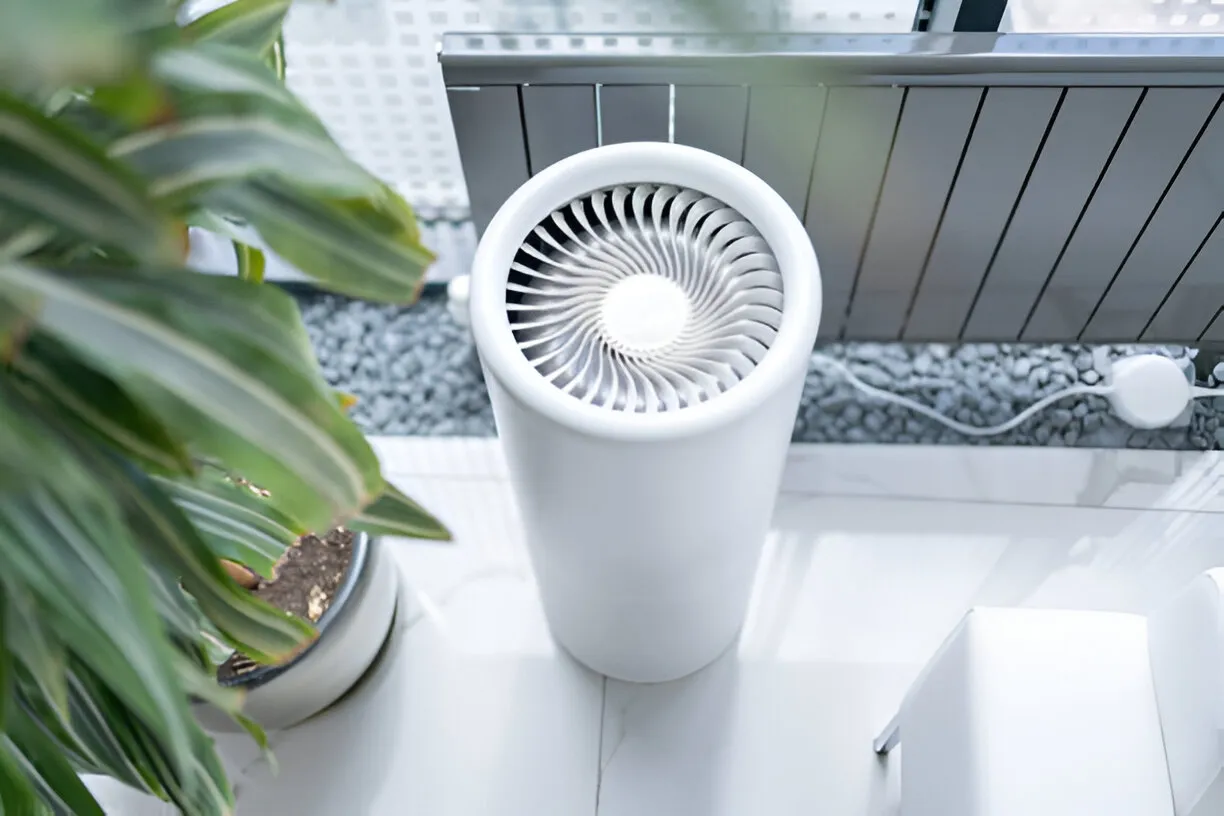
Common ventilation problems in Powell, OH homes
- High indoor humidity and condensation on windows during winter or after humid summer nights.
- Musty odors and visible mold growth in basements, bathrooms, or closets.
- Stale air, lingering cooking or pet odors, and elevated indoor particulates during allergy season.
- Pressure imbalance causing drafts, back-drafting of combustion appliances, or difficulty closing doors.
- Insufficient fresh-air exchange after envelope tightening or major insulation/air-sealing upgrades.
Whole-home ventilation options explained
- Balanced ventilation (ERV or HRV): Supplies fresh air while exhausting an equal amount of stale air. Heat or energy recovery reduces heating and cooling penalties. Best for tight, energy-efficient homes that need controlled fresh-air exchange.
- Energy Recovery Ventilator (ERV): Transfers both heat and some moisture between outgoing and incoming air. In Powell’s humid summers and cold winters, an ERV often helps maintain comfortable humidity levels year-round while recovering energy. ERVs are typically recommended when there’s a need to control indoor humidity without adding dehumidification.
- Heat Recovery Ventilator (HRV): Transfers sensible heat but limits moisture transfer. HRVs are beneficial in cold, dry climates where retaining indoor moisture is desired. In Powell, an HRV may be chosen for very dry winter conditions or specific indoor humidity strategies.
- Supply-only and exhaust-only systems: Simpler, lower-cost options that can be appropriate in leaky or seasonal-use homes. These systems are less precise and can create pressure imbalances, so they are not ideal for tightly sealed homes.
How to choose the right system for your home
- Assess home tightness: Modern, air-sealed homes require balanced ventilation (ERV/HRV). Older, drafty homes may get adequate passive exchange and could use targeted mechanical solutions. A blower door test helps quantify leakage and informs system selection.
- Consider occupancy and use patterns: Large families, frequent guests, home offices, or high indoor pollutant sources (pets, smoking, heavy cooking) increase required ventilation rates.
- Evaluate moisture control needs: If summer humidity is a recurring concern in Powell homes, prioritize an ERV to transfer moisture and reduce reliance on the air conditioner. If winters are very dry and moisture retention is desired, an HRV may be preferred.
- Integrate with existing HVAC: Determine whether the ventilator will run independently or integrate with the central air handler for distribution and filtration. Integration can simplify ducting and improve whole-house mixing.
Typical installation steps
- On-site evaluation: inspect envelope tightness, HVAC configuration, attic/basement access, and intake/exhaust locations considering prevailing wind and pollen season.
- System selection and sizing: calculate required fresh-air flow per ASHRAE 62.2 and local code guidance to match occupancy and square footage.
- Duct layout and intake placement: design balanced intake and exhaust locations away from driveways, dryer vents, or roof exhausts and with proper screening for pollen and debris.
- Mechanical installation: mount ERV/HRV unit, connect to power and controls, install ductwork with backdraft dampers, and implement condensation management if needed.
- Commissioning and balancing: measure airflow, adjust fans and dampers, and set control strategies (continuous low flow vs demand-controlled boost). Proper commissioning ensures correct fresh-air delivery and energy performance.
Energy implications and operational costs
- Energy recovery dramatically reduces heating and cooling penalties compared to unconditioned fresh-air intake. An ERV/HRV recovers a large portion of the energy that would otherwise be lost, reducing overall HVAC load.
- Fan energy increases slightly because of continuous ventilation, but modern units are efficient and often offset by the reduced heating/cooling demand.
- Controls matter: using timers, occupancy sensors, or demand-controlled ventilation reduces runtime and energy use while preserving indoor air quality.
- Consider seasonal strategies: in high pollen periods add filtration on intake; in shoulder seasons, lower ventilation rates to save energy while maintaining IAQ.
Maintenance and lifecycle
- Replace or clean filters on the intake and core as recommended by the manufacturer—typically every 3 to 12 months depending on pollen and dust loads. Powell’s spring pollen can shorten filter life.
- Clean exchanger cores annually and inspect condensate drains to prevent blockages and microbial growth.
- Check fans and electrical connections annually. Confirm that intake screens remain clear and that exterior intakes are positioned to avoid snow or debris intrusion.
- Proper maintenance preserves efficiency and IAQ over the unit’s life.
Code and health considerations in Powell, OH
- Design ventilation to meet current indoor air quality guidance and local code requirements (commonly aligned with ASHRAE 62.2). A professional will size systems to code and ensure combustion safety.
- Be aware of radon and combustion appliance interactions: mechanical ventilation affects house pressure and can influence radon entry or back-drafting. Coordinate ventilation strategies with radon testing and mitigation when needed.
- For homes with unvented combustion appliances, verify combustion safety after installing ventilation to avoid creating hazardous conditions. Maintain working carbon monoxide and smoke alarms as part of overall safety.
Benefits and final considerations
Whole-home mechanical ventilation in Powell, OH improves occupant comfort and health by providing consistent fresh-air exchange, controlling humidity, and reducing allergens and indoor pollutants. For tight, energy-efficient homes, an ERV or HRV paired with proper commissioning offers the best balance of air quality and energy performance. Regular maintenance and correct sizing are essential to realize the full health and efficiency benefits. When evaluating options, prioritize systems that address Powell’s humid summers and pollen seasons while ensuring compliance with local codes and combustion safety requirements.
Hot Deals & Cool Savings

.webp)
New Service Agreement Membership
.webp)
Any New Client Service
Next Service for Referring a New Client
New Service Agreement Membership
Any New Client Service
Next Service for Referring a New Client
.webp)
.webp)

Service Areas
