
AC Replacement in Grove City, OH
Air Conditioning replacement in Grove City, OH delivers greater comfort and energy savings. Learn about timing, options, and financing.

Air Conditioning Replacement in Grove City, OH
Replacing your home air conditioner is a major decision. In Grove City, OH, where hot, humid summers put heavy demand on cooling systems, choosing the right time and the right equipment matters for comfort, indoor air quality, and long‑term energy costs.
Why consider AC replacement now
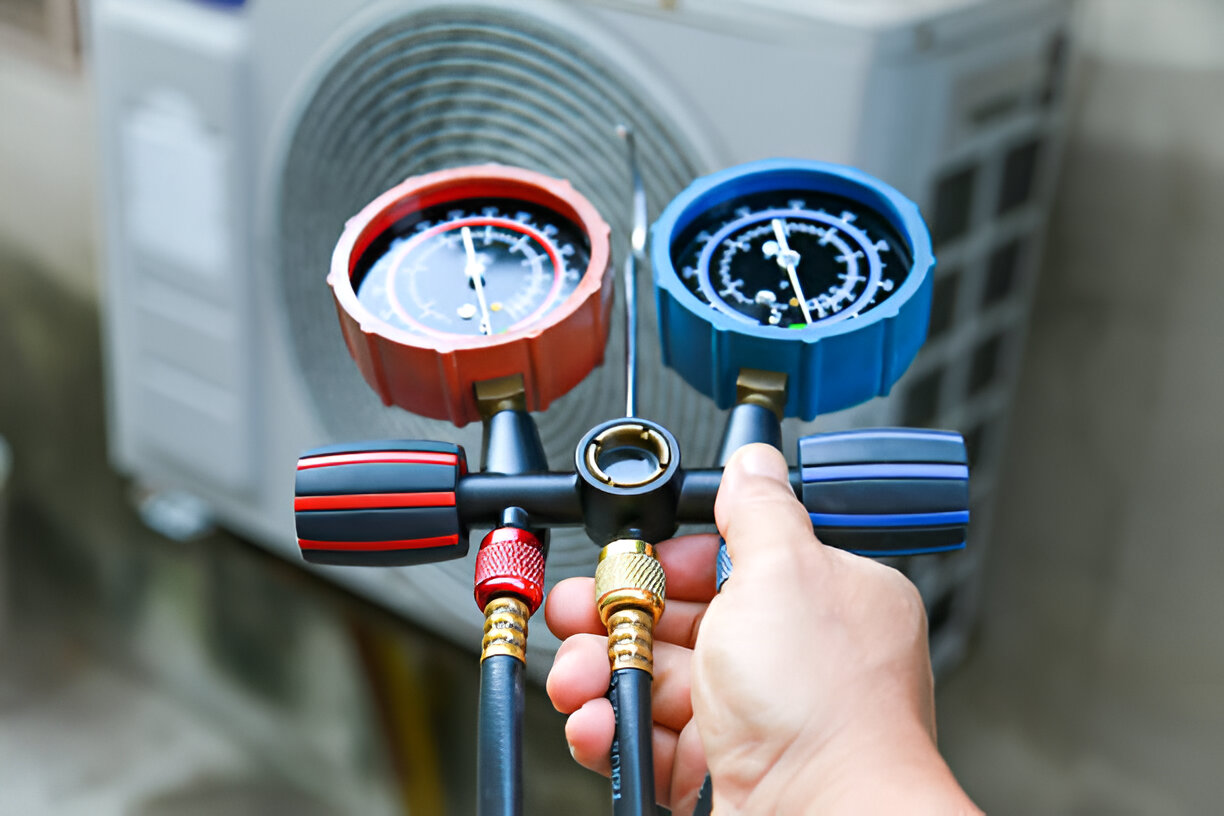
Older or failing systems struggle to keep indoor temperatures and humidity comfortable on Grove City’s peak summer days. If your AC:
- is more than 10–15 years old,
- runs constantly but cools poorly,
- requires increasingly frequent or costly repairs,
- uses phased‑out refrigerant (for example R‑22), or
- causes uneven cooling and high energy bills,
replacement will often deliver better comfort, reliability, and lower operating costs than continuing repairs. Timely replacement also reduces the risk of sudden breakdowns during the hottest months in central Ohio.
Common AC problems that lead to replacement
Homeowners in Grove City commonly face:
- Declining efficiency and very high electric bills during July and August.
- Compressor failures in older single‑stage units.
- Refrigerant leaks or use of older refrigerants no longer widely supported.
- Frequent component failures (capacitors, relays, fan motors).
- Poor matches between outdoor unit and indoor coil or furnace, leading to short cycling.
- Ductwork limitations that prevent an older unit from delivering adequate airflow.
When these issues accumulate or when repair frequency rises, replacement is usually the more cost‑effective long‑term choice.
Evaluation criteria: how technicians decide replace vs repair
A professional replacement recommendation typically considers:
- Age: Most central AC units have a useful life of roughly 10–15 years. Age alone is a strong indicator.
- Seasonal efficiency rating (SEER): Older units often have much lower SEER ratings than modern equipment. Lower SEER means higher energy use for the same cooling output.
- Repair history: Repeated, high‑cost repairs within a short time frame suggest replacement.
- Performance: Inability to maintain set temperature or control humidity.
- Refrigerant type: Units using older refrigerants may become impractical to service.
- System match and ductwork: Mismatched indoor/outdoor components or leaky, undersized ducts can reduce performance — sometimes replacement of both the air handler and condenser, or duct repairs, are required for optimal results.
- Home specifics: House size, insulation, attic conditions, and local shading all affect system sizing and choice.
Technicians should perform a load calculation (Manual J or equivalent) to size the new system correctly rather than relying on the old unit’s nominal capacity.
Replacement options and high‑efficiency upgrades
Options suited to Grove City homes include:
- High‑efficiency central air conditioners (higher SEER ratings, two‑stage compressors, or variable‑speed fans) for improved comfort and lower seasonal costs.
- Heat pump systems that provide both heating and cooling and can be a smart choice in well‑insulated homes.
- Ductless mini‑splits for additions, garages, or homes lacking ductwork.
- Matched system replacements (replacing both outdoor and indoor components) to ensure optimal performance.
- Smart thermostats and zoning systems to improve control and reduce wasted cooling.
High‑efficiency features to consider:
- Variable‑speed compressors and fans for quieter operation and better humidity control.
- Two‑stage compressors for improved part‑load efficiency during milder days common in spring and fall.
- Advanced coils and airflow solutions for better dehumidification during Grove City’s humid summers.
Removal and disposal of old equipment
Proper removal includes:
- Safe recovery of refrigerant in accordance with federal and state regulations.
- Disconnecting and removing the outdoor condenser, indoor coil/air handler, and associated electrical and refrigerant lines.
- Recycling metal and appropriate disposal of nonrecyclable materials.
- Sealing or capping refrigerant lines and closing wall/roof penetrations as needed.
Responsible disposal protects the environment and avoids compliance issues. In some cases, old equipment may require special handling for compressors or refrigerant-containing components.
Cost considerations (what affects investment)
Rather than a single price, replacement cost depends on several variables:
- System type and efficiency level selected.
- Proper sizing — larger or custom configurations add cost.
- Whether ductwork needs repair, sealing, or redesign.
- Complexity of installation (access limitations, attic or crawlspace work, electrical upgrades).
- Need to replace or modify the indoor air handler or furnace coil to match the new outdoor unit.
- Local permitting and inspection requirements.
- Removal and disposal services for the old system.
Understanding these factors helps you compare proposals and evaluate the value of higher‑efficiency equipment over the system lifetime.
Expected energy savings and performance gains
Replacing a very old air conditioner with a modern high‑efficiency system typically reduces cooling energy use substantially. Homeowners often see:
- Noticeable reductions in monthly cooling costs during Grove City’s hottest months.
- Improved humidity control and more consistent indoor temperatures.
- Quieter operation and longer intervals between service calls.
Actual savings depend on climate, thermostat settings, insulation, duct efficiency, and the chosen system’s SEER and technology (variable‑speed units yield the best seasonal savings and humidity control).
Typical timeline for completion
A standard, straightforward replacement in a typical single‑family Grove City home usually follows this sequence:
- Site assessment and load calculation.
- Selection of equipment and matching components.
- Ordering equipment (lead times vary).
- Removal of old unit and installation of the new system.
- System start‑up, refrigerant charge verification, airflow and safety checks, and homeowner walkthrough.
Most complete replacements are completed in a day when parts and access are straightforward; more complex projects (ductwork modifications, electrical upgrades, or permit scheduling) may extend to multiple days.
Financing choices and payment considerations
Homeowners commonly use several finance options to manage the investment:
- Home improvement or personal loans with fixed terms.
- Dedicated HVAC financing plans through lenders offering fixed monthly payments.
- Home equity lines or loans where applicable.
- Manufacturer or retailer financing promotions with deferred interest structures (understanding terms is important).
When evaluating financing, consider total interest, term length, and whether the monthly payment fits within projected energy savings from a higher‑efficiency system.
Maintenance and long‑term benefits
After replacement, regular preventive maintenance preserves efficiency and prolongs equipment life. Seasonal tune‑ups, filter changes, and duct checks keep performance optimal. Benefits of a well‑executed replacement in Grove City include improved comfort during humid summers, lower seasonal operating costs, fewer emergency repairs, and increased home value.
Choosing the right replacement involves matching system capacity and features to your home, accounting for local climate demands, and balancing upfront investment with long‑term energy savings and reliability.
Hot Deals & Cool Savings

.webp)
New Service Agreement Membership
.webp)
Any New Client Service
Next Service for Referring a New Client
New Service Agreement Membership
Any New Client Service
Next Service for Referring a New Client
.webp)
.webp)

Service Areas
