
The Cold Hard Truth About Why Your AC Isn't Cooling

The Real Reason Your AC Is Blowing Warm Air (And What to Do Right Now)
Why is my ac blowing warm air is one of the most common questions Central Ohio homeowners ask — especially when April 2026 temperatures in Columbus start climbing and the humidity makes every degree feel worse. If your system is running but pushing warm air through the vents, you are not alone, and in most cases, the fix is simpler than you think.
Here are the most common reasons your AC is blowing warm air:
- Incorrect thermostat settings — fan set to "On" instead of "Auto," or mode set to "Heat"
- Dirty air filter — restricted airflow causes the system to work harder and cool less
- Tripped circuit breaker — the outdoor unit loses power while the indoor fan keeps running
- Refrigerant leak or low refrigerant — the system can't absorb heat without enough refrigerant
- Frozen evaporator coils — ice buildup blocks heat transfer entirely
- Clogged condensate drain line — triggers a safety shutoff that stops cooling
- Dirty or blocked outdoor condenser unit — the most overlooked culprit, responsible for roughly 90% of warm air complaints
- Failing compressor, capacitor, or fan motor — mechanical breakdown in the outdoor unit
Some of these you can check yourself in minutes. Others need a trained technician. This guide walks you through both — starting with the easiest fixes first.
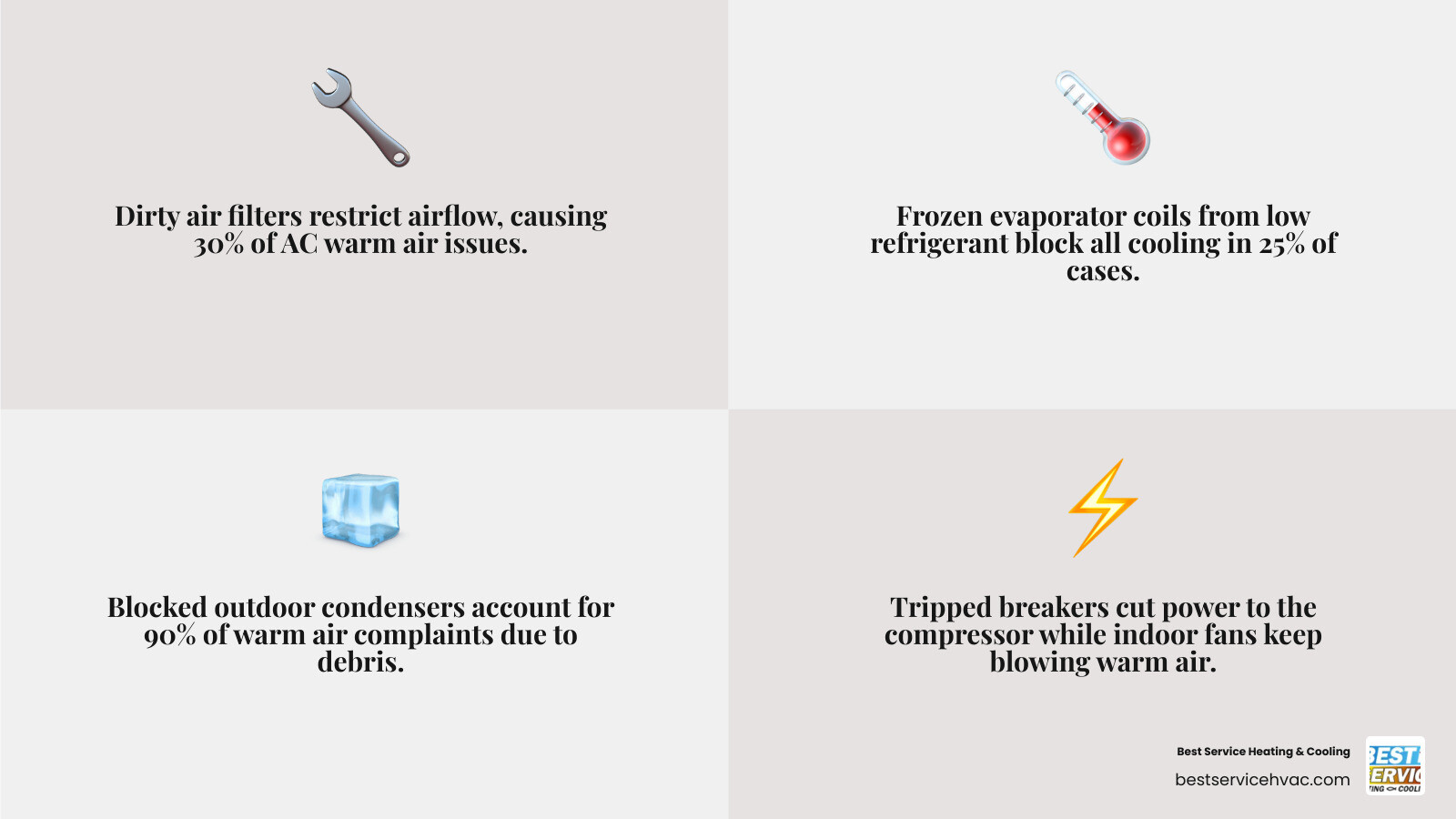
Why is my ac blowing warm air in my Columbus home?
When you’re dealing with the sticky humidity of a Central Ohio spring, an AC that isn't cooling feels like a genuine emergency. To understand why it's failing, it helps to know how it's supposed to work. Your AC doesn't actually "create" cold; it removes heat. It uses a refrigerant cycle to pull heat from your indoor air and dump it outside. If any part of that cycle is interrupted, you get lukewarm air.
Before you panic, we recommend checking the "Big Three" simple issues: the thermostat, the filter, and the power. We see many common AC repair issues and solutions that start with these basic components. If you've lived in the area for a while, you might even remember our AC Repair Columbus OH Guide 2025 which highlighted how often small oversights lead to big discomfort.
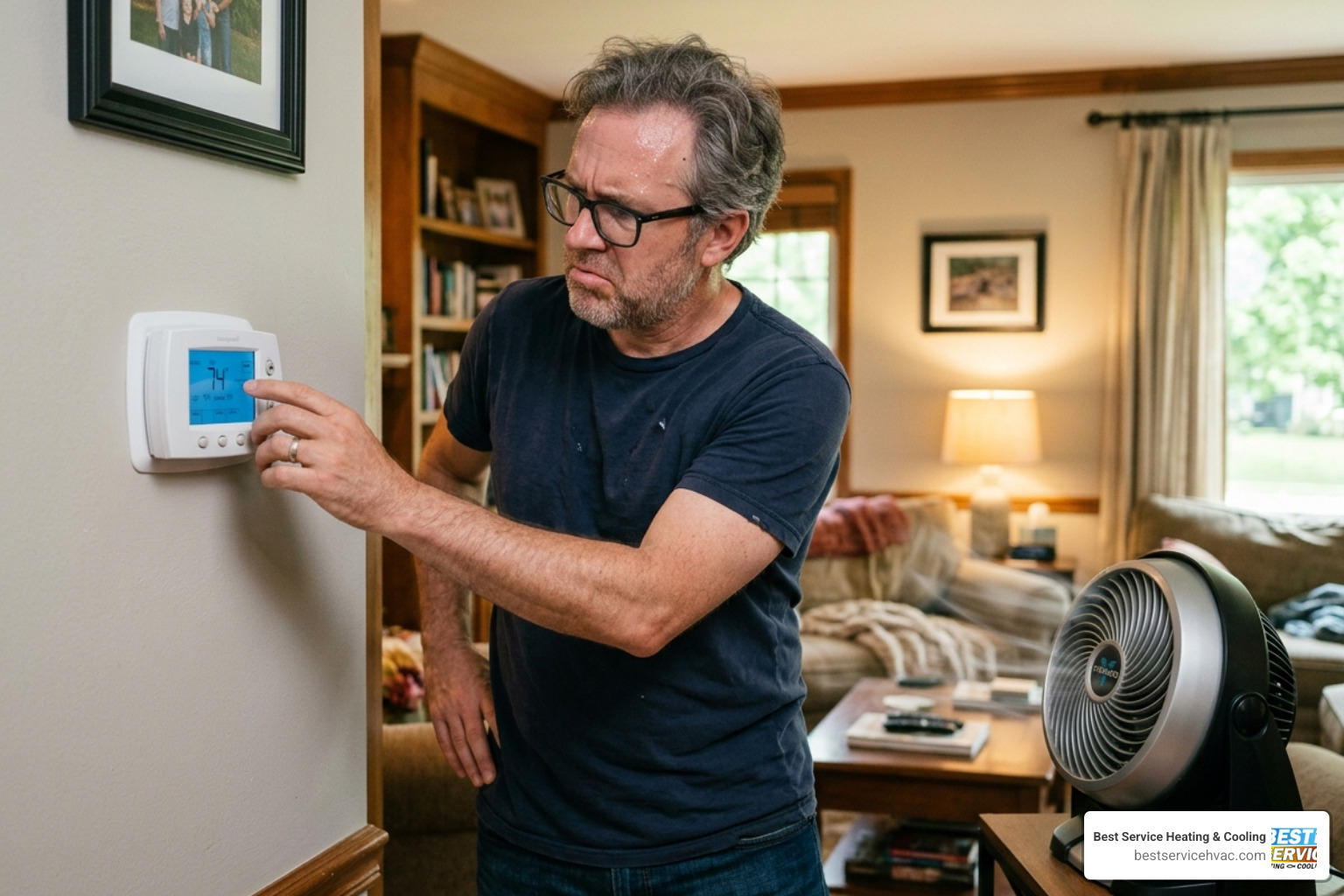
Why is my ac blowing warm air due to thermostat issues?
It sounds almost too simple, but the thermostat is the "brain" of your HVAC system, and even brains have bad days. If you're asking why is my ac blowing warm air, start here:
- Check the Mode: Ensure it is set to "Cool." Sometimes during the fluctuating spring weather in places like Westerville, someone might have switched it to "Heat" during a chilly night and forgotten to switch it back.
- The "On" vs. "Auto" Trap: This is a major culprit. If your fan is set to "On," the blower motor runs 24/7, even when the AC isn't actually cooling the air. This results in warm air blowing through your vents between cooling cycles. Switch it to "Auto" so the fan only blows when the air is being chilled.
- Battery Power: If your thermostat screen is blank or fading, the batteries might be dying. This can cause the thermostat to lose its connection to the outdoor unit.
- Calibration: Over time, sensors can drift. If your thermostat thinks it’s 70 degrees when it’s actually 78, it won’t tell the AC to kick on.
For residents needing AC repair in Westerville, OH, a quick thermostat reset or battery change often saves a service call.
DIY filter inspection and replacement
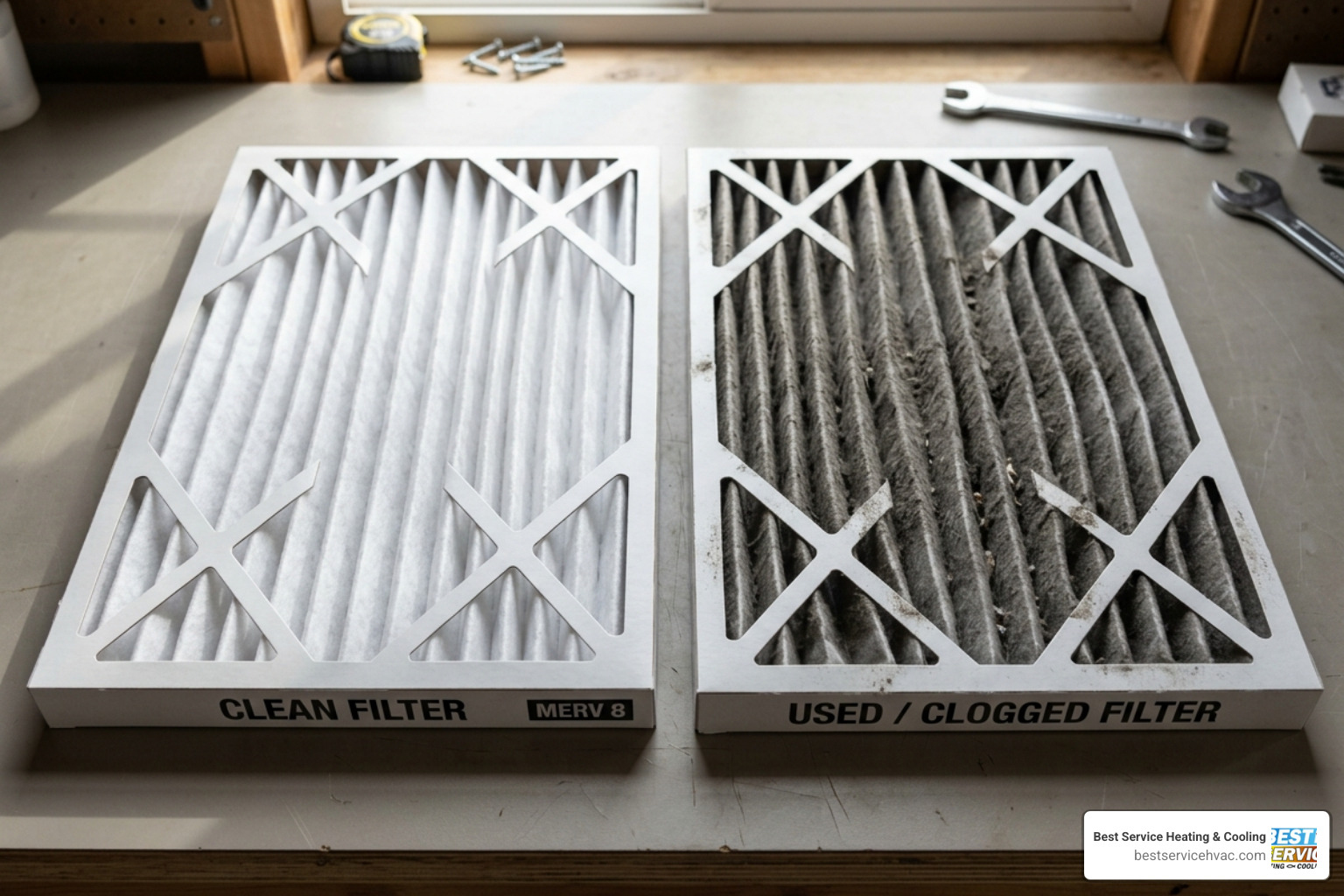
If your thermostat is fine but you're still wondering why is my ac blowing warm air, look at your air filter. A dirty, clogged filter is the arch-nemesis of your HVAC system.
When a filter is packed with dust, pet dander, and Columbus pollen, it restricts airflow. Your AC needs a steady stream of warm air to pass over the evaporator coils to keep them from getting too cold. Without enough air, the coils freeze, and the system can no longer absorb heat.
We recommend replacing your filters every 1 to 3 months. If you have pets or allergies, aim for every 30 days. High MERV-rated filters catch more particles but can also restrict airflow if your system isn't designed for them. If you are looking for AC repair in New Albany, OH, checking your filter is the first thing our technicians will do.
Troubleshooting the Outdoor Condenser Unit in Central Ohio
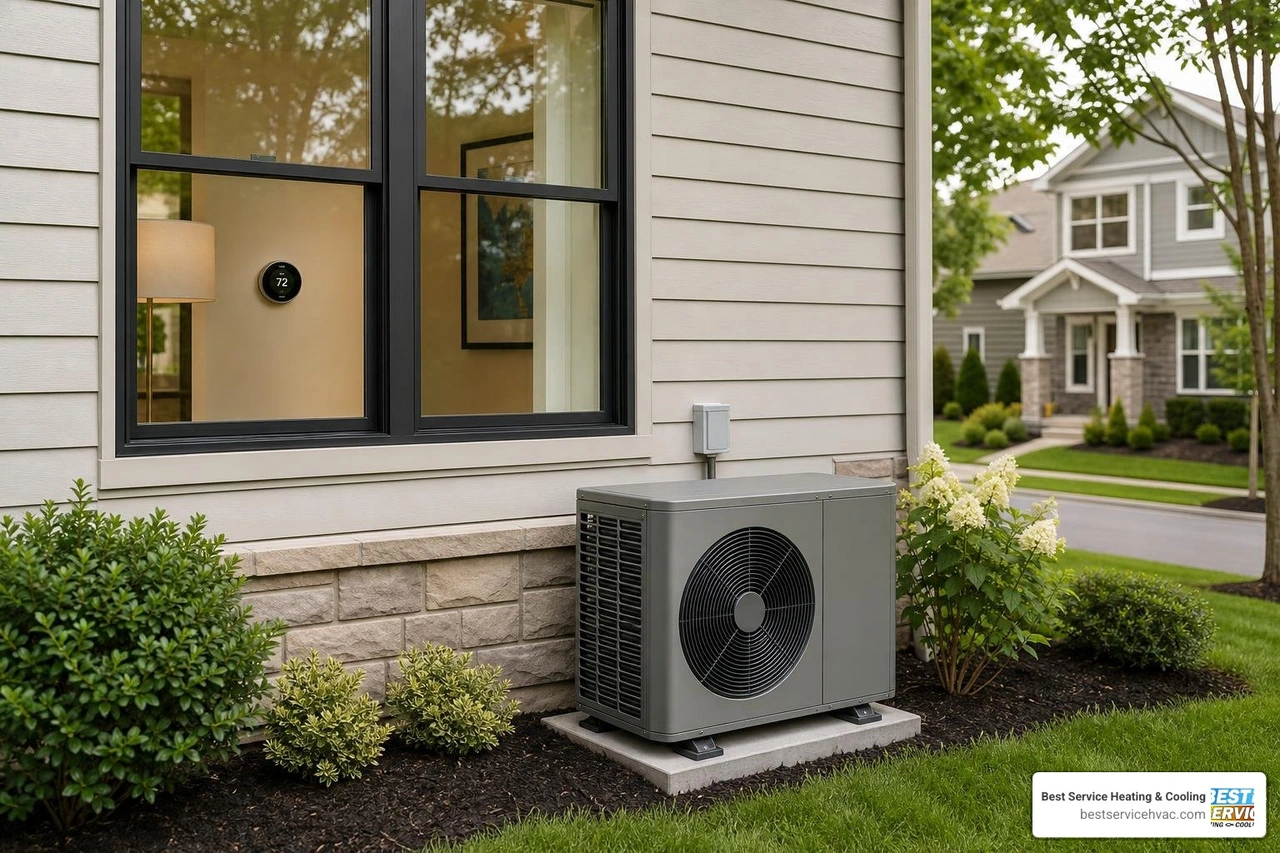
Did you know that 90% of the time, the reason your AC is blowing hot air is located in the outdoor condenser unit? While the indoor unit handles the air, the outdoor unit handles the heat rejection. If the outdoor unit can't "breathe," your home won't cool.
Whether you need AC repair in Canal Winchester or you're looking for an AC repair guide for Brice, OH, the outdoor unit should be your primary focus during troubleshooting.
Clearing debris for better airflow
Your outdoor unit uses a large fan to pull air through metal fins (coils) to dissipate heat. In Central Ohio, our outdoor units face a constant barrage of cottonwood seeds, grass clippings, and falling leaves.
If these coils are coated in "fuzz" or dirt, the heat stays trapped inside the refrigerant. To fix this:
- Power Off: Turn off the AC at the thermostat and the outdoor disconnect switch.
- Clear the Perimeter: Ensure there is at least 2 feet of clear space around the unit. Trim back any bushes or weeds.
- Gentle Cleaning: Use a garden hose (not a power washer!) to gently rinse the coils from the top down. Avoid bending the delicate metal fins.
If you’re following our AC repair Baltimore, OH guide, you’ll know that keeping this unit clean can significantly boost efficiency and prevent that dreaded warm air.
Identifying capacitor and fan failures
If you go outside and hear a faint humming sound coming from the unit, but the fan isn't spinning, you likely have a failed capacitor or fan motor. The capacitor acts like a giant battery that gives the motor the "kick" it needs to start.
A common DIY trick (to be used with caution) is to gently poke the fan blade with a long stick through the top grille. If the fan starts spinning after a manual nudge, your capacitor is definitely shot. While the part is inexpensive, it stores a dangerous electrical charge and should usually be replaced by a professional.
Refrigerant Leaks and Frozen Evaporator Coils
Refrigerant is the "blood" of your AC system. It doesn't get "used up" like gas in a car; it circulates in a closed loop. If your refrigerant is low, it means you have a leak.
Why is my ac blowing warm air because of a refrigerant leak?
When refrigerant levels drop, the pressure in the system changes. This causes the evaporator coil (the indoor part) to become extremely cold—so cold that it freezes the humidity in the air into a block of ice. Once the coil is encased in ice, air cannot pass through it, and you’ll notice the air coming out of your vents getting warmer and weaker.
Signs of a leak include:
- Hissing or bubbling noises near the unit.
- Ice forming on the copper lines or the outdoor unit.
- Indoor humidity problems that won't go away.
If you suspect a leak, turn the system off immediately. Running an AC with low refrigerant can cause the compressor to freeze or burn out, leading to much more expensive repairs.
How to safely thaw frozen coils
If you see ice, you must thaw it before a technician can even begin to diagnose the problem.
- Turn off the "Cool" setting: Stop the cooling cycle immediately.
- Switch the Fan to "On": This will blow unchilled air over the ice to help it melt.
- Wait 24 Hours: It can take a full day for a heavy block of ice to melt completely.
Once thawed, check your filter. If the filter was clean and the coils still froze, you likely have a leak or a blower motor issue. At this point, it might be worth asking: is it time for an AC replacement?
Electrical and Mechanical Failures
Sometimes the reason why is my ac blowing warm air is hidden inside your electrical panel.
Clogged condensate drain lines
Your AC removes gallons of water from the air every day. This water drains into a plastic pipe. Over time, algae and "slime" can clog this pipe. Most modern systems in Columbus have a "float switch" that detects a backup. To prevent a flood in your home, the switch shuts off the outdoor unit.
The result? Your indoor fan keeps blowing (moving warm air), but the cooling stops. You can often clear this by using a wet/dry vac on the outside end of the drain line or flushing it with a bit of vinegar. For more on handling these sudden stops, check our Columbus Emergency AC Guide.
Compressor distress signals
The compressor is the "heart" of your AC. If it fails, the system cannot pump refrigerant.
- Tripped Breakers: If your AC keeps tripping the circuit breaker, the compressor might be "grounded" or drawing too much power. See our guide on solving frequent AC circuit breaker trips for more details.
- Noises: Listen for a loud "clunk" when the unit tries to start, or a sound like "coins in a dryer." These are signs of mechanical distress.
| Issue | DIY Friendly? | Professional Needed? |
|---|---|---|
| Dirty Filter | Yes (Replace monthly) | No |
| Thermostat Settings | Yes (Check batteries/mode) | No |
| Tripped Breaker | Yes (Reset once) | If it trips again |
| Clogged Drain Line | Yes (Vacuum out) | If backup persists |
| Refrigerant Leak | No | Yes (EPA certification required) |
| Capacitor/Motor Failure | No | Yes (High voltage risk) |
| Compressor Failure | No | Yes |
Professional Maintenance and Prevention
The best way to stop asking why is my ac blowing warm air is to prevent the problem before the summer heat hits. Regular AC maintenance is the "oil change" for your home.
An annual tune-up includes:
- Cleaning the condenser coils.
- Checking refrigerant pressures.
- Tightening electrical connections.
- Testing the capacitor and motor "draw."
- Clearing the condensate drain.
By scheduling a professional AC tune-up in Columbus, OH each spring, you catch the small leaks and weak capacitors before they leave you sweating in July.
Frequently Asked Questions about AC Performance
Should I turn off my AC if it is blowing warm air?
Yes! If your AC is blowing warm air, continuing to run it can cause the compressor to overheat or the evaporator coils to freeze into a solid block of ice. This puts unnecessary strain on the "heart" of your system and can turn a simple repair into a full system replacement.
How can I tell if my home AC issue is different from a car AC problem?
While both use the same basic principles, they are very different systems. Car ACs often use R134a refrigerant and are prone to leaks due to road vibrations and drying seals. Home ACs are stationary and use different refrigerants (like R410A). Home systems also rely heavily on ductwork and large-scale filtration, whereas car issues are often related to the compressor clutch or a simple cabin filter.
How often should I schedule professional AC service?
We recommend a professional inspection at least once a year, ideally in the spring. This ensures your system is clean, the refrigerant is at the proper level, and all electrical components are safe for the heavy workload of a Central Ohio summer.
Conclusion
At Best Service Heating & Cooling, we’ve been helping our neighbors in Columbus, Reynoldsburg, and the surrounding areas stay cool since 1992. As a family-owned business with an A+ BBB rating, we know that when your AC starts blowing warm air, you want fast, honest answers and affordable solutions.
Whether you're in Gahanna, Hilliard, or Canal Winchester, don't suffer through the heat. If our DIY tips didn't get the cold air flowing again, our team of expert technicians is ready to help. Check out our Professional Air Conditioning Services to see how we can restore your home's comfort today.

.webp)
.webp)

Service Areas
