
High Efficiency vs Standard HVAC Pros and Cons for Homeowners

How a Standard vs High Efficiency HVAC Comparison Can Lower Your Energy Bills in Columbus, OH
A standard vs high efficiency hvac comparison comes down to one core question: how much of your energy dollar actually heats or cools your home? Standard systems waste up to 20 cents of every dollar you spend. High-efficiency systems can recover nearly all of it.
Here's a quick side-by-side to help you decide:
| Feature | Standard Efficiency | High Efficiency |
|---|---|---|
| Furnace AFUE Rating | ~80% | 95–99% |
| Central AC SEER2 Rating | 13–14 SEER2 | 16–21+ SEER2 |
| Heat Pump HSPF2 | ~7.7 | 9.0+ |
| Venting Type | Metal flue | PVC pipe |
| Condensate Drain | No | Yes |
| Variable-Speed Blower | Rarely | Common |
| Annual Energy Savings vs. Standard | Baseline | $150–$500+ |
| Typical Payback Period | N/A | 5–10 years |
| Upfront Cost | Lower | Higher |
| Best For | Mild climates, tight budgets, short stays | Cold climates, high bills, long-term ownership |
For Central Ohio homeowners, where winters are real and summers are humid, the efficiency gap between these two system types shows up directly on your monthly utility bills. Columbus sees enough heating degree days each year that upgrading from an 80% AFUE furnace to a 96%+ model can mean meaningful savings that add up fast over a 15–20 year system life.
But high efficiency isn't the right call for every home or every budget. The honest answer depends on your home size, how long you plan to stay, your current energy bills, and what incentives are available to you in 2026.
This guide walks you through everything you need to make a confident decision — from technical specs and comfort benefits to real payback math and Columbus-specific considerations.
Technical Differences in a Standard vs High Efficiency HVAC Comparison
When we look at the technical bones of an HVAC system, the differences between standard and high-efficiency models are more than just a sticker on the cabinet. It involves a fundamental shift in how fuel is burned and how air is moved through your home in communities like Dublin or Westerville.
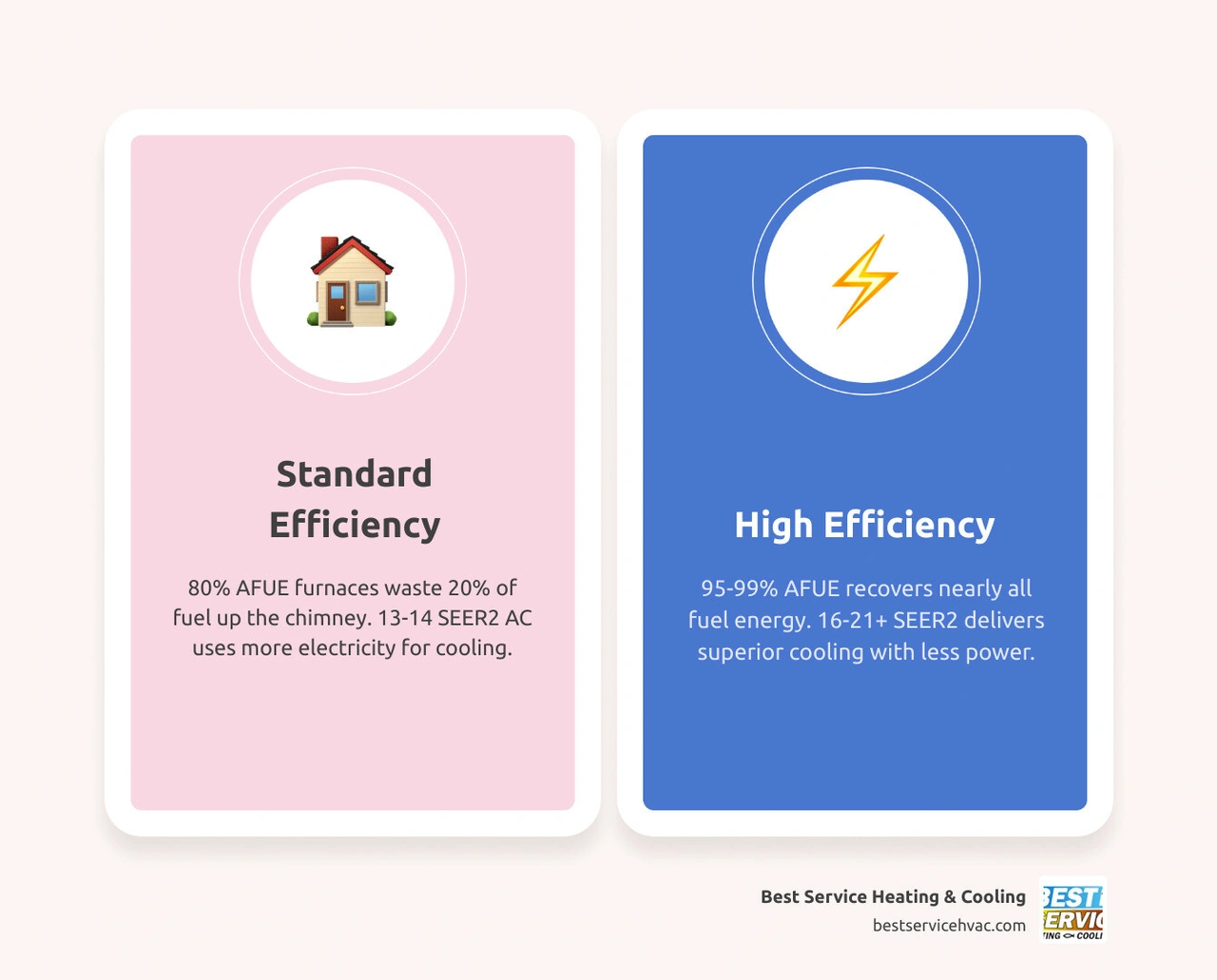
The most common metric for furnaces is AFUE (Annual Fuel Utilization Efficiency). A standard-efficiency furnace usually sits at 80% AFUE. This means for every dollar of natural gas you buy, 80 cents becomes heat for your living room, and 20 cents escapes through the chimney as waste. High-efficiency units, often called condensing furnaces, reach 95% to 99% AFUE. They are designed to squeeze almost every bit of thermal energy out of the fuel.
On the cooling side, we look at SEER2 (Seasonal Energy Efficiency Ratio 2). As of April 2026, the federal minimums have tightened, but there is still a wide gap. A standard AC might meet the baseline of 13.4 or 14.3 SEER2, while high-efficiency models soar past 20 SEER2. Similarly, heat pumps use HSPF2 (Heating Seasonal Performance Factor 2) to measure winter efficiency. The higher the number, the less electricity the system pulls from the grid to keep you warm.
To understand why one is more efficient than the other, we have to look under the hood at the More info about heating and cooling services we provide to see the hardware in action.
Advanced Components and Fuel Utilization
The "secret sauce" of a high-efficiency furnace is the secondary heat exchanger. In a standard 80% furnace, the hot exhaust gases pass through one heat exchanger and are then vented out of the house while they are still quite hot.
High-efficiency systems add a second heat exchanger made of stainless steel. This component captures "latent heat" by cooling the exhaust gases so much that the water vapor inside them condenses into liquid. That phase change from gas to liquid releases extra heat that a standard furnace simply tosses away.
Furthermore, high-efficiency systems often utilize modulating gas valves and inverter-driven compressors. While a standard unit is either 100% "on" or 100% "off," a modulating system can adjust its output in tiny increments. It’s like the difference between a light switch and a dimmer switch. By running at 40% or 60% capacity most of the time, the system avoids the energy-intensive "startup" cycle and maintains a much more stable temperature.
Venting and Drainage Requirements
Because high-efficiency furnaces extract so much heat, the remaining exhaust is cool enough to be vented through plastic PVC piping rather than a heavy metal flue. This allows for "sealed combustion," where the furnace pulls fresh air for burning directly from outside through one pipe and sends exhaust out through another. This is a massive safety and efficiency upgrade because it doesn't use the air you've already paid to heat inside your home for combustion.
However, this process creates a byproduct: condensation. High-efficiency systems require a condensate drain line to carry away the slightly acidic water produced during the heating cycle. In many Columbus basements, we install neutralizer kits to ensure this water doesn't damage your plumbing. This adds a layer of complexity to the installation, but it’s a necessary step for capturing that extra 15-19% of fuel efficiency.

Performance and Comfort Benefits of High-Efficiency Systems
While the lower utility bills are the headline, the real-world "feel" of a high-efficiency system is often what homeowners in Gahanna or Grove City appreciate most. A standard vs high efficiency hvac comparison usually reveals that standard systems are "loud and proud"—they blast hot or cold air at full force until the thermostat is satisfied, then shut off, leading to noticeable temperature swings.
High-efficiency systems are designed for "long and low" runtimes. By running at lower speeds for longer periods, they eliminate the "cold blow" at the start of a cycle and keep the air moving constantly. This results in:
- Superior Temperature Balance: No more shivering on the couch while the hallway is roasting.
- Enhanced Humidity Control: In a humid Columbus summer, an AC that runs longer at a lower speed removes significantly more moisture from the air than a standard unit that cycles on and off quickly.
- Whisper-Quiet Operation: Advanced blowers and insulated cabinets mean you might not even notice the system is running.
Why a standard vs high efficiency hvac comparison favors variable-speed technology
Variable-speed blower motors (often called ECM motors) are the heart of high-efficiency comfort. Unlike standard permanent split capacitor (PSC) motors that have one or two speeds, variable-speed motors can adjust to the exact static pressure of your ductwork.
If your air filter starts to get a little dirty, a variable-speed motor can sense the resistance and ramp up slightly to maintain the correct airflow. This ensures consistent comfort and protects the internal components from overheating or freezing up. When paired with More info about air conditioning services, these motors can also be integrated into zoning systems, allowing you to cool the upstairs bedrooms without freezing out the kitchen.
Impact on Indoor Air Quality and Sound
Because high-efficiency systems keep air moving more consistently, your home’s air is passed through your filtration system or air purifier more often. This is a game-changer for families in New Albany or Pickerington who struggle with seasonal allergies.
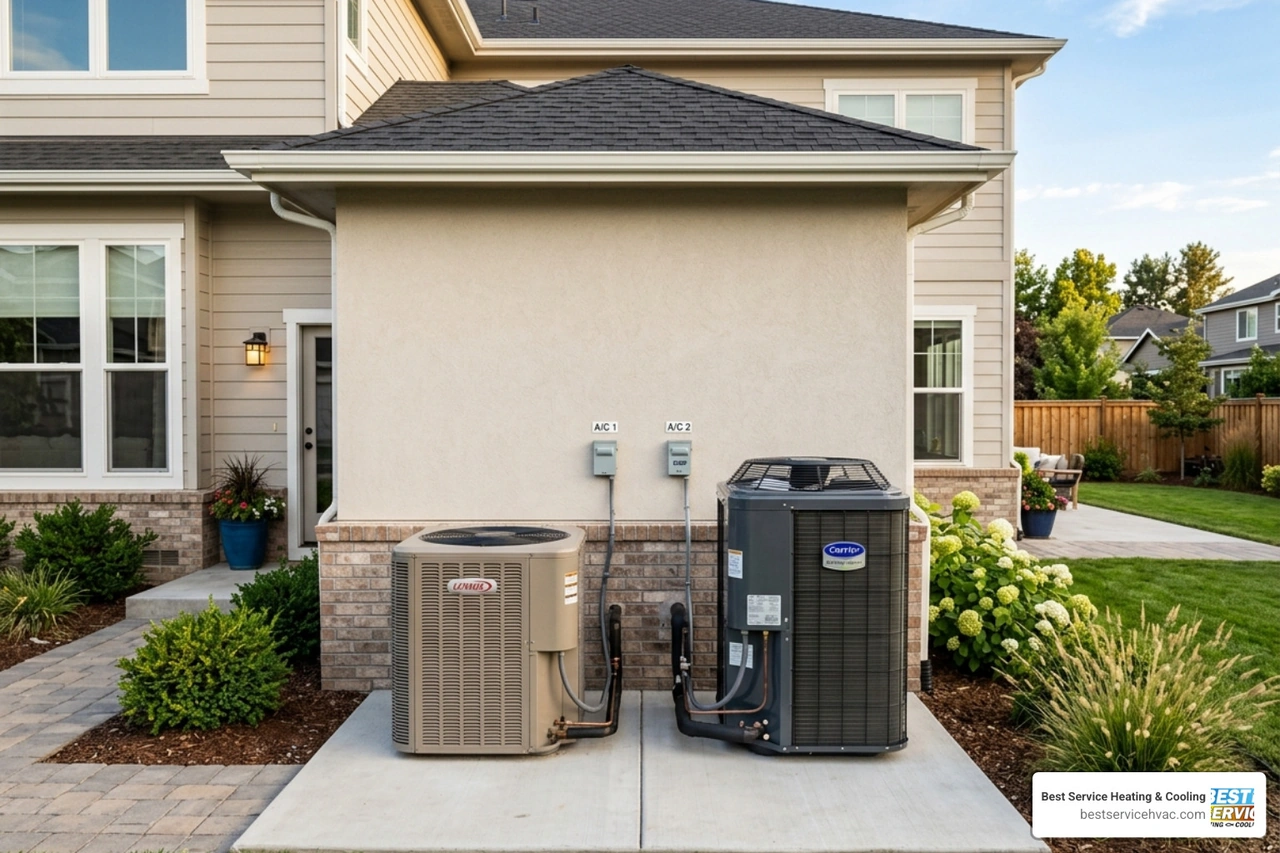
Sound is the other major factor. High-efficiency outdoor condensers often feature sound blankets over the compressor and specially shaped fan blades. When the system is running at 50% capacity on a mild day, it is virtually silent, allowing you to enjoy your backyard patio without the roar of a standard AC unit in the background.
Maximizing ROI with Heat Pumps and Dual-Fuel Setups
In 2026, many Central Ohio homeowners are moving toward dual-fuel systems. This setup pairs a high-efficiency gas furnace with an electric air-source heat pump. It is the "best of both worlds" approach for our specific climate.
The heat pump handles the cooling in the summer and the heating during the spring and fall. Modern heat pumps are incredibly efficient down to about 30 or 40 degrees Fahrenheit. When the temperature drops into a deep Columbus freeze, the system automatically switches over to the gas furnace, which provides that "toasty" heat we all crave in January.
This hybrid approach significantly reduces your "site energy" consumption and carbon footprint, often cutting energy usage by 20% to 40% compared to an older AC and gas furnace combo. You can explore our More info about heat pump services to see how these units have evolved to handle colder temperatures than ever before.
Efficiency in the Columbus Climate
Our local weather is the ultimate test for any HVAC system. We deal with high heating loads in the winter and intense humidity in the summer.
- Winter: A 96% AFUE furnace is a workhorse in Ohio. If you run your heat from October through March, the 16-cent-per-dollar savings over a standard unit adds up to hundreds of dollars every year.
- Summer: The variable-speed compressor in a high-efficiency AC is vital for managing that "sticky" July air. By running longer cycles, it acts as a whole-home dehumidifier.
Maintenance Needs in a Standard vs High Efficiency HVAC Comparison
Is a high-efficiency system harder to maintain? Not necessarily, but it is more "sensitive." Because these units have more sensors, secondary heat exchangers, and condensate management systems, they require a professional touch to keep them running at peak performance.
Standard systems are simpler, but they are also less communicative. A standard furnace might run inefficiently for years before finally breaking down. A high-efficiency system is designed with safety switches that will shut the unit down if it senses a clogged drain line or an airflow issue. This protects your investment but means you cannot skip your annual tune-ups.
Our More info about maintenance services include specific checks for high-efficiency components, such as cleaning the condensate trap and checking the pressure switches that govern the sealed combustion process.
Long-Term Reliability and Component Complexity
There is a common myth that high-efficiency systems are less reliable because they have "more parts to break." While it’s true that a variable-speed control board is more complex than a standard relay, these systems are built to higher manufacturing standards.
Most high-efficiency models come with superior manufacturer warranties, often covering the heat exchanger for the life of the unit. The key to longevity is proper installation. A high-efficiency unit that is improperly sized or connected to leaky ductwork will fail prematurely. That is why choosing an experienced team for the initial setup is the most important part of the process.
Frequently Asked Questions about HVAC Efficiency
When is a standard-efficiency system still the better choice?
While we love the benefits of high efficiency, a standard 80% AFUE furnace or 14 SEER2 AC might be the better choice if:
- You plan to sell your home in the next year or two and won't be there to see the energy savings.
- Your home has existing venting limitations that make installing PVC pipes through the roof or side wall impossible or prohibitively expensive.
- You are conditioning a small space, like a guest cottage or a tiny home, where the total energy usage is already very low.
Are there rebates or incentives available for high-efficiency upgrades in 2026?
Yes! In 2026, many local utility providers in Central Ohio offer instant rebates for systems that meet specific SEER2 and AFUE thresholds. Additionally, Energy Star certified equipment often qualifies for manufacturer promotions during the "shoulder seasons" of spring and fall. We always recommend checking the current rebate database before making a final selection, as these programs can change quarterly.
How do smart thermostats impact high-efficiency performance?
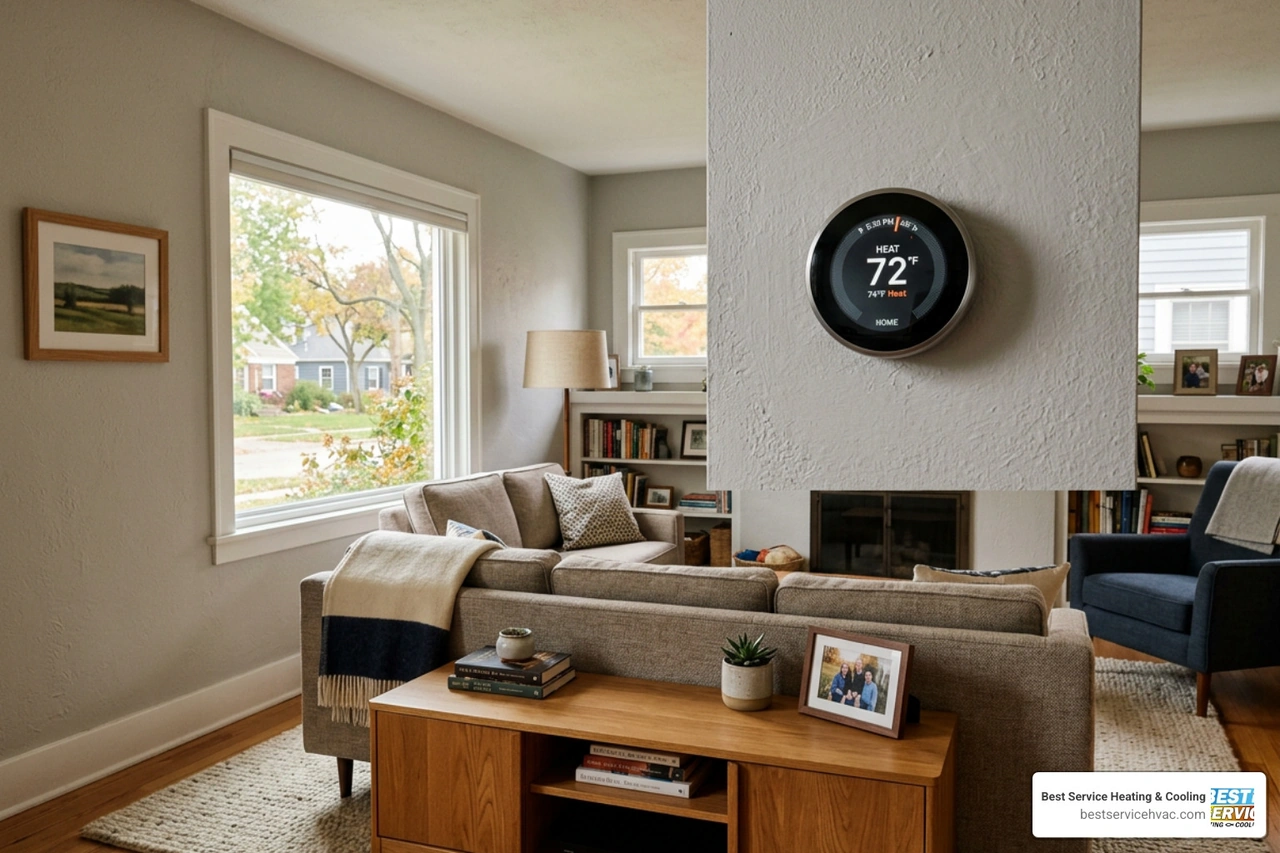
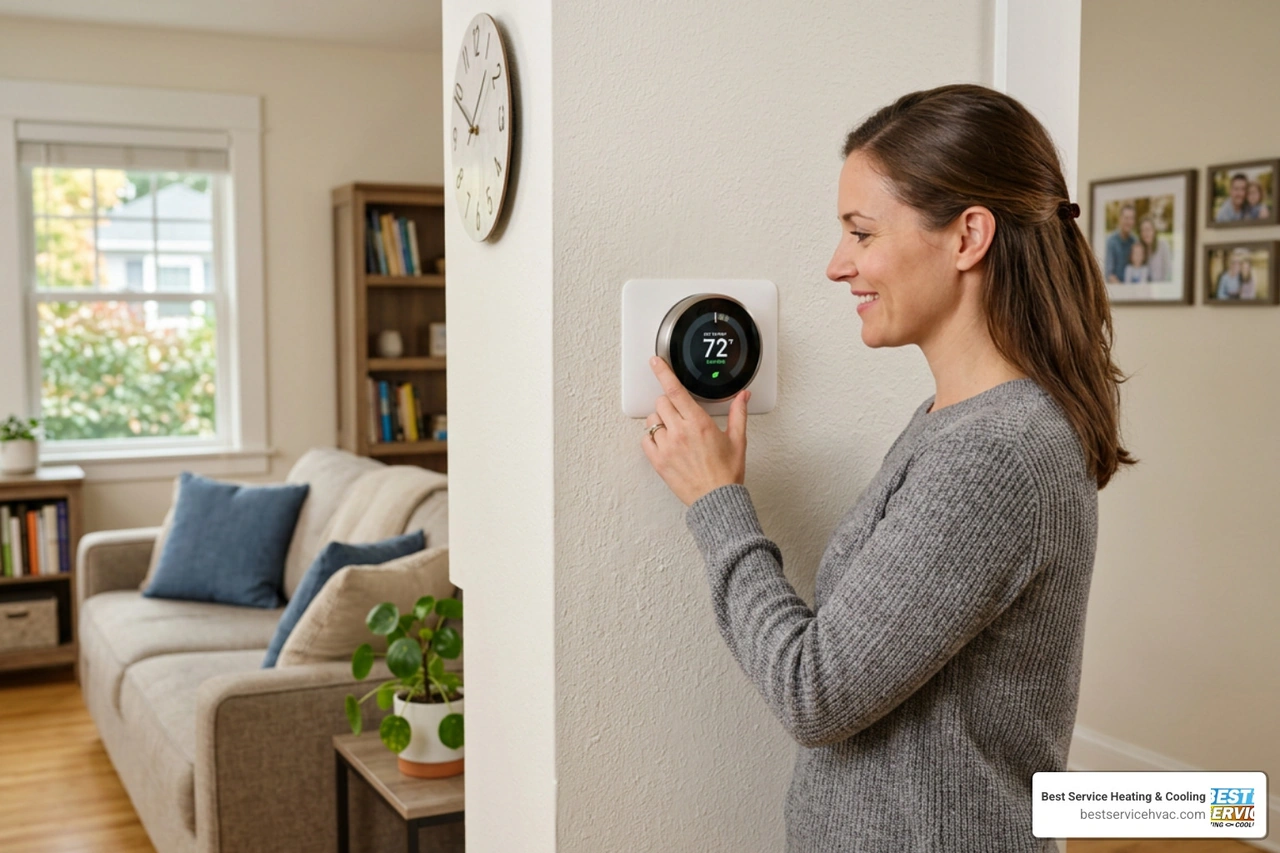
A high-efficiency system is only as smart as its controller. Smart thermostats can cut HVAC energy use by an additional 8% to 15% by using geofencing to lower the temperature when you leave the house and "learning" your schedule. More importantly, they allow the system to use its variable-speed capabilities to their full potential, providing detailed energy reports so you can see your savings in real-time.
Conclusion
Choosing between standard and high-efficiency equipment is a significant decision for any homeowner. Whether you are in Dublin, Hilliard, or Reynoldsburg, the goal is the same: a comfortable home and a predictable energy bill.
At Best Service Heating & Cooling, we’ve been helping our neighbors navigate these choices since 1992. As a family-owned business with an A+ BBB rating, we don't believe in "upselling"—we believe in finding the right fit for your specific home and budget. Whether you choose a rugged, standard-efficiency system or a state-of-the-art high-efficiency dual-fuel setup, our trained technicians ensure the installation is done right the first time.
Ready to see the math for your own home? Schedule your high-efficiency HVAC consultation in Columbus today and let us help you stay comfortable all year long.
.webp)
.webp)

Service Areas
