
How to prevent HVAC emergencies with maintenance and save your sanity

Why Learning How to Prevent HVAC Emergencies with Maintenance Could Save You a Major Headache
How to prevent HVAC emergencies with maintenance is one of the most important things you can do as a Central Ohio homeowner — especially when Columbus winters drop below freezing and summers push into the 90s. Your HVAC system quietly keeps your family comfortable all year, but most homeowners don't think about it until something goes wrong. And when it does go wrong, it almost always happens at the worst possible time.
Here's a quick summary of how to prevent HVAC emergencies:
- Change air filters every 30–90 days depending on pets, allergies, and usage
- Schedule professional tune-ups twice a year — spring before cooling season, fall before heating season
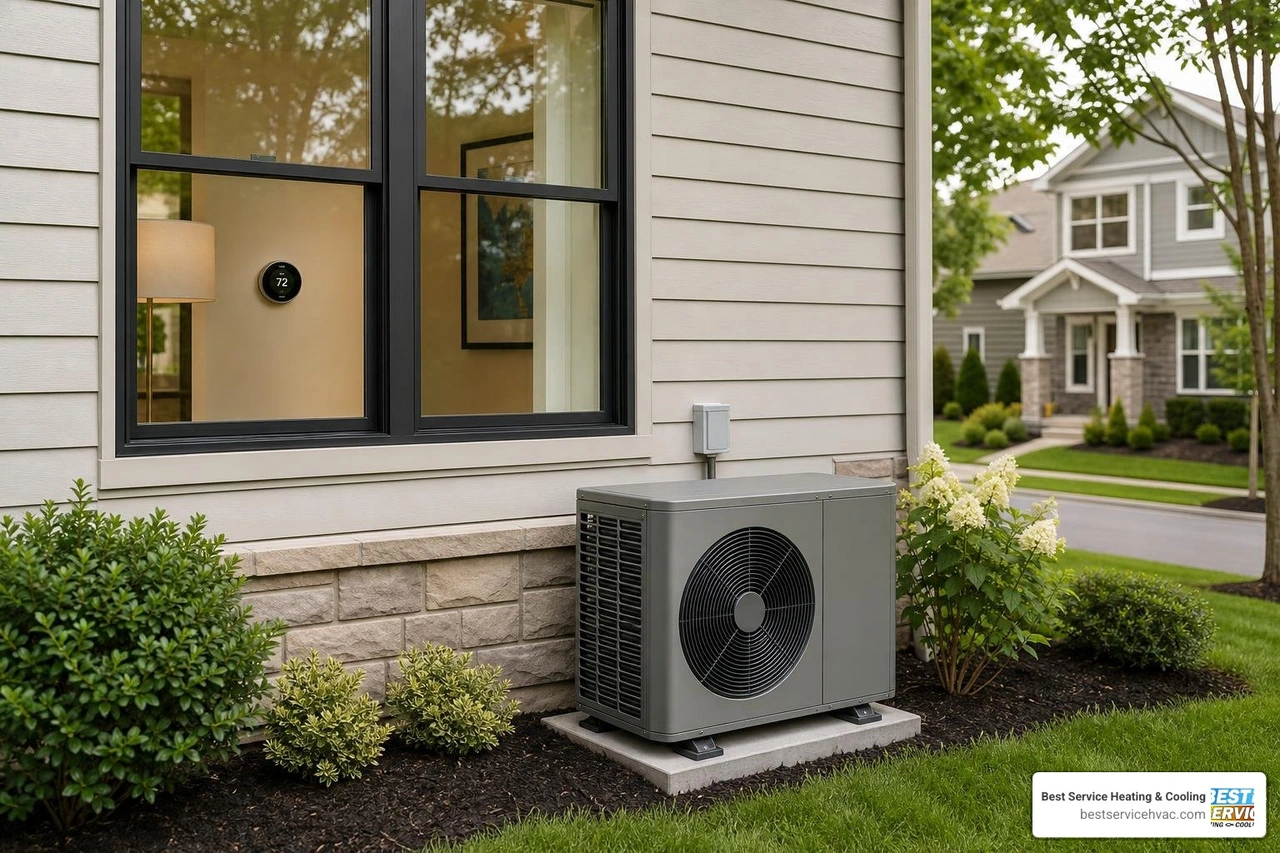
- Keep outdoor units clear of debris, leaves, and vegetation (at least 2 feet of clearance)
- Clean condensate drain lines every 3 months to prevent water damage and mold
- Watch for warning signs like strange noises, unusual odors, uneven temperatures, or rising energy bills
- Seal duct leaks to prevent losing up to 30% of your conditioned air
- Test carbon monoxide detectors monthly and check your furnace flame for a steady blue color
- Use a smart thermostat to monitor system performance and catch issues early
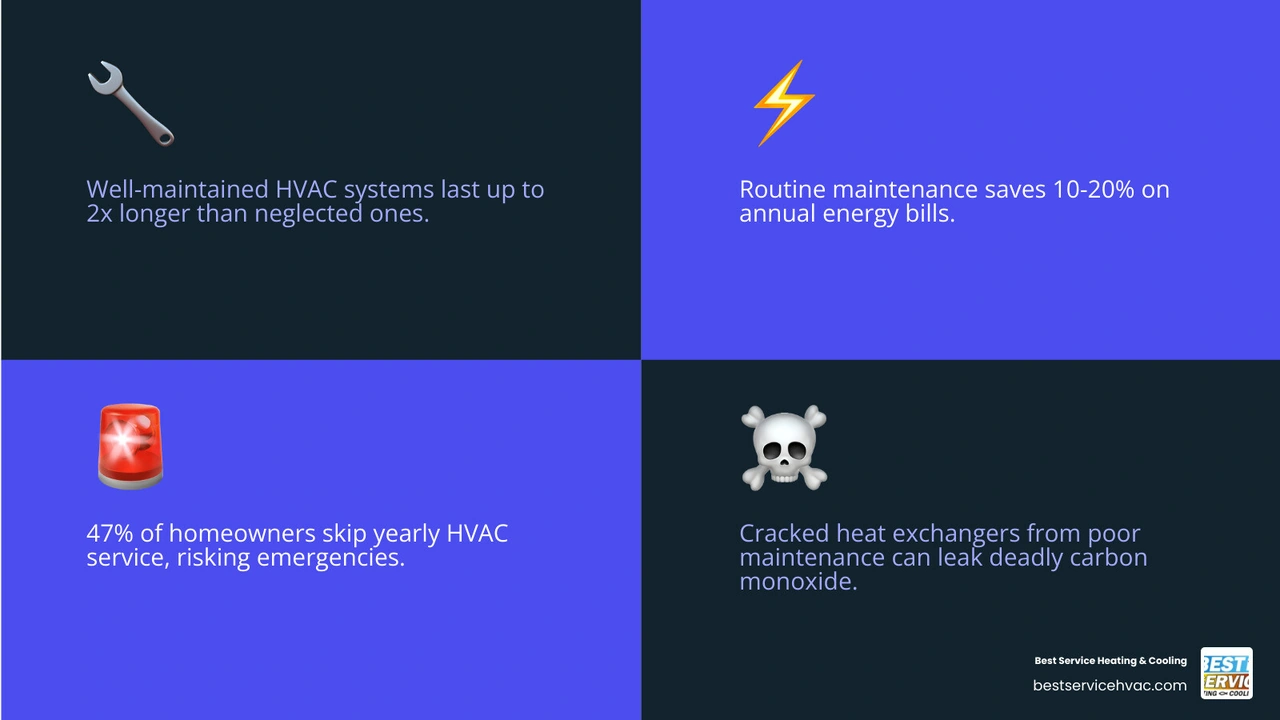
The numbers tell a clear story. Fewer than half of homeowners — just 47% — had their HVAC serviced in the last year. Yet a well-maintained system can save 10–20% on energy costs, and annual maintenance can actually double the remaining lifespan of your equipment. Skipping that routine care doesn't just risk a breakdown — it can void your warranty and leave you with a repair or replacement bill that's many times the cost of a simple tune-up.
In this guide, Best Service Heating & Cooling walks you through everything you need to know to keep your system running safely and reliably throughout every Central Ohio season.
Understanding what constitutes an HVAC emergency
Not every HVAC hiccup is a full-blown emergency, but knowing the difference can protect your family and your property. In our decades of serving the Columbus area, we define an HVAC emergency as any situation that poses a direct threat to your health, safety, or the structural integrity of your home.
One of the most serious threats is a carbon monoxide (CO) leak. Since CO is odorless and colorless, it is a "silent killer." If your furnace heat exchanger cracks due to age or lack of maintenance, it can leak this toxic gas into your living space. Similarly, a natural gas leak — often identified by a "rotten egg" smell — requires immediate evacuation and professional intervention.
Extreme temperatures also create emergencies. If your heating fails during a polar vortex in January, you risk frozen pipes that can burst and cause thousands of dollars in water damage. Conversely, a total AC failure during a July heatwave isn't just uncomfortable; it’s a health risk for infants, the elderly, and those with certain medical conditions. Electrical shorts or burning smells from your vents are also high-priority issues that could lead to a house fire. For a deeper look at handling these situations, check out our Columbus Emergency AC Guide.
How to prevent HVAC emergencies with maintenance and efficiency
The secret to a stress-free home isn't luck; it's proactive care. When we talk about how to prevent HVAC emergencies with maintenance, we are really talking about efficiency and longevity. A system that doesn't have to struggle to breathe or circulate air is far less likely to suffer a catastrophic component failure.
Statistics show that well-maintained HVAC systems can reduce energy consumption by 10-20%. When your system is clean and calibrated, it doesn't just run better; it runs less. This reduced runtime preserves the life of the blower motor, compressor, and heat exchanger. For more tips on keeping your utility bills low, read our guide on Energy Saving for Heating and Cooling System.

How to prevent HVAC emergencies with maintenance for cooling systems
Summer in Central Ohio can be brutal on an air conditioner. One of the most common "preventable" emergencies we see is a frozen evaporator coil. This usually happens because of restricted airflow (often a dirty filter) or a refrigerant leak. When the coil freezes, the system stops cooling entirely, and as the ice melts, it can overflow the drain pan and cause ceiling or floor damage.
Regular Air Conditioning Maintenance Westerville OH involves cleaning the outdoor condenser coils. If these coils are caked in dirt or cottonwood seeds, the unit can't release heat, causing the compressor to overheat and fail. A simple Air Conditioning Tune-Up Blacklick OH ensures your refrigerant levels are correct and your electrical components are tight, preventing a sudden breakdown during a 90-degree afternoon.
How to prevent HVAC emergencies with maintenance for heating units
Heating emergencies are often more dangerous than cooling ones. For gas furnaces, the heat exchanger is the most critical component. During a professional inspection, we look for hairline cracks or heavy corrosion that could allow combustion gases into your home. We also clean the burners and ignition assembly to ensure reliable "starts" every time the thermostat calls for heat.
Whether you need Furnace Maintenance Lewis Center OH or a specialized Boiler Maintenance Dublin OH Guide, the goal is the same: ensuring safe, efficient combustion. Neglected boilers can develop pressure issues or leaks, while neglected furnaces often suffer from "limit switch" trips caused by overheating, leaving you in the cold at 2:00 AM.
Essential DIY tasks for Central Ohio homeowners
While we handle the technical heavy lifting, there are several tasks you can do to keep your system happy between professional visits. Taking ownership of these small chores is the first step in mastering how to prevent HVAC emergencies with maintenance.
Start by ensuring your vents and registers aren't blocked by furniture, rugs, or curtains. Obstructed vents cause pressure to build up in the ductwork, which can damage the blower motor. Also, take a walk outside. Your outdoor unit needs to "breathe." If you have bushes, tall grass, or stored items within two feet of the unit, your AC will struggle to work. For a seasonal breakdown of what to do, see our guide on Spring AC and HVAC Maintenance for Central Ohio.
Routine filter and unit care
The humblest part of your HVAC system is also the most important: the air filter. A dirty filter reduces efficiency by as much as 15% and is the leading cause of system shutdowns. We recommend checking your filter every month. If you have pets that shed or family members with allergies, you might need to change it every 30 days.
When choosing a filter, look at the MERV (Minimum Efficiency Reporting Value) rating. A MERV 8 to 11 is usually the "sweet spot" for residential homes, providing great filtration without putting too much strain on the motor. If you find that your filters are getting exceptionally dirty very quickly, it might be time to look into Air Duct Cleaning in Dublin OH to remove the source of the dust.
Monitoring for warning signs
Your HVAC system will often try to tell you it's in trouble before it actually quits. Learning these signs is key to how to prevent HVAC emergencies with maintenance.
- Strange Noises: Banging, screeching, or whistling sounds usually indicate a loose belt, a failing motor bearing, or a refrigerant leak.
- Unusual Odors: A "dirty sock" smell can indicate mold in the coils, while a metallic burning smell often points to electrical overheating.
- Short Cycling: If your system turns on and off every few minutes, it’s likely overheating or has a faulty sensor.
- Uneven Temperatures: If the living room is a sauna but the bedroom is a walk-in freezer, you likely have ductwork issues or a failing blower.
If you notice any of these, don't wait for the system to fail completely. Check out the Top 7 Most Common Signs That You Need an AC Tune-Up to see if your system is waving a red flag.
The role of professional tune-ups and smart technology
There is a limit to what DIY can accomplish. Modern HVAC systems are complex machines with high-voltage electrical connections and pressurized chemical refrigerants. A professional Columbus HVAC Preventative Service visit includes tasks that require specialized tools, such as checking amp draws on motors, testing for minute gas leaks, and measuring refrigerant sub-cooling.
| Task | DIY | Professional |
|---|---|---|
| Change Air Filter | X | X |
| Clear Debris Around Unit | X | X |
| Clean Condensate Drain | X | X |
| Test Electrical Connections | X | |
| Measure Refrigerant Levels | X | |
| Inspect Heat Exchanger | X | |
| Calibrate Thermostat | X | X |
| Lubricate Moving Parts | X |
Seasonal professional scheduling
Timing is everything. You don't want to find out your AC is broken on the first 90-degree day of May. That's why we recommend scheduling your cooling tune-up in the early spring and your heating tune-up in the early fall.
Residents looking for an HVAC Tune-Up Bexley OH or an HVAC Tune-Up Westerville OH benefit from this "pre-season" approach because it allows us to catch worn parts before they snap under the stress of peak weather. It also means you won't be waiting in a long queue during the busiest weeks of the year.
Advanced system monitoring and specialized care
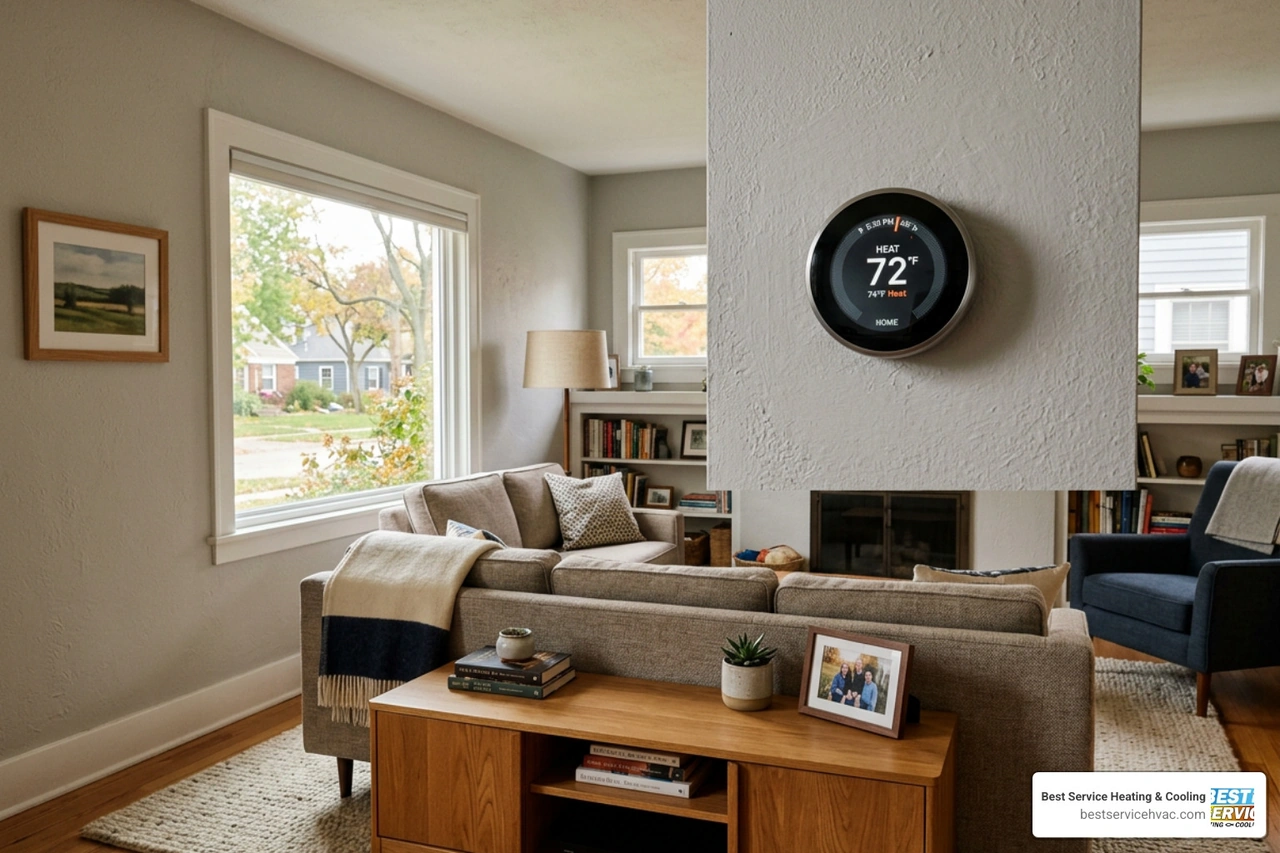
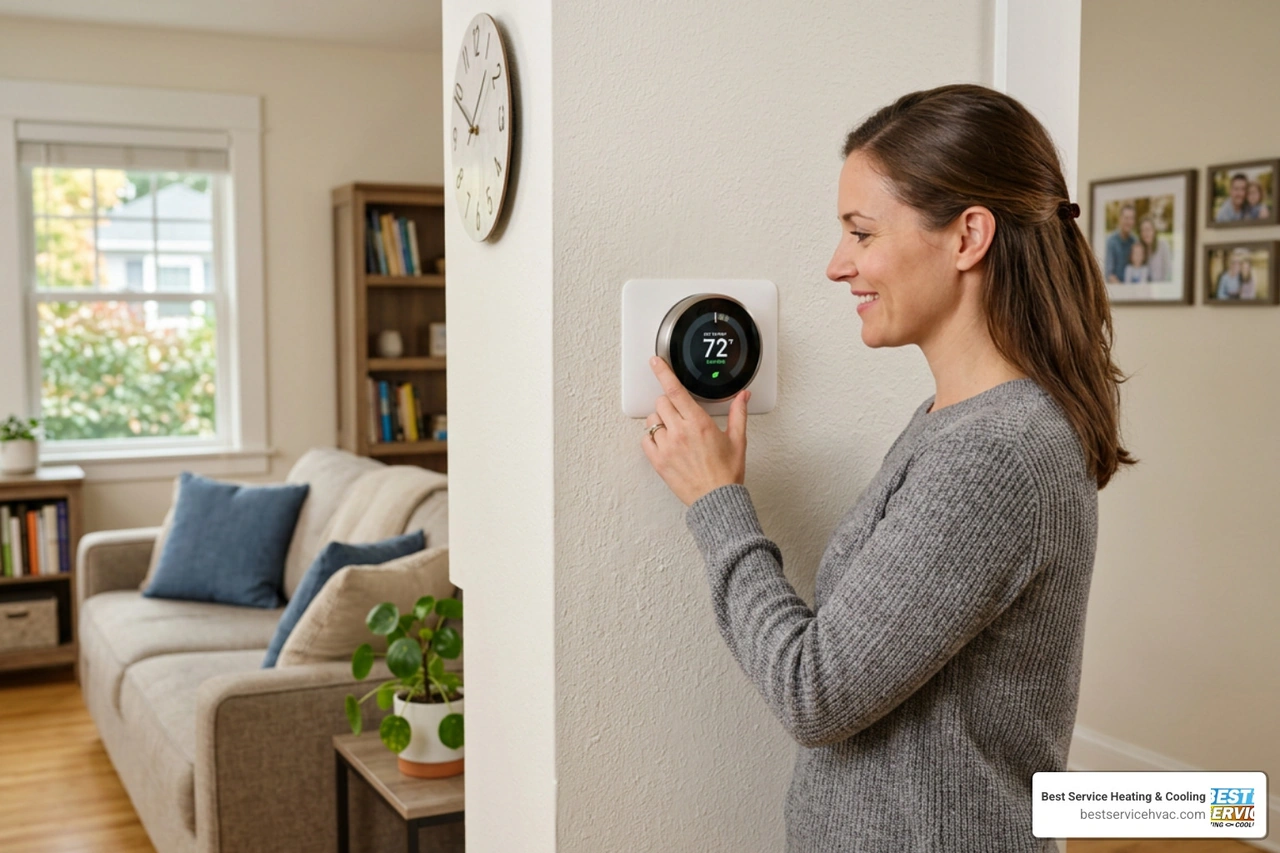
Technology has made how to prevent HVAC emergencies with maintenance easier than ever. Smart thermostats and IoT (Internet of Things) devices can now monitor your system's performance in real-time. Some systems can even send an alert to your phone (and to us!) if they detect a drop in efficiency or a part starting to fail.
This specialized care is especially important for modern high-efficiency systems. If you have a heat pump, you need Heat Pump Maintenance Clintonville OH to ensure the reversing valve and defrost cycle are working correctly for the winter. Similarly, Mini-Split Maintenance Columbus OH requires specific cleaning techniques for the small, sensitive indoor blowers to prevent "water leaks" and maintain quiet operation.
Frequently Asked Questions about HVAC maintenance
How often should I change my HVAC filters in Columbus?
In the Columbus area, we deal with high humidity in the summer and dry, dusty air in the winter. We recommend a monthly check. If the filter looks gray or has visible "fuzz," change it. Typically, a standard pleated filter lasts 90 days, but if you have pets or suffer from seasonal allergies, you should aim for every 30 to 45 days.
When should I call a professional for an inspection?
Ideally, you should call us twice a year. However, you should call immediately if you hear loud mechanical noises, notice a sudden spike in your utility bills without a change in weather, or if your system is struggling to reach the set temperature. Also, most manufacturers require at least one professional HVAC Maintenance German Village OH visit per year to keep your equipment warranty valid.
Can maintenance really double my system's lifespan?
Yes! Think of it like an oil change for your car. Without maintenance, an AC unit might only last 10 years before the compressor burns out from overwork. With regular Heating Maintenance Columbus OH and cooling care, that same unit can often last 15 to 20 years. Maintenance reduces the friction and heat that wear down internal components, keeping the system "young" for much longer.
Conclusion
At Best Service Heating & Cooling, we’ve been a family-owned staple of the Central Ohio community since 1992. With our A+ BBB rating and deep roots in Reynoldsburg, we understand exactly what Columbus homes need to survive our unpredictable weather.
Learning how to prevent HVAC emergencies with maintenance doesn't have to be a chore. By handling the simple DIY tasks and partnering with us for our comprehensive service agreement membership plans, you can enjoy total peace of mind. Our members get priority service and the assurance that their system is being watched over by the best in the business.
Don't wait for a breakdown to leave you in the dark. Schedule your HVAC Tune-Up Columbus OH today and let us help you save your sanity and your wallet!

.webp)
.webp)

Service Areas
