
IAQ Products in Hilltop, OH
IAQ solutions for Hilltop, OH: purifiers, humidifiers, and ventilation. Learn installation and maintenance to improve air quality.

IAQ Products in Hilltop, OH
Indoor air quality matters year round in Hilltop, OH. Whether you live in an older farmhouse or a newer subdivision, seasonal pollen, muggy summer humidity, cold-dry winters, wood smoke from nearby burning, and household VOC sources can combine to reduce comfort and aggravate allergies, asthma, and sinus issues.
Common IAQ issues in Hilltop, OH homes
- Seasonal pollen and outdoor allergens that enter through windows and doors in spring and fall.
- High summer humidity leading to mold growth and dust mite activity in basements and crawlspaces.
- Cold-season dryness that causes irritated airways, dry skin, and static.
- Smoke and particulate intrusion from neighborhood wood burning or distant wildfires on stagnant days.
- VOC exposure from household cleaning products, new furniture, and building materials.
Understanding which of these issues affects your home determines the right mix of IAQ products.
IAQ product types and how they improve home health
Below are the primary IAQ product categories and the benefits each delivers for Hilltop, OH homes.
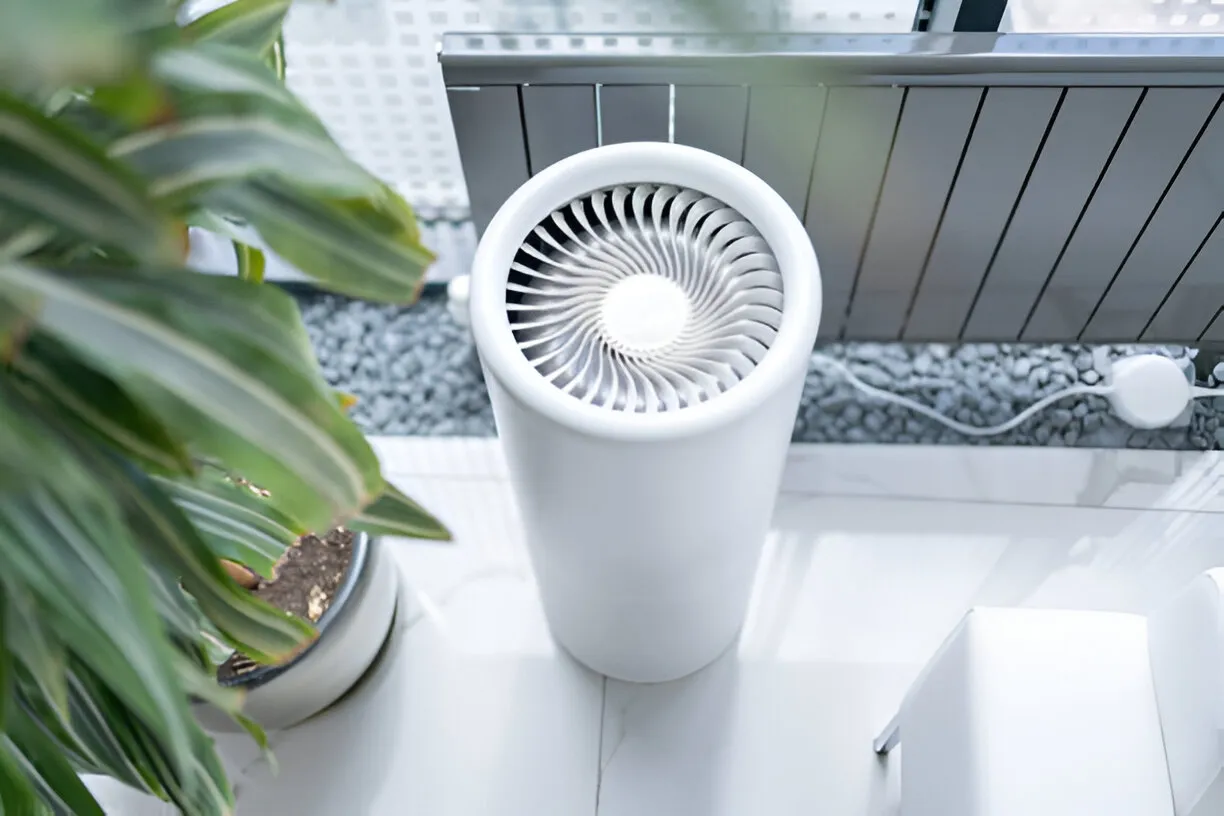
- Air purifiers (HEPA and multi-stage)
- Capture 99.97% of particles 0.3 micron and larger, reducing pollen, pet dander, and smoke particulates.
- Ideal for allergy and asthma sufferers or rooms where smoking or wood burning occurs.
- Portable units suit single rooms; whole-home purifiers integrate with HVAC for continuous filtration.
- Humidifiers (whole-home and portable)
- Add moisture during cold, dry Ohio winters to relieve dry throats and prevent wood floor cracking.
- Whole-home humidifiers attach to the HVAC system for even humidity control across multiple rooms.
- Include automatic controls and sensors to avoid over-humidification.
- Dehumidifiers (portable and whole-house)
- Control summer and basement humidity, slowing mold and dust mite growth.
- Whole-house systems paired with ventilation provide balanced moisture control for finished basements and crawlspaces.
- Filters (MERV-rated and HEPA-compatible)
- Higher MERV ratings trap smaller particles; MERV 8 to 13 is common for residential systems.
- Electrostatic and pleated filters improve airborne particle capture without excessive airflow restriction.
- UV and UV-C systems
- Installed in ductwork to reduce microbial growth on coils and in air streams.
- Complement filtration by addressing bacteria, mold spores, and viruses on surfaces inside the HVAC system.
- Sensors and smart monitors
- Measure PM2.5, humidity, CO2, and VOCs to identify issues and verify system performance.
- Smart sensors enable automated responses, like activating ventilation or purifiers when pollutant levels rise.
- Mechanical ventilation equipment (ERV/HRV and exhaust fans)
- Bring in controlled fresh air while recovering energy in cold months.
- Essential for tightly sealed homes to avoid stale air and elevated indoor pollutants.
How to choose the right IAQ solutions
Selecting products is about matching equipment to your home size, layout, and concerns.
- Assess the dominant problem: allergies, smoke, VOCs, mold, or dryness. Solutions vary by issue.
- Consider home size and layout: single-room portable purifiers work for bedrooms; whole-home products are better for open floor plans or multi-level houses.
- Evaluate your HVAC compatibility: whole-home purifiers, humidifiers, and UV systems typically require integration with your current heating and cooling system.
- Use sensors for data-driven decisions: baseline readings for PM2.5, humidity, and VOCs reveal whether filtration, dehumidification, or ventilation will deliver the biggest benefit.
- Prioritize energy-efficient choices: look for ENERGY STAR ratings on dehumidifiers and humidifiers and low static pressure filters for HVAC longevity.
- Balance upfront cost with lifecycle value: higher-quality filters and properly sized whole-home equipment often reduce long-term maintenance and energy waste.
Installation and ongoing maintenance
Proper installation and routine care are crucial for performance.
- Installation overview: A site assessment confirms equipment sizing, ductwork needs, and placement. Whole-home units are mounted in the HVAC plenum or duct; ERV/HRV units require exterior vents and balanced air pathways. Portable units require placement considerations for airflow and coverage.
- Typical maintenance tasks:
- Replace filters every 3 to 12 months depending on MERV rating and household conditions.
- Clean or replace UV bulbs annually.
- Descale and sanitize humidifiers seasonally and empty dehumidifier reservoirs regularly.
- Calibrate and check sensors twice a year.
- Service visits: Annual inspections of whole-home IAQ systems and HVAC interfaces maintain efficiency and prevent moisture or microbial issues.
Specifications and warranties to look for
- Filter efficiency: HEPA (99.97% at 0.3 microns), MERV ratings between 8 and 13 for most homes.
- Humidity control range: Reliable whole-home humidifiers should maintain 30 to 50 percent relative humidity without over-saturation.
- Dehumidification capacity: Measured in pints per day; choose capacity based on basement size and moisture load.
- UV system output: Measured in microwatts per square centimeter at target distance; higher output improves microbial reduction but follow manufacturer specs.
- Warranty expectations: Most residential IAQ equipment carries 1 to 5 year limited warranties, with extended options on major components like compressors or heat exchangers. Verify what routine maintenance voids warranties and whether professional installation is required for full coverage.
Case studies: real-world Hilltop, OH scenarios
- Case study 1: Suburban Bungalow with seasonal allergies
- Problem: High spring pollen infiltration causing daily congestion.
- Solution: MERV 13 whole-home filter plus bedroom HEPA purifier and door-sealing upgrades.
- Result: Noticeable reduction in allergy symptoms and fewer nighttime awakenings.
- Case study 2: Raised ranch with damp basement and mold risk
- Problem: Summer basement humidity above 60 percent and visible mold on stored items.
- Solution: Whole-house dehumidifier integrated to HVAC, targeted bathroom exhaust upgrades, and mold remediation guidance.
- Result: Consistent 45 percent humidity, reduced mold recurrence, and safer storage conditions.
- Case study 3: New-construction townhouse with VOC concerns
- Problem: Off-gassing from new cabinets and paint causing headaches and odors.
- Solution: Continuous ventilation with ERV, portable VOC sensors, and activated carbon filtration on air purifiers.
- Result: Drop in VOC readings and improved occupant comfort within weeks.
Long-term benefits and maintenance tips
Investing in the right IAQ products improves sleep, lowers allergy and asthma incidents, reduces mold risk, and can extend HVAC life by keeping coils and filters cleaner. For Hilltop, OH residents, seasonal attention is key: prepare humidification for winter, dehumidification and ventilation for summer, and keep filtration high during pollen season. Regular sensor checks and scheduled maintenance ensure systems operate efficiently and protect warranties.
Selecting and maintaining the right mix of air purifiers, humidifiers, dehumidifiers, filters, UV systems, sensors, and ventilation equipment will make Hilltop homes healthier and more comfortable year round.
Hot Deals & Cool Savings

.webp)
New Service Agreement Membership
.webp)
Any New Client Service
Next Service for Referring a New Client
New Service Agreement Membership
Any New Client Service
Next Service for Referring a New Client
.webp)
.webp)

Service Areas
