
IAQ Products in Minerva Park, OH
IAQ products for Minerva Park, OH homes with expert installation guidance and ongoing maintenance—Learn more and improve indoor air quality today.

IAQ Products in Minerva Park, OH
Indoor air quality matters year-round in Minerva Park, OH. Hot, humid summers and cold, dry winters create seasonal problems: pollen and mold in spring and summer, elevated indoor humidity in basements, and overly dry air in winter that aggravates respiratory conditions. Choosing the right indoor air quality (IAQ) products can reduce allergies, protect family members with asthma or compromised immune systems, prevent moisture damage, and improve comfort and energy efficiency. Below is a practical, expert guide to the IAQ products that best fit Minerva Park homes, how to choose them, and what to expect from installation and ongoing care.
Common IAQ problems in Minerva Park homes
- High indoor humidity in summer and basements leading to mold and dust mites
- Winter dryness causing irritated sinuses, static, and wood shrinkage
- Seasonal pollen and outdoor allergens tracked inside
- VOCs from new paint, flooring, or household products in tightly sealed homes
- Poor ventilation in older or tightly sealed homes, leading to stale air and elevated CO2
IAQ product types and benefits
Below are the primary IAQ products and what they address.
Whole-home air purifiers
- Benefit: Continuous filtration for the entire HVAC system improves air throughout the house rather than one room at a time.
- Best for: Larger homes, families with allergy or asthma sufferers, or anyone wanting low-maintenance, whole-home protection.
- Typical specs: MERV 13-16 or integrated electronic/polarized media; CADR not usually listed for whole-home systems since performance is tied to HVAC airflow.
- Considerations: Must be matched to HVAC capacity to avoid airflow restriction.
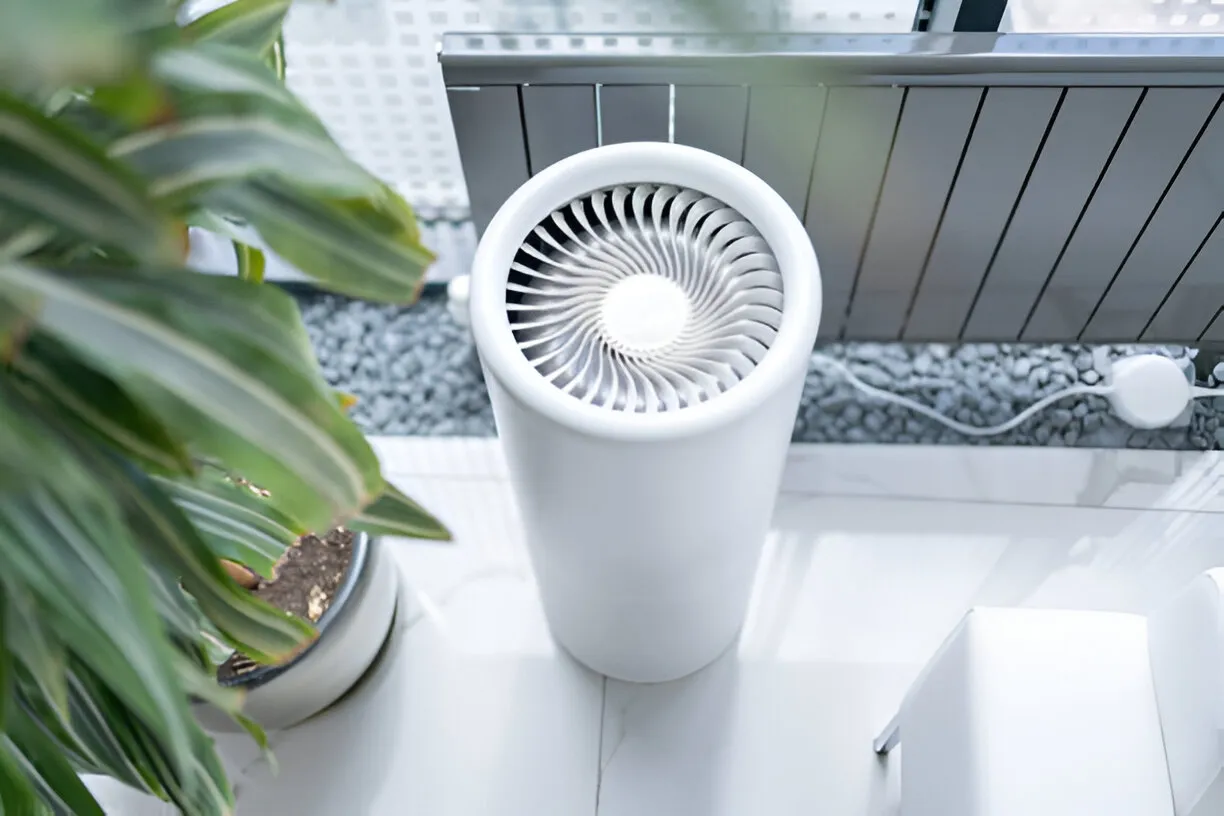
Stand-alone HEPA air purifiers
- Benefit: Captures 99.97% of particles down to 0.3 microns; useful for bedrooms and living areas.
- Best for: Targeted control in high-use rooms, supplemental cleaning for homes without whole-home purification.
- Typical specs: CADR ratings for smoke, pollen, dust; coverage in square feet; noise levels (dB).
Filters (HVAC filters)
- Benefit: Remove dust, pollen, and some particles from returned air to protect HVAC equipment and reduce airborne contaminants.
- Types: MERV 8 to MERV 16; higher MERV captures smaller particles but can restrict airflow if HVAC fan is not sized appropriately.
- Typical specs: MERV rating, pressure drop, recommended replacement interval.
Humidifiers
- Benefit: Increase indoor humidity during cold, dry Ohio winters to reduce respiratory irritation and protect woodwork.
- Types: Whole-home steam or bypass humidifiers; console units for single rooms.
- Typical specs: Gallons per day output, humidity control range, recommended coverage area.
Dehumidifiers
- Benefit: Lower indoor humidity in hot, humid months and damp basements to prevent mold and musty odors.
- Types: Whole-home dehumidifiers integrated with HVAC or portable units.
- Typical specs: Pints per day (capacity), coverage sq ft, drainage options (pump or gravity).
Ventilation components (HRV/ERV, exhaust fans)
- Benefit: Controlled fresh air exchange without losing heating or cooling energy. ERV recommended where humidity control is important.
- Best for: Tightly sealed Minerva Park homes or recent renovations that reduced natural ventilation.
- Typical specs: Airflow cfm, heat recovery efficiency, sensible/latent heat exchange values.
Monitoring devices (sensors)
- Benefit: Real-time awareness of PM2.5, VOCs, CO2, temperature, and relative humidity so you can respond before problems escalate.
- Typical specs: Sensor types (laser PM, electrochemical VOC), accuracy ranges, integration with smart home systems.
Choosing the right combination for your home
Match solutions to home size, layout, and health needs:
- Small homes or condos: One or two high-CADR HEPA purifiers plus a quality MERV 11-13 filter in the HVAC. Consider a wall-mounted humidity controller for winter.
- Medium to large homes with central HVAC: Whole-home purifier or high-MERV HVAC media filter combined with supply-side ventilator (ERV) and humidity control.
- Homes with basements or known moisture problems: Whole-home dehumidifier sized by basement square footage and humidity load; add basement-specific ventilation if necessary.
- Allergy, asthma, or immunocompromised households: Whole-home purification with HEPA-grade filtration or a mix of whole-home system and room HEPA units; continuous monitoring for PM2.5 and VOCs.
Sizing tips
- HEPA purifier coverage should match room square footage with CADR appropriate for room use.
- Whole-home components must be matched to HVAC airflow (CFM) and static pressure limits. Professional load and airflow checks ensure filter and purifier compatibility.
- Dehumidifier sizing based on pints/day considering basement area, current humidity levels, and whether the space is finished.
Installation and diagnostic process
- Initial assessment: Technician evaluates HVAC system, ductwork, home layout, existing ventilation, and indoor humidity/particle levels.
- System recommendation: Propose a solution set (e.g., whole-home purifier + ERV + basement dehumidifier) with product specifications tailored to your HVAC capacity and home size.
- Installation steps: Safely disconnect power, mount or integrate equipment to HVAC ductwork or on walls/floors, ensure proper condensate and drainage for humidifiers/dehumidifiers, and commission controls and sensors.
- Verification: Post-installation testing of airflow, filter fit, humidity levels, and sensor calibration to confirm system performance.
Maintenance and performance expectations
- Filters: Replace or clean according to manufacturer guidance; typical HVAC filters every 3-12 months depending on MERV and home conditions. Higher MERV often needs more frequent replacement.
- Humidifiers/dehumidifiers: Seasonal inspection for scale, cleaning of reservoirs, and verification of drainage. Dehumidifiers often need annual coil cleaning.
- Purifiers and sensors: HEPA modules may need replacement every 6-18 months; electronic purifiers require periodic cleaning. Sensors should be calibrated annually if used for critical health monitoring.
- Seasonal tips for Minerva Park: Use dehumidification through June to September; switch to humidification in heating season to maintain 35-45% relative humidity.
Product specifications and warranties
- Common specs to request: Coverage area (sq ft), CADR (for portable purifiers), MERV rating, airflow CFM, pints/day (dehumidifiers), humidity control range, sensor accuracy, noise levels.
- Warranties: Manufacturer warranties typically range from 1 to 5 years on parts with extended warranty options available from many reputable brands. Installation workmanship warranties can vary; confirm terms before purchase.
Frequently asked questions
Q: Do I need both a purifier and a humidifier/dehumidifier?
A: If your home has seasonal or persistent humidity extremes plus airborne particles or VOCs, combining filtration with humidity control gives comprehensive protection. The purifier handles particles while humidifiers/dehumidifiers manage moisture-related problems.
Q: What MERV rating should I choose for my HVAC filter?
A: For most homes aiming for allergy reduction, MERV 11 to MERV 13 is a good balance. Higher ratings capture smaller particles but require an HVAC system with sufficient blower capacity to avoid airflow restriction.
Q: How often should I change HEPA filters or MERV filters?
A: HEPA filters in room units often last 6 to 18 months depending on use. HVAC MERV filters can range from 3 months (MERV 13+ in dusty homes) to 12 months in cleaner environments. Follow manufacturer guidance and monitor pressure drop.
Q: Are ERV and HRV systems necessary in tightly sealed homes?
A: Yes. They provide controlled fresh air exchange while recovering heating or cooling energy. ERV is preferred in humid climates when moisture transfer control is important.
Q: Will a portable purifier remove VOCs from paint or new flooring?
A: Many purifiers filter particles but not all remove VOCs. Look for devices with activated carbon or specialized VOC adsorbent stages and consider extended ventilation after renovations.
Q: Can IAQ monitoring save money long-term?
A: Monitoring helps you run systems only when needed, optimizes filter change schedules, and identifies problems early, which can reduce energy waste and prevent costly moisture or health-related issues.
This guidance is designed to help Minerva Park homeowners select the right IAQ products and understand installation and upkeep. Properly sized and maintained IAQ equipment delivers measurable health and comfort benefits while protecting your home from moisture and pollutant damage.
Hot Deals & Cool Savings

.webp)
New Service Agreement Membership
.webp)
Any New Client Service
Next Service for Referring a New Client
New Service Agreement Membership
Any New Client Service
Next Service for Referring a New Client
.webp)
.webp)

Service Areas
