
Whole House Air Purifiers in Obetz, OH
Improve air quality in Obetz, OH with whole-house purifiers. Learn how filtration, carbon stages, and UV reduce allergens and odors.

Whole House Air Purifiers in Obetz, OH
Keeping indoor air clean in Obetz, OH is essential for healthy living year-round. With humid summers, cold winters, seasonal pollen from surrounding green spaces, and vehicle exhaust from nearby Columbus corridors, many homes face elevated levels of allergens, mold spores, smoke, and volatile organic compounds (VOCs). Whole house air purifiers integrated with your central HVAC provide continuous, whole-home protection — reducing airborne particles, odors, and microbial load across every room without relying on single-room devices.
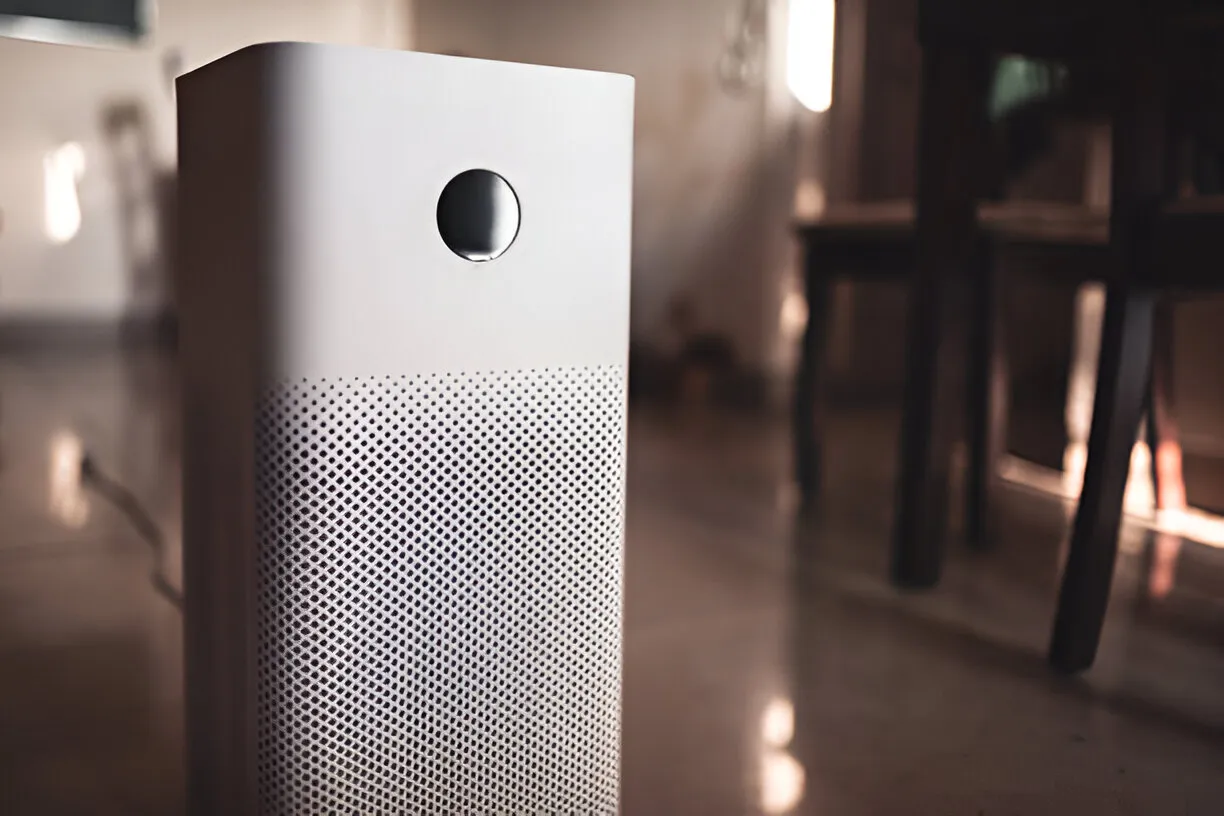
Common whole house air purification needs and problems in Obetz, OH
- Higher spring and summer pollen counts causing allergy flare-ups in homes with central air.
- Increased indoor humidity promoting mold and dust mite activity in basements and crawl spaces.
- Smoke intrusion during regional wildfire events or local wood-burning stove use.
- VOCs from paints, new flooring, and household products following renovations.
- Persistent odors and pet dander that single-room purifiers struggle to control.
Understanding these local patterns helps match technology to needs. Not all systems address every pollutant equally, so selecting the right combination matters.
Types of whole house air purifiers and how they work
- HEPA-grade filtration / High MERV filters: Capture 99.97% of particles at 0.3 microns (true HEPA) or provide high-efficiency particle removal via MERV-rated media (MERV 13-16). Best for allergens, dust, and smoke particulates. In-duct versions require proper housing to accommodate filter thickness.
- Activated carbon stages: Adsorb odors and VOCs from paints, cleaning products, and smoke. Carbon is essential for noticeable reductions in household smells and chemical odors.
- UV / UV-C germicidal systems: Installed in the HVAC air stream to inactivate bacteria, viruses, and mold spores on a molecular level. Most effective as part of a multi-stage strategy, particularly where microbial growth in the system is a concern.
- Electronic / ionizing systems: Use charged plates or ions to remove particles. They can be effective for ultrafine particles but some types produce ozone as a byproduct. Choose CARB-compliant or UL-certified units to avoid ozone-related risks.
Integration with central HVAC and sizing guidance
Whole-house purifiers either retrofit into the return plenum, replace the filter in the air handler, or mount inline in the ductwork. Sizing and placement depend on:
- HVAC airflow (CFM) and filter face velocity
- Home volume and desired air changes per hour (ACH)
- Targeted pollutant type (particles vs gases vs microbes)
A common guideline is to size filtration for the HVAC system’s rated CFM and to aim for 4-6 ACH for allergy and asthma benefits. Homes with severe smoke or VOC problems may need higher airflow treatment or dedicated carbon modules.
Installation process and commissioning
- Assessment: Inspect duct layout, air handler capacity, and indoor pollutant sources. Measure return and supply flows.
- System selection: Choose appropriate filtration stages (particle + carbon + UV if needed) and confirm mechanical compatibility.
- Installation: Mount in return plenum or duct section, secure electrical for UV modules, and ensure seals to avoid bypass leakage.
- Commissioning: Validate airflow, measure pressure drop across filters, verify UV lamp output, and run a particle count test to establish a baseline and post-install result.
Professional commissioning ensures performance without overloading the HVAC fan or creating excessive pressure drop that reduces system efficiency.
Maintenance: filters, UV lamps, and schedules
- HEPA / High-MERV filters: Replace or service according to manufacturer guidance. Typical MERV 13-16 media in central systems often needs inspection every 3 months and replacement 6-12 months depending on dust load.
- Activated carbon cartridges: Life depends on VOC load; in homes with renovations or heavy smoke exposure, replace every 3-6 months. Under normal conditions, 6-12 months is common.
- UV/UV-C lamps: Output declines over time; replace annually to maintain germicidal effectiveness.
- Electronic filters: Require periodic cleaning (monthly to quarterly) and occasional component replacement. Confirm ozone emissions or choose ozone-free technologies.
Keeping a maintenance log and scheduling inspections around seasonal changes (pre-summer and pre-winter) helps sustain performance in Obetz’s variable climate.
Performance testing and certifications
To evaluate effectiveness choose systems or installers that reference:
- MERV rating or HEPA class (H13/H14 for true HEPA-level performance)
- CADR-like particle removal metrics where available and particle count reductions (PM2.5) before and after installation
- UL/ETL listings and UV manufacturers’ performance data
- CARB compliance or UL 2998 for ozone-free electronic devices
- ASHRAE guidance on filtration and pressure drop
A measurable baseline (particle counts, VOC readings) and documented post-installation testing are the best way to demonstrate real-world improvements.
Energy considerations
Higher-efficiency filters increase system pressure drop and can raise fan energy use if the blower runs at a fixed speed. Mitigation strategies:
- Use variable-speed ECM blowers to maintain airflow efficiently with high-MERV media.
- Balance filtration efficiency and pressure drop; consider staged filtration so heavy carbon or HEPA only runs during peak events.
- Regular maintenance keeps pressure drop low and systems operating near design efficiency.
Energy-aware design preserves indoor air quality without unnecessarily increasing utility consumption.
Expected results and typical before/after outcomes
While results vary by system and home, realistic outcomes include:
- Significant reductions in airborne allergens and PM2.5 (commonly 60-99% particle count reductions depending on filtration stages and ACH)
- Noticeable odor and VOC reduction when activated carbon is included
- Reduced microbial activity in ducts and cooler surfaces with UV-C staging
- Fewer allergy symptoms and better overall indoor comfort for occupants
These outcomes are most consistent when systems are properly sized, installed, and maintained.
Final notes on choosing a solution in Obetz, OH
Whole-house air purification in Obetz addresses specific regional challenges like seasonal pollen, indoor humidity-driven mold growth, and occasional smoke intrusion. The best approach combines a high-efficiency particle stage, targeted carbon for gases/odors, and optional UV for microbial control. Prioritize systems with measurable performance data, appropriate certifications, and a clear maintenance plan to protect indoor air quality year-round.
Hot Deals & Cool Savings

.webp)
New Service Agreement Membership
.webp)
Any New Client Service
Next Service for Referring a New Client
New Service Agreement Membership
Any New Client Service
Next Service for Referring a New Client
.webp)
.webp)

Service Areas
