
Ultimate Checklist for Best Air Filter for Your Home

Why Finding the Best Air Filter for Your Home Matters More Than You Think
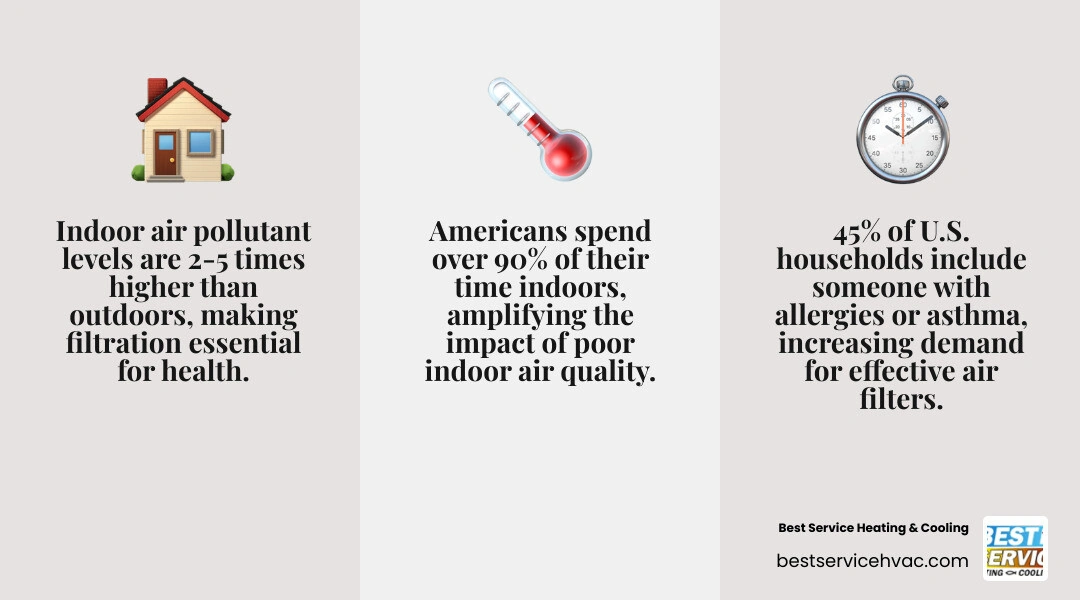
Most Central Ohio homeowners don't give their air filter much thought — until allergies flare up, dust covers every surface, or the HVAC system starts struggling. But the air inside your home may actually be more polluted than the air outside. According to the EPA, indoor air pollutant concentrations can run two to five times higher than typical outdoor levels. Since Americans spend over 90% of their time indoors, that's a problem worth taking seriously.
Here's a quick look at the top air filter options for most homes:
| Filter Type | Best For | MERV Rating | Replacement Frequency |
|---|---|---|---|
| 1-inch pleated (MERV 13) | Most homeowners | MERV 13 | Every 90 days |
| 4–5 inch media filter | Better filtration, less maintenance | MERV 11–16 | Every 6–12 months |
| Whole-home electronic system | Maximum whole-house coverage | Equivalent to MERV 16+ | Annual cleaning |
| Standalone room air purifier | Single rooms, renters | N/A (HEPA-based) | Filter-dependent |
About 45% of U.S. households include someone with allergies or asthma — and in a tightly sealed Central Ohio home during winter, airborne particles have nowhere to go unless your filtration system is doing its job. Whether you're dealing with pet dander, pollen, dust mites, or smoke, the right filter makes a measurable difference in how your family breathes every day.
This guide breaks down everything you need to know — from rating systems like MERV, MPR, and FPR, to filter thickness, replacement schedules, and whole-home air cleaning options — so you can make a confident, informed choice.
Understanding the Best Air Filter for Your Home: Standard Filters vs. Whole-Home Air Cleaners
When you start searching for the best air filter for your home, you will quickly notice that the market is divided into two primary categories: standard HVAC filters that slot directly into your furnace or air handler, and standalone or whole-home air purification systems.
Standard HVAC filters are primarily designed to protect your heating and cooling equipment from dust buildup, though high-efficiency pleated versions do an excellent job of cleaning the air you breathe. They work through filtration mechanics like interception and diffusion, trapping particles as air circulates through the return vents.
Whole-home air cleaners, on the other hand, are heavy-duty systems integrated directly into your ductwork. Instead of just catching the debris that happens to pass through a basic 1-inch screen, these advanced media or electronic systems actively treat your home’s entire volume of air.
Why Whole-Home Systems Outperform Standalone Room Purifiers
Portable room air purifiers have become incredibly popular, but they have major limitations. A standalone unit only cleans the air in its immediate vicinity. If you place a portable purifier in your living room, the bedrooms, kitchen, and hallways remain untreated. Furthermore, running multiple portable units throughout your house can be noisy and energy-inefficient.
Whole-home systems outperform portable units because they utilize your existing HVAC ductwork to provide comprehensive, house-wide coverage. Every time your system's fan runs, air is drawn through return air grilles, passed through a highly efficient filter, and redistributed evenly.
In terms of performance, the comparison is stark. While a premium portable air purifier might have a clean air delivery rate (CADR) of around 300 to 450 cubic feet per minute (CFM), a whole-home electronic system like the Trane CleanEffects boasts an astounding 1,200 CADR. This whole-home system is up to eight times more effective than the best HEPA room filters and up to 100 times more effective than a standard 1-inch throwaway filter, removing up to 99.98% of airborne particles down to 0.1 micron.
Decoding Filter Ratings: MERV, MPR, and FPR Explained
Shopping for air filters can feel like alphabet soup. Manufacturers use different rating scales, which makes side-by-side comparisons tricky. Here is a simple breakdown of how these industry rating systems compare:
| MERV Rating (ASHRAE Standard) | MPR Rating (3M / Filtrete) | FPR Rating (The Home Depot) | Best Used For | Typical Particles Captured |
|---|---|---|---|---|
| MERV 1–4 | N/A | N/A | Basic system protection | Lint, large dust, carpet fibers |
| MERV 5–8 | 300–600 | 4–5 (Good) | Standard residential use | Pollen, dust mites, mold spores |
| MERV 11–12 | 1000–1600 | 6–9 (Better/Best) | Homes with mild allergies or pets | Pet dander, car emissions, fine dust |
| MERV 13–14 | 1900–2500 | 10 (Premium) | Superior residential air quality | Bacteria, smoke, virus carrier particles |
| MERV 15–16 | 2800+ | N/A | Hospital-grade home filtration | Ultrafine particles, sneezes, tobacco smoke |
- MERV (Minimum Efficiency Reporting Value): This is the universal industry standard developed by ASHRAE. It measures a filter's ability to capture particles between 0.3 and 10 microns. The higher the number, the more efficient the filter.
- MPR (Microparticle Performance Rating): Developed by 3M, this scale rates a filter's ability to capture tiny microparticles between 0.3 and 1.0 micron (such as bacteria and viruses).
- FPR (Filter Performance Rating): This is a proprietary 1-to-10 rating scale used by The Home Depot for brands like Honeywell. It factors in both particle capture efficiency and weight gain over the filter's operational life.
Why MERV 13 is the Best Air Filter for Your Home to Control Dust
If your primary goal is dust control and allergen reduction, a MERV 13 filter is widely considered the sweet spot for residential HVAC systems.
Dust is a relentless opponent. Humans shed roughly 500 million skin cells daily, which combines with pet dander, fabric fibers, and outdoor dirt to form that grey layer on your furniture. Standard low-MERV filters (ratings 1 to 4) only capture large lint and dust fibers, letting fine dust recirculate indefinitely.
A MERV 13 filter captures up to 98% of airborne particles as small as 0.3 microns. This includes dust mites, mold spores, pollen, bacteria, and pet dander (sometimes affectionately called "pet glitter"). Premium 1-inch options, like the Filtrete MPR 1900 (which carries a MERV 13 rating), use electrostatically charged fibers to pull these microscopic particles out of the air while maintaining better airflow than almost any other residential 1-inch retail MERV 13 filter on the market.
High-Efficiency Options and System Compatibility
While a higher MERV rating means cleaner air, you cannot simply buy the highest-rated filter available without checking your system's compatibility.
High-MERV filters have dense pleats to trap tiny pollutants. This density creates airflow resistance, also known as static pressure. If your furnace or air handler is not designed to push air through such a dense barrier, your system will experience severe strain. This can lead to frozen AC coils, overheated furnace heat exchangers, increased energy bills, and premature equipment failure.
Before upgrading to a high-efficiency filter, it is crucial to consult with an HVAC professional. We can measure your system's static pressure to ensure your equipment can handle a higher-rated filter without sacrificing longevity or efficiency.
Selecting the Right Size, Thickness, and Replacement Schedule
To get the most out of your home's filtration, you must use the correct filter size and thickness. Using a filter that is even slightly too small allows unfiltered air to bypass the media entirely, coating your HVAC coils in dust and letting pollutants cycle back into your living spaces.
Standard residential filters are 1 inch thick, but many modern systems are designed to accommodate media filters that are 4 to 5 inches thick. If you want to keep your system running perfectly year-round, pairing the right filter with a professional maintenance plan is the best approach. More info about HVAC maintenance plans can help you understand how regular service keeps your heating and cooling equipment in peak condition.
How Thickness Affects Performance and Lifespan
Thicker filters are vastly superior to standard 1-inch filters in two key areas: performance and lifespan.
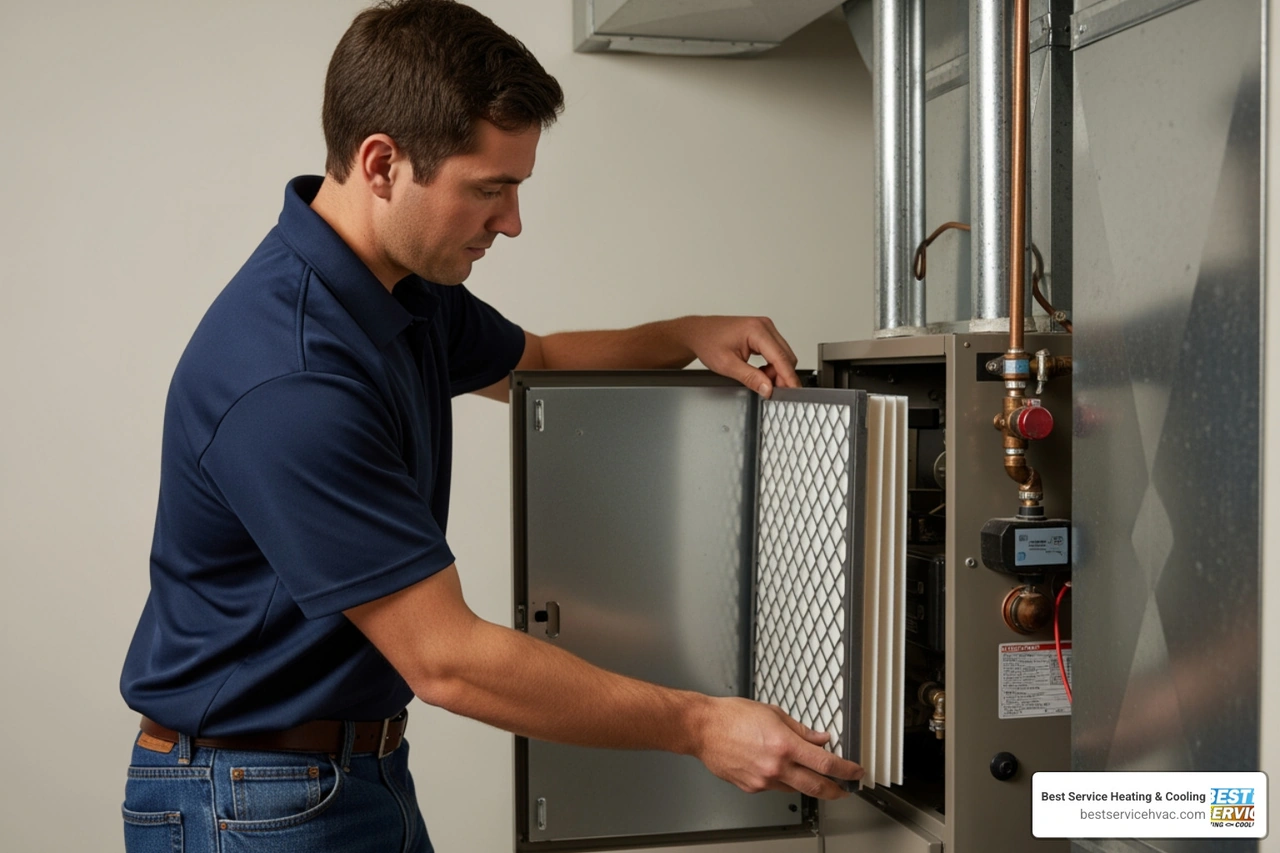
Because a 4-inch or 5-inch media filter is deeply pleated, it has a massive surface area. This extra material allows it to hold a much larger volume of dust and debris without restricting airflow. While a standard 1-inch pleated filter must be replaced every 90 days (or even every 30 days in homes with multiple pets), a 4-inch media filter can easily last six to twelve months before needing a replacement.
If your current ductwork is only set up for a 1-inch filter, an HVAC professional can often perform a simple cabinet retrofit. This allows your system to accept thicker media filters, instantly upgrading your home's air quality while reducing your maintenance chores.
Advanced Whole-Home Air Cleaning Systems for Central Ohio Homes
For homeowners seeking the ultimate level of indoor air quality, standard replacement filters may not be enough. This is especially true during seasonal allergen spikes or outdoor air pollution events, such as when wildfire smoke drifts across the region.
Advanced whole-home air cleaning systems offer multi-stage defense:
- Whole-Home Media Air Cleaners: Large, deep-cabinet filters (like the Aprilaire 1210 or 2210) that trap up to 98% of pollen, mold, and dust.
- Electronic Air Cleaners: Systems like the Trane CleanEffects that use an intense electrical field to charge incoming particles, pulling them onto grounded collection plates like a magnet.
- UV Germicidal Lights: Installed inside your ductwork to destroy the DNA of airborne viruses, bacteria, and mold spores as they pass through your system.
These systems are professionally installed directly into your HVAC ductwork, ensuring that every cubic foot of air distributed by your furnace or air conditioner is thoroughly purified.
Choosing the Best Air Filter for Your Home Based on Health Needs
Your family's health is the most important factor when choosing a filtration setup.
- For Asthma and Allergy Sufferers: A MERV 13 pleated filter or a whole-home media air cleaner is highly recommended. These systems capture the microscopic triggers—like dust mite feces and pollen—that set off respiratory distress.
- For Homes with Pets: Choose a filter with a high dust-holding capacity (such as a 4-inch media filter) and an electrostatically charged design to pull pet dander out of suspension.
- For Virus and Bacteria Mitigation: Look for premium options like the Filtrete MPR 2500 (MERV 14), which boasts up to a 90% capture rate for virus-sized particles, or opt for a whole-home electronic air cleaner. Standalone medical-grade units like the IQAir HealthPro Plus XE (utilizing HyperHEPA technology to capture 99.5% of particles down to 0.003 microns) are also excellent for targeted protection in specific rooms.
Frequently Asked Questions About Home Air Filtration
How often should I replace my home's air filter?
The standard rule of thumb for a 1-inch pleated filter is every 90 days. However, this frequency depends heavily on your household. If you have multiple pets, suffer from severe allergies, or have a large family, you may need to change your filter every 30 to 60 days. Thicker 4-inch to 5-inch media filters only need to be replaced every 6 to 12 months. We recommend performing a quick visual inspection monthly; if the filter looks dark grey and clogged with dust, it is time for a fresh one.
Can a high-quality HVAC filter protect my family during wildfire smoke events?
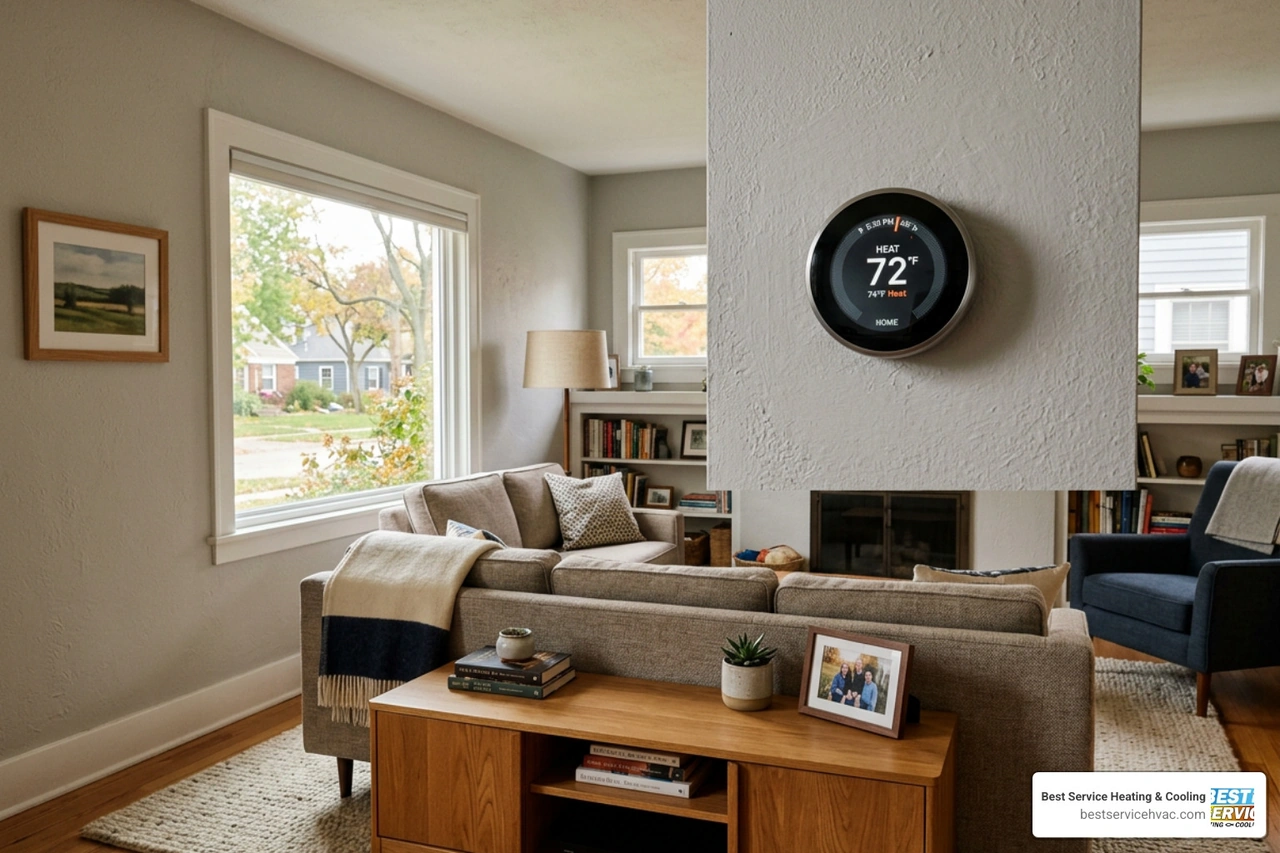
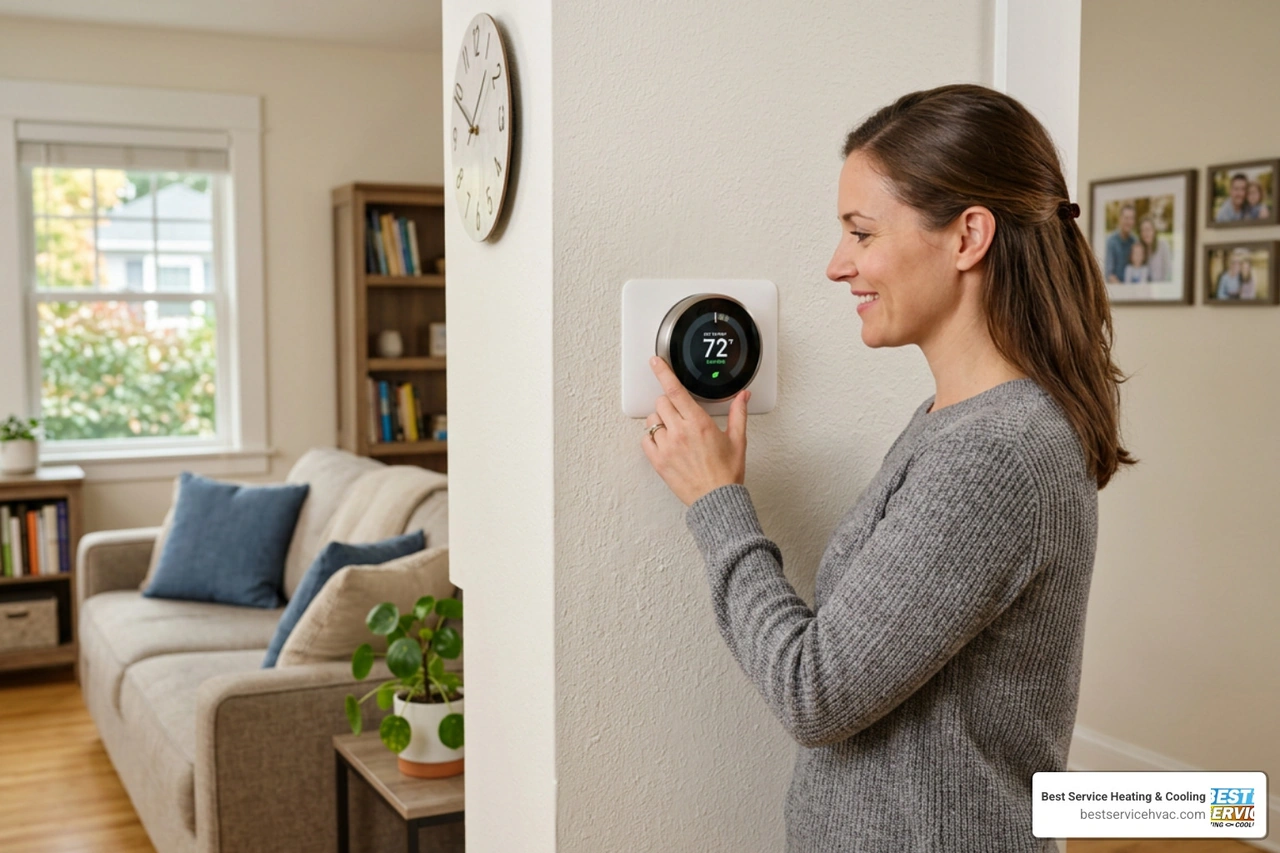
Yes, but you must use a filter rated MERV 13 or higher to trap the extremely fine particulate matter (PM2.5) found in wildfire smoke. During outdoor pollution events, make sure to set your thermostat's fan setting to "On" rather than "Auto." This keeps your HVAC blower running continuously, forcing your indoor air through the high-efficiency filter to scrub out the smoke particles.
Are smart air filters worth the investment?
Smart air filters use built-in sensors or Bluetooth pressure monitors to track actual airflow restriction and pressure drops, sending an alert to your smartphone when it is truly time for a replacement. While they are more expensive than standard filters, they can prevent you from replacing a clean filter too early or running a clogged filter too long. Alternatively, setting a recurring calendar reminder on your phone is a highly cost-effective way to stay on top of your filter changes.
Conclusion
Finding the best air filter for your home is one of the simplest, most effective ways to protect your family's health and keep your heating and cooling equipment running efficiently. Whether you decide to stick with a high-quality 1-inch pleated MERV 13 filter or upgrade to a high-capacity 4-inch media cabinet, regular attention to your indoor air quality pays off in cleaner surfaces, lower energy bills, and easier breathing.
At Best Service Heating & Cooling, we have been helping Columbus, Ohio homeowners stay comfortable and healthy since 1992. As a family-owned business with an A+ BBB rating, we pride ourselves on delivering honest, top-rated HVAC solutions across Central Ohio—including Reynoldsburg, Westerville, Dublin, Gahanna, and Grove City.
Ready to upgrade your indoor air quality or schedule your next system tune-up? Schedule your seasonal maintenance plan with our team today, and let us help you find the perfect filtration solution for your home.
.webp)
.webp)

Service Areas
