
How to Save Energy with These Thermostat Settings

How Much Can the Right Thermostat Settings Actually Save You?
The best thermostat settings for energy savings come down to a few simple numbers — and knowing when to use them. If you want the quick answer, here it is:
Recommended Thermostat Settings at a Glance
| Season | When Home & Awake | When Sleeping | When Away |
|---|---|---|---|
| Summer | 78°F | 80°F+ | 85°F+ |
| Winter | 68°F | 62–65°F | 60–62°F |
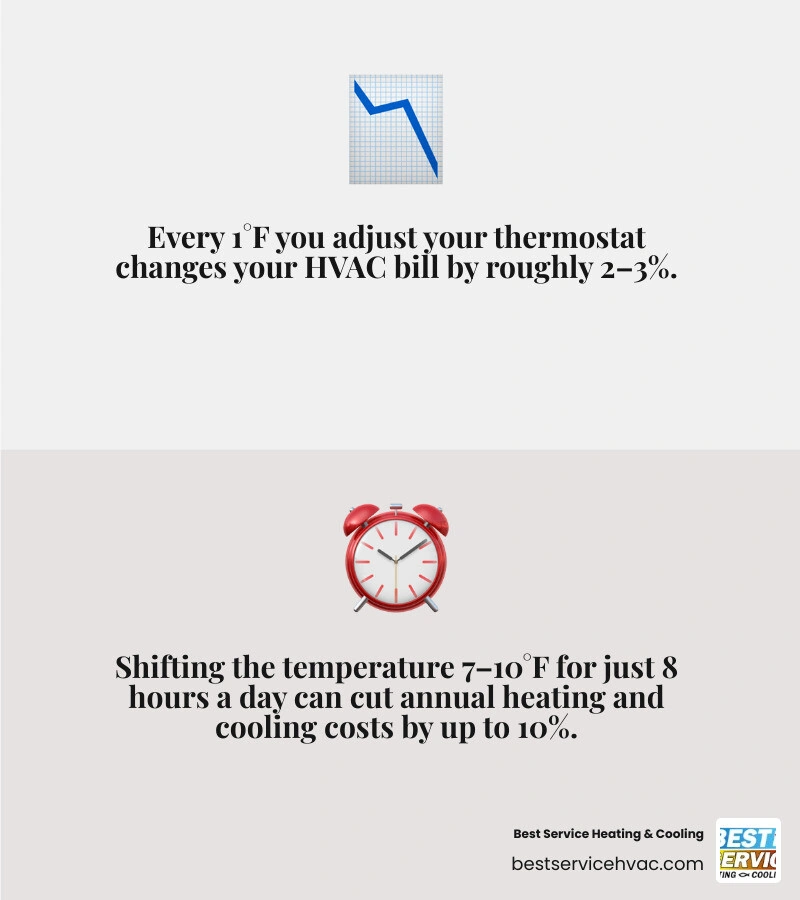
- Every degree you adjust your thermostat moves your HVAC bill by roughly 2–3%
- Shifting the temperature 7–10°F for just 8 hours a day can cut annual heating and cooling costs by up to 10%
- Heating and cooling account for over half of the average home's total energy use
Those numbers matter — especially in Central Ohio, where summers get humid and winters get brutal. Small changes to how you set your thermostat can add up to real savings on your energy bill every single month.
Most homeowners are leaving money on the table without even realizing it. Not because their HVAC system is broken, but because their thermostat habits are working against them. Keeping your home at one steady temperature year-round, for example, is one of the most common — and costly — mistakes people make.
The good news? You don't need to sacrifice comfort to save energy. You just need the right settings, the right schedule, and a few simple habits to back them up.
Seasonal Guidelines: Best Thermostat Settings for Energy Savings
To understand why adjusting your thermostat works so well, we have to look at a basic rule of physics: heat naturally moves from warm spaces to cooler ones.
In the dead of winter, the heat inside your home is constantly trying to escape to the freezing outdoors. In the middle of a sweltering July in Columbus, the heavy, hot outdoor air is trying to force its way into your cool living room. The larger the difference between the indoor and outdoor temperatures, the faster this heat transfer happens, and the harder your HVAC system has to work to keep up.
By setting your thermostat closer to the outdoor temperature when you are asleep or away, you slow down this heat transfer. Your system takes a much-needed break, and your utility bill drops. If you are comparing systems to see how efficiency plays a role in this process, check out our Standard vs High Efficiency HVAC Comparison to see how modern system upgrades handle these thermal loads.
Summer Cooling: Best Thermostat Settings for Energy Savings in Warm Weather
When the summer sun is beating down on your roof, the golden rule of energy savings is to keep your thermostat at 78°F when you are home and awake.
We know what you might be thinking: "78 degrees? That sounds like a sauna!" But before you dismiss it, consider that you can easily bridge the comfort gap with a few smart strategies:
- Unleash the Power of Ceiling Fans: Running a ceiling fan creates a wind-chill effect on your skin. It doesn't actually cool the room, but it makes the air feel about 4°F cooler than it actually is. That means a 78°F room suddenly feels like a highly comfortable 74°F. Just remember the golden rule of fans: fans cool people, not rooms. Turn them off when you leave the room to save electricity.
- Manage Your Indoor Humidity: High humidity makes hot air feel sticky and much warmer than it is. Keeping your home's humidity balanced allows your body's natural cooling mechanism (sweat evaporation) to work efficiently.
- Block the Solar Heat Gain: Close your south- and west-facing blinds and curtains during the peak hours of 11:00 AM to 3:00 PM. This simple step blocks the sun from acting like a giant radiator inside your living room.
- Avoid Heat-Generating Activities: Skip using the oven, stove, or clothes dryer during the hottest parts of the day. Opt for outdoor grilling or use the microwave instead.
- Keep Your System Sized Correctly: If your air conditioner is too small or too large, it will struggle to maintain comfort even at a sensible 78°F. Learn more about how this dynamic works in our guide on How Proper HVAC Sizing Affects Comfort and Efficiency.
When you leave for work or head out for a day at the park, don't leave the AC blasting. Raise the thermostat to 85°F or higher (or turn it up by 7 to 10 degrees). This prevents your system from cooling an empty house all day, saving you a massive chunk of change on your monthly electric bill.
Winter Heating: Best Thermostat Settings for Energy Savings in Cold Weather
When Central Ohio freezes over and the snow starts piling up, your target daytime temperature should be 68°F when you are home and awake.
For many families, 68°F is the absolute sweet spot for staying alert, cozy, and energy-conscious. When you head to bed or leave the house for the day, you can unlock the deepest savings by lowering the temperature to 60°F to 65°F.
Here is how you can stay warm and comfortable without constantly bumping the thermostat back up to 72°F:
- Dress for the Season: It sounds simple, but throwing on a comfortable sweater, warm socks, or a pair of sweatpants is the easiest way to feel comfortable at 68°F.
- Harness Natural Solar Heating: During sunny winter days, open your curtains and blinds on the south-facing windows to let the sun naturally warm your home. As soon as the sun goes down, close them tightly to add an extra layer of insulation against the cold glass.
- Eliminate Drafts: Use door sweeps and weatherstripping to seal up drafty windows and doors. Cold air leaking into your home forces your furnace to cycle constantly.
- Reverse Your Ceiling Fans: Switch your ceiling fans to run in a clockwise direction on low speed. This gently pushes the warm air that naturally rises to the ceiling back down into your living space.
- Explore Local Energy Incentives: If you are looking to upgrade your heating system to a highly efficient model that makes saving energy even easier, check out the available Ohio Energy Rebates for HVAC Upgrades.
Thermostat Types and Advanced Features
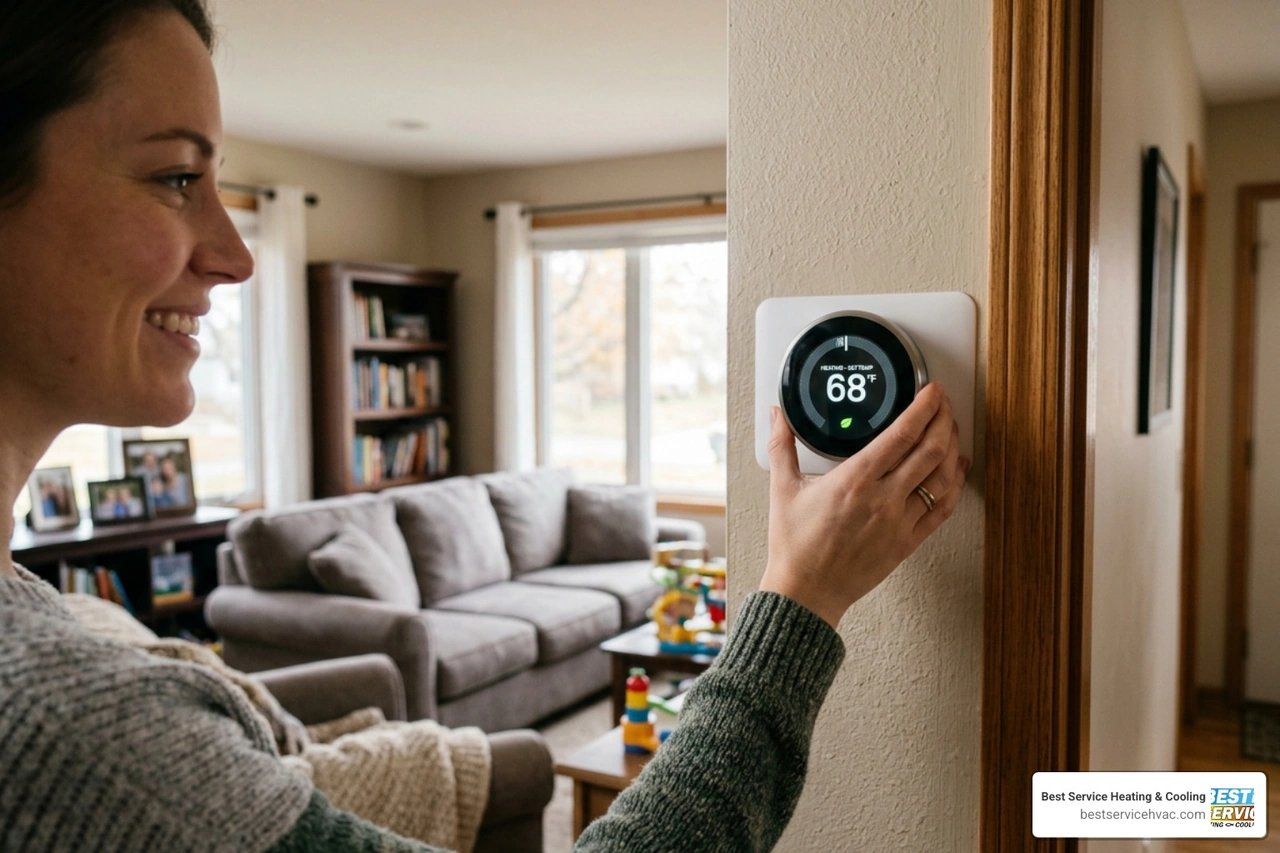
Not all thermostats are created equal. The technology you use to control your heating and cooling system plays a massive role in how easily you can achieve your energy-saving goals.
- Manual Thermostats: These are the old-school dial or slide models. While simple, they require you to manually adjust the temperature every time you sleep, leave, or return. Because humans are naturally forgetful, manual thermostats often lead to missed savings or "override abuse," where a frustrated homeowner cranks the system too far in one direction.
- Programmable Thermostats: These allow you to pre-program a schedule based on your weekly routine (such as wake, away, return, and sleep times). If you have a highly consistent schedule, a programmable thermostat can easily save you up to 10% a year. However, they struggle to adapt when your plans change unexpectedly.
- Smart Thermostats: This is where the magic happens. Smart thermostats connect to your home's Wi-Fi, allowing you to control your HVAC system from your phone, tablet, or smart home assistant. Energy Star certifies smart thermostats based on real-world data showing an average of 8% savings on heating and cooling.
If you are curious about making the switch, explore our breakdown of the Smart Thermostat Benefits for Homeowners to see how these devices pay for themselves over time.
Smart Thermostat Settings That Maximize Efficiency
If you already own a smart thermostat (or are planning to install one), simply hanging it on the wall won't automatically lower your bills. You need to configure a few advanced settings to truly unlock its potential:
- Geofencing: This feature uses your smartphone's GPS to detect when you leave a pre-set boundary (usually 1 to 3 miles from your house). Once the last household member crosses the boundary, the thermostat automatically shifts into "Eco Mode" or "Away Mode." When you cross back into the boundary on your way home, it starts warming or cooling the house so it is perfectly comfortable by the time you walk through the door.
- Remote Room Sensors: Most basic thermostats only measure the temperature in the hallway where they are mounted. Remote sensors can be placed in bedrooms, home offices, or living rooms to average out the temperature across the spaces you actually use, preventing your system from overworking to cool an empty hallway.
- Fan "Circulate" Mode: Instead of leaving your HVAC fan set to "On" (which runs the blower 24/7, wasting electricity and increasing indoor humidity) or "Auto" (which only runs the fan when heating or cooling is active), use "Circulate." This setting runs the fan for a set amount of time — usually 15 to 20 minutes per hour — to mix the air, eliminate hot and cold spots, and keep your home comfortable without running the actual AC compressor or furnace.
- Adaptive Recovery: Smart thermostats learn how long your specific home takes to heat up or cool down. Instead of turning on at peak capacity to blast your home with air, the thermostat calculates the most efficient, gradual way to reach your target temperature right on schedule.
Special HVAC Systems and Home Layouts
While the general seasonal guidelines work for standard split-system air conditioners and gas furnaces, certain home layouts and HVAC configurations require a specialized approach.
The Heat Pump Exception
If your home uses a heat pump for winter heating, you must throw out the standard "7-to-10-degree setback" rule. Heat pumps are incredibly efficient, but they heat a home gradually.
If you drop your heat pump's thermostat by 5 degrees or more at night, the system will struggle to recover that temperature quickly in the morning. When a heat pump detects a large temperature gap, it automatically activates its backup auxiliary heat strips (often called "emergency heat"). These electric resistance strips consume an immense amount of electricity, completely wiping out any savings you gained from the overnight setback.
For heat pumps in the winter, keep your setbacks small — no more than 2 to 3 degrees — or use a smart thermostat specifically designed to manage heat pump recovery without triggering the auxiliary heat.
Multi-Story Homes
If you live in a classic two-story home in Hilliard, Westerville, or Dublin, you already know that heat naturally rises. This temperature stratification often leaves the upstairs bedrooms sweltering in the summer while the basement and downstairs living areas feel like an icebox.
If you have a zoned system with separate thermostats for each floor, use them to your advantage. In the summer, set the upstairs thermostat to your target comfort level (like 78°F) and set the downstairs thermostat 2 degrees warmer. In the winter, reverse this strategy: set the downstairs thermostat to 68°F and let the rising heat keep the upstairs bedrooms comfortable at a slightly lower setting.
Common Thermostat Mistakes to Avoid
Even with the best intentions, it is easy to fall into habits that quietly inflate your utility bills. Here are the most common blunders we see in Central Ohio homes:
- Falling for the "Constant Temperature" Myth: Some folks believe that leaving the thermostat at one steady temperature all day saves energy because the system doesn't have to "work harder" to recover from a setback. This is thermodynamically false. The rate of heat loss or gain slows down as your indoor temperature gets closer to the outdoor temperature. Setting back your thermostat always saves energy.
- Ignoring Thermostat Placement: A thermostat must be installed on an interior wall, away from direct sunlight, drafty windows, exterior doorways, skylights, and heat-generating appliances. If your thermostat is mounted in direct sunlight, it will read a "ghost temperature" that is much hotter than the rest of your home, causing your AC to run constantly.
- Treating the Thermostat Like a Throttle: Cranking your thermostat down to 60°F when you get home on a hot day will not cool your house down any faster. Your air conditioner runs at the exact same speed regardless of the target setting. It will simply run past your comfort zone, wasting energy and freezing you out.
- Neglecting Regular HVAC Maintenance: A dirty air filter, clogged condenser coil, or failing blower motor forces your HVAC system to draw significantly more electricity to achieve the temperature set on your thermostat.
Wondering what happens when you let these maintenance tasks slide? Read our detailed guide on What Happens If You Skip HVAC Maintenance to protect your system and your wallet.
Frequently Asked Questions About Thermostat Settings
Does turning the thermostat off completely save more money than a setback?
In moderate weather, turning your system off entirely when you leave the house can save a small amount of energy. However, in extreme climates — like a humid 95°F summer day in Columbus — turning the AC completely off can cause a phenomenon called heat-soaking.
When the AC is off for hours, your walls, furniture, floors, and drywall absorb the heavy outdoor heat and humidity. When you finally turn the system back on, your air conditioner has to run at peak capacity for hours just to draw the heat out of your home's physical structure. Using a moderate setback (like 85°F) keeps the humidity under control and prevents heat-soaking, making it much easier and safer for your system to recover.
What is the best temperature for sleeping in the winter?
The National Sleep Foundation recommends setting your thermostat between 62°F and 65°F for the best night of sleep.
Our bodies naturally drop in temperature as we fall asleep. A cool room supports this natural process, preventing restless tossing and turning. Plus, sleeping in a cooler room is the perfect excuse to bundle up under a heavy, comfortable blanket, allowing you to save money while enjoying deep, high-quality rest.
How often should I have my HVAC system serviced to ensure efficiency?
To keep your heating and cooling equipment running at peak efficiency, you should have your system professionally serviced twice a year: once in the spring for your air conditioner, and once in the autumn for your furnace or heat pump.
Regular cleanings and safety inspections ensure that your system can actually deliver the energy savings you are targeting with your thermostat settings. For a deeper dive into scheduling, check out our guides on How Often Should You Service Your HVAC and discover Why Schedule Routine Home HVAC Service to keep your home comfortable year-round.
Conclusion
Taking control of your home's energy consumption doesn't require a lifestyle overhaul. By embracing the best thermostat settings for energy savings — 78°F in the summer and 68°F in the winter, combined with smart setbacks when you are away or sleeping — you can easily lower your monthly utility bills while maintaining a cozy, welcoming home.
If you are ready to maximize your home's efficiency, upgrade to a modern smart thermostat, or ensure your heating and cooling system is in prime condition, Best Service Heating & Cooling is here to help. Since 1992, our family-owned business has provided top-rated, reliable residential HVAC services to homeowners throughout Columbus, Reynoldsburg, Dublin, Westerville, Gahanna, Grove City, New Albany, Pickerington, and the surrounding communities.
Let us help you make your home comfort systems work smarter, not harder. Explore our comprehensive HVAC Maintenance Plan Guide 2026 to keep your system in peak shape, or schedule a professional consultation today by visiting our Smart Thermostat and AC Efficiency Services page. We look forward to serving you!
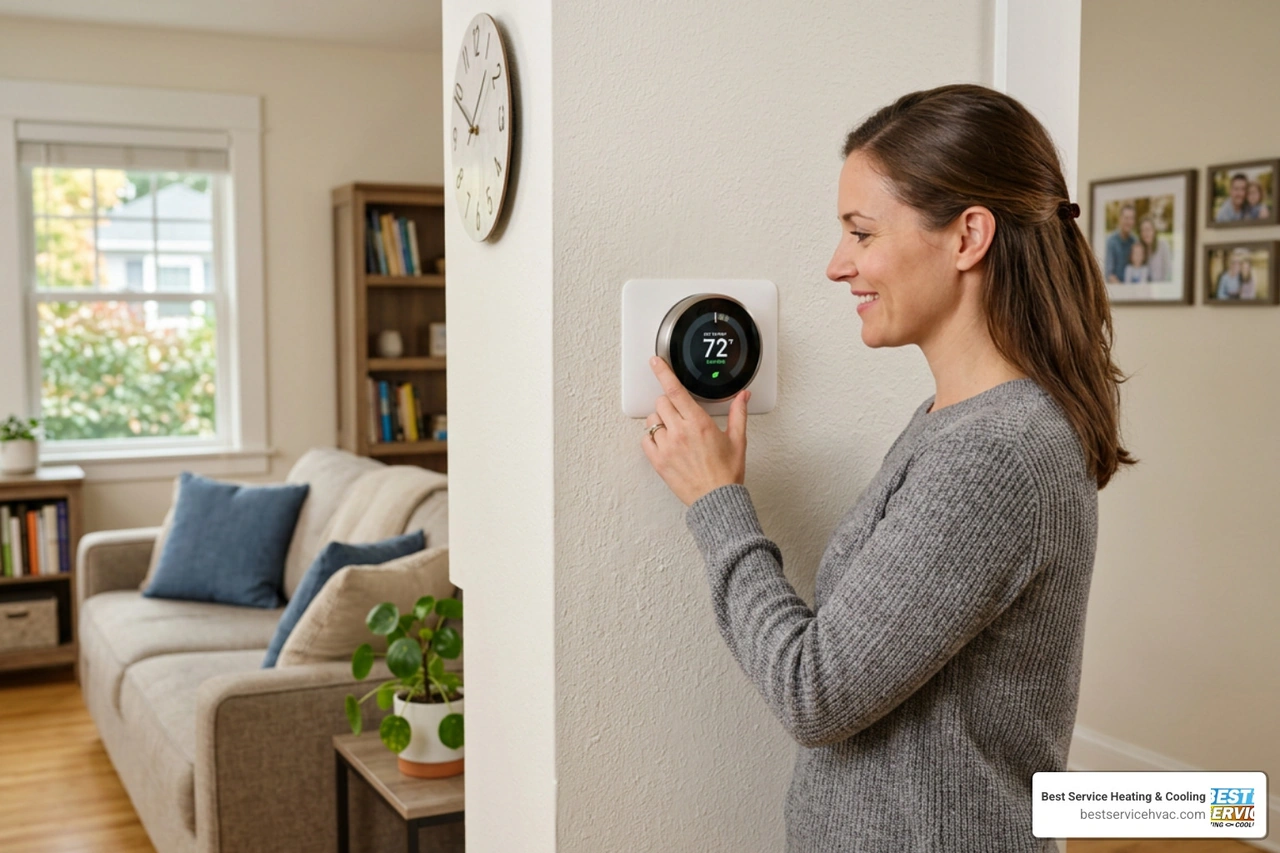
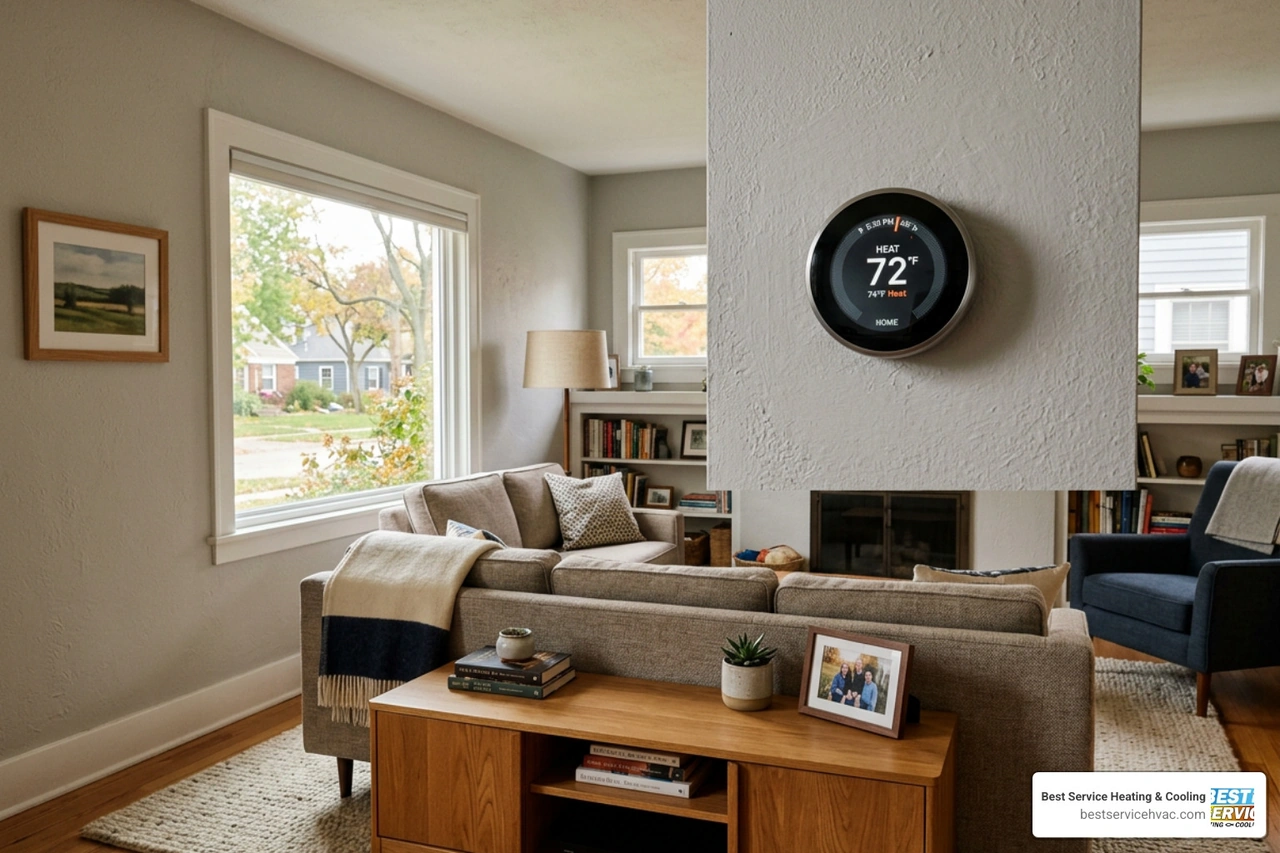
.webp)
.webp)

Service Areas
