
The Definitive Guide to How a Maintenance Plan Extends Equipment Life

Why Understanding How a Maintenance Plan Extends Equipment Life Could Save You Thousands
How a maintenance plan extends equipment life is one of the most important things a Central Ohio homeowner can understand — especially when your heating and cooling system is one of the biggest investments in your home.
Here's the short answer:
A maintenance plan extends equipment life by:
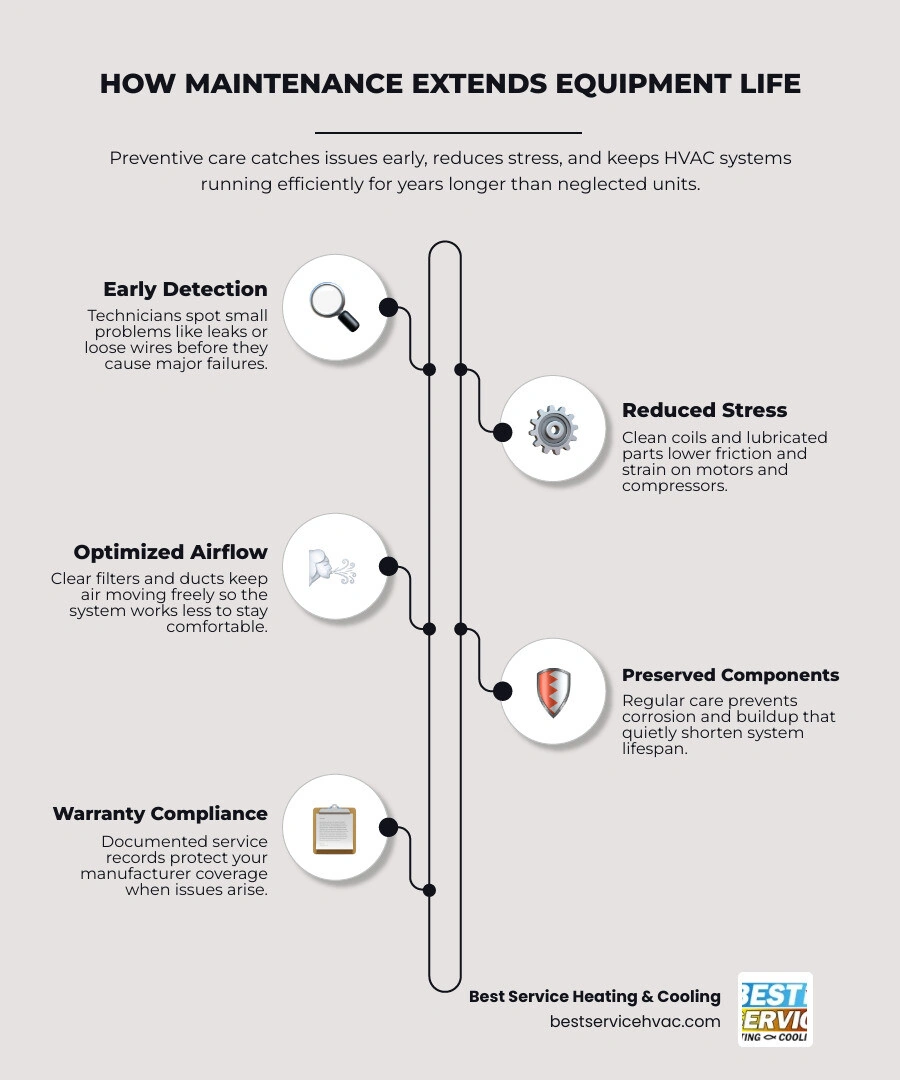
- Catching small problems early before they become expensive failures
- Reducing operational stress on components like motors, coils, and compressors
- Keeping energy efficiency high so the system doesn't have to work harder than it should
- Preventing corrosion, buildup, and wear that quietly shorten a system's lifespan
- Maintaining warranty compliance so manufacturers honor coverage when you need it most
The numbers tell a clear story. HVAC systems that receive professional maintenance twice a year can last 20 to 25 years. Systems that are ignored after installation typically fail in 5 to 10 years. That's a gap of 10 to 15 years of useful life — and potentially tens of thousands of dollars in early replacement costs.
Reactive maintenance (fixing things after they break) costs 3 to 5 times more per repair than the same work done on a schedule. And unplanned breakdowns don't just cost money — they happen at the worst possible times, like the first cold snap of an Ohio winter or the hottest week of a Columbus summer.
Structured preventive care changes that equation entirely. Instead of waiting for your system to fail, a maintenance plan keeps it running at its best — season after season, year after year.
Preventive vs. Reactive Care: How a Maintenance Plan Extends Equipment Life
To truly appreciate why a structured approach works, we have to look at the differences between how systems are cared for. Most people fall into one of two camps: those who wait for the system to break (reactive maintenance), and those who schedule regular, systematic inspections (preventive maintenance).
Reactive maintenance is often called "run-to-fail." It seems convenient at first because you do not have to think about your heating and cooling system until it stops working. However, this approach is incredibly tough on your equipment. When one small part starts to wear out, it does not fail in a vacuum. A worn-out fan belt or a slightly misaligned blower wheel forces the motor to draw more electrical current, run hotter, and experience accelerated wear and tear. By the time the system finally shuts down, a simple, cheap part issue has often cascaded into a major system failure.
Preventive maintenance, on the other hand, is all about staying ahead of the physics of wear and tear. When you understand Why Schedule Routine Home HVAC Service, you realize that regular tune-ups are designed to catch and reverse these minor issues before they can cause structural harm to your system. Systematic inspections allow us to clean, lubricate, adjust, and test every critical component, keeping your home comfort system operating exactly as the manufacturer intended.
| Feature | Preventive Maintenance Plan | Reactive "Run-to-Fail" Approach |
|---|---|---|
| Lifespan Expectancy | 20 to 25 years of reliable service | 5 to 10 years due to cumulative neglect |
| Average Repair Cost | Lower; minor issues caught before they cascade | 3 to 5 times higher per repair event |
| Energy Efficiency | Maximized; saves up to 40% on utility bills | Drops by roughly 10% every year of neglect |
| System Reliability | High; reduces unexpected breakdowns by up to 70% | Low; highly prone to mid-season failures |
| Warranty Status | Fully compliant with manufacturer requirements | Often voided due to lack of professional service records |
| Operational Stress | Minimal; balanced airflow and calibrated parts | High; clogged filters and dirty coils strain motors |
The Science of Longevity: How Scheduled Care Protects Your Investment
At its core, extending the life of mechanical equipment is a matter of physics. Your air conditioner and furnace are complex assemblies of moving parts, electrical circuits, and heat-exchange surfaces. Over time, these systems are subject to constant operational stress.
Friction is the ultimate enemy of mechanical longevity. Without proper lubrication, bearings in your blower motor and condenser fan wear down, creating resistance. This resistance forces the motors to draw more electricity, running at much higher temperatures than they were designed to handle. Overheating breaks down winding insulation, eventually leading to a complete motor burnout. Regular maintenance ensures that all moving parts are properly lubricated, reducing friction and preserving these expensive components.
Airflow optimization is another physical necessity. Your HVAC system is designed to move a very specific volume of air across its heat-exchange coils. When dust, pet dander, and pollen build up on your air filters and blower blades, it is like asking your system to run a marathon while breathing through a straw. The system must run longer cycles to achieve the thermostat's target temperature, putting excessive wear on the compressor—the very heart of your air conditioning system.
By investing in regular, structured care, you prioritize component preservation. Instead of allowing dirt and friction to degrade your system day by day, scheduled maintenance resets the clock, restoring your equipment to its peak operating state.
For a deeper look at what happens when these physical needs are ignored, read our guide on What Happens If You Skip HVAC Maintenance.
How a Maintenance Plan Extends Equipment Life Through Early Detection
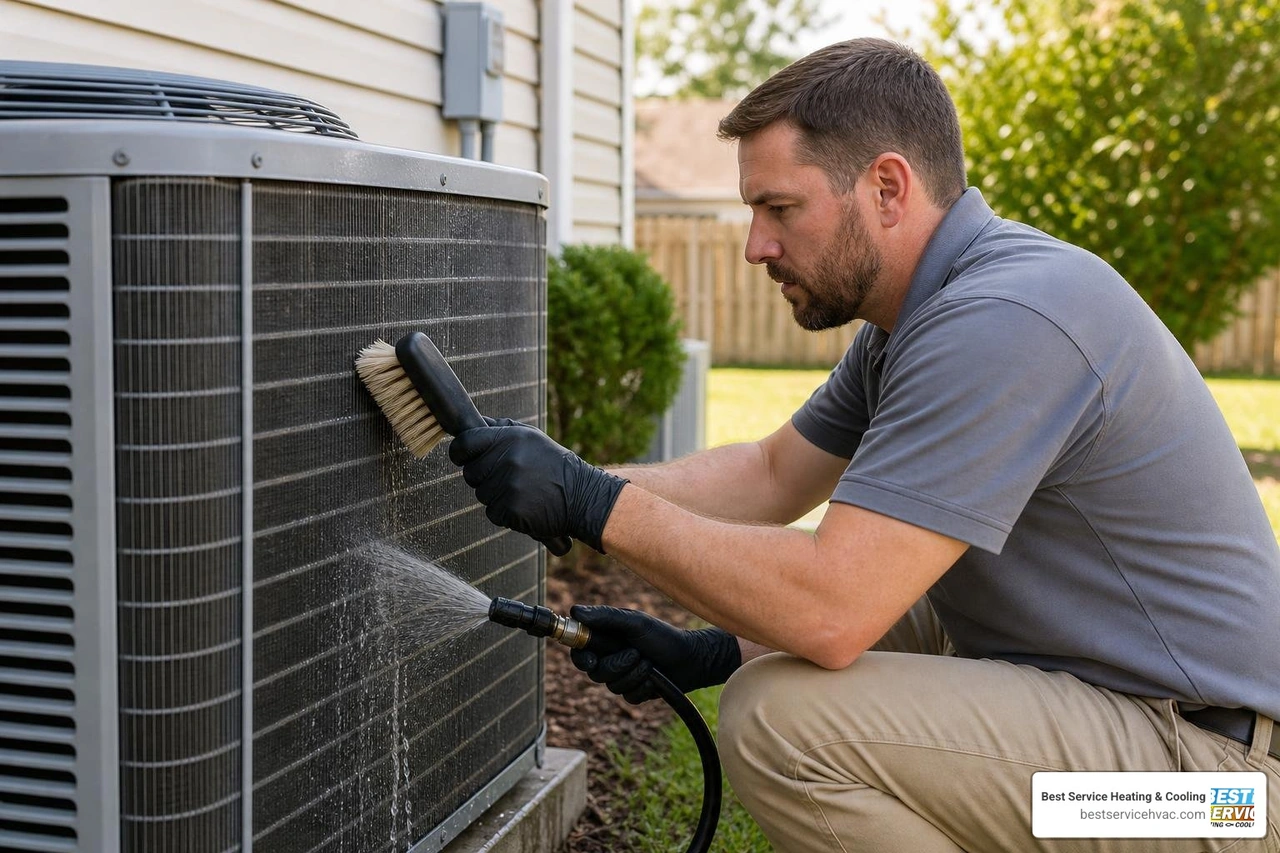
How a maintenance plan extends equipment life comes down to one simple, powerful concept: catching small problems before they turn into major financial headaches. During a comprehensive inspection, we look for subtle warning signs that the average homeowner would never notice.
- Refrigerant Leaks: A system running even slightly low on refrigerant has to work twice as hard to cool your home. The compressor runs hotter, and the evaporator coil can freeze over, potentially sending liquid refrigerant back to the compressor and destroying it. Early detection of a tiny pinhole leak allows us to seal the leak and protect the compressor.
- Electrical Connections: Heating and cooling cycles cause components to expand and contract. Over time, this thermal movement can loosen electrical connections. Loose connections create electrical resistance, which generates heat. This heat can melt wire insulation, damage control boards, or trigger safety switches. Tightening these connections during a routine visit prevents sudden system failures.
- Clogged Condensate Drains: Your air conditioner removes an incredible amount of moisture from your indoor air. If the algae and dust that accumulate in the drain pan are not flushed out, the line will clog. This can lead to water backing up into your home, causing drywall damage, mold growth, or triggering water safety switches that shut down your entire system.
By identifying and addressing these minor issues during a scheduled visit, we prevent them from snowballing into catastrophic failures. To learn more about what our team does during these comprehensive checks, review our breakdown of What Does an HVAC Maintenance Visit Include.
How a Maintenance Plan Extends Equipment Life by Optimizing Energy Efficiency
There is a direct connection between how efficiently your system runs and how long it will last. When a system is highly efficient, it runs shorter, cleaner cycles. When efficiency drops, the system must run longer and more frequently to keep your home comfortable, accelerating the wear on every single component.
Skipping professional maintenance can cause your system’s efficiency to drop by roughly 10% every single year as dirt accumulates on the coils and airflow becomes restricted. This drop in efficiency directly translates to higher utility bills and a larger carbon footprint for your household.
By keeping the coils clean, replacing filters, and calibrating the thermostat, a maintenance plan reduces the physical workload on your equipment. In fact, a well-maintained heating and cooling system can save you up to 40% on your energy consumption compared to a neglected system. That is a massive reduction in operational stress, which keeps your equipment running smoothly for many extra years.
To discover more about the financial and environmental perks of keeping your system calibrated, check out the Benefits of Regular Furnace and AC Tune-Ups.
Key Steps to Developing and Executing an Effective Maintenance Program
While most homeowners rely on a professional service agreement, understanding how a successful maintenance program is structured can help you appreciate the value of your plan. Whether managing industrial machinery or residential comfort systems, the core principles of effective maintenance remain the same.
- Asset Inventory and Criticality Classification: The first step is cataloging every piece of equipment. In a home, this means documenting the brand, model, serial number, and age of your furnace, air conditioner, heat pump, or indoor air quality systems. We classify these by criticality—your primary heating and cooling units are "Class A" critical assets because their failure directly impacts your safety and home comfort.
- Choosing the Right Scheduling Models: Effective programs use a mix of different schedules to keep things running smoothly:
- Calendar-Based PM: These are scheduled service visits performed at specific times of the year, such as a spring air conditioning tune-up and a fall furnace safety check.
- Condition-Based PM: This relies on the actual state of the equipment. For example, changing an air filter when a pressure sensor detects restriction, rather than just waiting for three months to pass.
- Utilizing Digital Tracking Tools (CMMS): In the professional maintenance world, teams use a Computerized Maintenance Management System (CMMS) like Maintenance Connection or Oxmaint to track work orders, log equipment history, and schedule tasks. At Best Service Heating & Cooling, we use advanced digital logging to keep a detailed history of your home's HVAC system. This allows us to track trends, monitor wear on specific parts, and know exactly what your system needs before we even arrive at your home in Columbus, Dublin, or Westerville.
- Proactive Resource Management: A great maintenance plan ensures that high-quality, original equipment manufacturer (OEM) parts are always available. Using cheap, generic aftermarket parts can compromise system balance and reliability, so we prioritize top-tier components to keep your system running exactly as designed.
For a helpful timeline on when to schedule these essential steps for your home, read our guide on How Often Should You Service Your HVAC.
Frequently Asked Questions About Equipment Longevity
How much longer does an HVAC system last with regular maintenance?
With consistent, professional maintenance twice a year, a high-quality residential HVAC system can easily last 20 to 25 years.
In contrast, a system that is neglected after installation and only receives attention when it breaks down typically has a lifespan of only 5 to 10 years. Over time, dust buildup, unaddressed electrical issues, and unlubricated motors cause the system to wear out prematurely, forcing you to pay for an expensive replacement long before you should have to.
Does skipping professional maintenance void my manufacturer warranty?
Yes, in almost all cases, skipping regular professional maintenance will void your manufacturer warranty.
Major HVAC manufacturers require documented proof of annual professional maintenance to keep their parts warranties valid. If a major component like your compressor or heat exchanger fails, the manufacturer will often ask for service records before they agree to ship a replacement part. Without proof of regular tune-ups, your claim can be denied, leaving you to pay for the repair out of pocket.
How often should I schedule professional HVAC maintenance in Central Ohio?
We recommend scheduling professional maintenance twice a year: once in the spring for your air conditioner or heat pump, and once in the fall for your furnace or heating system.
The climate in Central Ohio can be incredibly demanding. Our hot, humid summers in areas like Grove City, Gahanna, and Hilliard require your air conditioner to run almost constantly, while our freezing winter temperatures put your furnace to the ultimate test. Seasonal tune-ups ensure your systems are fully prepared for these extreme temperature shifts.
To learn more about why local service is so vital for your home, read our article on why Regular HVAC Service Essential for Home.
Conclusion
Understanding how a maintenance plan extends equipment life is the key to protecting your home, your family's comfort, and your hard-earned money. By shifting from a stressful, reactive "run-to-fail" approach to a structured, proactive plan, you can double your system's lifespan, cut your energy bills by up to 40%, and prevent unexpected breakdowns.
At Best Service Heating & Cooling, we have been helping homeowners throughout the Central Ohio area protect their comfort since 1992. As a family-owned business with an A+ BBB rating, we take pride in delivering honest, top-rated service to our neighbors in Columbus, Reynoldsburg, New Albany, Pickerington, and the surrounding communities.
Our technicians are fully trained to keep your heating and cooling systems running at peak reliability and efficiency, giving you complete peace of mind no matter what the Ohio weather brings.
Ready to stop worrying about unexpected breakdowns and start maximizing the lifespan of your heating and cooling system? Explore our comprehensive Maintenance Plan and sign up today to give your HVAC system the professional care it deserves!
.webp)
.webp)

Service Areas
