
Ohio HVAC Showdown: Central Air vs Mini Split Systems

Is Central Air or a Mini Split Right for Your Central Ohio Home?
Central air vs mini split for central ohio homes is one of the most common questions homeowners in Columbus, Dublin, Westerville, and surrounding communities ask when it's time to upgrade their comfort system. The short answer: it depends on your home's layout, existing ductwork, and how you use your space.
Here's a quick side-by-side to help you decide at a glance:
| Factor | Central Air | Mini Split |
|---|---|---|
| Best for | Homes with existing ductwork | Homes without ducts, additions, or specific rooms |
| Energy efficiency | Up to ~20 SEER | 30+ SEER possible |
| Zoning control | Limited (one thermostat) | Excellent (room by room) |
| Installation disruption | Moderate to high (if adding ducts) | Minimal (small wall opening) |
| Air filtration | Superior with whole-home filters | Good, but less powerful per unit |
| Heating capability | Requires separate furnace or heat pump | Built-in heat pump in most models |
| Ideal home type | Larger, open floor plans | Older homes, slab foundations, room additions |
Central Ohio's climate throws real curveballs at homeowners. Summers get hot and sticky, with humidity that makes a 90°F day feel brutal. Winters dip well below freezing. Your HVAC system has to handle both extremes reliably. Whether you're tired of uneven temperatures, sky-high utility bills, or dealing with a room that never quite cools down, choosing the right system makes a real difference in your day-to-day comfort and your monthly costs.
Neither system is universally better. But understanding how each one performs in Central Ohio's specific conditions will point you in the right direction.
Central Air vs Mini Split for Central Ohio Homes
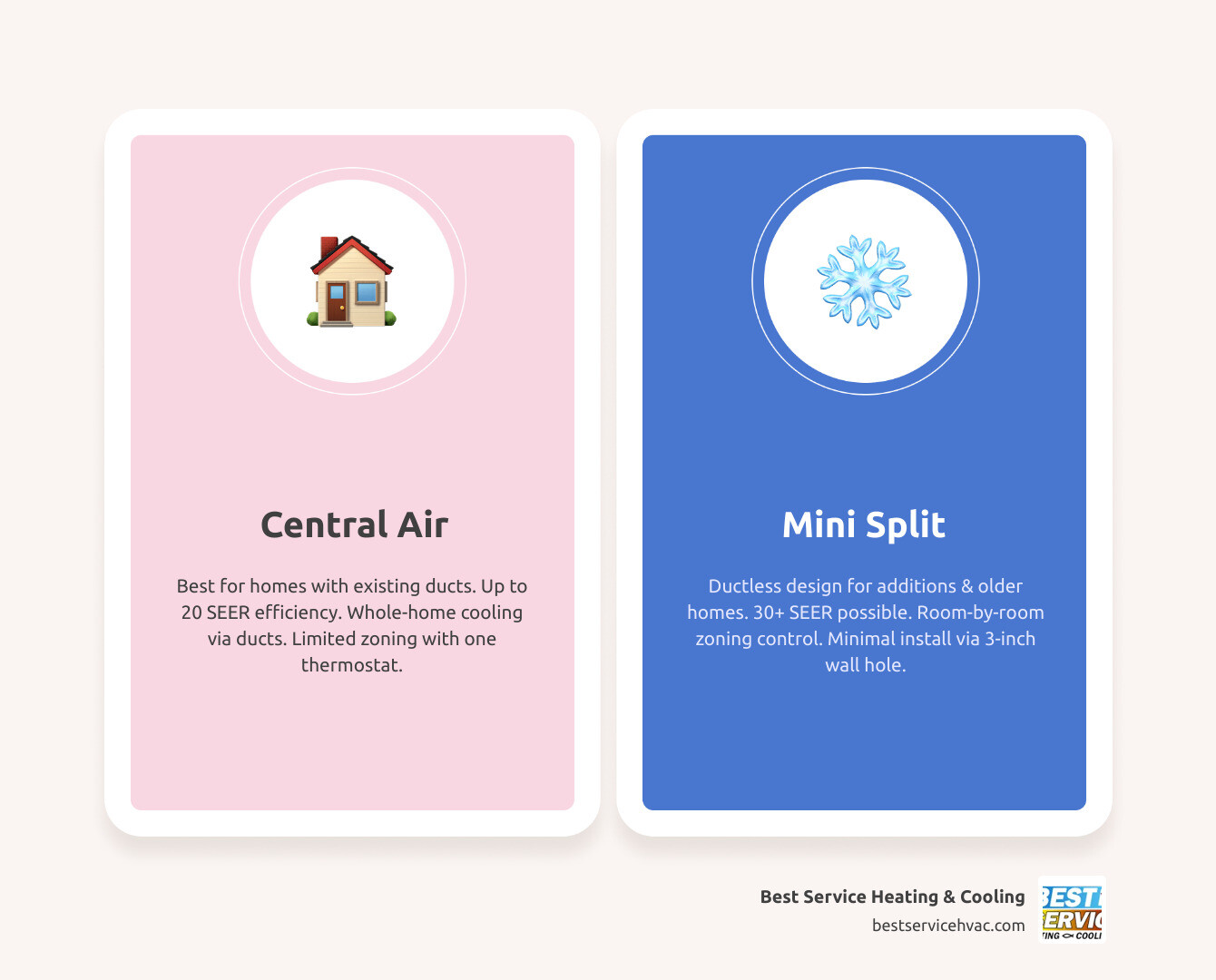
When we look at central air vs mini split for central ohio homes, we are essentially comparing two different philosophies of home comfort. Central air is the "set it and forget it" approach for the whole house, while Mini Split systems offer surgical precision for specific areas.
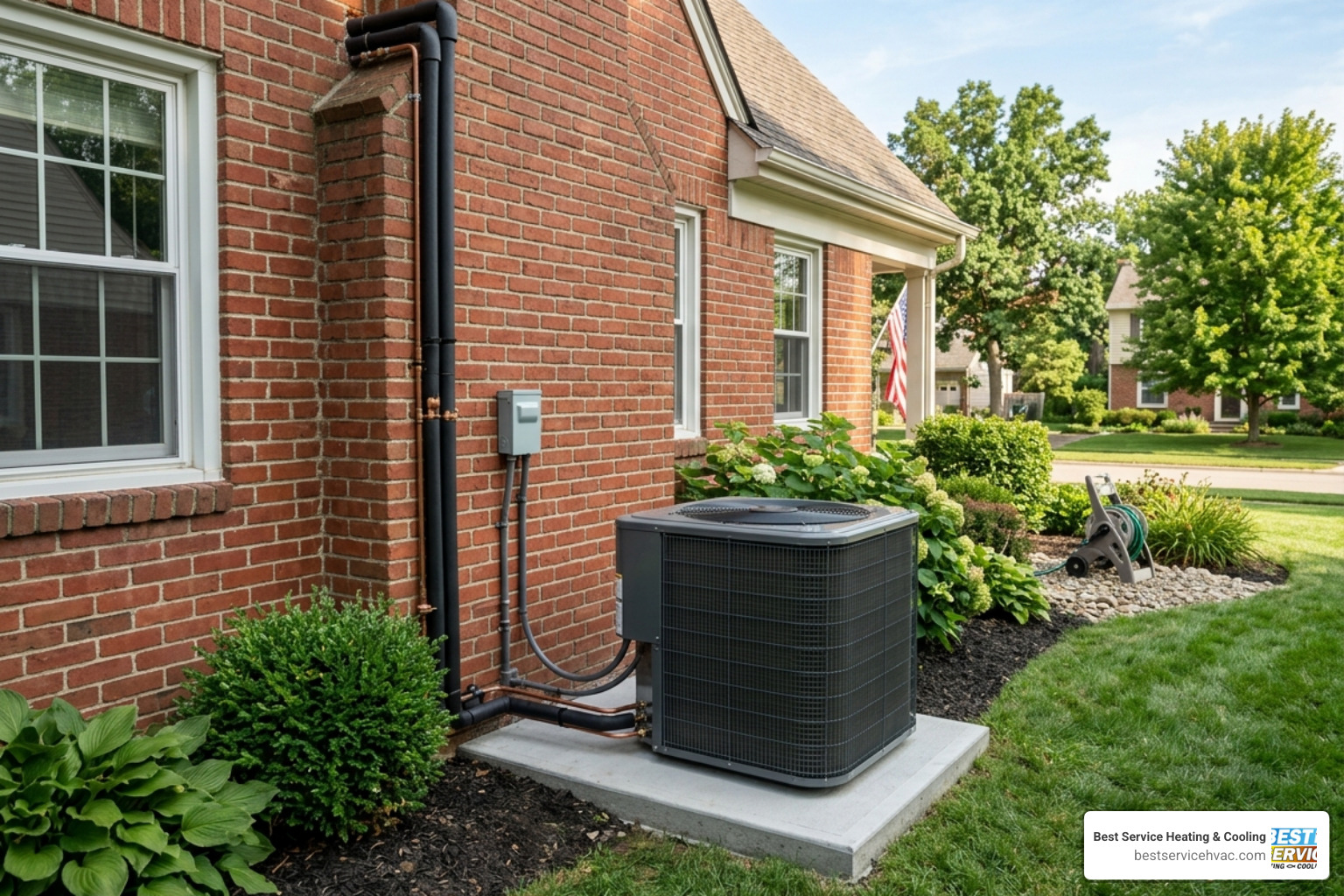
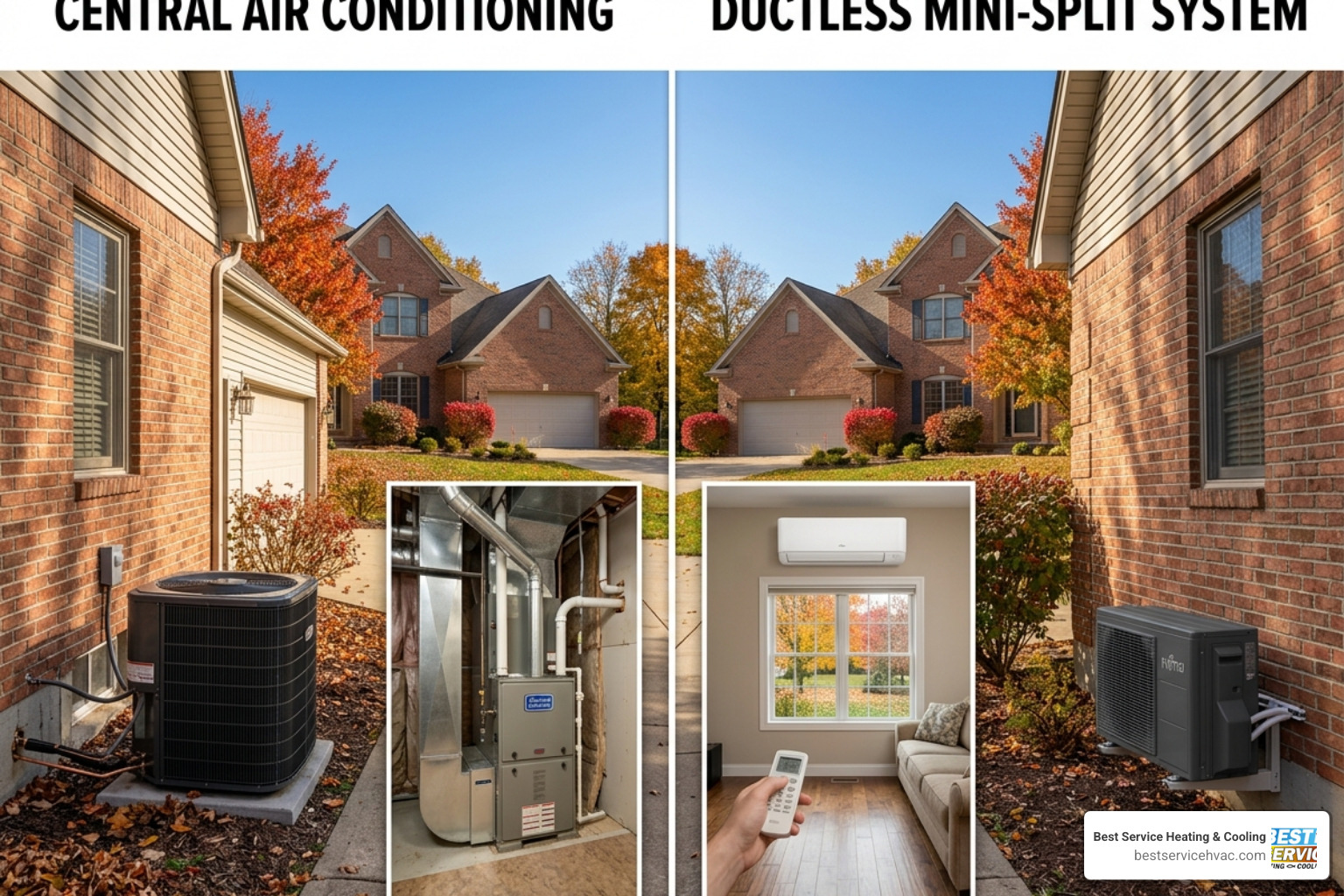
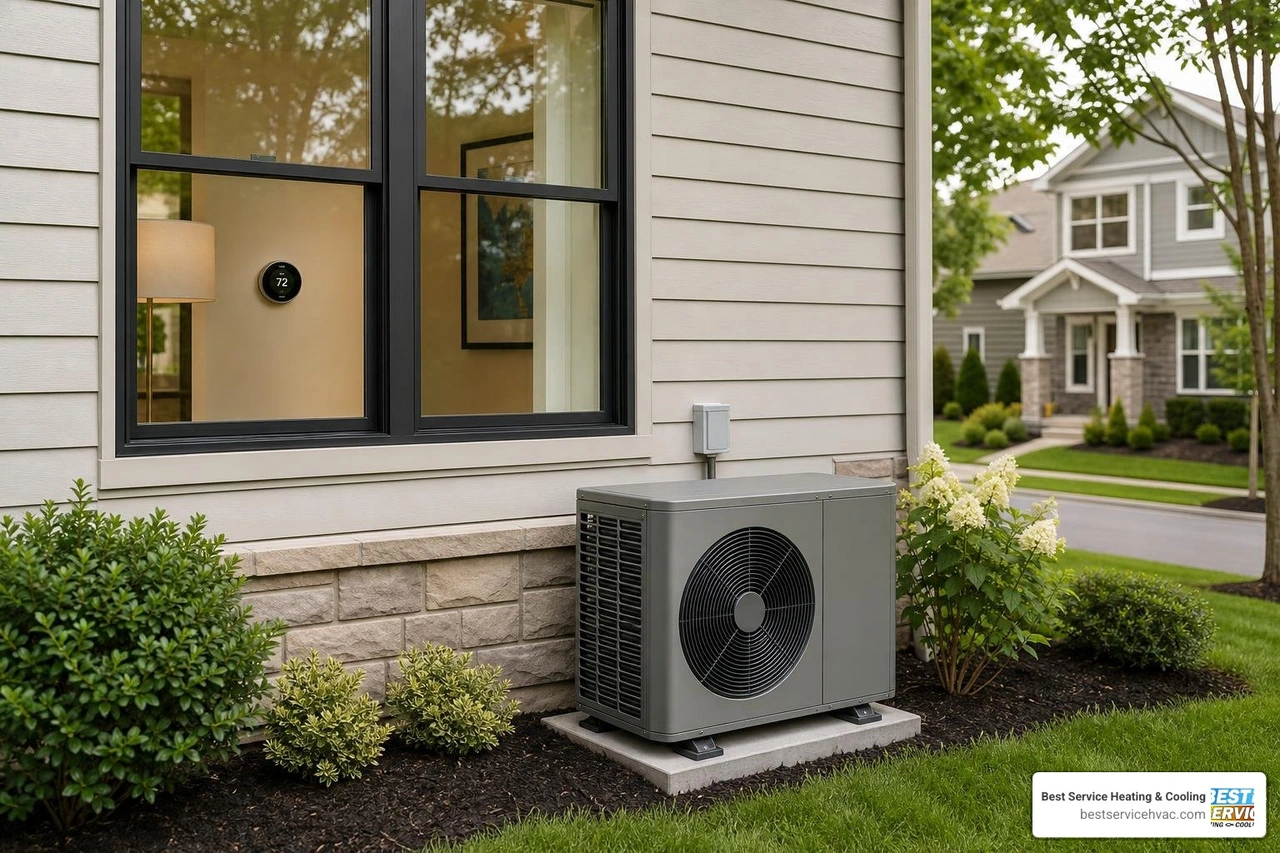
Central air systems consist of a large outdoor condenser unit and an indoor air handler (often part of your furnace) that pushes air through a network of ducts. In contrast, a mini-split system is "ductless." It uses an outdoor unit connected to one or more Indoor air handlers mounted directly on your walls or ceilings. These units are linked by small refrigerant lines, requiring only a three-inch hole in the exterior wall.
One of the biggest technological leaps in recent years is the use of inverter technology. Most modern mini-splits and high-end central systems use variable-speed compressors. Unlike older "single-stage" systems that are either 100% on or 100% off, variable-speed systems can scale their output up or down. This is like having a dimmer switch for your AC instead of a standard on/off switch, allowing for much smoother temperature regulation and significant energy savings.
Comparing Central Air vs Mini Split for Central Ohio Homes Efficiency
Efficiency is where the Central Ohio Ductless Hvac conversation really heats up. Efficiency is measured by SEER (Seasonal Energy Efficiency Ratio) for cooling and HSPF (Heating Seasonal Performance Factor) for heating.
- Central Air: High-efficiency central systems typically top out around 20 SEER. While a new central unit can be 30% to 45% more efficient than a 20-year-old system, it still faces a major hurdle: duct loss. Energy Star reports that roughly 30% of the energy used to heat or cool a home can be lost through leaks or poor insulation in the ductwork.
- Mini Splits: Because they don't use ducts, mini-splits eliminate that 30% energy waste immediately. These systems can achieve SEER ratings of 30 or higher. In fact, some mini-split systems are two to four times more efficient to run than traditional central air.
For homeowners in areas like Gahanna or Hilliard, this efficiency translates directly into lower monthly utility bills, especially during our humid July afternoons.
Handling Ohio Weather with Central Air vs Mini Split for Central Ohio Homes
Our "humid continental" climate in Central Ohio means we deal with heavy moisture in the summer and bone-chilling dry air in the winter.
During the summer, both systems act as dehumidifiers, but mini-splits often have an edge because their variable-speed motors run for longer cycles at lower speeds, which is more effective at pulling moisture out of the air.
In the winter, a Ductless Heating Service Columbus Oh becomes vital. Modern mini-splits are often "cold climate" heat pumps. They use a Coefficient of Performance (COP) to measure efficiency—essentially how much heat they move versus how much electricity they use. While a central heat pump might have a COP of 2.0 to 4.0, a high-quality mini-split can range from 3.0 to 4.5, meaning it remains efficient even when temperatures drop toward zero in January.
Efficiency and Performance in the Ohio Climate
Efficiency isn't just a buzzword; it’s about how much of your hard-earned money stays in your pocket. When we discuss hvac performance, we have to look at how the system interacts with your home's structure.
If you have an older home in Clintonville or Bexley, your ductwork might be undersized or leaky. In these cases, even the most expensive central AC unit will struggle. We often recommend duct sealing or Aeroseal to fix these issues, but sometimes the better path is to bypass the ducts entirely with a Ductless Ac Service Columbus Oh.
By choosing a system with a SEER 30+ rating, you are using the most advanced technology available to combat Ohio's heat. This is especially important as energy rates continue to fluctuate; the more efficient your system, the more protected you are against rising costs.
Superior Zoning and Temperature Control
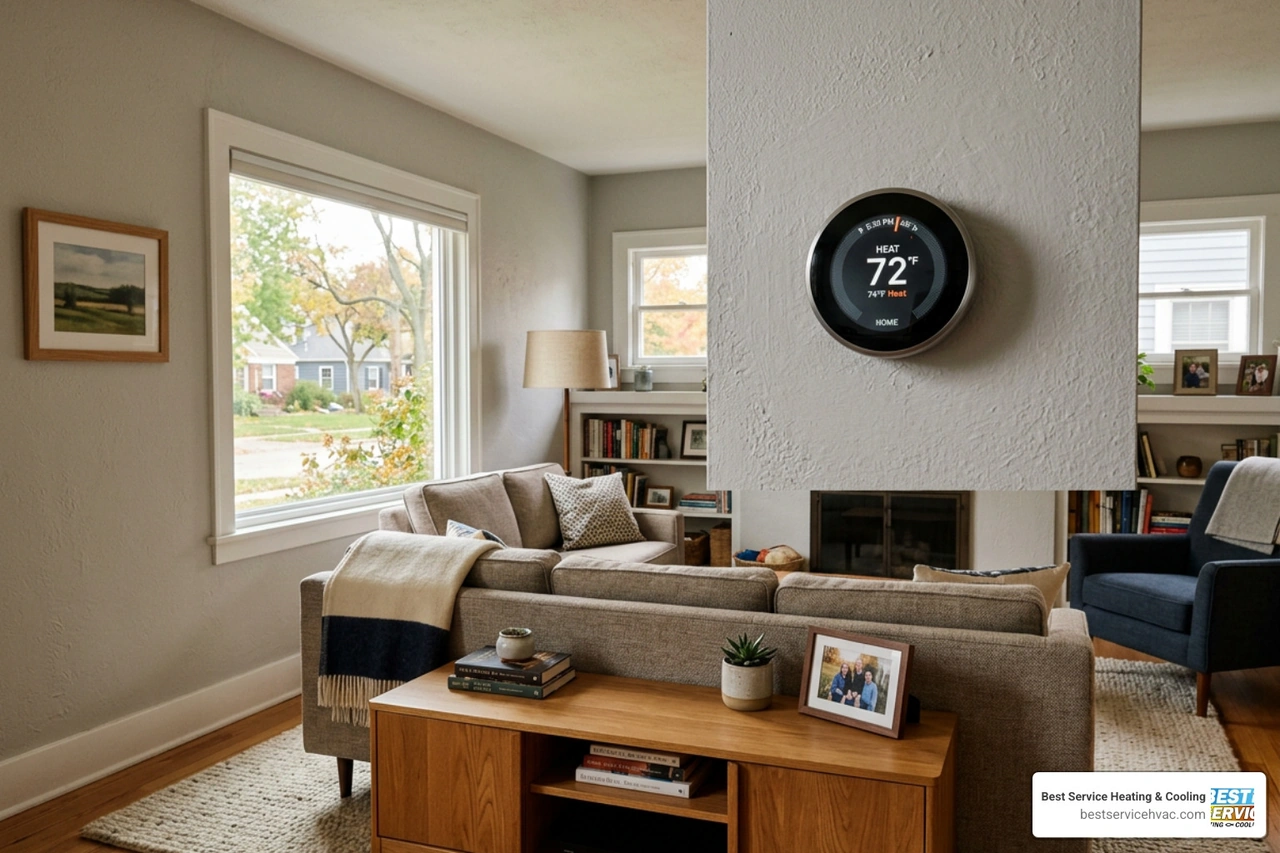
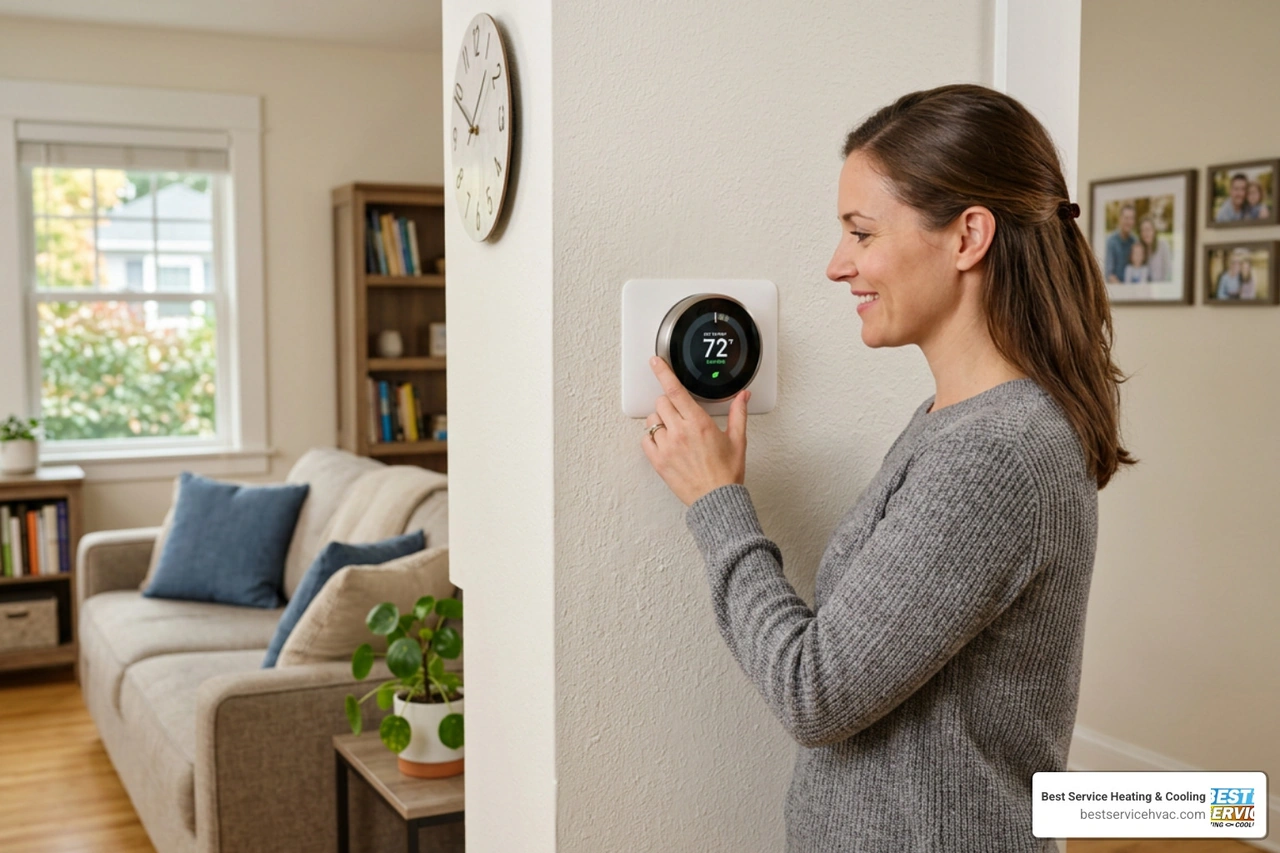
Have you ever had a "thermostat battle" in your house? Maybe the upstairs is sweltering while the basement is a walk-in freezer. This is a common flaw of central air. Because it relies on one central thermostat, it can't account for the different needs of every room.
Mini-splits solve this through "zoning." A single outdoor unit can support up to five indoor heads, each with its own remote or smart home integration. This allows you to:
- Keep the master bedroom at 68°F for sleeping.
- Keep the guest room at 72°F.
- Turn off the air in the home office when you aren't using it.
This level of control can reduce cooling costs by as much as 30% compared to traditional systems. If a unit in one room ever needs attention, Ductless Ac Repair Columbus Oh is localized, meaning the rest of your home stays comfortable while the specific unit is serviced.
Best Applications for Zoned and Ducted Systems
Every home in Central Ohio is unique. While central air is often the most cost-effective choice for a newer home in New Albany that already has great ductwork, there are many scenarios where a Ductless Heating Replacement Columbus Oh is the smarter move.
Mini-splits are the undisputed champions for:
- Historic Homes: Many older homes in German Village or Downtown Columbus lack the space for bulky ductwork. Installing a mini-split preserves the architectural integrity of the home.
- Slab Foundations: Homes built on slabs often have ductwork in the ceiling or no ducts at all. Mini-splits are a perfect retrofit here.
- Nuisance Rooms: We all have that one room—a finished attic, a sunroom, or a garage—that the central heating system just can't reach.
- Room Additions: If you're adding a mother-in-law suite or a new home office, it's often easier and more efficient to give that room its own mini-split rather than trying to tie into your existing HVAC system.
Hybrid HVAC Solutions for Maximum Comfort
You don't always have to choose just one. In fact, many of the most comfortable homes in Columbus use a hybrid approach. This involves keeping your central Air Conditioning for the main living areas but adding a mini-split to a problematic bedroom or a newly finished basement.
A Residential Air Conditioning And Heating Columbus Oh specialist can help you design a system where a dual-fuel setup (a gas furnace paired with an electric heat pump) handles the bulk of the work, while supplemental mini-splits provide precision comfort in the rooms you use most. This "best of both worlds" strategy ensures whole-home coverage while maximizing energy savings.
Maintenance and Indoor Air Quality Differences
Maintenance is the key to longevity for any system. At Best Service Heating & Cooling, we emphasize that both systems need regular love to stay efficient.
- Central Air: Requires changing a single central filter every 1-3 months. It also requires periodic duct cleaning to remove dust, pet dander, and allergens that can accumulate over years. Central systems allow for high-end IAQ (Indoor Air Quality) add-ons like HEPA filters and UV lights that treat the air for the entire house.
- Mini Splits: These units have washable filters inside each indoor head. Because these filters are smaller, they need to be cleaned more frequently—often every few weeks if you use the system year-round. While they provide good filtration, they aren't quite as powerful as a whole-home HEPA system.
Aesthetics are also a consideration. While central air is invisible (hidden in vents), mini-split heads are visible on the wall. To keep things looking professional, we always recommend using "line hides." These are decorative covers for the refrigerant lines on the outside of your house, protecting them from the elements and making the installation look much cleaner. We also use condensate pumps where gravity drainage isn't possible, ensuring your walls stay dry and protected.
Our services include comprehensive maintenance plans for both types of systems, ensuring that whether you have ducts or not, your air stays clean and your system stays under warranty.
Frequently Asked Questions
Which system is quieter for a bedroom?
Mini-splits are generally much quieter indoors. Because the noisy compressor is located outside and the indoor unit only contains a small, variable-speed fan, the sound is often described as a "whisper" or "soft rustle." Central air can sometimes produce a "whoosh" sound when the air kicks on through the vents.
Are there local rebates for high-efficiency systems in Ohio?
Yes! Depending on the year and current federal legislation (like the Inflation Reduction Act), there are often significant tax credits and local utility rebates for installing high-efficiency heat pumps and mini-splits. While programs change, we stay up-to-date on all available incentives to help our customers save as much as possible on their upgrades.
Can a mini-split handle a Columbus winter without a furnace?
Modern "Hyper-Heat" or cold-climate mini-splits can provide primary heat even when temperatures drop to -13°F. For many homes, they are more than capable of being the sole heat source. However, in very large or poorly insulated homes, some owners prefer to keep a backup heat source for the most extreme "Polar Vortex" days.
Conclusion
Choosing between central air vs mini split for central ohio homes doesn't have to be a headache. Whether you need the whole-home reach of a traditional system or the surgical efficiency of a ductless setup, the goal is the same: a comfortable, healthy home for your family.
At Best Service Heating & Cooling, we've been the trusted name in Columbus HVAC since 1992. As a family-owned business with an A+ BBB rating, we pride ourselves on giving you honest advice tailored to your specific neighborhood—from the historic streets of Westerville to the growing suburbs of Canal Winchester. We don't just sell boxes; we provide comfort solutions that last.
Ready to see which system fits your home and budget? Schedule your Central Ohio home comfort consultation today! We’ll help you navigate the options and ensure your home stays perfectly chilled in the summer and cozy all winter long.
.webp)
.webp)

Service Areas
