
Will Your Tankless Water Heater Outlive Your Traditional Tank?

How Long Does a Tankless Water Heater Last on Average?
How long does a tankless water heater last is one of the most common questions homeowners ask before making the switch — and the short answer is: significantly longer than a traditional tank.
Quick Answer:
| Water Heater Type | Average Lifespan | Well-Maintained Lifespan |
|---|---|---|
| Tankless (gas) | 20+ years | 25-30 years |
| Tankless (electric) | 15-20 years | 20-25 years |
| Traditional tank | 8-12 years | Up to 15 years |
For most Central Ohio homeowners, that difference adds up to nearly a decade of extra service — and potentially thousands of dollars in avoided replacement costs.
But here's the catch: that longer lifespan isn't automatic. It depends on how the unit is installed, how well it's maintained, and what kind of water runs through it. Central Ohio's water quality, usage habits, and even where the unit is mounted all play a role in whether your tankless heater hits the 20-year mark — or falls short of it.
In this guide, we'll walk you through everything you need to know to get the most out of your investment.
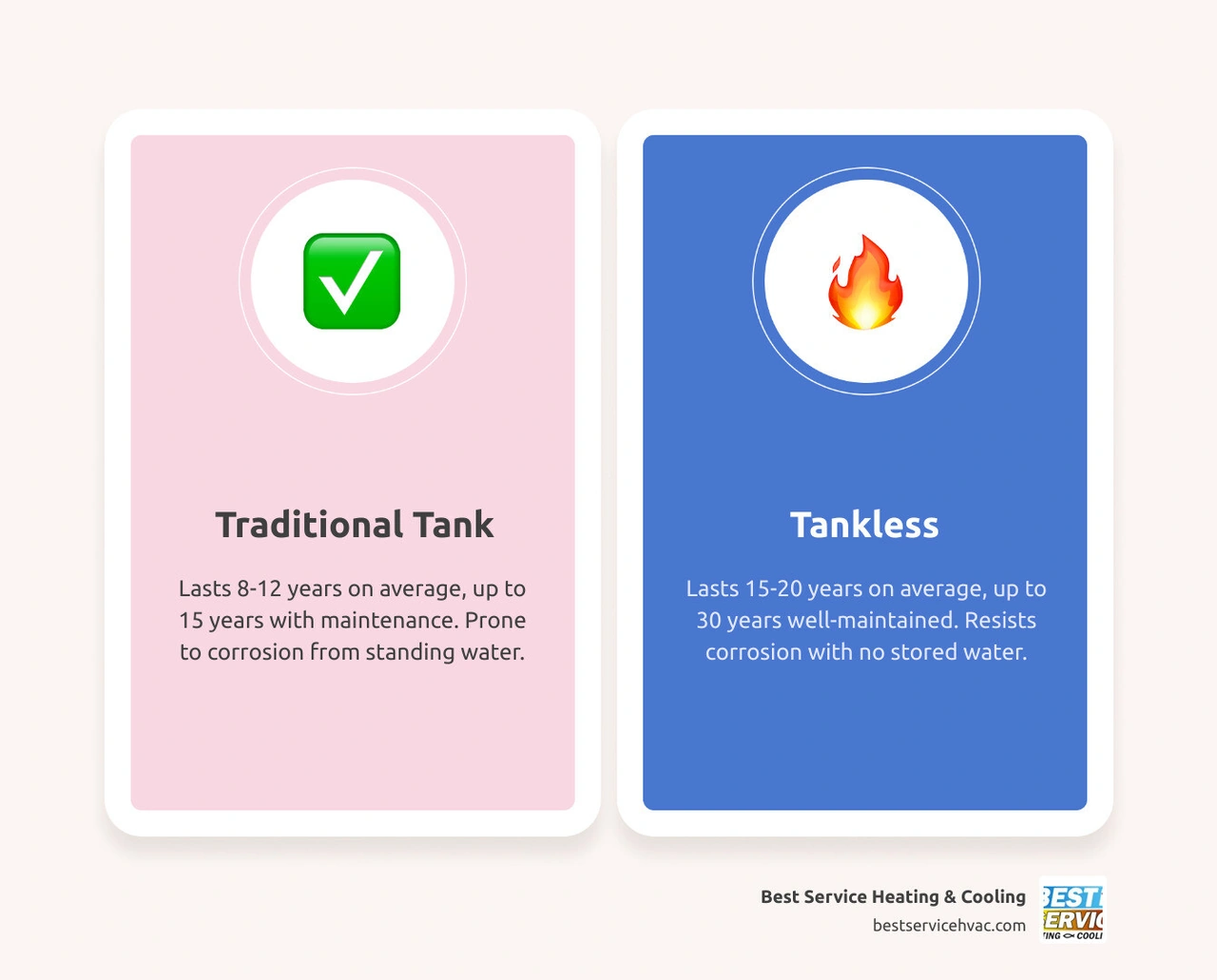
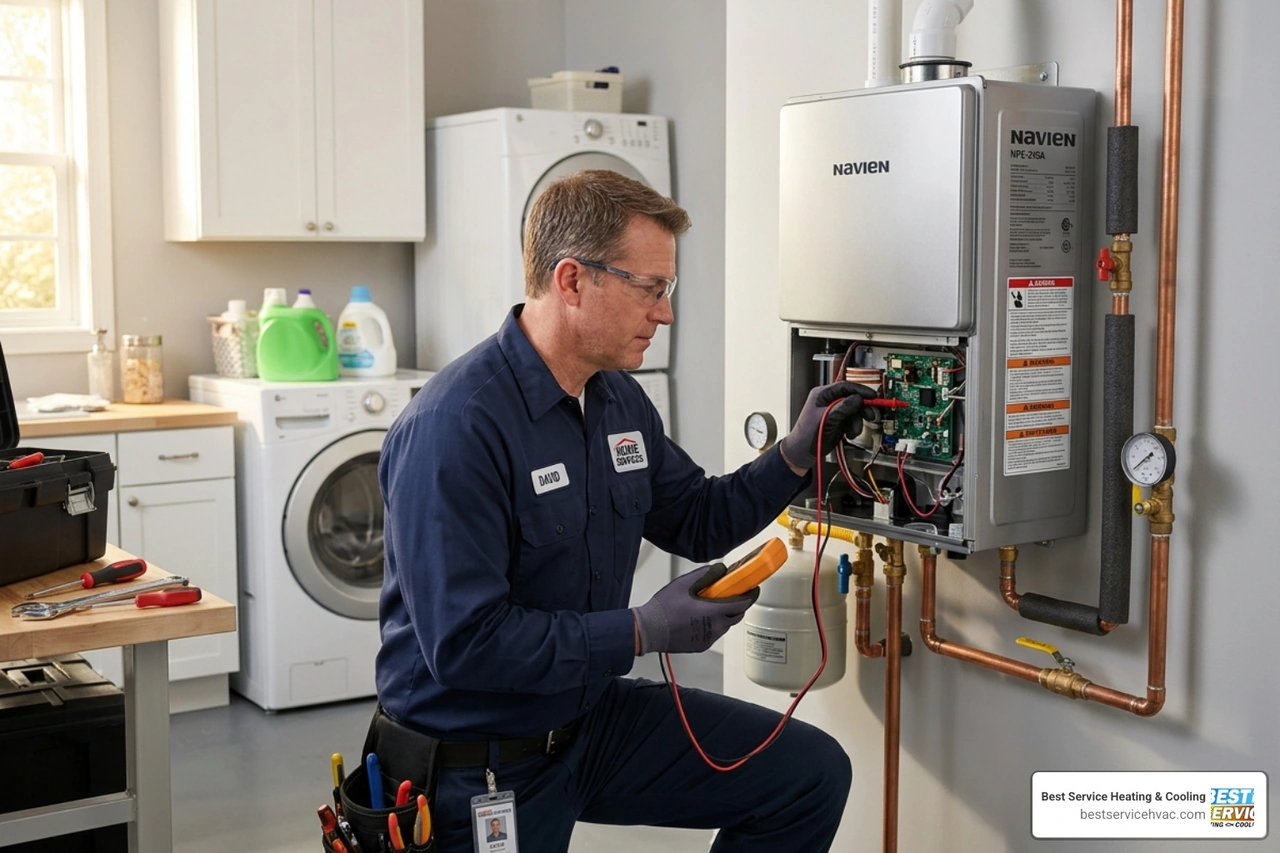
When we look at the industry standards in May 2026, the consensus is clear: tankless units are the marathon runners of the plumbing world. On average, a tankless water heater lasts 15 to 20 years. However, with meticulous care, it is not uncommon for these systems to reach the 25 or even 30-year milestone. This is a staggering contrast to traditional tank-style heaters, which typically start showing signs of terminal failure between 8 and 12 years.
The material of your unit’s internal components also dictates its endurance. Most high-end units utilize one of two materials for their heat exchangers:
- Copper Heat Exchangers: These are highly efficient at transferring heat but are softer and more susceptible to "erosion-corrosion" over time. They typically last 12 to 15 years.
- Stainless Steel Heat Exchangers: These are the gold standard for longevity. While slightly less thermally conductive than copper, stainless steel is far more resistant to the corrosive effects of hard water and can easily last 20 to 30 years.
To help you visualize the long-term value, consider this Water Heater Options Tankless And Traditional comparison:
| Feature | Tankless Water Heater | Traditional Tank Heater |
|---|---|---|
| Typical Lifespan | 20 Years | 10 Years |
| Main Failure Cause | Scale Buildup (Fixable) | Tank Corrosion (Fatal) |
| Space Required | Small Wall Mount | Large Floor Space |
| Energy Efficiency | 80% - 99% | 60% - 70% |
Why Tankless Units Outlast Traditional Tanks
The primary reason tankless units win the longevity race is their design. Traditional heaters are always full of water. This means the metal tank is in a constant state of battle against rust and sediment. Eventually, the glass lining of a tank cracks, the steel corrodes, and the unit leaks—a "death knell" that usually can't be repaired.
Tankless units, often called "on-demand" heaters, only have water running through them when you turn on a tap. This significantly reduces the time the internal chassis is exposed to standing water. Furthermore, tankless systems are modular. If a sensor, heating element, or valve fails, we can often replace that specific part. In a traditional tank, once the bottom rusts out, the whole unit is scrap. This modularity makes Tankless Water Heaters The Smart Choice for homeowners looking for a "one-and-done" solution.
Gas vs. Electric: How Long Does a Tankless Water Heater Last by Fuel Type?
The fuel source you choose for your home in Grove City, OH or Hilliard, OH will impact the unit's expected life.
- Gas Tankless Heaters: These are generally the most durable, often exceeding 20 years. They use powerful burners to flash-heat water. While the combustion process eventually degrades the burner assembly, these units are built for heavy-duty, long-term use.
- Electric Tankless Heaters: These usually last between 15 and 20 years. Their heating elements are submerged in the water flow, making them more prone to "mineral plating"—where calcium and magnesium from our local water supply stick to the elements like a stony crust. This causes the elements to run hotter and eventually burn out.
Key Factors That Influence Longevity in Central Ohio
If you live in Dublin, OH or Worthington, OH, you likely know that our water can be quite "crunchy." Central Ohio is notorious for hard water, which is the number one enemy of any water heater.
Hard water contains high concentrations of dissolved minerals. When this water is heated, the minerals solidify, creating "scale." In a tankless unit, this scale acts like an insulator on the heat exchanger. The unit has to work twice as hard to get the water to your desired temperature, which leads to "hot spotting." Eventually, the metal of the heat exchanger can crack under the stress of overheating. Without intervention, hard water can cut the lifespan of a tankless unit in half—sometimes leading to failure in as little as 7 to 10 years.
How Long Does a Tankless Water Heater Last with Proper Maintenance?
The "secret sauce" to reaching that 20 or 30-year mark is consistent maintenance. We recommend an annual "rescue flush." This involves pumping a food-grade descaling solution (like concentrated citric acid) through the unit for about 45 to 60 minutes to dissolve mineral buildup.
In addition to flushing, Maintenance Tips For Tankless Water Heaters include:
- Cleaning the Water Inlet Filter: This screen catches pebbles and sediment before they enter the heat exchanger.
- Air Filter Maintenance: For gas units, a clean air filter ensures the fan doesn't overwork and the burner receives the right oxygen mix.
- Sensor Calibration: Ensuring the internal computer correctly reads temperatures prevents the unit from over-firing.
The Role of Professional Installation and Sizing
A tankless heater that is too small for a busy household in Worthington, OH will die young. This is due to "short-cycling." If the unit is constantly turning on and off for small tasks—like rinsing a single spoon—it experiences rapid thermal expansion and contraction, which stresses the components.
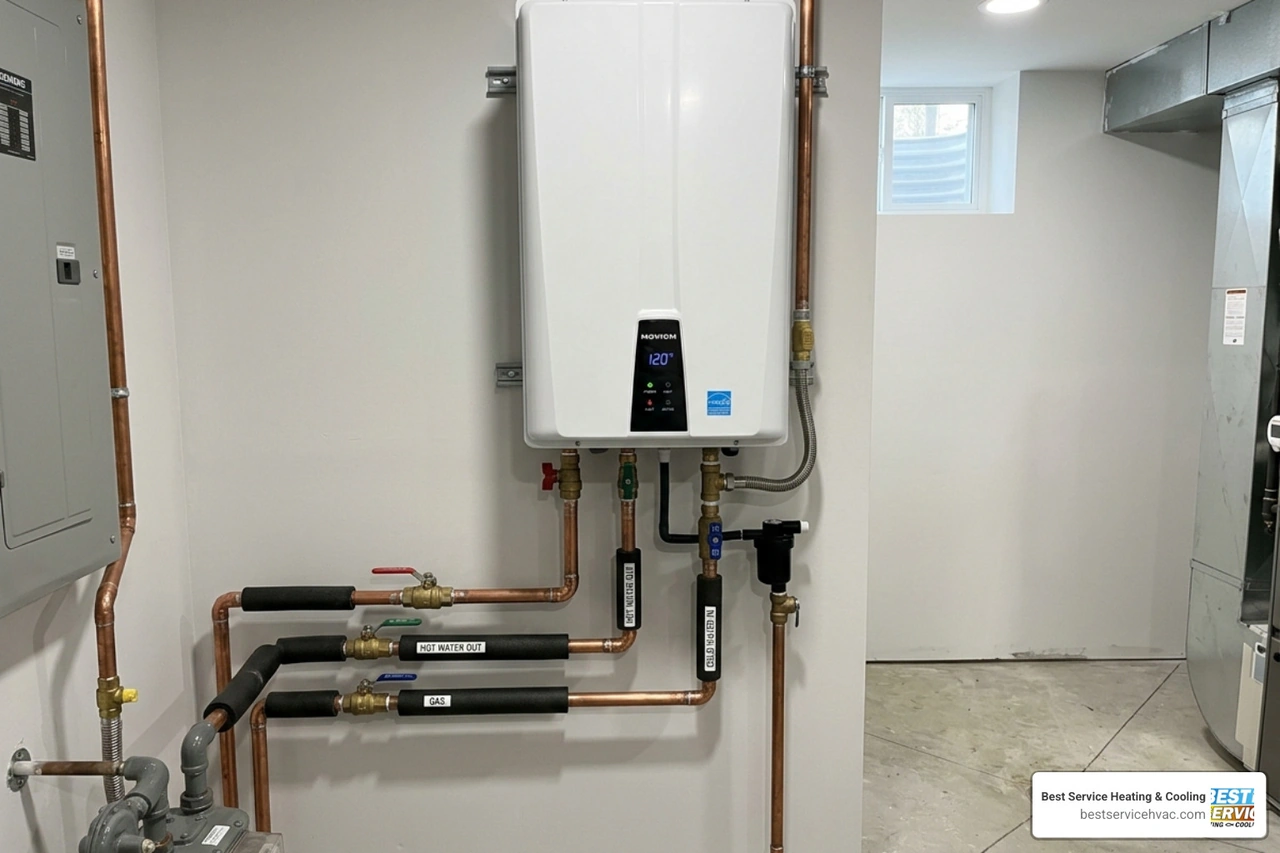
Professional installation ensures the unit is sized correctly for your "peak demand" (like running a shower and the dishwasher at the same time). It also guarantees that the gas lines and venting meet the high BTU requirements of these units. Poor venting can cause condensation to back up into the burner, leading to premature corrosion.
Essential Steps to Maximize Your Investment
To ensure your system outlives your mortgage, we recommend a proactive approach. For our neighbors in Pickerington, OH, installing a water softener or a dedicated scale inhibitor at the water inlet is the single best upgrade you can make. By removing the minerals before they reach the heater, you eliminate the primary cause of failure.
Some modern units now come equipped with advanced technology designed to prevent scale from forming in the first place. These systems can extend the operational life of the unit by up to 300% compared to unmaintained standard models. Additionally, keeping the unit in a climate-controlled area (rather than a freezing garage) prevents the internal components from working harder during our cold Ohio winters.
Signs Your System Is Nearing the End of Its Life
Even the best systems eventually wear out. If your unit is approaching its 15th or 20th birthday, keep an eye out for these warning signs that your Tankless Water Heater Is About To Break Down:
- The "Cold Water Sandwich": This is when you get a blast of cold water in the middle of a hot shower, indicating the sensors or burners are struggling to maintain a steady flow.
- Strange Noises: Banging, rumbling, or screeching sounds often mean that scale buildup has become so thick it's causing the unit to overheat or obstructing the flow.
- Frequent Error Codes: If you find yourself resetting the unit once a week, the internal control board or ignition system is likely failing.
- Reduced Water Pressure: Scale can eventually clog the narrow passages of the heat exchanger, leading to a noticeable drop in hot water pressure.
When to Repair vs. Replace
When a major component fails, we often suggest the "50% Rule." If the repair cost is more than half the price of a new unit—and your system is over 15 years old—it's usually a smarter financial move to replace it. A new installation in areas like Grandview, OH or Bexley, OH will bring higher efficiency ratings and updated technology.
However, because these units are modular, many issues—like a failed fan or a dirty sensor—are simple repairs that can add years back to the unit's life. This is why a professional diagnosis is so important when deciding Traditional Vs Tankless Water Heater For Home upgrades.
Frequently Asked Questions about Tankless Longevity
Can a tankless water heater really last 20 years?
Yes! In fact, many well-maintained gas units can reach 25 or even 30 years. Because they don't hold standing water like a tank, they avoid the "rust-through" issues that kill traditional heaters.
Does hard water significantly shorten the lifespan?
Absolutely. In Central Ohio, untreated hard water can cut a unit's life down to 7-10 years. The minerals form a layer of "rock" inside the heat exchanger, causing it to overheat and eventually crack.
Is annual flushing necessary if I have a water softener?
While a water softener does most of the heavy lifting, we still recommend a flush every two years. Even a small amount of residual mineral content can accumulate over a decade, and a quick flush is cheap insurance for your investment.
Conclusion
Investing in a tankless water heater is a smart move for your home's comfort and long-term budget. While the upfront transition requires professional expertise, the reward is two decades or more of endless hot water and lower energy bills.
At Best Service Heating & Cooling, we’ve been helping Central Ohio families stay comfortable since 1992. As a family-owned business with an A+ BBB rating, we take pride in providing honest advice and high-quality Water Heater services. Whether you are in Columbus, Westerville, or Reynoldsburg, our team is ready to ensure your home has the reliable hot water it deserves.
Ready to make the switch or need to schedule a "rescue flush" for your current unit? Give us a call today!
.webp)
.webp)

Service Areas
