
Why getting the right size HVAC is a total game changer

Why Getting the Right Size HVAC Is a Total Game Changer for Your Home Comfort
How proper HVAC sizing affects comfort and efficiency comes down to one core idea: a system that matches your home's actual heating and cooling needs will keep you comfortable, keep your energy bills in check, and last significantly longer than one that doesn't.
Here's a quick summary:
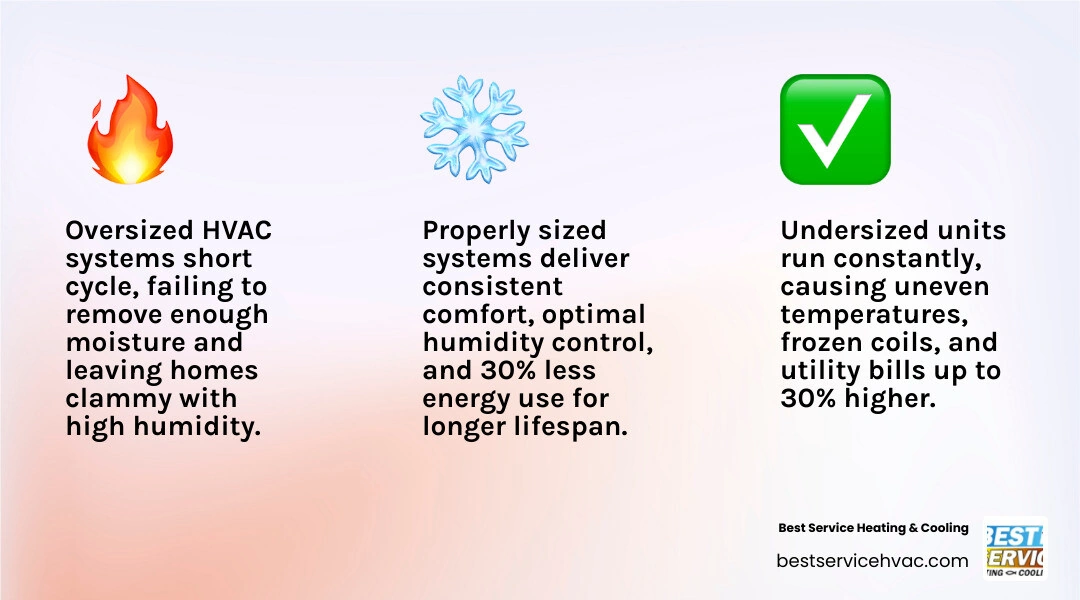
- Too big: The system short cycles — turning on and off rapidly — leaving your home feeling clammy and wasting energy
- Too small: It runs constantly, struggles to reach your target temperature, and drives up utility bills
- Just right: Consistent temperatures, controlled humidity, lower energy use, and a longer system lifespan
More than half of U.S. homes have HVAC systems that are either too large or too small — and most homeowners have no idea. If your home never quite feels comfortable, or your energy bills seem higher than they should be, the size of your system could be the reason.
A properly sized HVAC unit can use up to 30% less energy than an oversized one. And an undersized unit can create temperature swings of up to 10°F between rooms. Neither extreme is acceptable when you're investing in your home's comfort for years to come.
In Central Ohio, where summers bring real humidity and winters can be genuinely brutal, getting this right matters even more. At Best Service Heating & Cooling, we've served Columbus-area homeowners since 1992 — and improper sizing is one of the most common (and most preventable) problems we see.
This guide walks you through everything you need to know: what sizing actually means, what goes wrong when it's off, and how the right approach protects your comfort and your investment.
Understanding the Basics: How Proper HVAC Sizing Affects Comfort and Efficiency
When we talk about HVAC sizing, we aren't talking about the physical dimensions of the metal box sitting outside your house in Dublin or Westerville. We are talking about "capacity"—the system's ability to remove heat (in the summer) or add heat (in the winter) to your living space.
Capacity is measured in two primary ways: BTUs and Tons.
- BTU (British Thermal Unit): This is the amount of energy needed to raise the temperature of one pound of water by one degree Fahrenheit. In HVAC terms, it tells us how much heat the unit can move in one hour.
- Tonnage: This is a bit of a throwback to the days when people cooled buildings with actual ice. One "ton" of cooling capacity equals 12,000 BTUs per hour.
Most residential systems in Central Ohio range from 1.5 to 5 tons. Choosing between them isn't a matter of "more is better." It’s about a precise match. If you buy a 5-ton unit for a home that only needs 3 tons, you aren't getting "extra" cooling; you're getting a system that doesn't know how to run correctly for your floor plan.
| Home Square Footage (Approx.) | Typical Cooling Capacity (Tons) | Capacity in BTUs |
|---|---|---|
| 1,000 – 1,200 | 2.0 Tons | 24,000 BTUs |
| 1,200 – 1,500 | 2.5 Tons | 30,000 BTUs |
| 1,500 – 1,800 | 3.0 Tons | 36,000 BTUs |
| 1,800 – 2,200 | 3.5 Tons | 42,000 BTUs |
| 2,200 – 2,500 | 4.0 Tons | 48,000 BTUs |
While this table offers a starting point, our Services involve much deeper calculations because square footage is only one piece of the puzzle. Factors like your roof type in Hilliard or the number of windows in your New Albany home change these requirements significantly.
The "Bigger is Better" Myth: Problems with Oversized Systems
It’s a common misconception: "If I get a bigger AC, it will cool the house faster!" While an oversized unit will indeed drop the air temperature quickly, it creates a cascade of Performance issues for HVAC system replacement that actually make your home less comfortable.
The biggest problem with an oversized system is short cycling. Because the unit is too powerful, it blasts the house with cold air and reaches the thermostat's set point in just a few minutes. It then shuts off. A few minutes later, the temperature creeps back up, and it kicks on again.
This rapid on-off cycle is a disaster for three reasons:
- Energy Spikes: The startup phase of an HVAC cycle consumes the most electricity. Frequent starts mean your energy bills in Gahanna or Grove City will skyrocket.
- Component Wear: Think of it like driving a car in stop-and-go traffic versus cruising on I-270. The constant starting and stopping puts massive strain on the compressor and blower motor, potentially shortening the system's lifespan by up to 50%.
- Uneven Temperatures: The air near the vents gets cold, but the air in the corners of the room or on the second floor never gets a chance to circulate.
How proper HVAC sizing affects comfort and efficiency by managing humidity
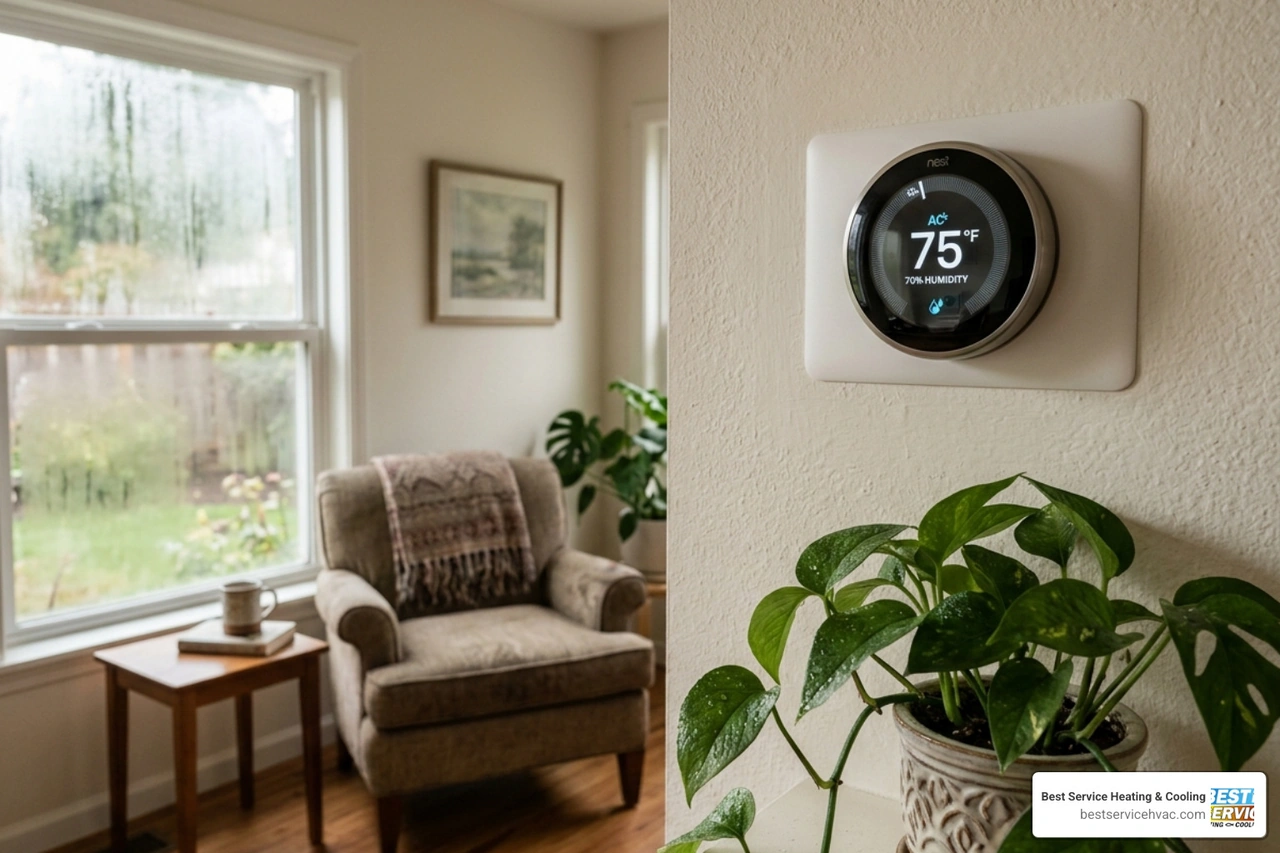
In Columbus, we know all about "muggy" weather. A major part of an air conditioner's job is to act as a giant dehumidifier. To remove moisture from the air, the cooling coils need to stay cold and the air needs to pass over them for a sustained period—usually at least 10 to 15 minutes.
When a system is oversized and short cycles, it never runs long enough to pull moisture out of the air. You end up with what we call the "cold jungle" effect: the air temperature is 72 degrees, but the humidity is so high that the air feels clammy, sticky, and gross.
High humidity isn't just uncomfortable; it's a health risk. Excess moisture promotes the growth of mold, bacteria, and dust mites. This is where the Impact of clean air ducts on HVAC performance becomes critical; if your oversized AC is leaving the house damp, those ducts can become breeding grounds for allergens, severely degrading your indoor air quality.
The Struggle of the Underdog: Risks of Undersized Units
On the flip side, some homeowners end up with an undersized unit, perhaps because they added a room addition or finished a basement without updating their HVAC. If you are considering a Bexley HVAC system replacement, you want to ensure you aren't repeating the mistakes of an underpowered system.
An undersized unit has one speed: "All Out." During a July heatwave in Pickerington, an undersized AC will run 24 hours a day and still might not get the house below 78 degrees.
The risks of an undersized system include:
- Frozen Coils: Because the unit runs constantly without a break, the evaporator coils can actually drop below freezing, causing ice to build up and eventually blocking all airflow.
- Early Failure: Just like running a car engine at the redline for hours on end, a system that never rests will burn out its components years before it should.
- Massive Utility Bills: Even though the unit is "smaller," the fact that it never turns off means it uses far more total kilowatt-hours than a properly sized unit would.
- Extreme Temperature Swings: You’ll likely notice that the rooms furthest from the unit stay uncomfortably hot (or cold in the winter), creating a frustrating experience for anyone trying to sleep in an upstairs bedroom.
The Science of Sizing: Manual J Load Calculations
So, how do we find that "Goldilocks" size that is just right? We don't guess, and we don't just look at what the previous installer put in (because they might have gotten it wrong!). Instead, we use the industry-standard scientific method: the Manual J Load Calculation.
Established by the Air Conditioning Contractors of America (ACCA), Manual J is a rigorous data-entry process. It’s the difference between buying "off-the-rack" shoes and getting a custom-fitted pair. When you are looking for The right company for HVAC repair services or installation, you should always ask if they perform a full load calculation.
The process actually involves three steps:
- Manual J (Load): Determining exactly how much heat your home loses in winter and gains in summer.
- Manual S (Selection): Choosing the specific piece of equipment that matches the Manual J results.
- Manual D (Ducts): Ensuring your ductwork is actually large enough to carry the amount of air the new system produces.
Why professional load calculations are key to how proper HVAC sizing affects comfort and efficiency
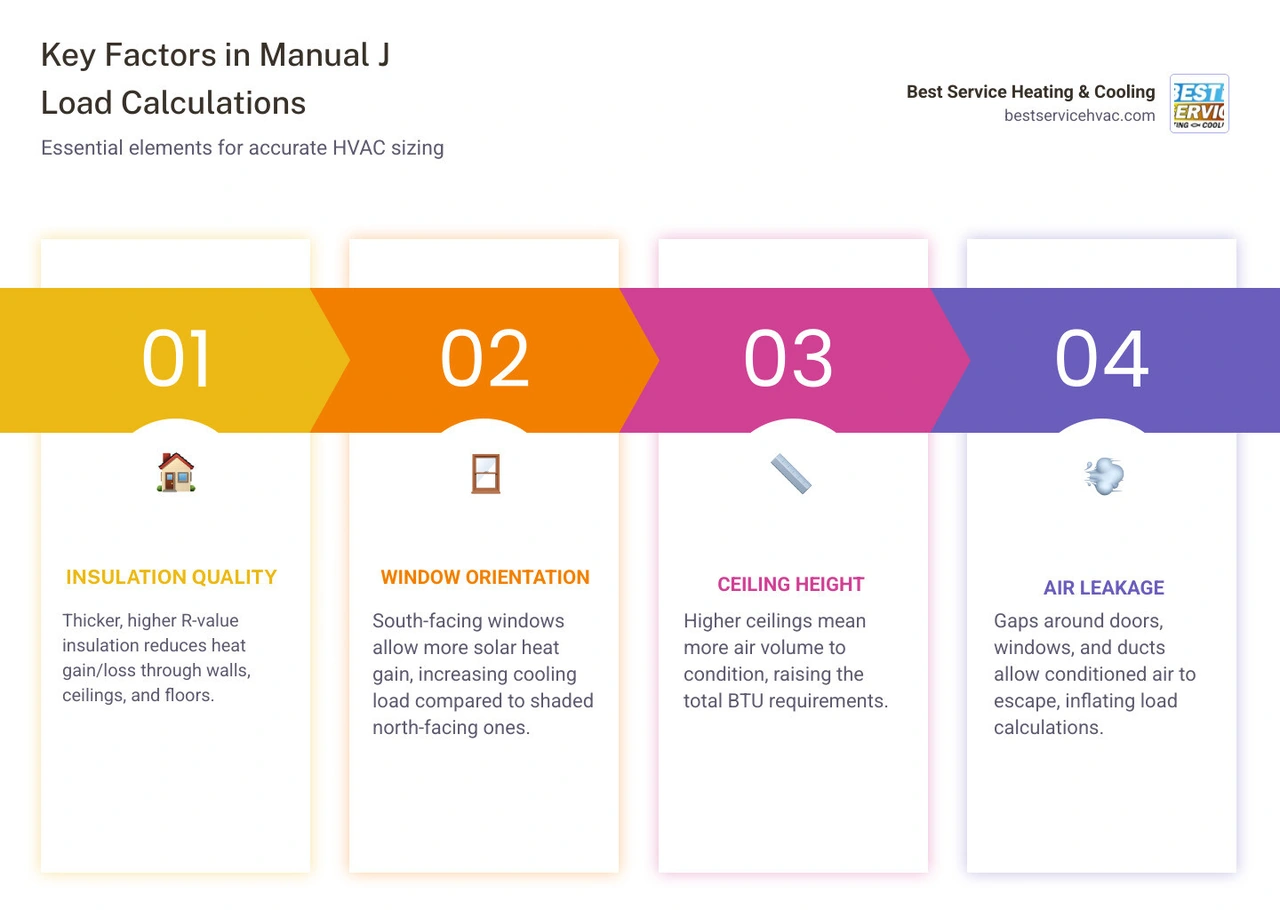
A Manual J calculation isn't just about square footage. It takes a holistic look at your home’s "envelope." To get an accurate number for a home in Clintonville or Upper Arlington, we look at:
- Window Orientation: A home with giant south-facing windows in the living room will have a much higher cooling load than a home shaded by mature trees.
- Insulation Quality: We check the R-value in your attic and walls. A well-insulated home requires a smaller (and more affordable) HVAC system than a drafty one.
- Air Leakage: We look at how "tight" the home is. Older homes in areas like German Village often have significant air infiltration that needs to be accounted for.
- Occupancy Patterns: Five people and two large dogs generate more heat than a single occupant.
- Climate Data: We use specific weather data for Central Ohio to ensure the system can handle our 95°F summer peaks and our sub-zero winter nights.
By considering these variables, we can recommend a system that operates at peak efficiency. This is also the perfect time to discuss Spring AC and HVAC maintenance for Central Ohio to ensure that once your perfectly sized system is installed, it stays in top shape.
Frequently Asked Questions about HVAC Sizing
We know that HVAC technicalities can be overwhelming. Here are some of the most common questions we hear from our neighbors in Columbus and the surrounding suburbs. You can also find more answers on our FAQ page.
Can I use a square footage "rule of thumb" to size my unit?
In the old days, some contractors used a "rule of thumb" like "one ton for every 500 square feet." We strongly advise against this.
Two houses in Dublin could both be 2,000 square feet, but if one was built in 1960 with original windows and the other was built in 2024 with high-efficiency spray foam insulation, their HVAC needs will be completely different. Using a rule of thumb almost always leads to oversizing, which brings back all those short-cycling and humidity problems we discussed earlier. Accuracy requires a Manual J.
What are the signs that my current system is improperly sized?
If you suspect your current unit is the wrong size, look for these "red flags":
- The 10-Minute Cycle: If your AC turns on, blasts air for 8 minutes, and shuts off, it’s likely oversized.
- The Never-Ending Run: If it’s 85 degrees outside and your AC hasn't turned off in four hours, it’s likely undersized.
- The "Cold Jungle": If your skin feels sticky or your home smells musty even though it's cool, you have a humidity/sizing issue.
- Hot and Cold Spots: If the kitchen is a freezer but the master bedroom is a sauna, your system and ductwork aren't matched to the home's layout.
Regular Columbus HVAC preventative service can help identify these issues and determine if a simple repair or a full resizing is necessary.
Does a high SEER rating make up for a poorly sized unit?
SEER (Seasonal Energy Efficiency Ratio) is like the MPG rating on a car. A higher SEER means the unit can be more efficient. However, efficiency ratings mean nothing if the sizing is wrong.
Think of it this way: You could buy a hybrid car that gets 50 MPG, but if you only use it to drive 100 yards at a time and then turn it off, you'll never actually see those fuel savings. Similarly, a 20-SEER air conditioner that is oversized will short cycle so often that it actually uses more energy than a properly sized 14-SEER unit. True efficiency only happens when the technology is matched to the load.
Conclusion
Choosing a new HVAC system is one of the biggest investments you'll make in your home. It’s not just about picking a brand; it’s about engineering a solution that fits your specific life and your specific four walls.
At Best Service Heating & Cooling, we take pride in being a family-owned business that has served Central Ohio since 1992. From Reynoldsburg to Powell and everywhere in between, we’ve built our A+ BBB rating by giving homeowners honest answers and scientific calculations—not "rule of thumb" guesses.
If you’re tired of uneven temperatures, high humidity, or utility bills that keep climbing, it’s time to see what a properly sized system can do. Whether you need a quick repair or are ready to explore a total system replacement, we are here to help.
Learn more About our commitment to your comfort or browse our full range of HVAC solutions today. Let's get your home comfort "just right."

.webp)
.webp)

Service Areas
