
Don't Let Your House Stifle You

Why Indoor Air Quality Matters in Your Central Ohio Home in 2026
If you want to know how to improve indoor air quality at home, here are the most effective steps you can take right now:
- Control pollution at the source - switch to low-VOC products, avoid indoor smoking, and limit candles and chemical sprays
- Ventilate regularly - open windows when outdoor air is clean, and always run exhaust fans while cooking or showering
- Upgrade your filtration - use MERV-13 or HEPA filters in your HVAC system and consider a standalone air purifier
- Manage humidity - keep indoor levels between 30-50% to prevent mold and dust mites
- Clean consistently - vacuum with a HEPA-filter vacuum at least twice a week and wash bedding weekly in hot water
- Test for hidden hazards - check for radon and install carbon monoxide detectors on every floor
- Schedule HVAC maintenance - clean, well-maintained systems circulate and filter air far more effectively
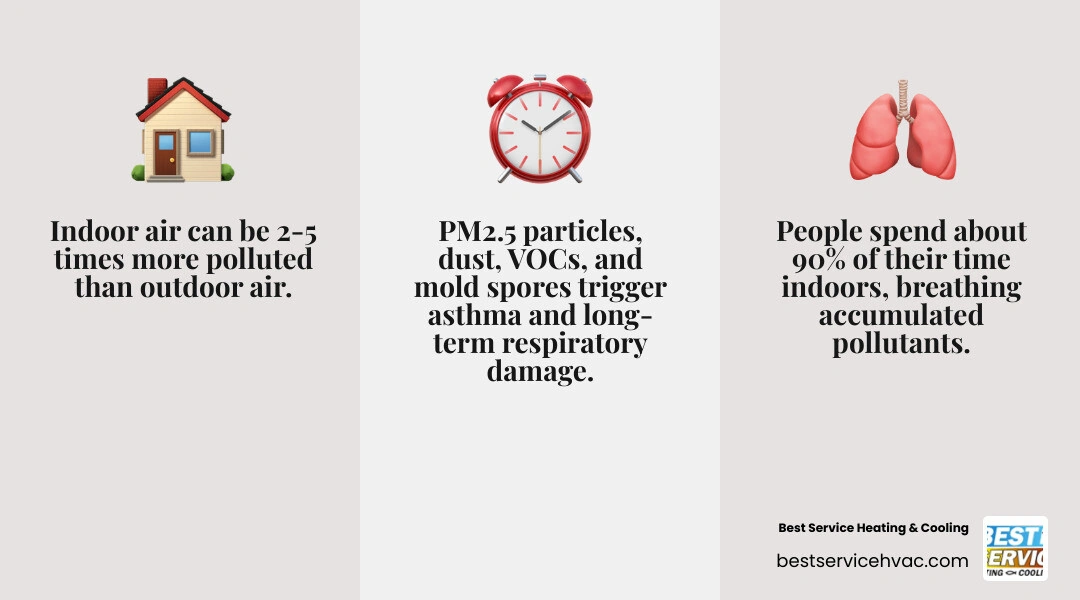
Here's something most Columbus-area homeowners don't realize: the air inside your home can be 2 to 5 times more polluted than the air outside. According to the EPA, Americans spend roughly 90% of their time indoors — and that number climbs even higher during Central Ohio's cold winters, when windows stay shut for months and heating systems run around the clock.
That means the air circulating through your living room, bedroom, and kitchen carries far more weight than most people give it credit for. Dust, pet dander, mold spores, volatile organic compounds (VOCs) from cleaning products, and fine particles called PM2.5 — invisible to the naked eye — can quietly build up to levels that irritate your lungs, trigger asthma attacks, disrupt sleep, and cause long-term health damage.
The good news? Most of the fixes are practical, and many are low-cost. Whether your home feels stuffy, someone in your family deals with allergies or asthma, or you just want to breathe easier, this guide walks you through exactly what to do — from simple daily habits to whole-home HVAC upgrades that make a lasting difference.
The Hidden Dangers of Poor IAQ
Indoor Air Quality (IAQ) isn't just about whether your house smells like last night's fish tacos. It’s about the concentration of microscopic particles and gases that we inhale thousands of times a day. In 2026, we are more aware than ever that the "sealed" nature of modern, energy-efficient homes can actually trap these pollutants inside.
Poor IAQ can lead to "Sick Building Syndrome," where residents experience headaches, dizziness, and fatigue that seem to vanish once they leave the house. More seriously, it acts as a major trigger for asthma and chronic respiratory irritation. For our neighbors in Reynoldsburg or Westerville, keeping a close eye on these levels is vital. If you’ve ever wondered if your home is part of the problem, using an Air Quality Monitor Reynoldsburg Blog can help you identify real-time spikes in pollutants.
How to Improve Indoor Air Quality at Home Through Source Control
The most effective way to manage air quality is simple: don't let the bad stuff in the house to begin with. This is what experts call "source control." It is often more cost-efficient than trying to filter out pollutants after they’ve already filled your rooms.
Think of your home like a bathtub. You can keep the drain open (ventilation) or use a sponge (filtration), but the best way to keep the tub from overflowing is to turn off the faucet.

Eliminating Chemical Pollutants and VOCs
Volatile Organic Compounds, or VOCs, are gases emitted from certain solids or liquids. They are found in thousands of household products, from paints and lacquers to cleaning supplies and even new furniture. In fact, VOC levels can be up to ten times higher indoors than outdoors.
To cut these down, we recommend:
- Choosing Low-VOC Paints: When repainting your home in Downtown Columbus, look for "Low-VOC" or "No-VOC" labels.
- Fragrance-Free Living: Many of those "ocean breeze" air fresheners and scented candles are actually releasing synthetic fragrances and phthalates into your lungs. Opt for beeswax or soy candles, or better yet, natural essential oil diffusers.
- Safe Cleaning: Switch to natural alternatives like vinegar and baking soda. If you must use heavy-duty cleaners, ensure the area is heavily ventilated.
- Furniture Off-gassing: New "pressed wood" furniture often contains formaldehyde. Whenever possible, buy solid wood or used furniture that has already finished its initial off-gassing period.
If you are looking for specific solutions to combat these chemicals, our team offers various IAQ Products Downtown Columbus OH designed to neutralize gaseous pollutants. Residents in other areas can also explore IAQ Products Pataskala OH to find the right fit for their specific home layout.
Managing Biological Contaminants
Biological pollutants include living things (or derivatives of them) like mold, dust mites, pet dander, and pollen. These are the primary culprits for seasonal allergies and year-round sneezing fits.
- Pet Dander: We love our furry friends, but their skin cells and hair are major irritants. Brush pets regularly (ideally outdoors) and keep them out of bedrooms to create a "clean air sanctuary" for sleeping.
- Dust Mites: These microscopic critters thrive in bedding and carpets. Wash your sheets weekly in hot water (at least 130°F) to kill them off.
- Pollen: During Ohio's high-pollen seasons, keep windows closed and use your AC system to filter the incoming air.
One of the most overlooked sources of biological contaminants is your ductwork. Over years, dust and dander settle in the vents, only to be blown back into your face every time the furnace kicks on. Scheduling professional Air Duct Cleaning Columbus OH can remove these built-up reservoirs of allergens.
Maximizing Ventilation and Airflow for Freshness
If source control is turning off the faucet, ventilation is opening the drain. Proper airflow dilutes the concentration of indoor pollutants by bringing in fresh outdoor air. However, most modern Central Ohio HVAC systems are "closed loops," meaning they recirculate the same air rather than pulling in fresh air from outside.
When and How to Ventilate Your Space
Natural ventilation is the easiest method—just open a window! However, to do it effectively, you should aim for "cross-ventilation" by opening windows on opposite sides of the house. This creates a breeze that pushes stale air out and pulls fresh air in.
Mechanical ventilation is also key. Always use your exhaust fans in the bathroom and kitchen. Kitchen fumes from gas stoves can release nitrogen dioxide and carbon monoxide, while bathroom steam can lead to mold. We suggest running these fans for at least 15 to 20 minutes after you finish cooking or showering. For those in Dublin, specialized systems like Heat Recovery Ventilators (HRVs) can provide a constant stream of fresh air without losing your indoor heat. You can learn more about Ventilation Dublin OH - Enhancing Indoor Air Quality. Similar services are available for our neighbors through Ventilation New Albany OH.
How to Improve Indoor Air Quality at Home During High Outdoor Pollution
There are times when opening the window is the worst thing you can do. If the Outdoor Air Quality Index (AQI) is high due to wildfire smoke, high ozone days, or heavy traffic pollution, you need to seal your home tight.
During these periods:
- Keep Windows Shut: Rely on your HVAC system.
- Recirculate Mode: Set your thermostat to "Recirculate" or "On" rather than "Auto" to ensure air is constantly passing through your filters.
- Seal Leaks: Use weatherstripping to prevent outdoor smog from seeping through cracks.
For specialized assistance in managing these transitions, check out our options for Ventilation Gahanna OH to ensure your home remains a safe haven regardless of what’s happening outside.
Advanced Filtration and Humidity Management
Sometimes, the air needs a little extra "muscle" to get clean. This is where filtration and humidity control come into play.
| Filter Type | Particle Capture Efficiency | Best For |
|---|---|---|
| MERV 8 | Captures large particles (dust, lint) | Basic HVAC protection |
| MERV 13 | Captures fine particles (smoke, bacteria) | Homeowners with allergies |
| HEPA | Captures 99.97% of particles down to 0.3 microns | Maximum clinical-grade protection |
How to Improve Indoor Air Quality at Home with High-Efficiency Filters
Most standard 1-inch filters are designed to protect your furnace, not your lungs. To truly clean the air, you need to upgrade. A MERV-13 filter is often the "sweet spot" for residential homes, as it is thick enough to catch bacteria and smoke but doesn't restrict airflow so much that it damages your blower motor.
If you have severe asthma or live in an area with high dust, you might consider Whole House Air Filtration Westerville OH. These systems are integrated into your ductwork and provide much higher Clean Air Delivery Rates (CADR) than portable units. For those in more historic areas, Whole House Air Purifiers German Village OH can be a game-changer for removing the specific types of dust found in older homes.
Balancing Humidity for Health
Humidity is the "Goldilocks" of indoor air quality: you don't want too much, and you don't want too little.
- High Humidity (>50%): This is the danger zone for mold growth and dust mite infestations. It can also make the air feel "heavy" and encourage VOCs to off-gas faster. If your basement feels muggy, consider Whole House Dehumidifiers Hilliard OH.
- Low Humidity (<30%): Common in Ohio winters, dry air can crack your woodwork, dry out your sinuses (making you more susceptible to viruses), and cause itchy skin. A Whole House Humidification Columbus OH system can keep your home at a comfortable 40% year-round.
Professional IAQ Solutions
For the ultimate clean, we often recommend "active" purification. While filters are "passive" (they wait for the air to come to them), products like UV Lights and iWAVE technology go out and attack pollutants.
- UV Coil Purifiers: These are installed inside your AC unit to kill mold and bacteria on the evaporator coil before they can be blown into your home. It’s a great way to prevent "dirty sock syndrome" (that musty smell when the AC kicks on). Check out UV Coil Purifiers Columbus OH for more details.
- iWAVE Ionization: This technology creates ions that cause small particles (like smoke and dust) to clump together, making them large enough for your filter to catch. It also neutralizes viruses and bacteria.
You can explore these and other Improve IAQ HVAC System Upgrades Blog to see which technology fits your lifestyle.
Frequently Asked Questions about Home Air Quality
Do indoor plants truly improve air quality?
You’ve likely seen the headlines about NASA’s "Clean Air Study." While it’s true that plants like Peace Lilies and Snake Plants can absorb VOCs in a sealed laboratory, the real-world impact is a bit more modest. To match the air-cleaning power of a single high-quality air purifier, you would need roughly 10 to 100 plants per square yard of floor space!
However, plants do offer great psychological benefits and can slightly boost humidity. Just be careful not to overwater them, as damp soil can become a breeding ground for mold and gnats.
How do I address radon and carbon monoxide?
These are the "silent killers" because they are colorless and odorless.
- Radon: This is a radioactive gas that seeps into homes from the soil. It is the second leading cause of lung cancer in the U.S. Because Central Ohio has high radon potential, we recommend every homeowner use a low-cost testing kit.
- Carbon Monoxide (CO): This comes from malfunctioning gas appliances (furnaces, water heaters, stoves). You should have CO detectors on every floor and near every sleeping area.
How often should I clean my air ducts?
There isn't a "one size fits all" answer, but generally, we recommend an inspection every 3 to 5 years. If you have pets, have recently finished a home renovation, or notice a "poof" of dust when the air turns on, it’s time for a cleaning. Keeping your ducts clear not only improves air quality but also boosts your HVAC system's performance and longevity. You can read more about why this matters here: Regular Air Duct Cleaning Improve Home Blog.
Conclusion
Breating clean air shouldn't be a luxury. By combining source control, proper ventilation, and advanced filtration, you can transform your home into a true sanctuary. Whether you are in Dublin, Westerville, or right here in Reynoldsburg, the team at Best Service Heating & Cooling is ready to help you find the perfect balance for your home.
We are a family-owned business that has been serving Central Ohio since 1992. With our A+ BBB rating and a commitment to affordable, high-quality comfort, we take pride in helping our neighbors breathe easier. If you’re ready to take the next step in your home's health, visit our IAQ page today to see our full range of solutions. Don't let your house stifle you—give us a call and let's get that air moving!
.webp)
.webp)

Service Areas
