
How to Prevent Freeze Damage From Ohio Freeze Thaw Cycles

Why Ohio Freeze-Thaw Cycles Are a Serious Threat to Your Home's HVAC and Plumbing
How Ohio freeze-thaw cycles affect your HVAC and plumbing is one of the most underestimated winter hazards facing Central Ohio homeowners. Here's a quick summary:
How Ohio Freeze-Thaw Cycles Affect HVAC and Plumbing — At a Glance:
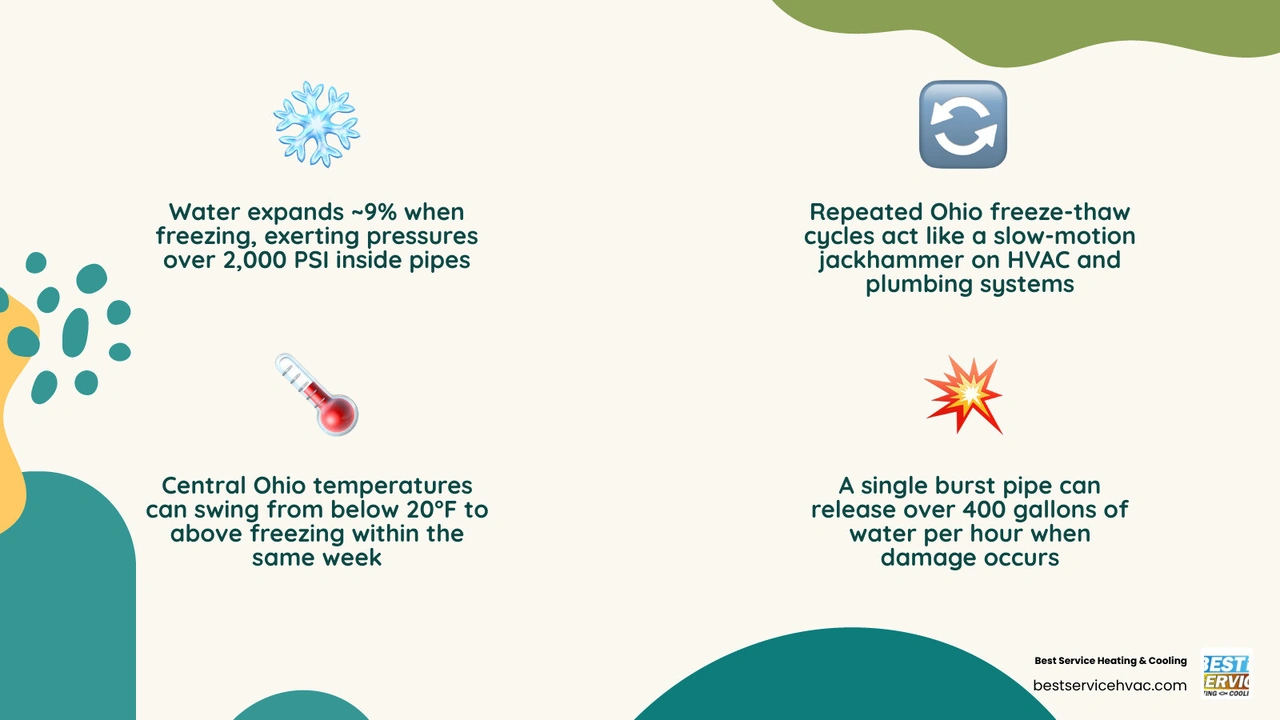
- Pipes: Water expands ~9% when it freezes, building pressure exceeding 2,000 PSI inside pipe walls — often causing bursts during the thaw, not the freeze
- Heat pumps and outdoor AC units: Ice and snow block airflow, forcing units to run constantly while delivering little heat and straining compressors
- Furnaces: Frozen condensate lines trigger safety shutdowns and error lockouts in high-efficiency systems
- Water heaters: Frozen supply or condensate lines starve the unit, causing shutoffs or internal damage — especially in tankless models
- Sewer and drain lines: Soil expansion from freezing ground shifts buried pipes, separating joints and causing backups
- Foundations and structural gaps: Repeated freeze-thaw cycles widen small cracks, allowing water intrusion with every new cycle
Ohio winters aren't just long — they're unpredictable. Temperatures across Central Ohio can swing from below 20°F to well above freezing within the same week. That kind of back-and-forth doesn't just feel harsh. It quietly puts enormous stress on the pipes, equipment, and mechanical systems that keep your home running.
Most homeowners don't notice the damage until water is already flowing somewhere it shouldn't be. A single burst pipe can release over 400 gallons of water per hour, and frozen HVAC components can trigger system failures right when you need heat the most. The good news is that most of this damage is preventable — if you know what to look for and when to act.
This guide breaks down exactly what freeze-thaw cycles do to your home's HVAC and plumbing systems, which components are most at risk, and what you can do right now to protect them.
How Ohio Freeze Thaw Cycles Affect Your HVAC and Plumbing
When we think of winter damage, we usually picture a prolonged, deep freeze. But in places like Columbus, Dublin, and Grove City, the real danger is the constant shifting between freezing and thawing. This back-and-forth cycle acts like a slow-motion jackhammer on your home's mechanical systems.
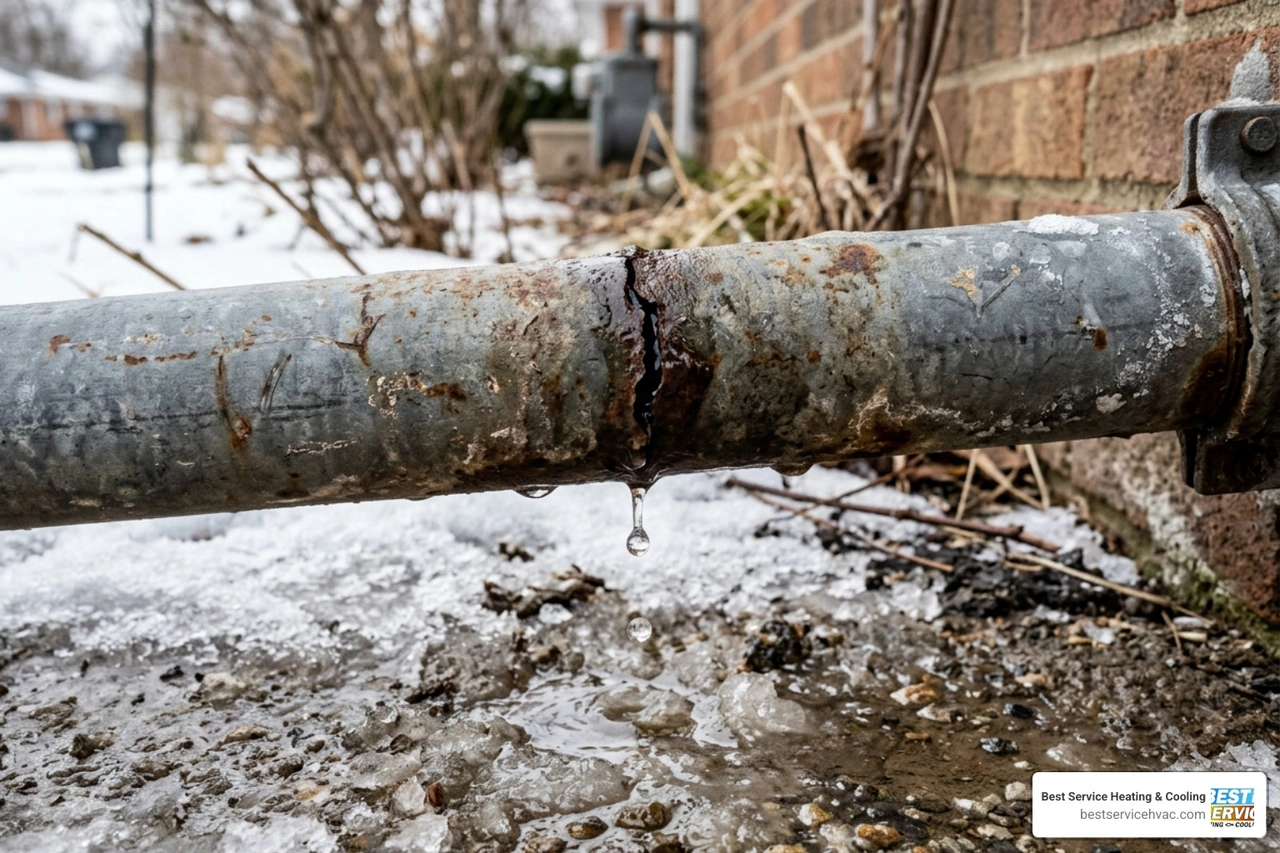
Every time the temperature dips below freezing, water trapped inside uninsulated pipes, condensate lines, or outdoor drains turns to solid ice. As it does, it expands with immense force. When the temperature climbs back above 32°F, that ice melts, but the structural integrity of the metal, plastic, or concrete holding it has already been compromised.
This process doesn't just happen once or twice a winter. In Central Ohio, we experience dozens of these mini freeze-thaw cycles between late December and early March.
The soil surrounding your home plays a major role in this process. Central Ohio is known for its heavy, clay-rich soil. Unlike sandy soils that drain quickly, clay soil acts like a sponge, absorbing and holding onto large amounts of water. When this water-logged clay freezes, it undergoes a process called frost heave, expanding outward and upward. This movement puts incredible lateral pressure on buried sewer lines, water mains, and even your home’s foundation.
As the ground shifts by inches over a single winter, buried plumbing joints can pull apart, and older cast iron or clay pipes can easily crack. If your heating system relies on a basement setup or a boiler, this shifting soil and the resulting hydrostatic pressure can lead to water seeping through foundation cracks, putting your indoor mechanical equipment at risk. When things go wrong with your heating system during these intense weather shifts, scheduling a professional Furnace Repair Grove City OH is the fastest way to restore safety and comfort to your home.
How Ohio Freeze Thaw Cycles Affect Your HVAC and Plumbing: The Science of Ice Expansion
To understand why freeze-thaw cycles are so destructive, we have to look at the unique physics of water. Most liquids shrink and become denser as they cool. Water does too—until it reaches about 39°F. Below that point, its molecules begin to arrange themselves into a crystalline structure that actually takes up more space.
By the time water freezes solid at 32°F, it has expanded by approximately 9% in volume.
When water is confined inside a copper, PEX, or PVC pipe, that 9% expansion has nowhere to go. As the ice block grows, it acts like a piston, pushing the remaining liquid water down the line. This creates a pocket of extreme hydrostatic pressure between the ice blockage and the closed faucet or valve. This pressure can easily exceed 2,000 PSI—far beyond the burst threshold of standard residential plumbing pipes, which typically handle around 100 to 150 PSI.
This pressure buildup is also why boilers and hydronic heating systems are incredibly vulnerable. If your home uses a boiler, a frozen pipe doesn't just mean a lack of running water; it can stop the circulation of heat entirely, leading to a cracked heat exchanger or a ruined boiler unit. Keeping up with regular maintenance, such as checking out this Boiler Maintenance Dublin OH Guide, ensures your hydronic system is protected against these extreme pressure spikes.
Spotting the Warning Signs of How Ohio Freeze Thaw Cycles Affect Your HVAC and Plumbing
Because freeze-thaw damage happens gradually, you have to keep a close eye out for early warning signs before a minor issue turns into a major home emergency.
Here is what you should watch for during a freeze-thaw transition:
- Reduced Water Flow: If you turn on a faucet and only get a trickle, or if your shower pressure suddenly plummets, there is a strong chance ice has partially blocked the pipe.
- Frost on Exposed Pipes: Visually inspect accessible plumbing in your basement, crawlspace, or garage. If you see frost forming on the outside of a copper or plastic pipe, that pipe is actively freezing.
- Strange Gurgling Odors or Slow Drains: When ice forms in your sewer vent stacks or drain lines, it restricts the gravity-fed flow of wastewater. You might hear gurgling from your drains or notice a faint sewer smell inside.
- Water Stains or Peeling Paint: During a thaw, keep an eye on your drywall and ceilings. Small, hairline fractures in pipes caused by ice expansion will begin to leak as the ice melts, leaving damp spots or bubbling paint.
- Boiler or Furnace Short-Cycling: If your heating system turns on and off rapidly, a frozen condensate line or safety switch might be struggling to drain properly.
If you notice any of these issues, especially concerning your hot water supply, it is crucial to read up on the Warning Signs Your Water Heater Needs Repair to catch failures before they lead to a flooded utility room.
Vulnerable HVAC Components and the Impact of Snow Accumulation
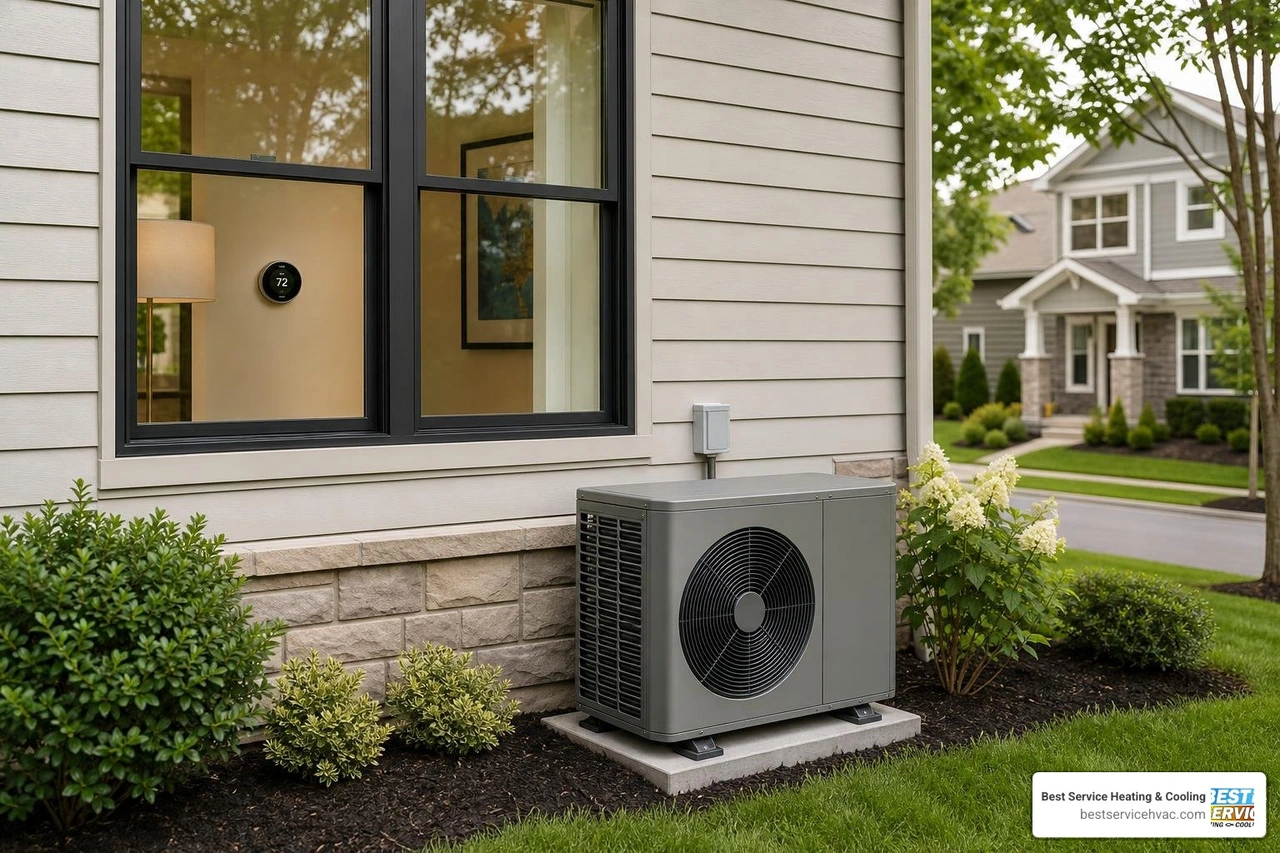
Your outdoor heat pump or air conditioning condenser is designed to withstand the elements, but Ohio's winter weather swings can push these systems to their limits. The combination of heavy, wet snow and rapid freeze-thaw cycles is particularly tough on heat pumps, which must run year-round to keep your home warm.
When snow accumulates around your outdoor unit, it restricts vital airflow. A heat pump works by extracting heat from the outdoor air—even when it feels freezing to us—and transferring it indoors. If the outdoor coils are buried in snow or encased in a thick sheet of ice from a daytime melt that refroze overnight, the system cannot breathe.
This lack of airflow causes several serious problems:
- Continuous Running: The system will run constantly without ever reaching your thermostat's set temperature, driving up your energy bills.
- Defrost Cycle Overload: Heat pumps have an automatic defrost mode designed to melt light frost off the coils. However, heavy snow and thick ice can overwhelm this cycle, causing the unit to freeze solid.
- Compressor Strain: Operating with restricted airflow forces the compressor to work much harder, leading to premature wear or complete motor failure.
- Physical Damage: Heavy icicles falling from your roof gutters can bend fan blades, damage the outer grille, or crush delicate aluminum coil fins.
To prevent these issues, always maintain at least a two-foot clearance of clear space around your outdoor HVAC unit. Gently brush away snow accumulation after a storm, and never use sharp metal objects or boiling water to clear ice from the coils, as this can easily puncture the refrigerant lines. If your system is struggling to keep up during a cold snap, scheduling a professional Heating Service Powell OH can diagnose and resolve airflow or defrost issues before permanent damage occurs.
Protecting Your Water Heater and Plumbing From Extreme Pressure
High-efficiency furnaces and modern water heaters rely on condensate drain lines to carry away the water vapor produced during the combustion process. Because these PVC lines often exit the home through an exterior wall or run through unheated crawlspaces, they are highly susceptible to freezing.
When a condensate line freezes solid, the water has nowhere to go. Modern high-efficiency systems are equipped with safety float switches designed to detect this backup. To prevent water from spilling into your home or damaging the internal electronics, the system will trigger an emergency lockout. This means your heat or hot water will shut down completely, often displaying an error code on your thermostat or unit screen.
Tankless water heaters are especially vulnerable to internal freeze damage. Unlike traditional tank heaters that keep a large volume of hot water warm at all times, tankless units hold only a small amount of water inside thin copper or stainless steel heat exchanger channels. If cold air drafts blow back through the exhaust vent during a freeze-thaw cycle, the water inside these delicate channels can freeze in minutes, splitting the metal and requiring a costly, full replacement.
If you suspect your water heater has been affected by a freeze-thaw cycle or is showing signs of a leak, acting quickly is essential. Getting a professional Water Heater Repair Berwick OH can save your system’s heat exchanger and restore your hot water before a minor split turns into a major flood.
Regional Ohio Frost Lines and Targeted Preventative Maintenance
To protect your home, it helps to understand how deep the winter freeze actually penetrates the ground in our state. The "frost line" is the depth to which groundwater in the soil is expected to freeze during a typical winter. Building codes require footings and water service lines to be buried below this line to prevent shifting and freezing.
| Ohio Region | Average Frost Line Depth | Primary Soil Type | Freeze-Thaw Frequency |
|---|---|---|---|
| Northeast Ohio (Cleveland, Akron) | 36 - 42 Inches | Heavy Glacial Clay / Loam | High (Lake Effect Snow & Quick Thaws) |
| Central Ohio (Columbus, Dublin) | 30 - 36 Inches | Dense Clay / Silt | Very High (Frequent Temp Swings) |
| Southwest Ohio (Cincinnati, Dayton) | 24 - 30 Inches | Clay / Sandy Clay | Moderate to High (Milder but Volatile) |
Because Central Ohio sits right in the middle, our 30-to-36-inch frost line means that any shallow plumbing, outdoor spigots, or poorly insulated crawlspace lines are at extreme risk during our frequent temperature swings.
Practical Steps to Protect Your Home:
- Insulate Exposed Pipes: Wrap any plumbing lines in your basement, attic, garage, or crawlspace with high-quality foam or rubber pipe insulation.
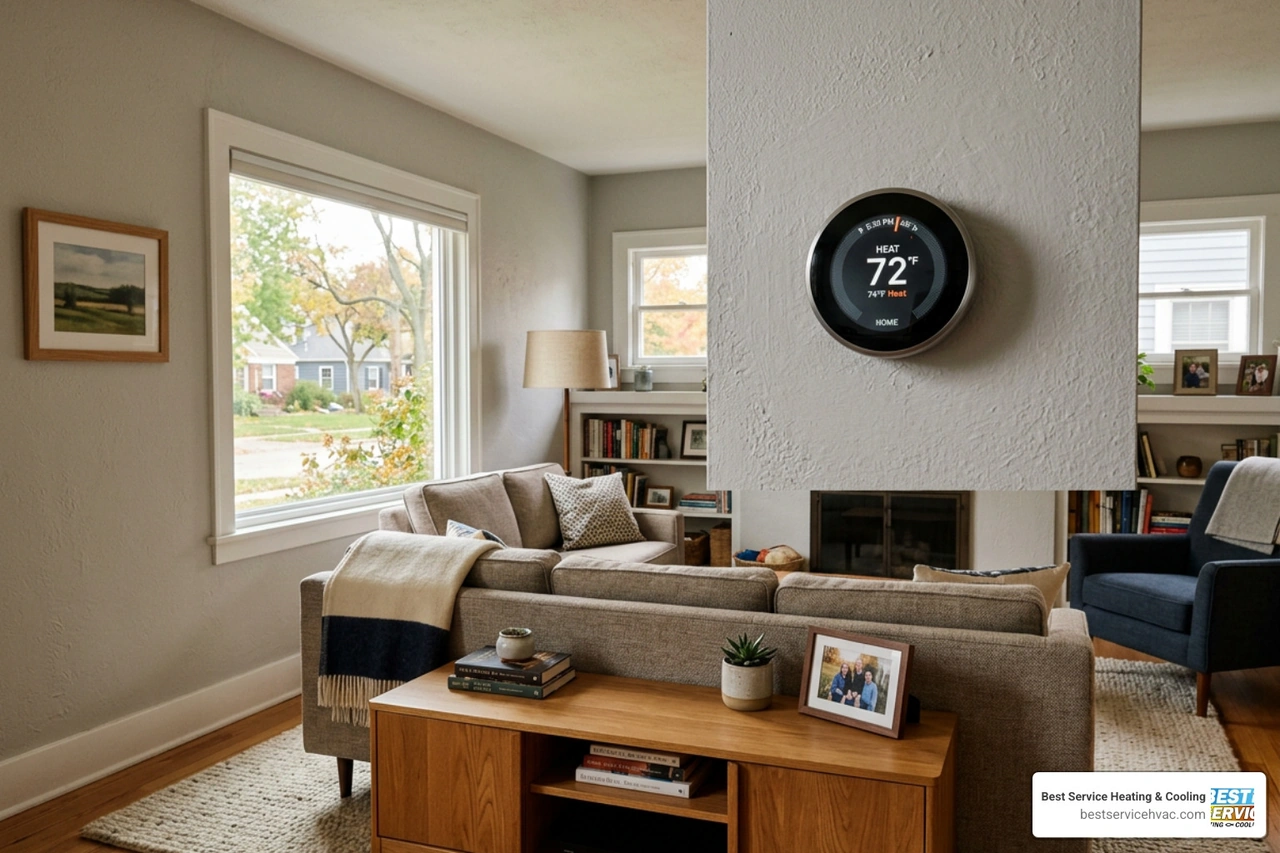
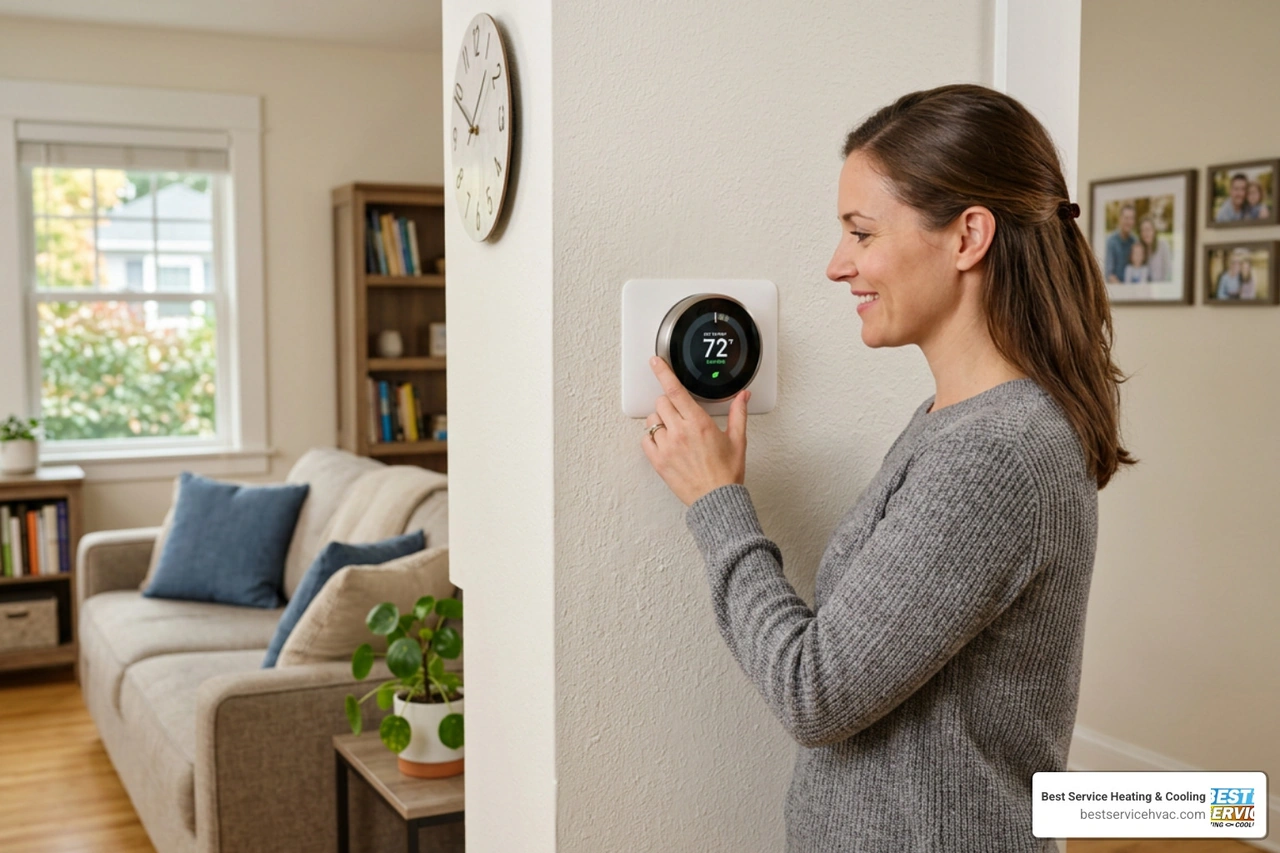
- Maintain Consistent Thermostat Settings: Avoid turning your thermostat down too low at night or when you are away. Keeping your home at a consistent temperature (no lower than 55°F, and ideally between 68°F and 70°F during extreme cold snaps) keeps warm air circulating through your wall cavities where pipes are located.
- Seal Drafts and Foundation Gaps: Use caulk or expanding foam to seal any gaps around outdoor dryer vents, outdoor hose bibs, or cable lines where cold air can blow directly onto interior pipes.
- Drain Outdoor Spigots: Disconnect garden hoses before the first freeze, shut off the interior shutoff valve to your outdoor spigots, and open the outdoor faucet to let any remaining water drain out completely.
Frequently Asked Questions About Ohio Freeze-Thaw Damage
At what temperature do pipes begin to freeze in Ohio?
Generally, residential water pipes can begin to freeze when the outdoor temperature drops below 20°F. However, this depends heavily on wind chill, insulation quality, and where the pipes are located. An uninsulated pipe in a drafty crawlspace or inside an exterior wall can freeze solid in as little as 6 to 8 hours of sustained cold, even if the outdoor temperature is slightly above 20°F.
How does snow accumulation affect my outdoor heat pump?
Snow accumulation blocks the critical airflow your heat pump needs to extract heat from the outdoor air. When buried in snow, the system will run continuously without warming your home, leading to high energy bills and severe compressor strain. In worst-case scenarios, the moisture can refreeze on the fan blades, causing them to warp or damage the fan motor.
Why do most pipe bursts happen during a sudden thaw?
It sounds counterintuitive, but pipes rarely burst at the exact moment or location where the water freezes. Instead, the burst occurs during the thaw. As the ice begins to melt, the water pressure trapped between the moving ice blockage and a closed valve or faucet spikes dramatically. The pressure finds the weakest point in the pipe—often a joint or a section already stressed by previous freeze-thaw cycles—and ruptures it.
Conclusion
Ohio's unpredictable winter weather doesn't have to put your home at risk. By understanding how freeze-thaw cycles impact your HVAC and plumbing systems, you can take simple, proactive steps to protect your property from costly water damage and sudden heating breakdowns.
From insulating vulnerable pipes to keeping your outdoor units clear of snow and ice, a little preventative maintenance goes a long way. Since 1992, Best Service Heating & Cooling has been helping Central Ohio families stay warm, safe, and comfortable. As a family-owned business with an A+ rating from the BBB, we provide top-rated residential HVAC services throughout Columbus, Dublin, Grove City, Westerville, and the surrounding areas.
Don't wait for the next major temperature swing to find out if your system is ready. Protect your home year-round by signing up for a comprehensive Best Service Heating & Cooling Maintenance Plan. Our trained technicians will inspect, clean, and tune up your heating system, giving you peace of mind no matter what the Ohio winter throws your way. Contact us today to schedule your seasonal service!
.webp)
.webp)

Service Areas
