
When Replacing Your HVAC Makes More Sense Than Another Band-Aid

My HVAC system keeps breaking down. Who provides the best advice on whether to repair or replace it in Columbus?
Deciding should I repair or replace my HVAC system is one of the most important calls a homeowner can make — especially when it breaks down during a Central Ohio heat wave or a January cold snap. The answer depends on a few key factors you can check right now.
Quick Answer: Repair or Replace?
| Situation | Recommended Action |
|---|---|
| System is under 10 years old, first major issue | Repair |
| Repair frequency is increasing significantly | Replace |
| Repair is a major portion of a new system's value | Replace |
| System uses R-22 (Freon) refrigerant | Replace |
| Cracked heat exchanger or CO risk detected | Replace immediately |
| Three or more repairs in the last three years | Replace |
| System is under warranty | Repair |
| Minor part failure (capacitor, contactor) on any age unit | Repair |
Most homeowners face this decision once or twice in their lives, and getting it wrong in either direction can lead to long-term frustration. Replacing a system too soon can be unnecessary, while pouring resources into a failing unit creates what industry pros call a "repair spiral" — where one fix leads to another, and another, until you've invested more than a new system would have required.
Making the right call can improve your home's comfort and efficiency for years to come. This guide walks you through the exact tools and benchmarks — including reliability tests, safety red flags, and 2026 efficiency standards — to help you make a confident, well-informed decision.
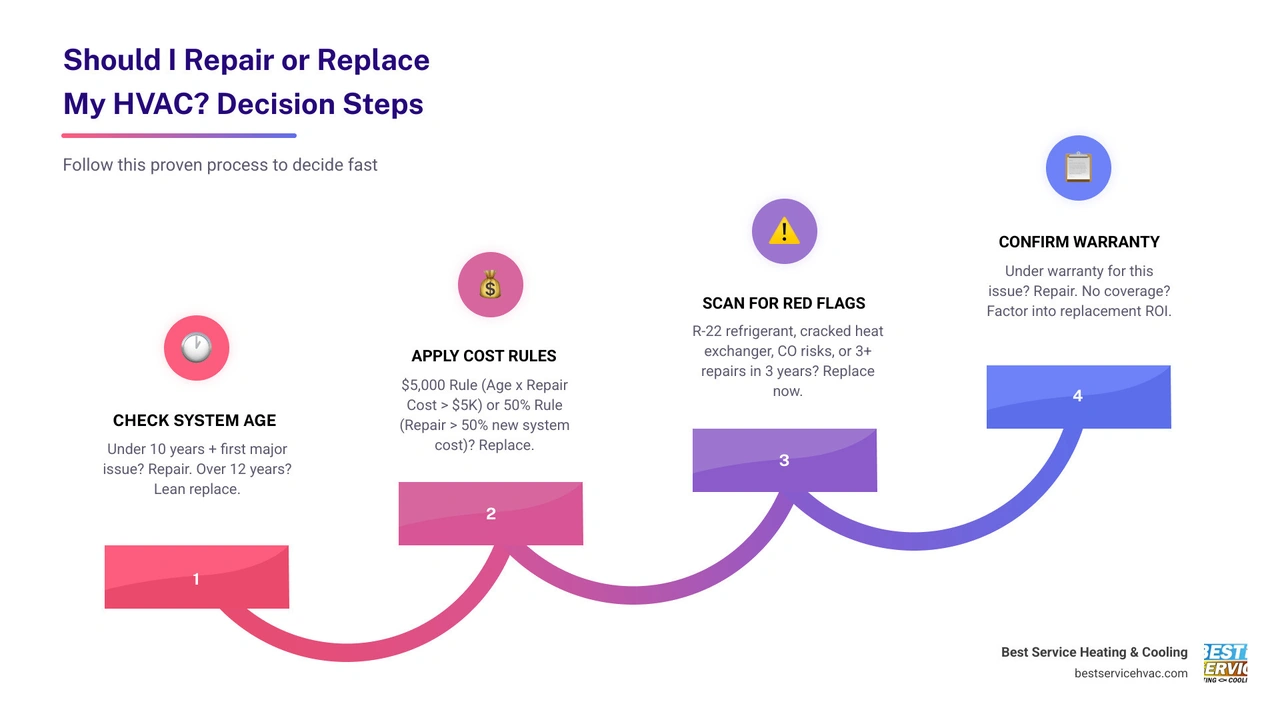
The Strategic Approach: Should I Repair or Replace My HVAC System?
When a technician hands you a repair quote, it’s easy to let emotion or immediate comfort concerns drive your choice. However, we always recommend taking a strategic approach to remove the guesswork. In our decades of providing HVAC Repair Columbus OH, we’ve found that specific benchmarks consistently lead homeowners to the smartest outcome.
The Reliability Test
This is a primary standard for HVAC decision-making. Consider the age of your unit in relation to the frequency of its failures.
- If the unit is older and requires frequent intervention: It is likely time to replace the unit.
- If the unit is younger and this is an isolated issue: A repair is likely a sound investment.
For example, if you have a 12-year-old air conditioner requiring a major repair, that fix is likely the start of a "repair spiral." Conversely, a 5-year-old unit needing a standard component replacement is well worth the investment to maintain its lifespan.
The Major Repair Rule
This rule is simple: If any single repair represents a substantial portion of what a brand-new, high-efficiency system would require, you should consider replacing. As we move through May 2026, the gap between old technology and new high-efficiency standards is wider than ever. Investing heavily into a system that is already halfway through its life expectancy is often considered "sunk cost" territory.
Efficiency and Long-Term Performance
When you choose replacement, you aren't just getting a new machine; you are investing in lower utility consumption and peace of mind. Modern systems can significantly reduce monthly energy usage. When you consider those monthly savings alongside the reliability of a new unit, the long-term value of replacement often outweighs keeping an old, inefficient unit on life support.
| Decision Rule | Criteria | When to Replace |
|---|---|---|
| Reliability Test | Age vs. Frequency of Failure | Frequent breakdowns in older units |
| Major Repair Rule | Repair vs. New System Value | Repair is a major percentage of new value |
| The 3-Year Test | Number of repairs in 36 months | 3 or more repairs |
| Warranty Status | Manufacturer coverage | Parts are out of warranty |
Evaluating System Age and Performance Benchmarks
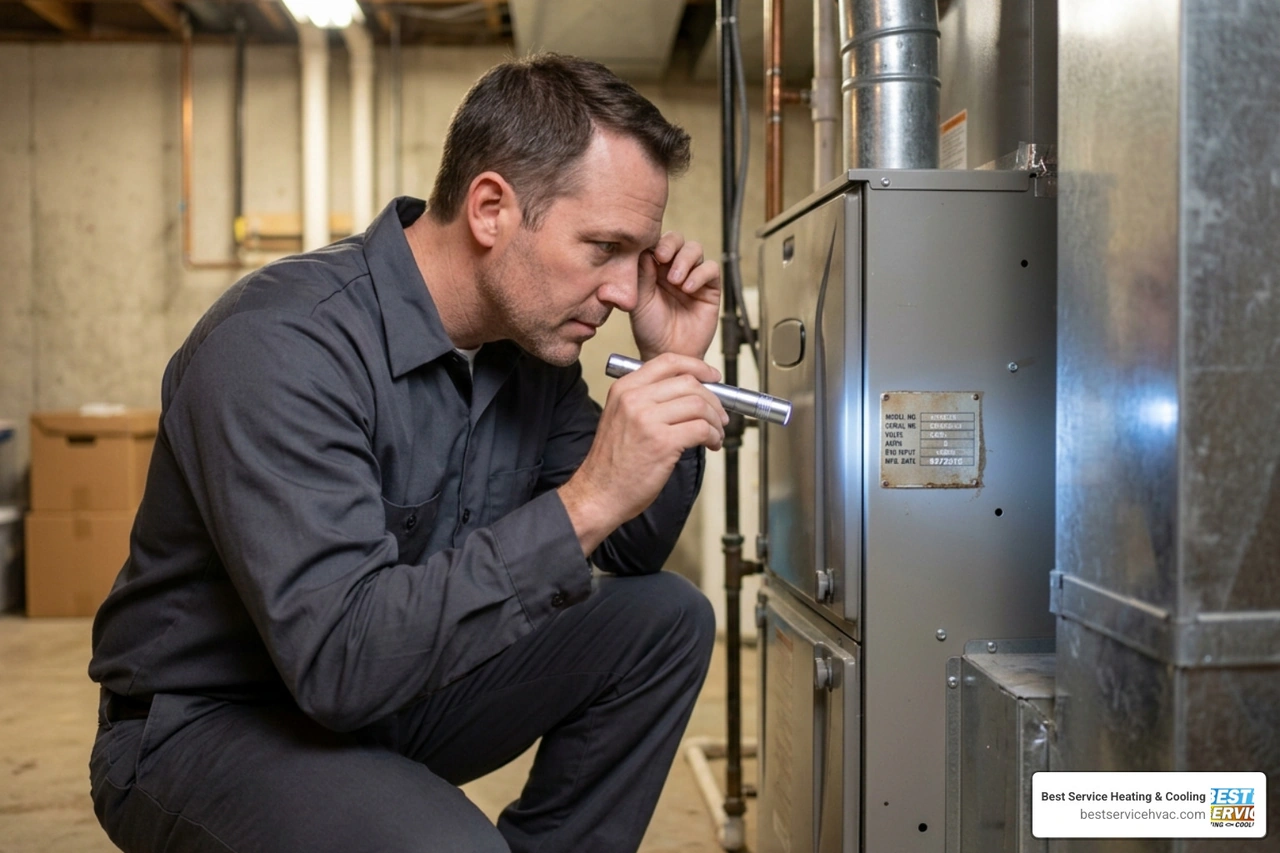
Every HVAC component has a "retirement zone." Knowing where your system stands in its lifecycle is critical when asking should i repair or replace my hvac system. While we’ve seen some well-maintained units in Westerville or Dublin outlast their expected lifespans, the following averages are what we use to gauge reliability:
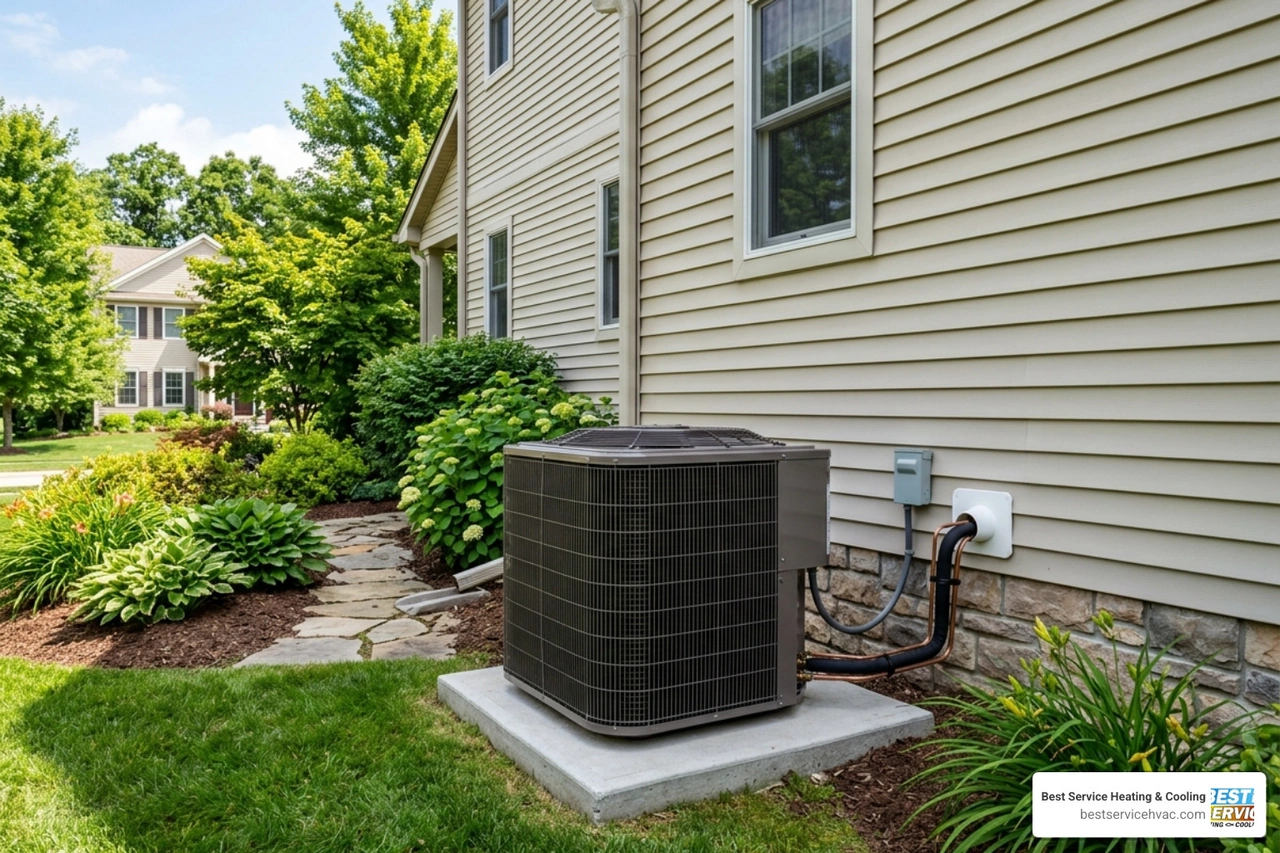
- Central Air Conditioners: 10 to 15 years.
- Furnaces (Gas/Electric): 15 to 20 years.
- Heat Pumps: 10 to 12 years.
Why do heat pumps have a shorter lifespan? They pull double duty, running year-round to provide both heating and cooling. A furnace gets a "summer vacation," and an AC gets a "winter break," but a heat pump is always on the clock. If you’re looking for HVAC Replacement Reynoldsburg OH, understanding these cycles helps you plan before an emergency happens.
Why age matters when asking: should i repair or replace my hvac system?
As a system ages, it suffers from "systemic fatigue." Replacing a major component like a compressor on a 14-year-old AC unit is like putting a brand-new engine into a car with high mileage. The new part is strong, but the rest of the components — the coils, the fan motor, the wiring — are still old and likely to fail next.
Furthermore, efficiency naturally declines as internal components wear down. An old 10 SEER unit might only be performing at a much lower level after a decade of Central Ohio humidity. Choosing HVAC Service Pickerington OH for an older unit can keep it running, but it won't restore that lost efficiency.
Environmental factors: should i repair or replace my hvac system?
The regulatory landscape has changed significantly. As of May 2026, R-22 refrigerant (Freon) is a relic of the past. If your system was manufactured before 2010, it likely uses this phased-out chemical. Because R-22 is no longer produced, a single recharge for a leak can be quite expensive and difficult to source.
We are also currently seeing the transition to newer, even more eco-friendly refrigerants like R-454B. If you are constantly calling for HVAC Service Blacklick OH to manage an old system, you are essentially maintaining an environmental hazard. Replacing the system moves you into modern, compliant technology that is easier to maintain and better for the planet.
Red Flags That Signal Replacement is Non-Negotiable
While many decisions fall into a "gray area," some symptoms make the choice for you. Safety is non-negotiable. If we detect any of the following during an inspection, we will almost always recommend immediate replacement to protect your family:
- Cracked Heat Exchanger: This is the most serious furnace failure. The heat exchanger separates combustion gases from the air you breathe. A crack can leak odorless, colorless carbon monoxide (CO) into your home. Because the labor required to replace a heat exchanger is so intensive, and the safety risk is so high, replacement is the standard professional recommendation.
- The "Repair Spiral": If you have your HVAC company on speed dial, that’s a red flag. We suggest the "Three-Year Rule": One or two repairs in three years is normal maintenance; three or more indicates the system is failing.
- Incurable Performance Issues: If your upstairs rooms stay hot while the downstairs is freezing, or if your home feels "sticky" and humid despite the AC running, your system may be improperly sized. No amount of HVAC Repair Clintonville OH can fix a unit that was built for the wrong square footage.
- Excessive Dust and Noise: If your system sounds like a jet engine or your house is constantly dusty despite changing filters, your ductwork or blower motor may be failing. These Performance Issues for HVAC System Replacement often signal that the system is at the end of its useful life.
For residents in historic areas, we often provide specialized Bexley HVAC System Replacement services because older homes frequently have mismatched systems that lead to these exact red flags.
Maximizing Efficiency and Financial Incentives in 2026
One of the biggest reasons to choose replacement in May 2026 is the sheer amount of financial help available. The Inflation Reduction Act has changed the outlook for thousands of families in Lewis Center and Powell.
ENERGY STAR and Modern Ratings
When shopping for a new system, look for the following benchmarks:
- SEER2 (Cooling): Modern minimums are 14.3, but high-efficiency units can reach 22+. Upgrading from an older unit to a SEER 16 system can significantly reduce annual cooling consumption.
- AFUE (Heating): Standard furnaces are 80% efficient. ENERGY STAR models reach 95% to 98%, meaning almost zero energy is wasted.
- HSPF2 (Heat Pump Heating): Look for ratings of 8 or higher for optimal winter performance in Ohio.
2026 Tax Credits and Rebates
Under current federal guidelines, homeowners may be eligible for substantial tax credits for the installation of a new heat pump. Additionally, programs like HEEHRA provide significant rebates for eligible households. When you combine these incentives with the monthly utility savings, a new HVAC Installation Lewis Center OH often provides a much faster return on your investment than you might expect.
Frequently Asked Questions about HVAC Decisions
Should I repair or replace if I am selling my home soon?
This depends on your timeline. If you plan to sell within the next 12 to 24 months, a minor repair is often the better choice to keep the system functional for the home inspection. However, if the system is over 15 years old, a buyer may request considerations for the inevitable replacement.
In many cases, installing a new system with a transferable warranty can be a major selling point and increase the marketability of your property. We've seen homeowners in Grandview use a new HVAC system to enhance their home's appeal. If you're unsure, HVAC Service Grandview OH can provide a "health report" you can show to prospective buyers.
Which repairs are always worth doing regardless of age?
Not every breakdown is a death knell. We call these "safe to fix" repairs. They include:
- Capacitors and Contactors: These are standard electrical components that often fail due to heat. Replacing them is almost always worth it.
- Fan Motors: While more involved than a capacitor, a fan motor is an isolated part. If the rest of the system is healthy, we recommend the repair.
- Clogged Condensate Lines: This is a maintenance issue, not a system failure.
If you need a quick HVAC Repair Minerva Park OH for one of these minor issues, it’s usually the smarter move.
How does maintenance affect the replacement timeline?
Maintenance is the single biggest factor in how long your system lasts. A system that receives annual tune-ups can last significantly longer than a neglected one. During our HVAC Maintenance Dublin OH visits, we catch small issues — like a failing capacitor — before they cause the "domino effect" that damages a compressor.
Regular maintenance also keeps your manufacturer warranty valid. Most brands require proof of annual service to honor parts replacements. If you haven't had a tune-up in over a year, your "repair vs replace" decision might be forced by a voided warranty.
Conclusion: Making the Right Call for Your Home
At Best Service Heating & Cooling, we know that your home is your sanctuary. Whether you are in Downtown Columbus, Hilliard, or Canal Winchester, you deserve a system that works when you need it most. We have been family-owned since 1992, maintaining an A+ BBB rating by giving our neighbors honest, transparent advice.
If you are still struggling with the question, "should i repair or replace my hvac system," let us help you run the math. Our trained technicians don't just look at the broken part; we evaluate the age, efficiency, and safety of your entire system to give you a clear path forward. We provide expert HVAC Service Columbus OH that focuses on long-term comfort, not just a temporary band-aid.
Schedule your professional system evaluation today and experience the peace of mind that comes with a truly comfortable home. Whether it's a precision repair or a high-efficiency replacement, we'll make sure you get the best value for your investment.
.webp)
.webp)

Service Areas
