
Why Your Home Needs a Smart Thermostat Right Now

Smart Thermostat Benefits for Homeowners: Are They Really Worth It?
The smart thermostat benefits for homeowners are real, measurable, and increasingly hard to ignore — especially as heating and cooling costs keep climbing. If you're a Central Ohio homeowner dealing with high utility bills and an HVAC system that runs more than it should, a smart thermostat could be one of the simplest upgrades you make this year.
Here's a quick look at what you get:
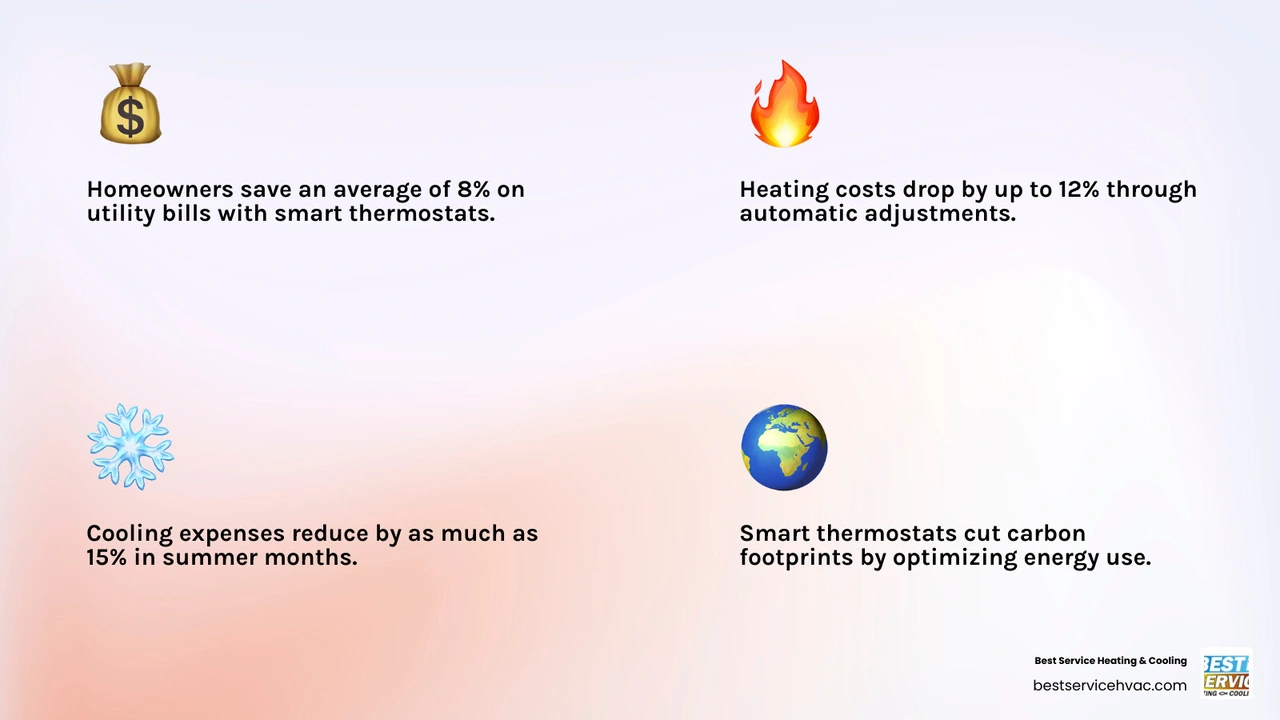
- Lower energy bills - Save an average of 8% on utilities, with up to 12% on heating and 15% on cooling
- Remote control - Adjust your home's temperature from anywhere using a smartphone app
- Automatic adjustments - Learning algorithms and geofencing keep your home comfortable without manual effort
- Reduced HVAC wear - Smarter cycling means less strain on your heating and cooling equipment
- Environmental impact - Less energy waste means a smaller carbon footprint
- Better comfort - Fewer hot and cold spots, more consistent temperatures throughout the day
- Maintenance alerts - Get reminders for filter changes and early warnings about system issues
Heating and cooling account for nearly half of the average home's energy use — that's more than $900 a year for most households. Yet nearly half of homeowners with programmable thermostats never actually set them up. Smart thermostats solve that problem by doing most of the work for you.
In this guide, we'll walk through every major benefit, what to check before you buy, and how to get the most out of a smart thermostat in a Central Ohio home.
1) Smart thermostat benefits for homeowners start with better control
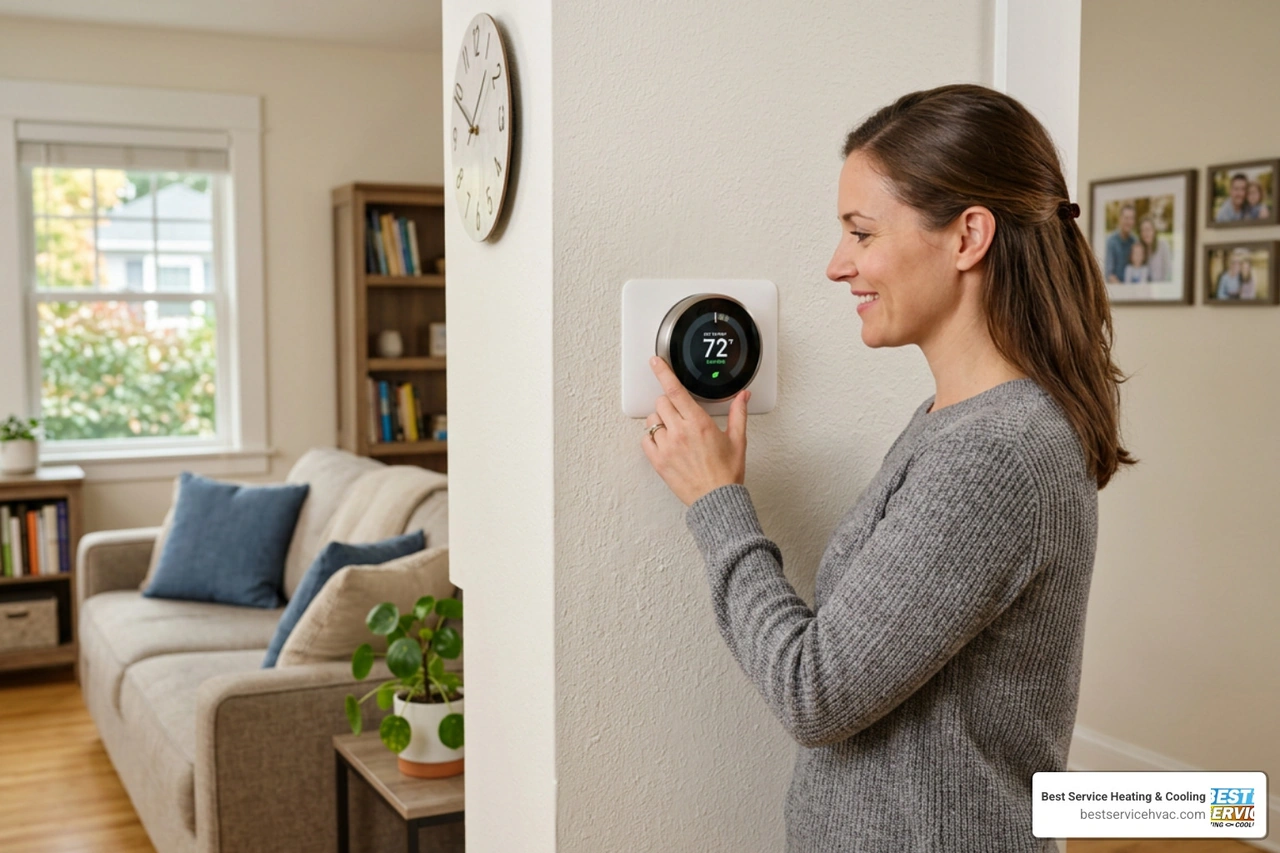
When we think about controlling the temperature in our homes, many of us are used to the old "click-and-hope" method. You walk to the hallway, click a button or turn a dial, and hope the house feels better in twenty minutes. A smart thermostat changes that dynamic entirely. It moves us away from manual guesswork and toward a system that actually understands our needs.
What a smart thermostat is and how it works
At its core, a smart thermostat is a Wi-Fi-enabled device that manages your HVAC system. Unlike a traditional thermostat that only acts as a simple on/off switch based on the current temperature, a smart model uses advanced sensors and algorithms.
By connecting to your home's internet, it can pull local weather data, communicate with a smartphone app, and even respond to voice commands via smart assistants. It doesn't just wait for you to tell it what to do; it learns your habits, monitors whether anyone is home, and adjusts the climate accordingly.
Smart thermostat benefits for homeowners vs. traditional and programmable models
You might wonder, "I already have a programmable thermostat, why do I need a smart one?" The reality is that nearly 50% of households with programmable thermostats never actually set them up. They are often clunky, difficult to program, and don't account for changes in your daily routine.
Smart thermostat benefits for homeowners include a "set it and forget it" experience. While a programmable model requires you to manually input a schedule for every day of the week, a smart thermostat can learn your schedule automatically. If you leave for work late or come home early, the smart thermostat notices and adjusts.
| Feature | Traditional | Programmable | Smart Thermostat |
|---|---|---|---|
| Control | Manual Dial/Button | Fixed Schedule | Adaptive Learning & App |
| Wi-Fi Connectivity | No | No | Yes |
| Remote Access | No | No | Yes (Smartphone/Tablet) |
| Energy Reports | No | No | Yes |
| Occupancy Sensors | No | No | Yes |
2) The biggest payoff: lower energy use and smaller utility bills
Let’s be honest: most of us are interested in smart tech because we want to see those monthly bills go down. In a climate like ours in Central Ohio, where we deal with humid summers and freezing winters, our HVAC systems work overtime.
How much homeowners can realistically save
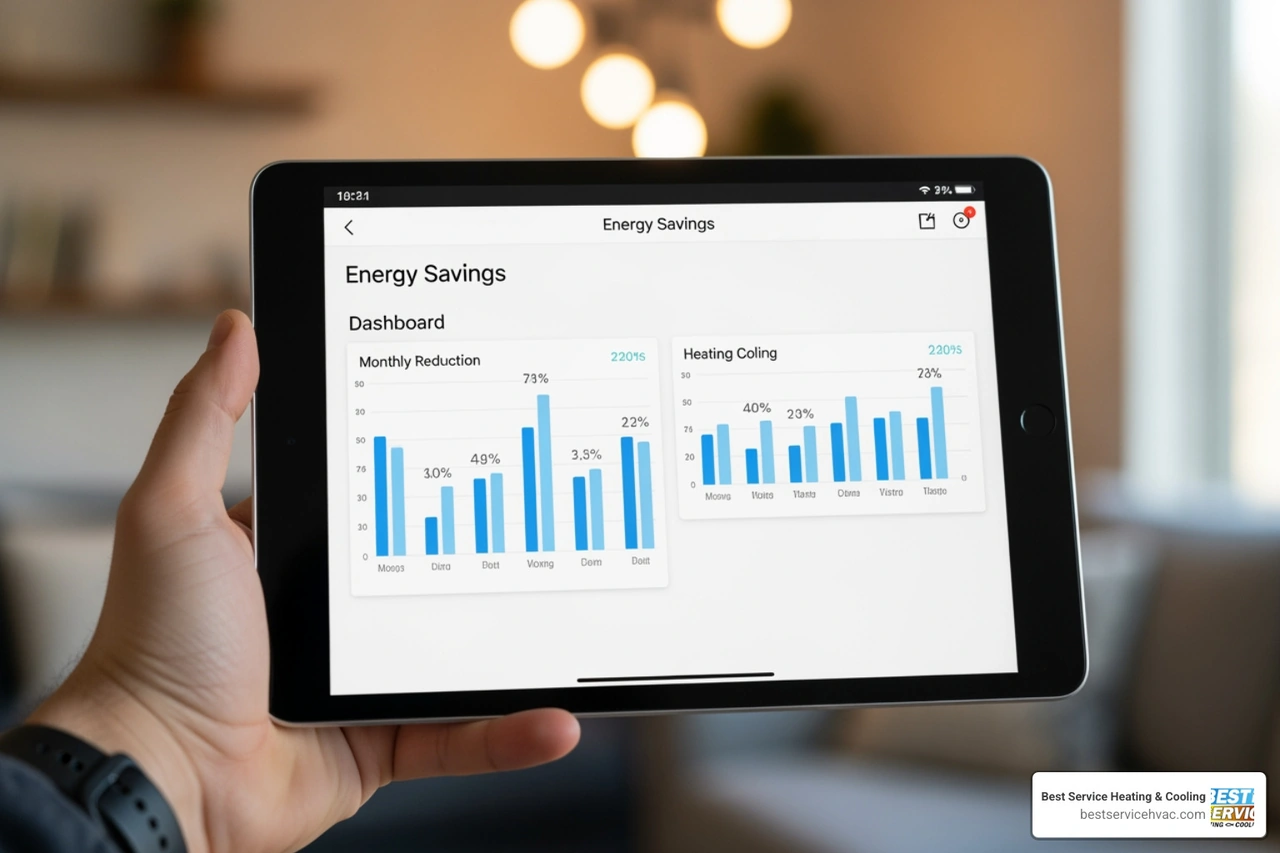
Statistics show that smart thermostats save users an average of 8% on their utility bills. When you break it down by service, the numbers are even more impressive: homeowners often see a 12% reduction in heating bills and a 15% reduction in cooling costs. For a high-usage home, this can translate to saving up to $100 or more annually. Over the lifespan of the device, it essentially pays for itself.
Why heating and cooling savings matter so much
In the average American household, almost half of the annual energy bill—often $900 or more—goes strictly to heating and cooling. Because HVAC systems are the biggest energy hogs in the house, even small improvements in efficiency lead to big financial gains. By simply setting your thermostat back 7° to 10° F for eight hours a day (like when you're at work or asleep), you can save up to 10% on your total bills. A smart thermostat automates this "setback" so you never forget to do it.
Features that drive savings automatically
- Learning Schedules: The device watches when you turn the heat up or down and creates a schedule based on those habits.
- Geofencing: Using your phone’s GPS, the thermostat knows when you’ve left the "fence" around your house and switches to an eco-friendly "away" mode.
- Occupancy Sensors: Some models use sensors to detect movement in specific rooms, ensuring you aren't cooling or heating an empty basement.
- Weather Response: If a sudden cold snap hits Columbus, the thermostat can proactively warm the house before you even feel the draft.
3) 7 smart thermostat benefits for homeowners who want more comfort and convenience
Beyond the money, there is a massive "quality of life" boost that comes with these devices. We’ve all had that moment where we’re tucked into bed, realize it’s too hot, and dread walking across the cold floor to the hallway. With a smart thermostat, that problem is gone.
More even temperatures throughout the day
Precision control is a hallmark of smart technology. Many systems support remote room sensors. If your thermostat is in a drafty hallway but you spend all your time in the living room, the sensor tells the HVAC system to keep running until the living room is comfortable, not just the hallway. This eliminates those annoying hot and cold spots.
Remote control from anywhere
Whether you are at the office, grocery shopping in Dublin, or vacationing far away, you have total control. If you forgot to turn off the AC before leaving for a week-long trip, you can handle it from the airport. Conversely, you can "pre-cool" the house on your way back from a long day so it's perfectly crisp the moment you walk through the door.
Better smart home integration
Smart thermostats play well with others. You can integrate them with voice assistants like Amazon Alexa or Google Assistant. "Hey Google, set the temperature to 72 degrees" is a lot easier than fiddling with buttons. You can even set up routines where your smart blinds close when the thermostat detects the afternoon sun is making the AC work too hard.
Helpful alerts and maintenance reminders
We all lead busy lives, and it’s easy to forget when you last changed your air filter. Your smart thermostat can track system runtime and send a notification to your phone when it’s time for a new filter. It can also monitor for performance issues, alerting you if the system isn't reaching the target temperature, which could indicate a mechanical problem before it becomes a total breakdown.
4) Environmental and long-term home benefits homeowners often overlook
While we focus on our own comfort and wallets, there is a bigger picture to consider. Using less energy isn't just good for your bank account; it's better for the planet and the longevity of your home's equipment.
How smart thermostats reduce your carbon footprint
If everyone in the country used an ENERGY STAR certified smart thermostat, the annual savings would be a staggering 56 trillion BTUs of energy. By reducing unnecessary HVAC runtime and optimizing cycles, you are directly lowering your household's carbon emissions. Many devices even have an "Eco Mode" or a little leaf icon that appears when you’ve chosen a temperature that saves energy.
Can a smart thermostat help your HVAC system last longer?
Think of a smart thermostat as a personal trainer for your furnace and AC. By balancing operation and preventing "short-cycling" (where the system turns on and off too rapidly), the thermostat reduces wear and tear. A system that runs efficiently and is well-maintained via reminders will almost always outlast a system that is constantly stressed by manual, extreme temperature swings.
Do smart thermostats add appeal to a home?
In today's real estate market, buyers are looking for "smart" and "green" features. A smart thermostat is a visible, modern upgrade that signals to potential buyers that the home is well-maintained and energy-efficient. It’s a low-cost upgrade that can make your property stand out in a competitive Central Ohio market.
5) When a smart thermostat is worth it most—and what to check before you buy
Is a smart thermostat right for every single home? Most of the time, yes—but there are specific scenarios where the investment pays off even faster.
Homes that benefit the most from a smart thermostat
- Busy Households: If your family is constantly coming and going for school, sports, and work, the automation features are a lifesaver.
- Extreme Weather Areas: Places like Columbus, with high humidity in the summer and bitter cold in the winter, see the highest ROI.
- Work-from-Home: If you're home during the day but move between rooms, occupancy sensors ensure your "office" stays comfortable without wasting energy on the rest of the house.
- Vacation Homes: Remote monitoring allows you to keep an eye on things and prevent pipes from freezing without being there in person.
Compatibility and installation basics
Most modern HVAC systems—including furnaces, heat pumps, and central AC—are compatible with smart thermostats. However, you should check for a "C-wire" (common wire), which provides continuous power to the device. If your home doesn't have one, you might need a power extender kit or professional installation.
At Best Service Heating & Cooling, we often recommend professional installation for homeowners in areas like Westerville or Gahanna to ensure the thermostat is calibrated correctly and doesn't void any existing HVAC warranties.
Potential drawbacks and limitations to know first
While we love this technology, there are a few things to keep in mind:
- Upfront Investment: They cost more than a $20 manual slider from the hardware store.
- Internet Reliance: If your Wi-Fi goes down, you can still adjust the temp manually at the wall, but you'll lose the "smart" app features until the connection returns.
- Privacy: Since these are connected devices, it's important to choose reputable brands with strong encryption and two-factor authentication.
What to consider when choosing the right model
Look for the ENERGY STAR label first; this ensures the savings have been independently verified. Consider whether you want a "learning" model that builds its own schedule or a "geofencing" model that relies on your location. Also, check for utility program compatibility—some local providers offer incentives for choosing specific models.
Frequently Asked Questions about smart thermostat benefits for homeowners
Are there rebates or incentives for smart thermostats in 2026?
Yes! Many local utility companies in Central Ohio offer rebates to encourage energy efficiency. You can often find these through the ENERGY STAR Rebate Finder or by checking directly with your electric or gas provider. Some programs even offer "Demand Response" incentives where you get a credit for allowing the utility to slightly adjust your temp during peak grid stress.
How long does it take to see a return on a smart thermostat?
Depending on your energy usage and the climate, most homeowners see the device pay for itself in one to two years through lower monthly bills. If you live in a larger home with high heating and cooling demands, that ROI can happen even faster.
Are smart thermostats secure and reliable?
Modern units from major manufacturers use high-level data encryption and two-factor authentication (2FA). As long as you follow basic digital safety—like using a strong password for your Wi-Fi and thermostat account—they are very secure.
Conclusion: A smart thermostat is a small upgrade with everyday benefits
When you look at the smart thermostat benefits for homeowners, it’s clear that this isn’t just a "gadget" for tech enthusiasts. It is a practical tool for saving money, protecting your HVAC system, and making your daily life just a little bit easier. From the remote control features that let you adjust the air from your couch to the automatic savings that trim your monthly budget, it’s an upgrade that keeps on giving.
If you’re ready to take control of your home’s comfort and efficiency, our team at Best Service Heating & Cooling is here to help. Whether you're in Hilliard, Pickerington, or right here in Reynoldsburg, we can help you select the perfect model and ensure it's installed perfectly.
.webp)
.webp)

Service Areas
