
Choosing Between Smart and Programmable Thermostats Without Losing Your Cool

Fundamental Differences Between Modern Control Systems
When we look at a smart thermostat vs programmable thermostat comparison, the fundamental difference lies in how much "thinking" the device does for you. In home comfort, your thermostat acts as the brain of your HVAC system. It tells your furnace or air conditioner when to wake up and when to rest.
Programmable Thermostats: The Fixed Schedule
A programmable thermostat is a digital device that allows you to pre-set temperatures for different times of the day. You might set it to 68 degrees at 7:00 AM when you wake up, 62 degrees at 8:30 AM when you leave for work in Dublin or Westerville, and back to 68 degrees at 5:00 PM.
The limitation here is that the schedule is rigid. If you have a snow day and stay home, or if you decide to stay out late for dinner in Downtown Columbus, a standard programmable thermostat has no way of knowing. You have to manually override it, or you end up heating or cooling an empty house. These devices typically feature a small liquid crystal display (LCD) and several physical buttons that can be notoriously fiddly to navigate.
Smart Thermostats: The Connected Solution
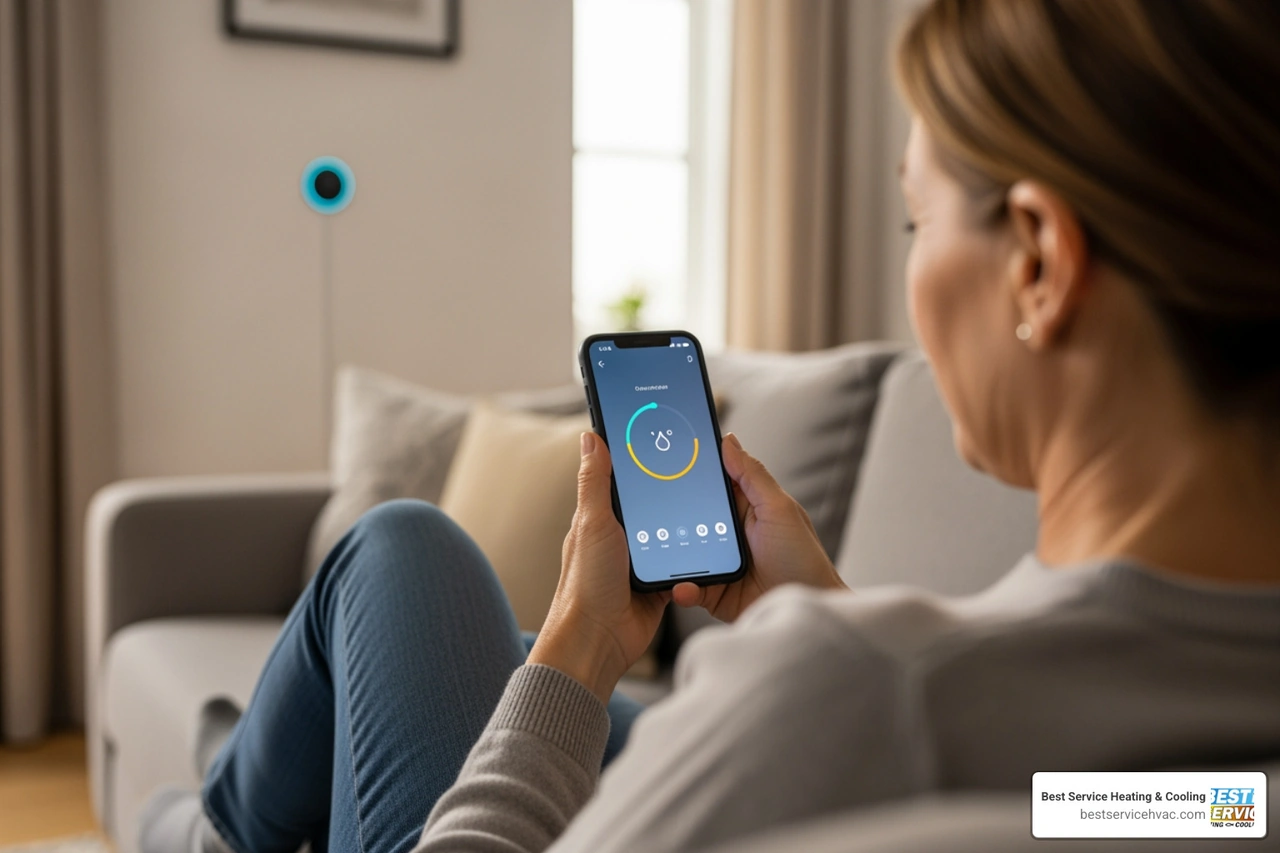
Smart thermostats take that basic scheduling and add a layer of artificial intelligence and internet connectivity. By connecting to your home’s Wi-Fi, these devices allow for remote access through a smartphone app. This means if you’re heading home early from a trip to Easton Town Center, you can turn up the heat from your phone so the house is cozy the moment you walk through the door.
Beyond remote access, the user interfaces on smart models are significantly more intuitive. Instead of squinting at a tiny screen and pressing "Set" five times, you use a sleek app on your phone. Many models also feature "walk-up usability," meaning the screen lights up and shows you the weather or your energy usage the moment you approach it. To learn more about how these devices integrate with your home's overall health, check out our guide on ac-efficiency-maintenance-and-smart-thermostats.
Smart thermostat vs programmable thermostat comparison: Energy Savings and Efficiency
In May 2026, energy efficiency is more than just a buzzword; it is a necessity for managing household budgets. Both types of thermostats aim to reduce energy waste, but they go about it in very different ways.
The Efficiency Gap
Residential thermostats dictate approximately 9% of total energy consumption in the United States. Because your HVAC system is likely the biggest energy consumer in your home, even small adjustments can lead to big changes in your utility bills.
| Efficiency Factor | Programmable Thermostat | Smart Thermostat |
|---|---|---|
| Average Savings | 10% – 15% (Estimated) | Up to 26% (Verified) |
| Annual Dollar Savings | Approx. $35 – $45 | Approx. $180 – $312 |
| Optimization | Manual Setbacks | Real-time Data & Learning |
| Energy Reports | None | Monthly Digital Summaries |
Real-Time Monitoring and HVAC Wear
One of the hidden benefits of a smart thermostat vs programmable thermostat comparison is the reduction in HVAC wear and tear. Smart thermostats analyze your home’s thermal properties. They know exactly how long it takes your furnace to raise the temperature by three degrees on a freezing night in Hilliard. By optimizing these cycles, the system avoids "short cycling," which extends the lifespan of your equipment.
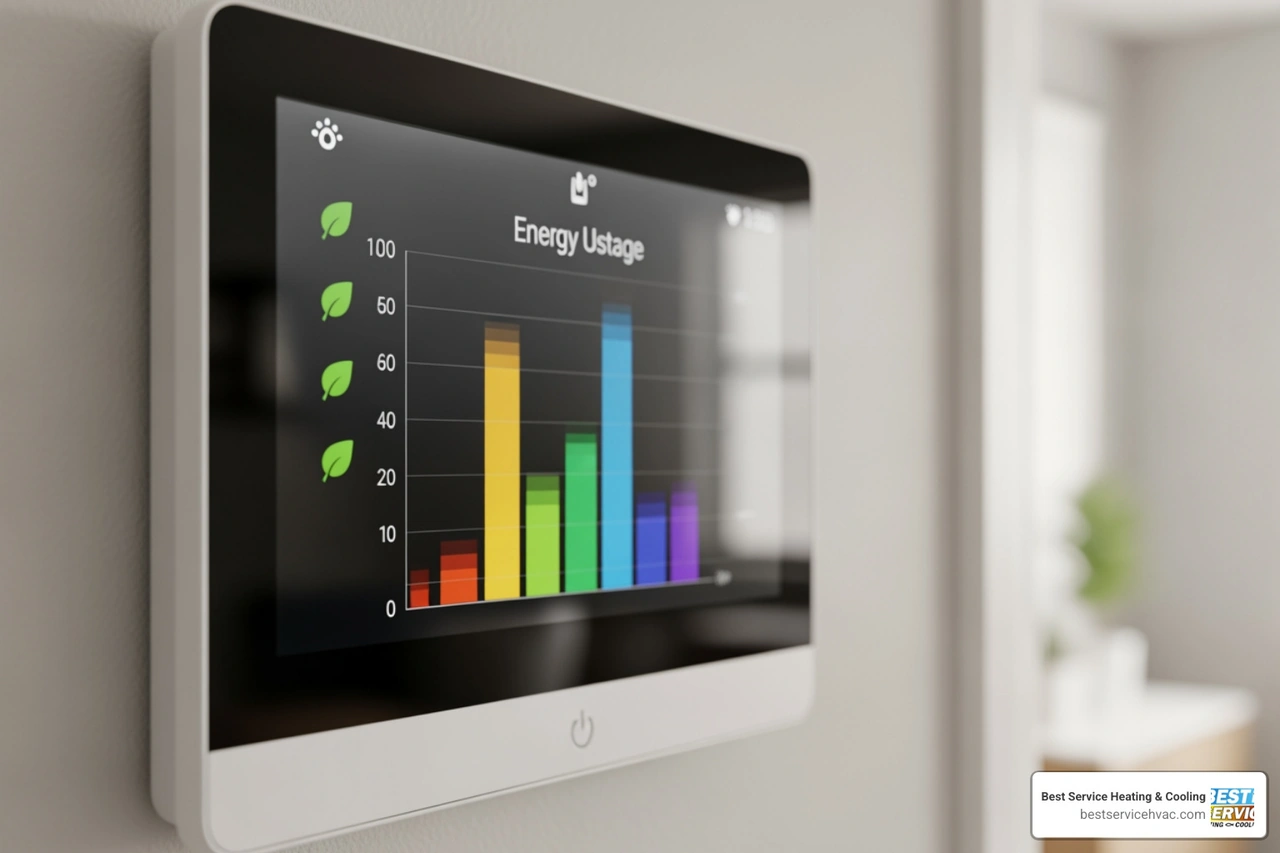
Furthermore, ENERGY STAR estimates that smart thermostats save an average of 8% on heating and cooling costs specifically through their automated setback features. Unlike programmable models, which often stay on a "hold" setting indefinitely because a user got frustrated with the interface, smart thermostats provide real-time monitoring and energy reports. These reports show you exactly when you used the most energy and offer suggestions on how to shave a few more dollars off your next bill.
Advanced Features: Automation, Learning, and Remote Access
The "smart" in smart thermostats comes from features that simply didn't exist a decade ago. These technologies move beyond a simple clock and thermometer to create a truly responsive home environment.
Geofencing and Occupancy Sensors
Geofencing uses the GPS in your smartphone to create a virtual perimeter around your home. When you leave for work in Grove City and cross that "fence," the thermostat automatically enters Eco Mode. When you head back and cross the perimeter again, it kicks the HVAC system back into gear.
Occupancy sensors take this a step further. They use motion and infrared technology to detect if anyone is actually in the room. If the house is empty on a Saturday afternoon, the thermostat will adjust itself to save energy, regardless of what the schedule says.
Learning Algorithms and Weather Integration
Some smart thermostats don't even require you to set a schedule. They spend the first week or two "learning" your habits. If you consistently turn the heat down before bed, the device notes that pattern and starts doing it for you.
Additionally, these devices integrate with local weather forecasts. If a humid heatwave is hitting Central Ohio, a smart thermostat can adjust the cooling cycle to manage indoor humidity levels, preventing that "sticky" feeling and protecting your home from mold growth.
How a smart thermostat vs programmable thermostat comparison affects busy schedules
For families in New Albany or Pickerington with unpredictable routines, a programmable thermostat can be more of a burden than a help. If your kids have soccer practice one day and music lessons the next, a fixed 5-2 day schedule (five weekdays, two weekend days) will never be accurate.
A smart thermostat vs programmable thermostat comparison reveals that smart technology is the clear winner for busy households. Features like Vacation Mode allow you to put the system into a deep save mode with one tap on your phone, and Auto-Adjustments ensure that if you’re stuck in traffic on I-270, you aren't paying to heat an empty living room.
Installation Requirements and HVAC System Compatibility
Before you run out to buy the latest gadget, we need to talk about what's behind the wall. Compatibility is the most common hurdle we see when homeowners try to upgrade their systems.
The C-Wire (Common Wire) Mystery
Most modern smart thermostats require a "C-wire" or Common wire. This wire provides a continuous stream of 24-volt power to the thermostat. Because smart thermostats have Wi-Fi radios and glowing color screens, they need more power than a simple programmable model that runs on two AA batteries.
- Forced-Air Systems: Approximately 90% of homes in the U.S. use forced-hot-air systems, which are generally compatible with both types.
- Radiant Heating: If your home uses radiant floor heating or older boiler systems, some smart thermostats may struggle. These systems react slowly, and the rapid adjustments of a smart sensor can lead to inefficiency.
- Baseboard Heaters: Most standard smart thermostats are not designed for high-voltage (120V or 240V) electric baseboard heaters. You would need a specific line-voltage smart thermostat for these.
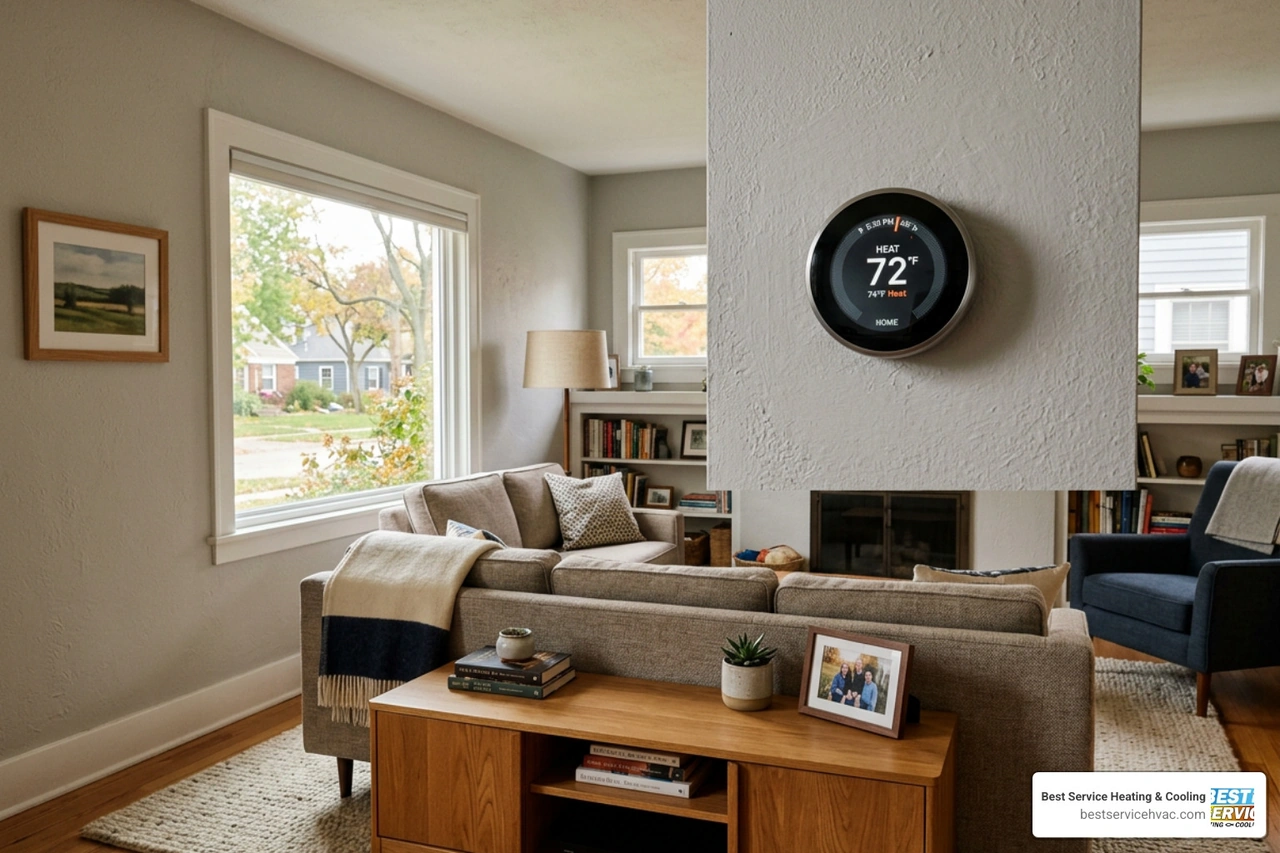
Choosing the right smart thermostat vs programmable thermostat comparison for your HVAC setup
While many manufacturers claim a 15-to-20-minute DIY installation, the reality in older Columbus homes can be more complex. If you pull off your old thermostat and see only two wires, you likely don't have a C-wire.
We often help homeowners by installing a C-wire adapter or running new wiring to ensure the smart thermostat doesn't "power rob" from the HVAC controller, which can cause system failures. Professional installation ensures that your new "brain" is talking correctly to your "heart" (the furnace) and "circulatory system" (the ducts). For more on maintaining this balance, see our page on ac-efficiency-maintenance-and-smart-thermostats.
Privacy, Security, and the User Experience
Whenever you connect a device to the internet, privacy becomes a valid concern. Some homeowners in areas like Bexley or Upper Arlington prefer programmable thermostats specifically because they don't want their data on a cloud server.
Cybersecurity and Data
Smart thermostats do collect data about your habits and when you are home. However, reputable manufacturers use high-level data encryption and offer two-factor authentication (2FA) to protect your account. To stay safe, we recommend:
- Using a strong, unique password for your thermostat account.
- Enabling 2FA.
- Keeping your thermostat’s software/firmware updated.
The Usability Factor
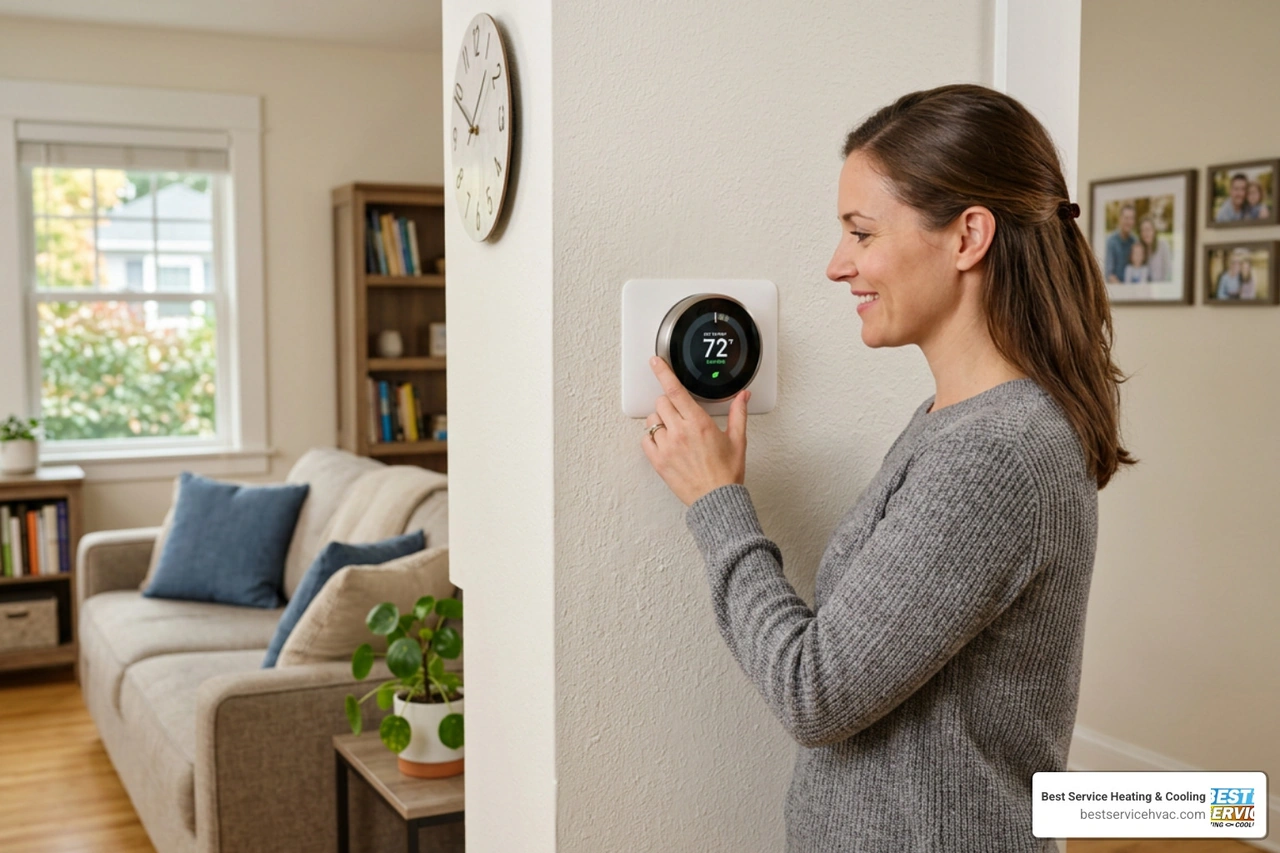
It is a bit ironic, but the "simpler" programmable thermostat is often much harder to use. The "usability gap" is a real phenomenon where the complexity of push-button programming leads users to give up and just leave the system on a permanent "hold." Smart thermostats solve this with high-resolution touchscreens and app interfaces that feel as natural as using social media. For most users, the "walk-up usability" of a smart device makes it far more likely they will actually use the energy-saving features they paid for.
Frequently Asked Questions about Thermostat Upgrades
Do I need a C-wire for all smart thermostats?
Not necessarily, but it is highly recommended. Some models claim to work without one by "power stealing," but this can lead to your Wi-Fi dropping out or even damaging your HVAC's control board over time. If you don't have a C-wire, we can install a power extender kit or a new wire for you.
Will a smart thermostat work if my Wi-Fi goes down?
Yes. If your internet goes out in Gahanna or Reynoldsburg, your smart thermostat will continue to function as a basic programmable thermostat. It will follow the last saved schedule stored in its local memory. You just won't be able to adjust it from your phone until the Wi-Fi returns.
Can I use a smart thermostat with a heat pump system?
Absolutely, but you need to ensure the model you choose supports multi-stage heating and cooling. Heat pumps require specific settings to ensure the "auxiliary heat" (which is more expensive to run) doesn't kick in unnecessarily. A proper smart thermostat vs programmable thermostat comparison shows that smart models are actually better for heat pumps because they can manage these stages more efficiently than a human can.
Conclusion
Choosing between a smart and a programmable thermostat comes down to how much you value convenience and automated savings. If you have a very rigid, unchanging schedule and are comfortable with manual controls, a programmable model is a budget-friendly choice. However, for the vast majority of Central Ohio families, the smart thermostat is a superior investment that pays for itself in energy savings within a year or two.
At Best Service Heating & Cooling, we’ve been helping our neighbors in Columbus, Dublin, and throughout Central Ohio find the perfect home comfort solutions since 1992. Whether you need help navigating a smart thermostat vs programmable thermostat comparison or you need a professional to handle a tricky C-wire installation, our family-owned team is here to help.
Don't let a confusing thermostat keep you from the comfort and savings you deserve. If you're ready to upgrade the "brain" of your home, check out our insights on ac-efficiency-maintenance-and-smart-thermostats or give us a call today to schedule a consultation with one of our expert technicians. We'll make sure your system is ready for whatever the Ohio weather throws your way!
.webp)
.webp)

Service Areas
