
The Complete Guide to What Temperature to Set Your Thermostat

The Thermostat Settings That Actually Save You Money (and Keep You Comfortable)
If you've ever wondered what temperature should I set my thermostat to stop overpaying on energy bills without freezing out your family, you're in good company. Heating and cooling account for more than half of the average home's energy costs — so even small adjustments can make a real difference month after month.
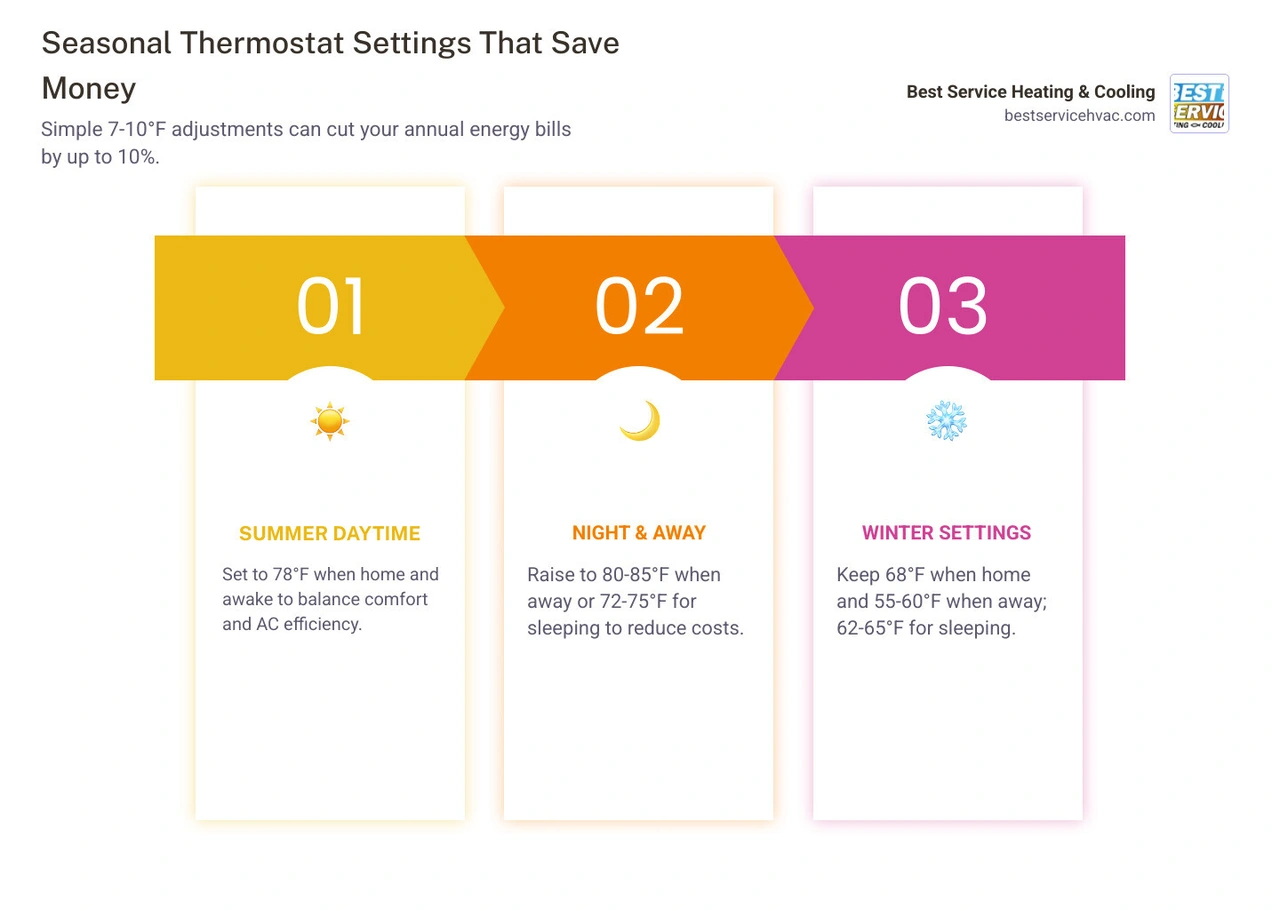
Here's a quick-reference guide to the most commonly recommended settings:
| Situation | Recommended Temperature |
|---|---|
| Summer - home and awake | 78°F |
| Summer - away from home | 80-85°F |
| Summer - sleeping | 72-75°F |
| Winter - home and awake | 68°F |
| Winter - sleeping | 62-65°F |
| Winter - away from home | 55-60°F |
These numbers come from the U.S. Department of Energy and are widely supported by HVAC professionals. They're a solid starting point — but your ideal setting also depends on humidity, household members, and your home's insulation.
The good news? Adjusting your thermostat by just 7 to 10 degrees for 8 hours a day can trim up to 10% off your annual heating and cooling bills. For Central Ohio homeowners dealing with hot, humid summers and cold winters, that adds up fast.
This guide walks you through exactly what to set your thermostat to in every situation — summer, winter, sleeping, away, and more — so you can stay comfortable without wasting energy.
What Temperature Should I Set My Thermostat for Summer Comfort?

When the humidity starts to climb in Columbus and the afternoon sun beats down on your roof, the temptation to crank the AC down to 68°F is strong. However, according to the U.S. Department of Energy, the "magic number" for summer efficiency is actually 78°F when you are home and awake.
We know what you’re thinking: "78 degrees? I might as well live in a toaster!" But there is a financial method to this madness. For every degree you set your thermostat above 72°F, you can save up to 3% on your cooling costs. If you move from 72°F to 78°F, that is an 18% reduction in your monthly cooling bill.
To make these higher settings more tolerable, we recommend minimizing the use of heat-generating appliances like ovens, clothes dryers, and dishwashers during the hottest parts of the day. These can raise your indoor temperature by up to 10 degrees, forcing your AC to work overtime. For more tips on keeping your bills low, check out our guide on Energy Saving for Heating and Cooling System. If your system is struggling to keep up even at these settings, it might be time for professional HVAC Service Columbus OH.
Optimal Settings for Sleeping and Humidity
Finding the right temperature for sleep is a bit different. Most people find it difficult to fall asleep in a 78-degree room. For nighttime recovery, a range of 72°F to 75°F is often the "sweet spot" for Central Ohio residents. This allows your body temperature to drop naturally for deeper sleep while still maintaining some level of efficiency.
Humidity plays a massive role here. In our region, the air can get quite "soupy." Your air conditioner’s secondary job is dehumidification. If you have a multi-speed or variable-speed system, it can run at lower speeds for longer periods, which is much better at pulling moisture out of the air than a standard single-stage unit. If your home feels clammy even when the temperature is low, you may need a system checkup or a dedicated dehumidifier. Residents in the northwest suburbs can benefit from our specialized HVAC Maintenance Hilliard OH to ensure their systems are handling the Ohio humidity correctly.
Using Fans to Supplement Your AC
One of the best ways to feel comfortable at 78°F is to use ceiling fans. In the summer, ensure your fans are rotating counterclockwise. This creates a "wind chill effect" by pushing a breeze directly down onto your skin.
While a fan doesn’t actually lower the room temperature, it can make you feel up to 4 degrees cooler. This allows you to raise the thermostat setting without sacrificing comfort. Just remember the golden rule of fans: they cool people, not rooms. If you leave the room, turn the fan off to save electricity!
Finding the Ideal Winter Settings for Warmth and Efficiency
When the snow starts falling in Dublin or Westerville, the battle for the thermostat moves to the heating side. For the winter months in 2026, we recommend a baseline of 68°F while you are home and awake.
Heating and cooling account for roughly 52% of American household energy costs, with heating taking the lion's share in colder climates. By keeping your home at 68°F instead of 72°F, you can save significantly. In fact, lowering your thermostat by 7-10°F for eight hours a day (like when you're sleeping or at work) can reduce your annual heating expenses by as much as 10%.
To understand why consistency and professional care matter for these winter settings, read about Why Schedule Routine Home HVAC Service. Our team provides expert HVAC Maintenance Dublin OH to ensure your furnace is calibrated perfectly for these energy-saving setpoints.
How Humidity Impacts What Temperature You Should Set Your Thermostat
In the winter, the problem is usually a lack of moisture. Cold air holds less water, and as your furnace heats that air, it becomes even drier. Dry air causes moisture to evaporate off your skin faster, which makes you feel colder than the thermometer says.
Maintaining an indoor humidity level between 30% and 50% can make 68°F feel like 72°F. If your skin feels itchy or you’re dealing with constant static shocks, your home is likely too dry. Integrating a whole-home humidifier can improve your perceived warmth and protect your wood floors and furniture. This is just one of the many Benefits of Regular HVAC Maintenance in Midwest Four-Season climates like ours.
Protecting Your Home During Ohio Cold Snaps
During extreme Ohio cold snaps, efficiency sometimes has to take a backseat to safety. If you are traveling or away during a deep freeze, never set your thermostat below 55-60°F. This is the minimum required to prevent your pipes from freezing and potentially bursting—a disaster no homeowner wants to deal with.
To help your thermostat maintain these temperatures without the furnace running 24/7, we suggest:
- Closing thermal curtains at night to seal in heat.
- Opening curtains during the day to let in natural sunlight (free heat!).
- Sealing drafts around windows and doors.
- Scheduling a tune-up to ensure your system is ready for the "Polar Vortex" days. For those in the southeast, we offer dedicated HVAC Maintenance Pickerington OH.
Maximizing Savings with Smart Technology and Habits
The days of manually sliding a lever on the wall are largely behind us. Modern technology makes it easier than ever to manage what temperature should i set my thermostat without having to think about it every day.
| Thermostat Type | Key Benefits | Best For |
|---|---|---|
| Manual | Simple, no-frills | People who are home all day and don't mind manual adjustments. |
| Programmable | Sets schedules for weekdays/weekends | Commuters with a very predictable daily routine. |
| Smart | Remote access, learning algorithms, geofencing | Busy families who want maximum savings and "set-it-and-forget-it" ease. |
Smart thermostats are particularly effective because they use geofencing to detect when your phone leaves the house, automatically shifting into "Eco" mode. They can also provide reports on your energy usage, helping you identify where you can save more. Keeping your technology updated is just as important as the HVAC hardware itself; learn why Regular HVAC Service Essential for Home includes checking your controls.
What Temperature Should I Set My Thermostat When I'm Away From Home?
If you're leaving the house for 8 hours or more, you should always adjust your thermostat. A common myth is that it takes "more energy" to cool or heat a house back to a comfortable level than it does to just leave the AC running. This is false. Your home loses energy slower when the temperature difference between inside and outside is smaller.
- Summer Away: Set to 85°F.
- Winter Away: Set to 55-58°F.
- Vacation: Use your thermostat's "Vacation Mode" to maintain these levels for the duration of your trip.
Just keep in mind the "recovery time." If you have an older system, it might take an hour or two to bring the temperature back to your comfort zone. Smart thermostats solve this by "learning" how long your home takes to cool down and starting the process before you walk through the door. For more on system efficiency, see How Often Should You Service Your HVAC.
Best Settings for Infants, Pets, and Houseplants
Not everyone in the house can speak up when they're too hot or cold. Here are the expert-recommended ranges for the more vulnerable members of your household:
- Infants: The ideal range for a baby's room is between 65°F and 74°F. Overheating is a significant risk factor for SIDS, so a slightly cooler room with appropriate sleepwear is safer than a hot room.
- Pets: Most cats and dogs are comfortable between 64°F and 78°F. If you have a very short-haired breed or an elderly pet, they may need the house a bit warmer in the winter.
- Houseplants: Most common tropical houseplants thrive between 60°F and 75°F. If you drop your thermostat to 50°F while you're away on a winter vacation, you might come home to some very unhappy (and brown) ferns.
Maintaining Your System for Peak Performance
You can have the most expensive smart thermostat in the world, but if your HVAC system is dirty, it won't matter what temperature you set it to. Airflow is the lifeblood of your heating and cooling system.
The most important task you can do as a homeowner is changing your air filters every 30 to 90 days. A clogged filter makes your blower motor work harder, increases your energy bills, and can eventually lead to a system breakdown. Additionally, ensure your outdoor AC unit is clear of grass clippings, leaves, and debris. For a deeper look at why this matters, read Annual HVAC Maintenance - Is It Worth It.
Professional Tune-Ups and Efficiency
While filter changes are a great DIY task, professional maintenance is required for long-term longevity. During a routine visit, we check the calibration of your thermostat, inspect ductwork for leaks, and ensure all electrical components are functioning safely. This seasonal readiness prevents emergency calls in the middle of a July heatwave. If you’re in the Hilliard area, we’ve got you covered with our HVAC Maintenance Hilliard OH services.
Frequently Asked Questions About Thermostat Settings
Does cranking the thermostat cool or heat the house faster?
No. This is perhaps the most common HVAC myth. Your furnace or AC produces a fixed amount of heating or cooling per hour. Setting your thermostat to 60°F when it's 80°F inside won't make the house cool down any faster than setting it to 72°F. It just means the system will keep running past your comfort point, wasting energy and putting unnecessary strain on the equipment.
Where is the best place to install a thermostat?
The best location is on an interior wall, near the center of the home, about five feet above the floor. You want to avoid:
- Direct Sunlight: This will make the thermostat think the house is hotter than it is.
- Drafts: Placing it near a window or door will cause it to trigger too often.
- Kitchens: The heat from your stove will throw off the readings.
- Hallways: These areas don't have good air circulation and won't represent the true temperature of your living spaces.
Is 72 degrees a good year-round setting?
While 72°F is a very common comfort preference, it is rarely the most "efficient" setting year-round. In the summer, 72°F is quite low and can lead to high bills. In the winter, 72°F is higher than necessary for most people. We recommend the "acclimation strategy": try moving your thermostat by just one degree each week until you find the highest (in summer) or lowest (in winter) temperature you can comfortably live with.
Conclusion
Finding the perfect balance between comfort and cost doesn't have to be a headache. By following the Department of Energy’s guidelines—78°F in the summer and 68°F in the winter—and using smart habits like setbacks and ceiling fans, you can keep your Central Ohio home cozy while keeping your wallet full.
At Best Service Heating & Cooling, we’ve been helping our neighbors in Columbus, Reynoldsburg, Gahanna, and the surrounding areas since 1992. As a family-owned business with an A+ BBB rating, we pride ourselves on providing reliable, honest service. Whether you need a quick repair or a brand-new high-efficiency system, our trained technicians are here to help.
Ready to take the guesswork out of your home comfort? Sign up for a comprehensive maintenance plan today and ensure your system is always running at peak efficiency!
.webp)
.webp)

Service Areas
