
Whole House Air Purifiers in Grandview, OH
Whole-House air purifier installation in Grandview, OH improves indoor air quality and reduces pollen and dust. Learn more.

Whole House Air Purifiers in Grandview, OH
Whole-house air purifiers for central HVAC systems are the most effective way to improve indoor air quality across every room in your Grandview, OH home. Whether you are dealing with seasonal pollen, winter-time indoor dust buildup, pet dander, or mold concerns from humid summers, an integrated in-duct purifier, electronic air cleaner, or HEPA-compatible solution delivers continuous particulate and allergen removal without portable units in every room.
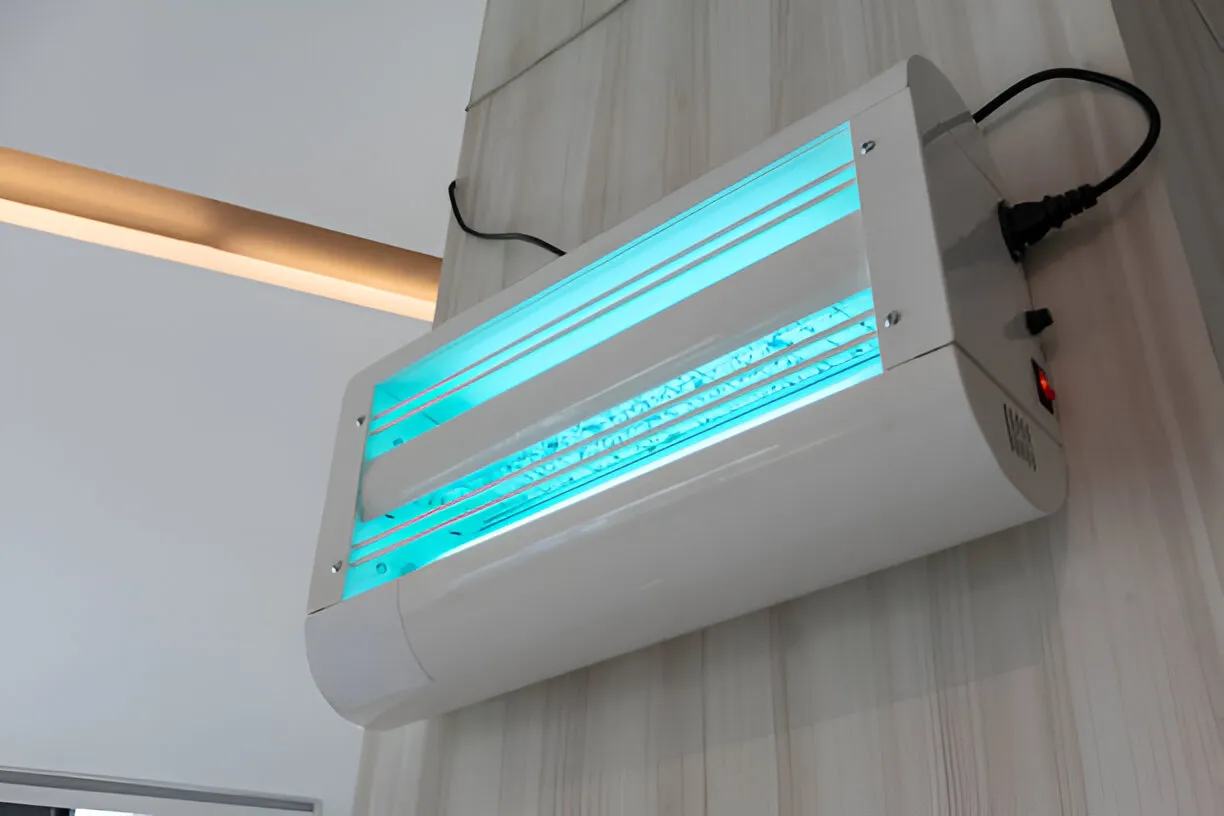
Why Grandview homes benefit from whole-house air purification
Grandview experiences humid summers, tree pollen peaks in spring, and tightly sealed homes for Ohio winters. Those factors increase the presence of allergens, mold spores, and fine particulates inside living spaces. Whole-house systems work with your existing central HVAC to:
- Reduce airborne pollen, dust, pet dander, and mold spores throughout the house
- Lower PM2.5 and visible dust levels that trigger allergies and asthma
- Improve comfort and reduce HVAC system dust buildup that can shorten component life
- Avoid the noise and hassle of multiple portable purifiers
Common whole-house purifier types and what they do
- In-duct media filters and HEPA-compatible systems: High-efficiency filters installed in the return or air handler that capture small particles. True HEPA in-duct requires careful integration or a dedicated bypass fan to maintain airflow.
- Electronic air cleaners (electrostatic precipitators): Use an ionizing and collection stage to trap particles on washable plates. They capture fine and ultrafine particles with lower filter replacement costs but need routine cleaning.
- UV and photocatalytic add-ons: Target biological contaminants like bacteria and mold on coils and surfaces. They are best used as supplements, not replacements for particle filtration.
Common whole house air purifier issues in Grandview, OH
- Increased static pressure when adding high-MERV or HEPA filters without accounting for fan capacity
- Reduced airflow and uneven room temperatures if the system is not sized or balanced properly
- Routine maintenance gaps: washable cells left dirty, prefilters not changed, or UV lamps not replaced
- Improper placement leading to bypass air that reduces overall effectiveness
Sizing and selection guidance
Choosing the right whole-house purifier depends on home volume, HVAC capacity, and your air quality goals.
Key metrics:
- Home volume = square footage x ceiling height. Example: a 2,000 sq ft home with 8 ft ceilings = 16,000 cubic feet.
- Desired air changes per hour (ACH). For strong whole-house particulate control, 3 to 5 ACH is a common target.
- Required CFM = (Volume x ACH) / 60. Using the example above at 4 ACH: (16,000 x 4) / 60 ≈ 1,067 CFM.
Selection tips:
- Verify your furnace/air handler rated CFM and static pressure limits before specifying a high-efficiency media or HEPA module.
- For older Grandview homes with lower fan capacity, consider an electronic air cleaner or a HEPA-compatible module with a booster fan to avoid undue strain on the HVAC system.
- Use MERV ratings to compare efficiency: MERV 8-11 improves comfort and dust control; MERV 13 and higher approach HEPA performance for particles down to 0.3 micron. True HEPA is >99.97% at 0.3 micron but often needs special installation considerations.
Professional installation and integration process
A professional approach ensures performance and avoids HVAC issues:
- Initial assessment: Measure home volume, inspect ducts, evaluate air handler capacity, and test baseline indoor particulate levels.
- System selection: Match purge type (in-duct media, electronic, or HEPA-compatible) to HVAC capacity and homeowner goals.
- Duct and airflow prep: Seal leaks, check dampers, and correct any imbalance that would hamper whole-house purification.
- Installation: Mount purifier in return plenum or air handler, wire to the blower or dedicated controls, and install prefilters as required.
- Commissioning: Test airflow, measure static pressure, verify ACH and filtration function, and adjust blower settings if necessary.
- User orientation: Explain maintenance tasks, filter schedules, and what performance to expect.
Maintenance and filter replacement schedules
Regular maintenance keeps whole-house systems effective and protects HVAC equipment:
- Washable electronic collector cells: clean every 3 to 6 months; frequency increases with pets or heavy pollen seasons in Grandview.
- In-duct media filters (MERV 8-13): check every 1 to 3 months; replace every 3 to 12 months depending on loading and filter type.
- HEPA modules: replace or service per manufacturer (often 12 to 24 months) and maintain a clean prefilter on a 1 to 3 month schedule.
- UV lamps: replace annually for consistent UV output.
- Annual system check: duct inspections, blower motor check, and performance test to confirm expected particulate reductions.
Expected performance metrics
Realistic performance depends on system type, home tightness, and proper installation:
- MERV 13+ in-duct setups can reduce airborne particulate counts by 70% or more for particles in the 1.0 to 10 micron range under continuous operation.
- True HEPA solutions, when correctly integrated, typically capture 99.97% of 0.3 micron particles in the airstream passing through the element; whole-house reductions depend on circulation and ACH.
- Electronic air cleaners commonly achieve 80% to 95% removal of fine particles when cells are maintained.
- VOCs and gaseous pollutants require activated carbon or dedicated VOC solutions; particle filtration alone has limited effect on gases.
Expect a measurable improvement in PM2.5 within 24 to 48 hours of operation for most installations, and sustained reductions in dust accumulation and allergy symptom triggers over weeks.
Local examples from Grandview installations
- Seasonal allergy reduction: In a Grandview townhouse near tree-lined streets, installing an in-duct high-efficiency media filter plus a sealed prefilter reduced indoor pollen counts by roughly 60% during peak spring pollen within 48 hours, noticeably easing residents’ symptoms.
- Basement humidity and mold spore control: A single-family home with a humid basement and recurring musty odors combined a HEPA-compatible in-duct unit with improved duct sealing and a dehumidification upgrade; measured airborne mold spore counts dropped by about 70% and visible dust on surfaces declined significantly over a month.
- Pet dander and indoor dust: A 3-bedroom home with two large dogs switched from MERV 8 to MERV 13 media filtration and increased fan runtime during winter; dust accumulation on vents and furniture decreased, and household vacuuming needs dropped.
Long-term benefits and maintenance best practices
Whole-house air purification reduces allergens and particulates across the entire home while protecting HVAC equipment from dust buildup. To maintain peak performance in Grandview, OH:
- Match filtration upgrades to your HVAC fan capacity or plan for booster options
- Set blower runtime to provide continuous low-speed circulation during allergy seasons
- Keep to a regular maintenance schedule for filters, electronic cells, and UV lamps
- Seal and insulate ducts to prevent bypass and maximize purification effectiveness
Properly designed and professionally installed whole-house air purifiers deliver measurable indoor air quality improvements for Grandview homes dealing with seasonal pollen, humid-summer mold risks, and year-round dust and pet dander.
Hot Deals & Cool Savings

.webp)
New Service Agreement Membership
.webp)
Any New Client Service
Next Service for Referring a New Client
New Service Agreement Membership
Any New Client Service
Next Service for Referring a New Client
.webp)
.webp)

Service Areas
