
Ultimate Guide to Best HVAC Setup for Central Ohio Weather

Why Finding the Best HVAC Setup for Central Ohio Weather Is More Complex Than You Think
Finding the best HVAC setup for central Ohio weather isn't as simple as picking a brand from a list. Columbus sits in IECC Climate Zone 5A — a cool, humid climate that demands serious heating power in winter and solid dehumidification in summer. With roughly 5,660 heating degree days per year and design temperatures that can dip to 1°F in winter and climb to 85°F in summer, your HVAC system earns its keep year-round.
Here's a quick breakdown of the best HVAC setups for Central Ohio, based on your home's fuel source and needs:
| Home Type | Recommended Setup | Key Efficiency Rating |
|---|---|---|
| Natural gas home | High-efficiency gas furnace + central AC | 95%+ AFUE, 16+ SEER2 |
| Propane or electric home | Cold-climate heat pump or dual-fuel hybrid | 9+ HSPF2, 16+ SEER2 |
| Home without ductwork | Ductless mini-split system | 20–30+ SEER |
| Larger or multi-story home | Zoned variable-speed system | Variable SEER2/AFUE |
The average Ohio household spends around $950 per year on heating and $280 on cooling. The right system — properly sized and installed — can cut those costs by up to 20% or more. But here's what most homeowners don't realize: the equipment brand matters far less than how well the system is designed, sized, and commissioned for your specific home.
This guide walks you through everything you need to know — from climate zone basics to fuel source comparisons, efficiency ratings, zoning, and how to choose a contractor who won't cut corners.
Understanding Climate Zone 5A and Central Ohio Weather Demands
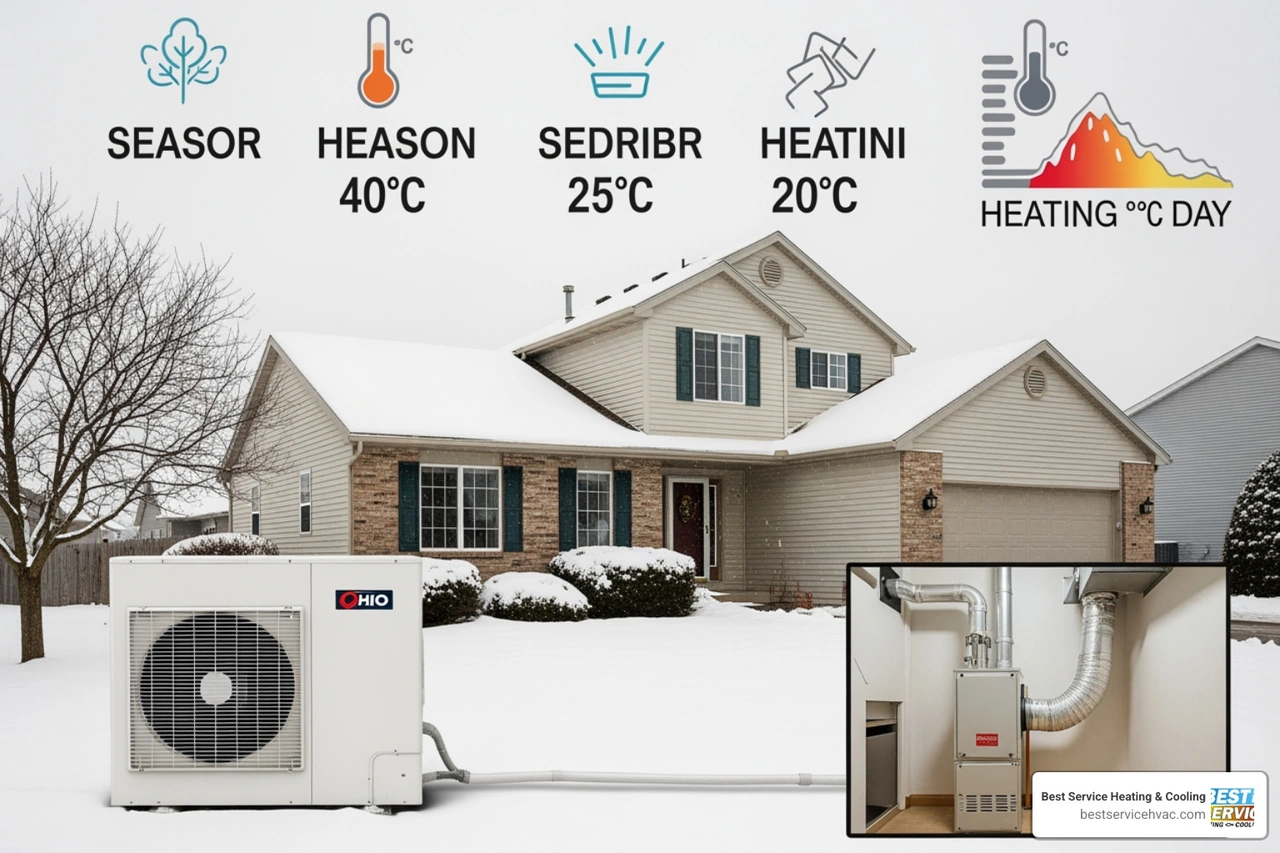
Central Ohio’s geography places it squarely within Climate Zone 5A (Cool-Humid). This designation is critical because it tells mechanical engineers and professional HVAC installers that our region is heating-dominated but still experiences intense, moisture-heavy summers.
With approximately 5,660 annual heating degree days (HDD) compared to southern Ohio areas like Cincinnati (which registers around 4,620 HDD), Columbus homes require robust heating equipment that can handle extended sub-freezing stretches. In contrast, we experience about 860 cooling degree days (CDD) annually. While our summers are shorter, the high relative humidity—frequently averaging around 73% during peak months—creates a heavy "latent load." This means your air conditioner must spend a significant amount of energy removing moisture from the air before it can effectively lower the actual temperature.
These dramatic shifts make the Spring HVAC Transition from Heating to Cooling a particularly volatile period for local systems. In April and May, it is not uncommon to run the furnace in the morning to ward off a 35°F chill, only to switch to the air conditioner by late afternoon when indoor temperatures climb past 75°F. This constant cycle of mode switching puts immense mechanical strain on your system’s reversing valves, contactors, and compressors. To survive these swings efficiently, your system must be designed to modulate its output rather than simply blasting on and off at full capacity.
Designing the Best HVAC Setup for Central Ohio Weather
When we design the best HVAC setup for central Ohio weather, we start from scratch rather than looking at what was previously installed. Standard building practices in older neighborhoods across Columbus, Clintonville, and Grandview often relied on "rules of thumb" (such as assigning one ton of cooling capacity per 500 square feet). This outdated approach leads to oversized systems that short-cycle, leaving homes drafty, humid, and plagued by high energy bills.
To get it right, we perform a detailed Manual J load calculation. This technical assessment evaluates:
- The exact square footage and layout of your home
- Wall, floor, and attic insulation R-values
- The orientation of your home relative to the sun (solar heat gain)
- The number, type, and U-factor of windows and doors
- Local winter and summer design temperatures (1°F and 85°F respectively)
By comparing options in our Standard vs High Efficiency HVAC Comparison, we find that variable-speed compressors are highly beneficial for Zone 5A. Unlike single-stage systems that operate like a light switch (either 100% on or completely off), variable-speed systems function like a dimmer switch. They modulate their capacity anywhere from 25% to 100% to match the exact heating or cooling demand of your home. This continuous, low-speed operation provides superior humidity extraction during humid July afternoons and maintains a steady, draft-free temperature all winter.
Additionally, as we move through 2026, the industry is transitioning to R-454B refrigerant. This new standard replaces older refrigerants to comply with updated environmental regulations, offering comparable or even superior thermal transfer efficiency, particularly in cold-weather heat pump applications.
Why Proper Commissioning Matters for the Best HVAC Setup for Central Ohio Weather
You can buy the most expensive, highly rated HVAC system on the market, but if it is not commissioned properly, it will perform no better than a base-tier budget model. Commissioning is the meticulous process of testing and adjusting a newly installed system to ensure it operates exactly as the manufacturer intended under real-world conditions.
At Best Service Heating & Cooling, our technicians complete a comprehensive 40-point quality assurance checklist during every installation. This process includes:
- Static Pressure Testing: Measuring the resistance to airflow within your ductwork. High static pressure forces your blower motor to work harder, leading to premature motor failure and uneven temperatures.
- Airflow Verification: Adjusting blower fan speeds to match the specific duct design of your home.
- Refrigerant Charge Verification: Ensuring the system has the precise amount of refrigerant needed for optimal heat transfer.
- Thermostat Calibration: Testing communication lines to prevent short-cycling or delayed starts.
Without this level of care, you risk losing a massive portion of your system's efficiency. In fact, Energy Star reports that roughly 30% of the energy used to heat or cool a home can be lost through leaks or poor insulation in the ductwork alone. Understanding the Impact of Clean Air Ducts on HVAC Performance is critical; clean, sealed, and properly balanced ducts ensure that the conditioned air actually reaches your living spaces rather than escaping into your attic or crawlspace.
Selecting the Best HVAC Setup for Central Ohio Weather Based on Fuel Source
Your home's existing utility infrastructure plays a massive role in determining which system configuration makes the most financial and practical sense.
Natural Gas Homes
If your home has access to natural gas, a high-efficiency gas furnace paired with a high-efficiency central air conditioner remains an incredibly reliable setup. Gas furnaces provide rapid, high-temperature heat recovery, which is highly satisfying when Columbus experiences sudden winter cold snaps. Choosing The Right Furnace Installation for Home means matching a condensing gas furnace (95% to 98% AFUE) with an appropriately sized outdoor AC unit.
Propane and All-Electric Homes
For homeowners in suburban or semi-rural areas surrounding Columbus (such as parts of Canal Winchester, Pataskala, or New Albany) who rely on propane or standard electric resistance heat, a cold-climate heat pump or a dual-fuel hybrid system is often the most cost-effective solution. Propane is historically volatile in pricing, and electric resistance heating (like electric baseboards or standard air handler heat strips) is incredibly expensive to run.
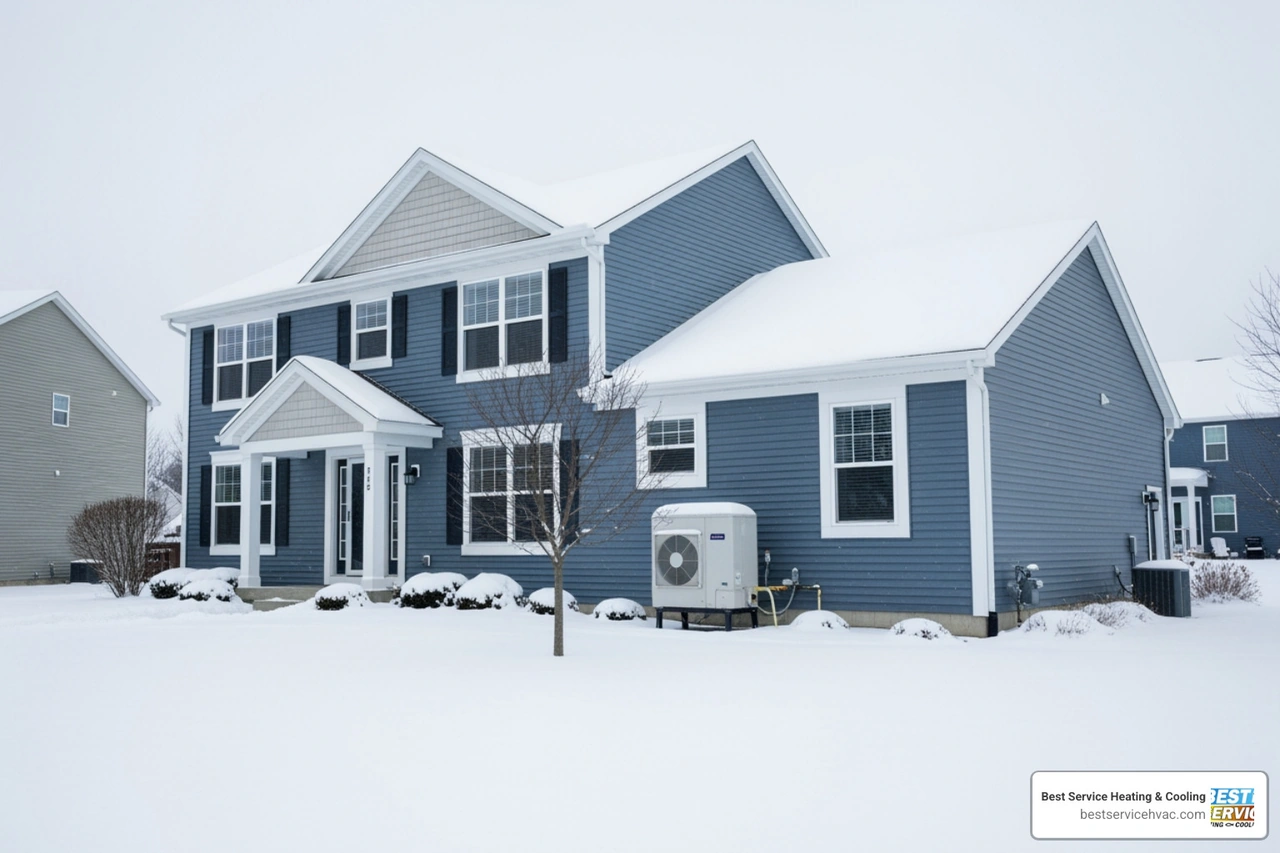
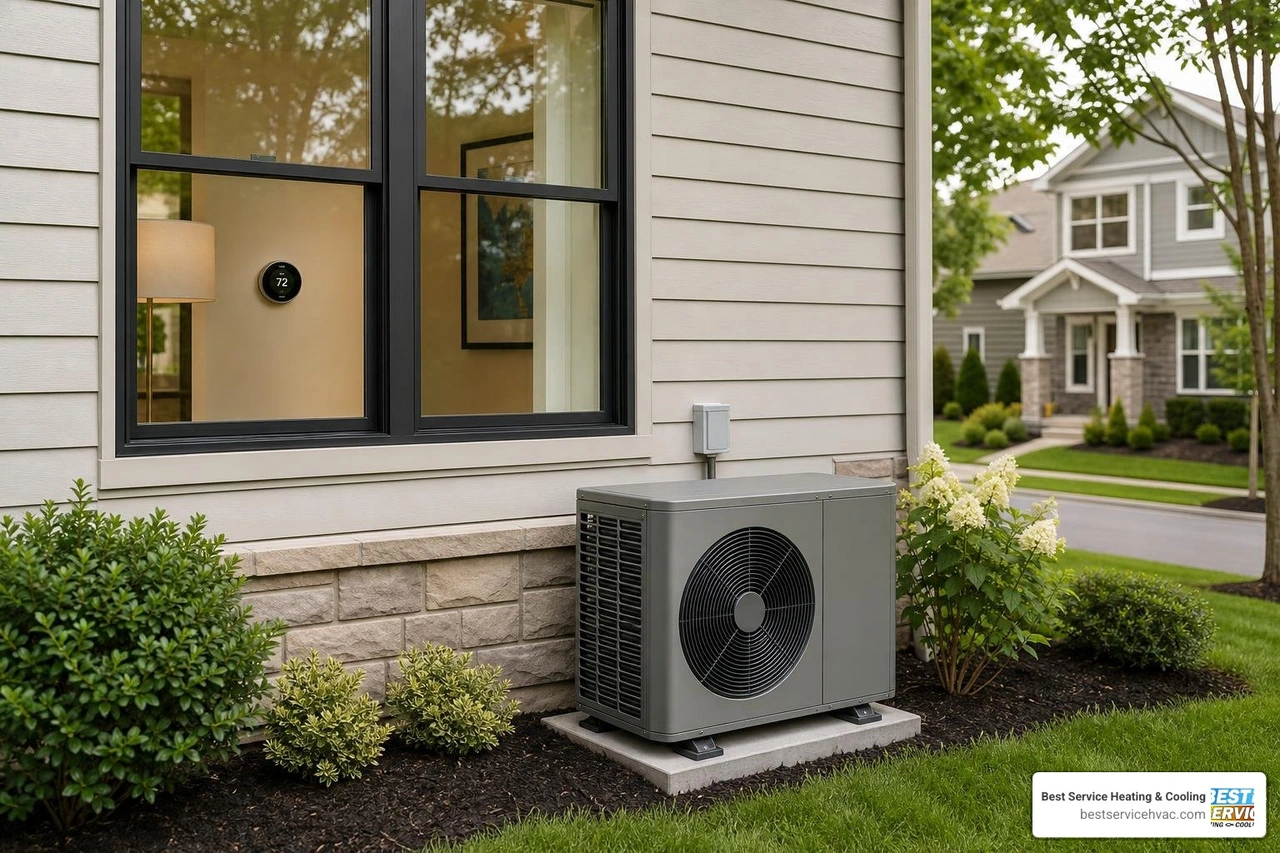
A cold-climate heat pump utilizes advanced inverter-driven compressors to extract heat from the outdoor air even when temperatures drop well below freezing (with some models maintaining high efficiency down to -15°F). In a dual-fuel hybrid system, the heat pump handles all the heating during moderate winter days (above 35°F), and the system automatically switches to a gas or propane furnace when extreme cold sets in.
| System Type | Best Suited For | Pros | Cons |
|---|---|---|---|
| Gas Furnace + Central AC | Homes with natural gas lines (Columbus, Dublin, Westerville) | Fast heat recovery; lower operating costs on natural gas; reliable in extreme cold | Requires gas line access; requires flue venting |
| Cold-Climate Heat Pump | All-electric or propane homes (Canal Winchester, Pataskala) | High efficiency; provides both heating and cooling; lowers carbon footprint | Heating capacity can drop slightly in extreme sub-zero temperatures without backup |
| Dual-Fuel Hybrid System | Homes seeking maximum efficiency and backup security | Automatically selects the cheapest fuel source; optimal comfort in all seasons | Higher initial equipment investment; requires dual utility connections |
Maximizing Efficiency with SEER2, AFUE, and HSPF2 Ratings
When shopping for a new HVAC system, you will encounter several acronyms that measure energy efficiency. Understanding how these ratings translate to real-world savings in Climate Zone 5A will help you make an informed investment.
- SEER2 (Seasonal Energy Efficiency Ratio 2): This measures the cooling efficiency of air conditioners and heat pumps over an entire cooling season. The "2" indicates updated testing standards that better represent real-world duct static pressure. For Central Ohio, we recommend a minimum of 16 SEER2 to keep your summer electric bills manageable.
- AFUE (Annual Fuel Utilization Efficiency): This measures how efficiently a gas furnace converts fuel into usable heat. An older, standard furnace might have an AFUE of 80%, meaning 20% of the fuel you pay for is wasted and escapes through the chimney. A high-efficiency condensing furnace (95% to 98.5% AFUE) uses a secondary heat exchanger to extract almost all the heat from combustion gases, reducing your heating costs by 15% to 30%.
- HSPF2 (Heating Seasonal Performance Factor 2): This measures the heating efficiency of a heat pump over the winter season. In our cool-humid climate, look for a system with an HSPF2 rating of 9.0 or higher.
Upgrading to an Energy Star certified system not only ensures you meet these high performance thresholds but also qualifies you for valuable federal tax credits and local utility rebates. Investing in a professional Furnace Installation Enhance Your Home project pays dividends beyond lower monthly utility bills. According to real estate data, knowing How a New HVAC System Increases Home Value is an excellent motivator; buyers in the Columbus market are highly sensitive to utility costs and prioritize homes with updated, efficient, and warrantied heating and cooling systems.
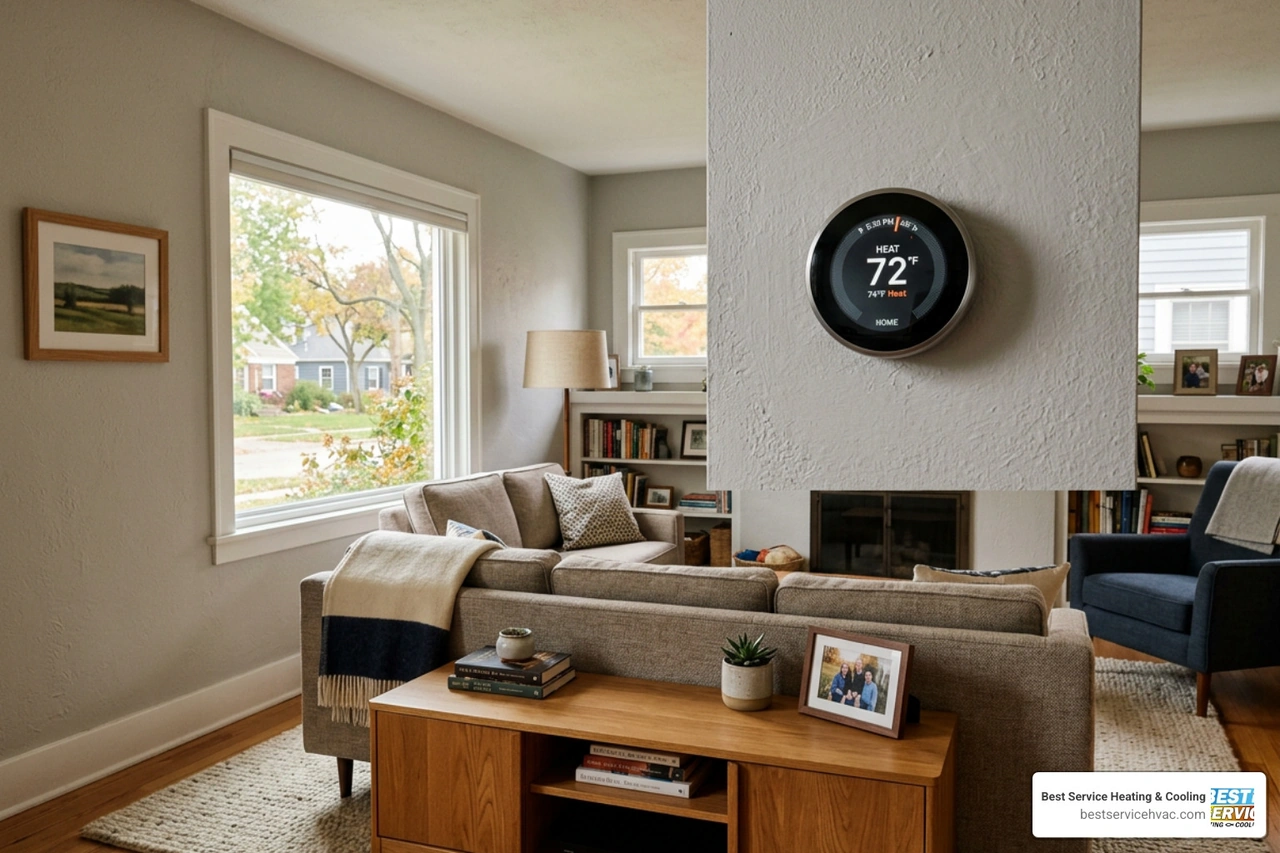
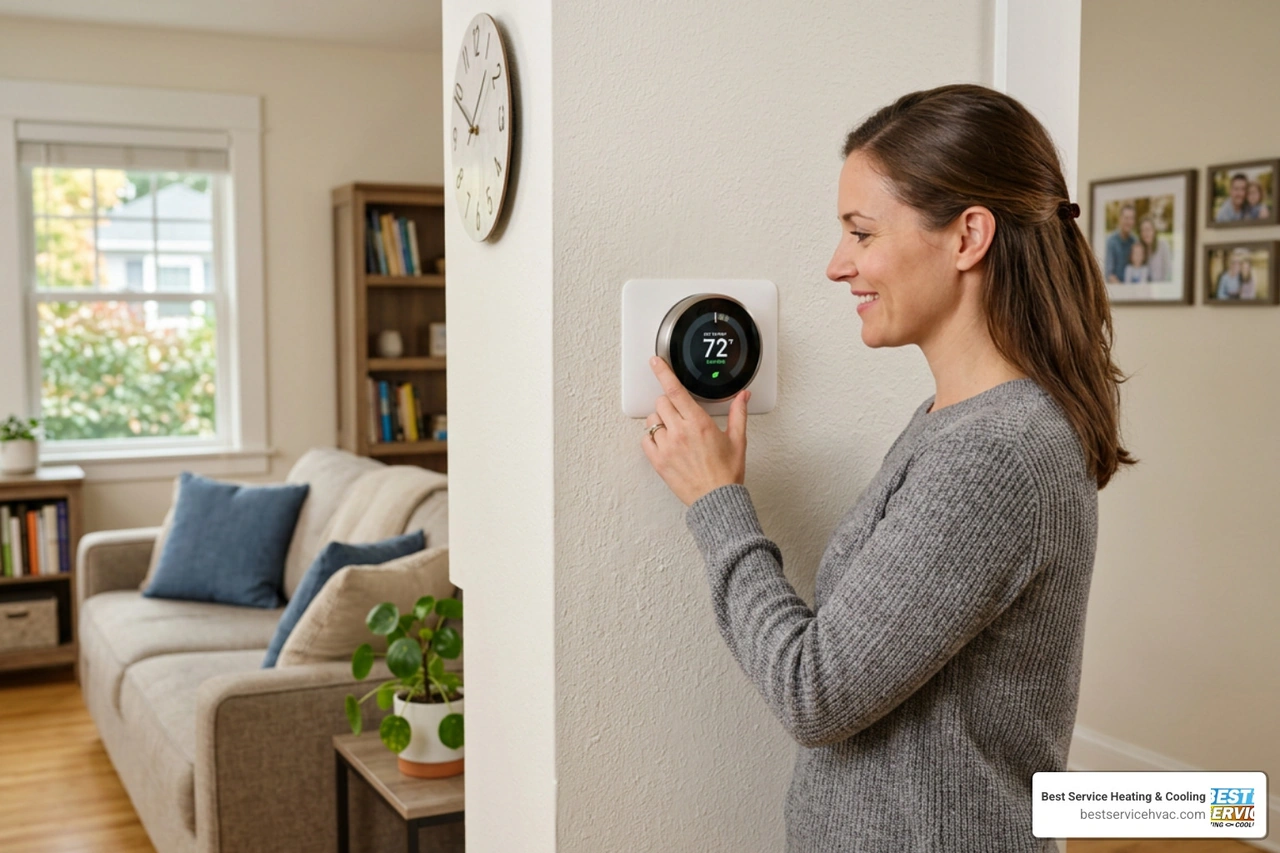
Additionally, pairing your new equipment with an Energy Star certified smart thermostat can save you an average of 10% to 15% on heating and cooling costs by automatically adjusting temperatures when you are away or asleep.
Advanced Comfort Control: Zoning and Smart Thermostats
Many multi-story homes in neighborhoods like Worthington, Bexley, and Upper Arlington suffer from a common comfort issue: the second-floor bedrooms are sweltering in July, while the basement and first floor feel like a refrigerator. This happens because hot air naturally rises, and standard single-zone HVAC systems only measure the temperature at a single thermostat located in a central hallway.
An HVAC zoning system solves this problem by dividing your home into distinct comfort zones, each controlled by its own thermostat.
These zones are managed by automatic dampers installed inside your ductwork that open or close to direct airflow exactly where it is needed. For example, during summer nights, the system can close the first-floor dampers and focus all cooling power on the second-floor bedrooms.
Zoning works best when paired with variable-speed air handlers and smart thermostats. If only one zone needs cooling, a variable-speed system will automatically ramp down its capacity to deliver a gentle, quiet stream of air to that specific zone, preventing system strain and saving energy.
During mild spring or fall days, you can utilize your thermostat's "fan-only" mode. This setting runs your system's indoor blower fan without activating the outdoor compressor or burner. It continuously circulates air throughout the home, balancing out hot and cold spots and filtering the air for a fraction of the energy cost. For those planning a major upgrade, reviewing a comprehensive Heating Installation Downtown Columbus Guide can help you understand how zoning and modern equipment integrate into urban or historic architectural layouts.
Frequently Asked Questions about Central Ohio HVAC Systems
How does humidity affect HVAC sizing in Columbus?
In Central Ohio, humidity directly impacts how we size your air conditioning system. High humidity increases the "latent heat" load in your home, which is the heat associated with the moisture in the air. If an HVAC technician only calculates the "sensible heat" (the actual temperature you read on a thermometer), they will likely undersize the system's dehumidification capability or oversize the system to try and compensate.
An oversized air conditioner will cool your home too quickly and shut off before it has completed a long enough cycle to pull moisture out of the air. This results in a cold, clammy house. By utilizing variable-speed air handlers, we can program the blower fan to run at lower speeds during the start of a cooling cycle. This allows the cooling coil to stay colder, maximizing moisture removal and keeping your home comfortable at a higher thermostat setting.
When should I repair versus replace my heating system?
Deciding whether to repair or replace an aging system comes down to three main factors: age, frequency of repairs, and operating costs. Most traditional furnaces and air conditioners have an operational lifespan of 15 to 20 years. If your system is over 12 years old and requires a major repair (such as a cracked heat exchanger, failed compressor, or broken blower motor), replacing the unit is often the smarter long-term financial move.
Keep an eye out for clear Signs Your Home Needs Heating Repair Services, such as yellow burner flames, frequent cycling, or strange rattling and squealing noises. If you catch these issues early, you can often save the system with a prompt repair. For minor issues on mid-aged systems, consulting our Affordable Heating Repair Columbus OH Guide will help you find reliable, budget-friendly ways to restore your comfort without jumping straight to a full replacement.
Are modern boiler systems still viable for older Columbus homes?
Absolutely. Many historic homes in German Village, Victorian Village, and Clintonville were built with radiator heating systems powered by boilers. While some homeowners consider converting to forced-air systems, doing so requires running bulky ductwork through historic plaster walls and closets, which can ruin the home's architectural character and reduce usable square footage.
Modern condensing boiler systems are incredibly efficient—often reaching AFUE ratings of 95% or higher—and provide exceptionally comfortable, draft-free radiant heat. If you live in an older home, exploring the Benefits of Modern Boiler Systems for Homes will show you how to preserve your home’s historic charm while enjoying modern energy savings and reliable winter comfort.
Conclusion
Achieving the best HVAC setup for central Ohio weather requires a balance of high-efficiency equipment, precise sizing, and professional installation. With our region's intense humidity swings and freezing winters, settling for a "one-size-fits-all" approach will only lead to high energy bills and uncomfortable rooms.
Once your perfect system is installed, keeping it running efficiently requires consistent care. Simple seasonal maintenance steps—like changing your air filters every 1 to 3 months, keeping debris away from your outdoor unit, and scheduling professional spring AC and fall furnace tune-ups—can reduce your energy use by up to 15% and keep your system operating 15% to 25% more efficiently over its lifetime.
Since 1992, Best Service Heating & Cooling has been the family-owned, A+ BBB-rated team that homeowners in Columbus, Reynoldsburg, Dublin, and surrounding communities trust for honest, high-quality comfort solutions. Whether you need a quick repair, a seasonal tune-up, or are ready to design a custom, zoned comfort system from the ground up, we are here to help.
Ready to upgrade your home’s comfort and start saving on your energy bills? Contact us today to explore our top-rated Best Service Heating & Cooling HVAC Services and find the perfect setup for your home!
.webp)
.webp)

Service Areas
