
How Ice and Snow Damage Your Outdoor HVAC Equipment

Why Central Ohio Winters Are Tough on Your Outdoor HVAC Equipment
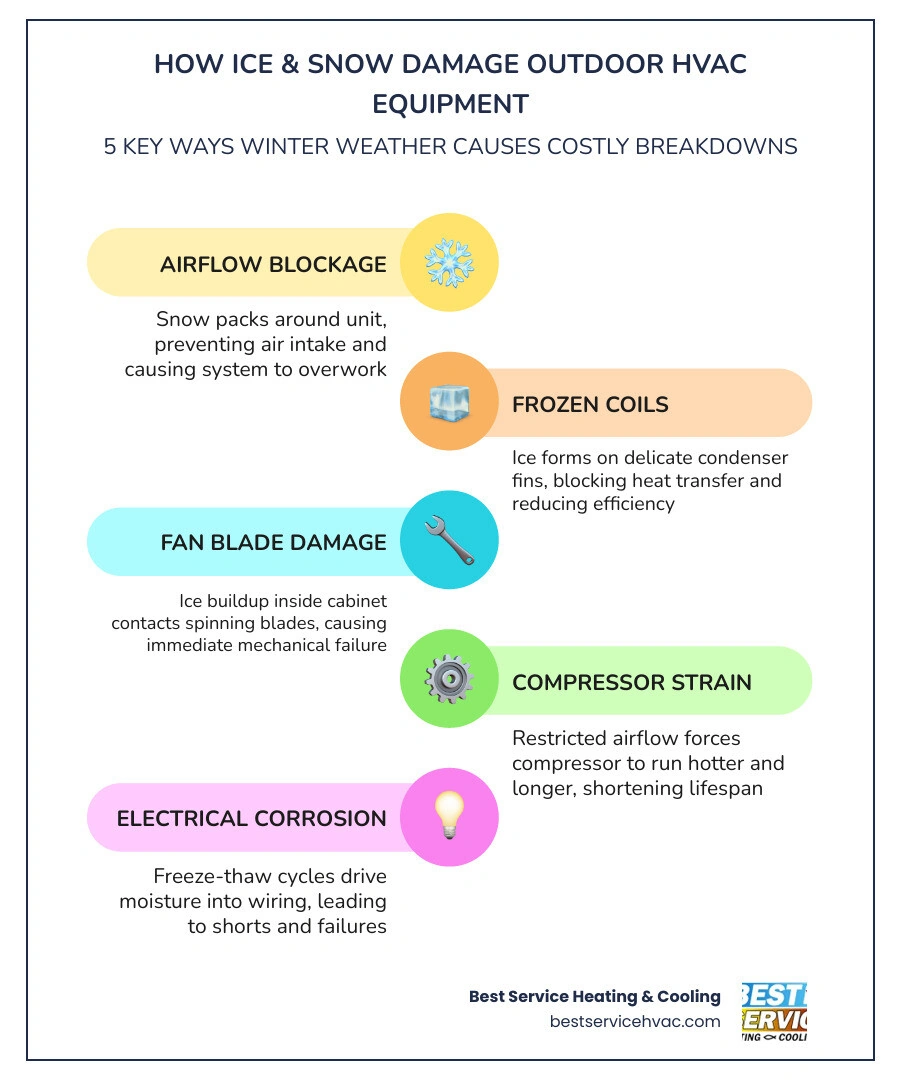
How ice and snow damage your outdoor HVAC equipment is something every Central Ohio homeowner should understand before the next winter storm hits. Snow and ice don't just sit harmlessly on your unit — they restrict airflow, freeze coils, strain compressors, and can cause electrical failures that lead to costly breakdowns.
Here's a quick look at the main ways winter weather causes damage:
- Airflow blockage — Snow and ice pack around the unit, starving it of the air it needs to operate
- Frozen coils — Ice on heat exchanger coils stops proper heat transfer, forcing the system to overwork
- Fan blade damage — Ice buildup inside the cabinet can make contact with spinning fan blades, causing immediate mechanical damage
- Compressor strain — When airflow is restricted, the compressor works harder and wears out faster
- Electrical corrosion — Freeze-thaw cycles push moisture into panels and wiring, causing short circuits and corrosion over time
- Physical impact damage — Falling icicles and roof runoff can dent cabinets, bend coil fins, and crack refrigerant lines
Columbus, Dublin, Westerville, and the broader Central Ohio region regularly experience the kind of wet, heavy snow and freeze-thaw cycles that hit outdoor HVAC equipment hardest. Whether you have a heat pump running all winter or an AC condenser sitting idle, both are vulnerable.
The good news is that most serious damage is preventable — if you know what to watch for and act early.
Understanding How Ice and Snow Damage Your Outdoor HVAC Equipment
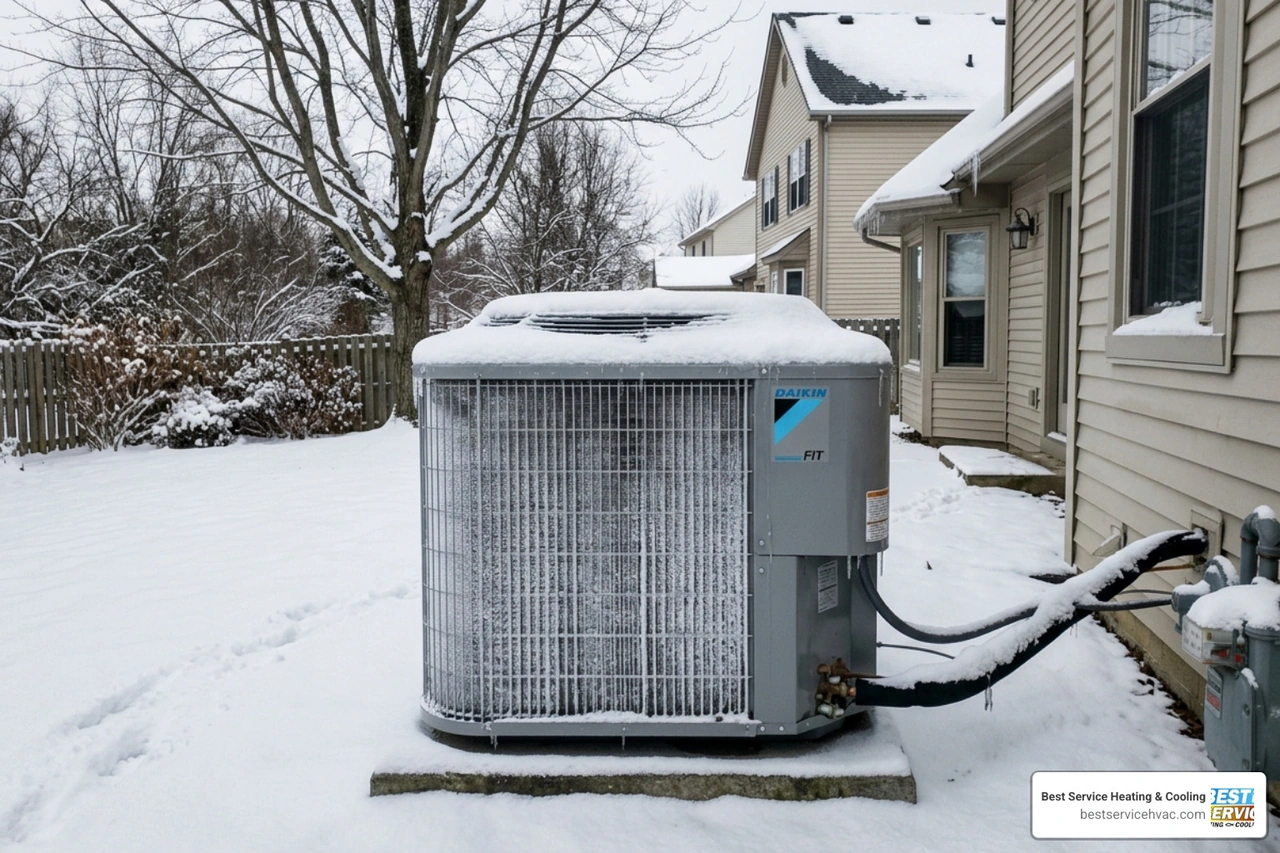
To protect your home, it helps to understand the mechanics of how ice and snow damage your outdoor HVAC equipment. Your outdoor unit, whether it is a heat pump providing warmth in January or an air conditioner waiting for July, relies on a constant, unobstructed exchange of air. When Columbus receives a heavy, wet snowfall, that snow can quickly pack against the sides of the unit, acting like a thick wool blanket that suffocates the system.
Airflow obstruction is the "silent killer" of HVAC efficiency. When the unit can’t pull in air, it struggles to move heat. This puts immense strain on the compressor—the most expensive part of your system. If the compressor is forced to run longer and hotter to compensate for blocked airflow, its lifespan is significantly shortened. Furthermore, ice can form directly on the delicate aluminum fins of the condenser coils. These fins are incredibly thin; the sheer pressure of expanding ice can bend or crush them, permanently reducing the unit's ability to transfer heat.
If your system is struggling to keep up during a freeze, or if you notice visible damage to these fins, you may be at the point when your home needs immediate HVAC repair to avoid a total system failure.

Physical Damage from Falling Icicles and Roof Runoff
One of the most overlooked hazards in Central Ohio is the position of the HVAC unit relative to the roofline. Many homes in areas like Gahanna or Grove City have units installed near the foundation, directly under the eaves. During a typical freeze-thaw cycle, snow melts on the roof, runs down, and refreezes into massive icicles or "ice dams."
When these heavy chunks of ice break loose, they become dangerous projectiles. A falling icicle can easily:
- Crush the protective fan grille.
- Bend or snap the fan blades.
- Puncture refrigerant lines, leading to a total loss of cooling or heating capacity.
- Dent the outer cabinet, which can lead to internal components shifting out of alignment.
If you notice your unit has been struck by falling debris, it is vital to check for common AC repair issues and solutions before you try to run the system again. Operating a unit with a bent fan or a refrigerant leak can turn a simple repair into a full replacement.
Electrical Failures and Corrosion from Freeze-Thaw Cycles
In Central Ohio, we often see temperatures jump from 20 degrees at night to 40 degrees during the day. This constant "freeze-thaw" cycle is particularly brutal on electrical components. As ice melts, water can seep into tiny cracks in the electrical panels or wiring insulation. When that water refreezes at night, it expands, widening those cracks and pushing deeper into the system.
Over time, this moisture causes corrosion on wire terminals and can lead to short circuits. Corroded connections increase electrical resistance, which means your system uses more power to do the same amount of work, leading to higher utility bills. To ensure your electrical connections remain tight and moisture-free, we recommend a professional HVAC tune-up in Downtown Columbus OH before the worst of winter arrives.
Normal Frost vs. Dangerous Ice Buildup on Heat Pumps
If you use a heat pump to stay warm in Pataskala or Hilliard, you might be alarmed to see frost on your outdoor unit. However, a light coating of frost is actually a normal part of winter operation. Because heat pumps extract heat from the cold outdoor air, the coils naturally become very cold, causing moisture in the air to freeze on contact.
To handle this, your heat pump has a "defrost cycle." Think of it as a self-cleaning mode. The system temporarily reverses its operation, sending warm refrigerant to the outdoor coils to melt the frost. During this time, you might see steam rising from the unit or hear a loud "whooshing" sound—this is completely normal! However, if the unit becomes completely encased in a thick block of ice that doesn't melt away after an hour, you have a problem.
When ice builds up to the point that you can no longer see the metal fins, it usually indicates a failure in the defrost board, a faulty sensor, or low refrigerant levels. If the unit begins making a heavy thumping or grinding sound, these are HVAC noises that signal professional service is required immediately.
Why how ice and snow damage your outdoor HVAC equipment during defrost failure
When the defrost cycle fails, the consequences are rapid. Without the ability to melt away accumulation, the ice continues to grow until it completely chokes the unit. This creates a "stuck" relay situation where the system might try to stay in defrost mode indefinitely, or worse, stay in heating mode while the outdoor fan is frozen solid.
A frozen fan motor that tries to spin against solid ice will likely burn out. This is a common reason for emergency calls for HVAC service in Amlin OH. When the outdoor unit fails, your system will likely switch to "Emergency Heat" or "Auxiliary Heat." While this keeps you warm, it is significantly more expensive to run, as it relies on electric resistance coils rather than the efficient heat pump technology.
Warning signs of mechanical distress in freezing temperatures
We want our neighbors in the Columbus area to be vigilant during the winter months. Watch for these warning signs that how ice and snow damage your outdoor HVAC equipment is reaching a critical point:
- The "Ice Block" Look: If your unit looks like a giant ice cube and doesn't clear up after 30 minutes.
- Unusual Noises: Grinding, shrieking, or heavy vibrating sounds often mean the fan is hitting ice.
- Frequent Cycling: If the unit turns on and off every few minutes, it may be hitting a high-pressure limit due to restricted airflow.
- No Heat: If your vents are blowing cold air and the outdoor unit is silent or encased in ice.
If you spot any of these, don't wait for the system to shut down entirely. Prompt HVAC repair in Linden OH can save you from a very cold night and a much larger repair bill later.
Safe Steps to Protect Your System During a Central Ohio Winter
Now that you know the risks, let's talk about prevention. You don't have to be an HVAC expert to keep your system safe; you just need to be proactive.
Clear the Perimeter: After every significant snowfall in Columbus, grab a plastic shovel or a soft broom. Clear a two-foot radius around your outdoor unit. This ensures that the system has enough "breathing room" to pull in the air it needs. Never use a metal shovel near the unit, as one slip can slice through the delicate aluminum fins or refrigerant lines.
Clear the Top: If snow is piled high on top of the unit, gently brush it off. This prevents the snow from melting and dripping down into the fan motor, where it might refreeze and lock the blades in place. For residents needing assistance or a professional eye on their system, we offer comprehensive HVAC maintenance in Pataskala OH to ensure your system is winter-ready.
Best practices for how ice and snow damage your outdoor HVAC equipment prevention with covers
A common question we get in Dublin and Westerville is: "Should I cover my unit?" The answer depends entirely on what kind of system you have.
- Air Conditioners (AC Only): Since these units don't run in the winter, a cover can be a good idea to keep out leaves, ice, and debris. However, you must use a breathable cover. A plastic tarp traps moisture inside, which causes rust and corrosion. It also creates a warm, dry "tent" that attracts rodents who love to chew on your wiring.
- Heat Pumps: NEVER cover a heat pump in the winter. Heat pumps must run year-round. If you cover a heat pump while it's trying to heat your home, you will suffocate the system, likely causing it to overheat and fail instantly.
Understanding these nuances is why regular HVAC service is essential for your home. We can help you determine the best protection strategy for your specific equipment.
Maintaining proper drainage to prevent ice pedestals
When your heat pump goes through its defrost cycle, it creates a lot of meltwater. If your unit is sitting directly on the ground or if the concrete pad has tilted over the years, that water won't drain away. Instead, it will pool under the unit and refreeze.
Over a few weeks, this can create an "ice pedestal" that grows upward into the bottom of the unit. This can eventually reach the fan blades or the bottom of the coils, causing significant damage. Ensure your unit is level and that the drainage path is clear of leaves and debris. Proper installation and leveling are core parts of our residential air conditioning and heating in Columbus OH.
Frequently Asked Questions about Winter HVAC Damage
Should I pour hot water on my frozen outdoor unit to melt the ice?
We strongly advise against this. While it might seem like a quick fix, pouring boiling or very hot water on a frozen unit can cause "thermal shock." The extreme temperature difference can cause the metal coils to expand too quickly, leading to cracks in the copper or aluminum. Additionally, that water will likely just refreeze once it hits the cold metal, making the ice problem even worse. If your unit is frozen solid, it's best to call a professional who can safely thaw it and find out why it froze in the first place.
Why is my heat pump blowing steam and making a loud noise in the snow?
Don't panic! This is usually just the defrost mode in action. When the system reverses to melt ice off the outdoor coils, the moisture evaporates, creating what looks like smoke but is actually just steam. The loud noise is the reversing valve shifting the flow of refrigerant. If the "smoke" doesn't smell like it's burning and the steam stops after a few minutes, your system is doing exactly what it was designed to do.
Can I use a sharp tool to chip ice off the coils?
Absolutely not. This is perhaps the fastest way to destroy an HVAC unit. The copper tubing inside your coils is relatively soft. One misplaced swing of a screwdriver or ice pick can puncture the line, releasing all the refrigerant into the atmosphere. This is an expensive, environmentally damaging mistake. If you must remove ice, use a gentle stream of water from a garden hose (if the temperature is above freezing) or simply wait for a professional.
Conclusion
Winter in Central Ohio is beautiful, but it demands respect—especially when it comes to your home's comfort system. Understanding how ice and snow damage your outdoor HVAC equipment is the first step in ensuring your family stays warm when the mercury drops. From clearing snow to watching for "ice blocks," your vigilance makes a difference.
At Best Service Heating & Cooling, we’ve been helping our neighbors in Columbus, Reynoldsburg, and the surrounding areas since 1992. As a family-owned business with an A+ BBB rating, we take pride in offering honest, affordable solutions to keep your home comfortable. Whether you need an emergency repair in the middle of a blizzard or want to prevent issues before they start, we are here to help.
The best way to avoid winter headaches is to stay ahead of them. Consider joining our Maintenance Plan to ensure your system is inspected, cleaned, and tested by our expert technicians before the snow flies. Stay warm, stay safe, and remember that we are just a phone call away!
.webp)
.webp)

Service Areas
