
How Old Is Too Old for an HVAC System in Columbus?

My HVAC system is getting old. Who provides reliable replacement services in Columbus?
Knowing how old is too old for an HVAC system is one of the most important questions you can ask as a homeowner — especially in Central Ohio, where hot, humid summers and cold winters push heating and cooling equipment hard every single year. Most systems don't fail overnight. They slow down gradually, use more energy to run, and break down more often — until one day the recurring issues make you wonder if you should have replaced it sooner.
Here's a quick answer based on system type:
| HVAC System Type | Typical Lifespan | Consider Replacing At |
|---|---|---|
| Central Air Conditioner | 15–20 years | 12–15 years |
| Heat Pump | 10–15 years | 10–12 years |
| Gas Furnace | 15–25 years | 15–20 years |
| Electric Furnace | 20–30 years | 20+ years |
| Boiler | 20–35 years | 15–20 years |
| Ductless Mini-Split | 15–20 years | 15+ years |
The short version: if your central AC or heat pump is over 12 years old, it's time to start paying close attention. If any system in your home is past 15–20 years, replacement is likely the smarter long-term move — even if it's still running.
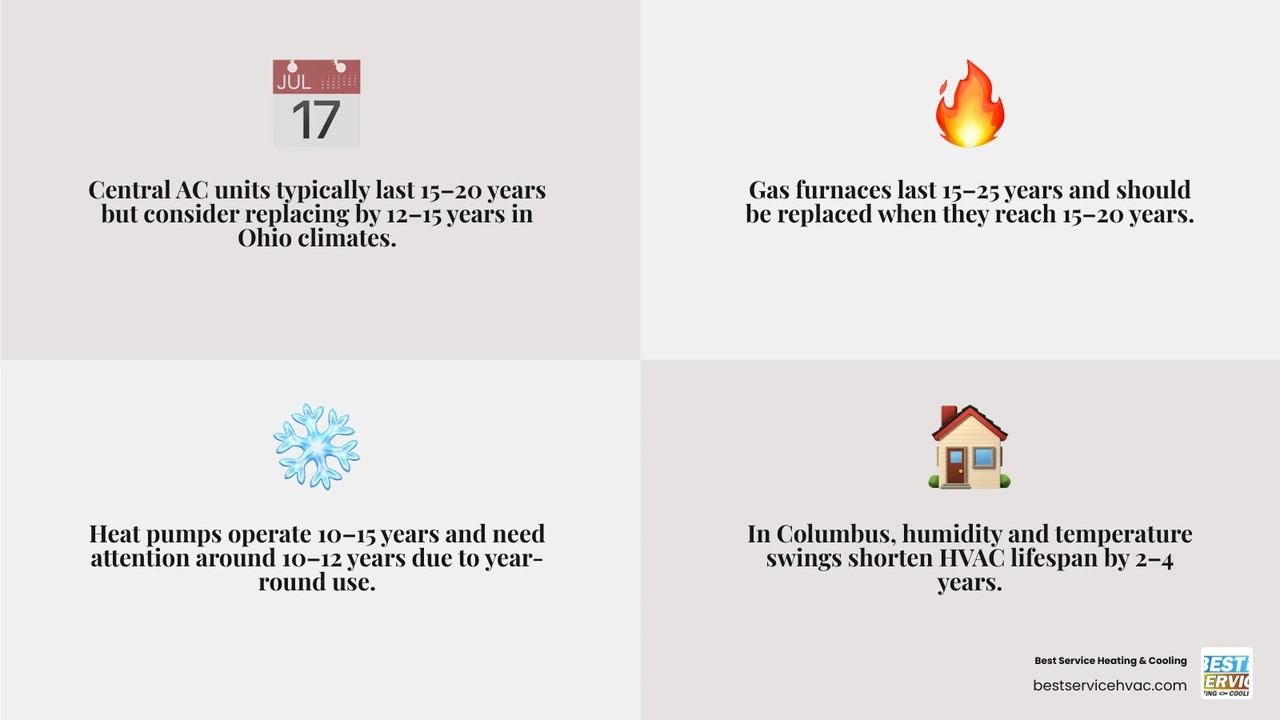
In Columbus and the surrounding communities, aging HVAC systems face extra stress from humidity, pollen, and wide temperature swings. That can shorten equipment life by two to four years compared to milder climates. The sections below walk you through exactly what to watch for, how to decide between repair and replacement, and what you gain from upgrading to a modern system.
How Old Is Too Old for an HVAC System?
There is no single birthday when every HVAC system suddenly becomes "too old." Age matters, but so do maintenance history, installation quality, runtime, duct condition, and how hard the system works through Columbus summers and winters.
Still, a few age milestones are useful:
- Around 10 years old: start monitoring efficiency, repair frequency, and comfort more closely
- Around 12 years old: many AC systems begin showing meaningful wear and efficiency loss
- Around 15 years old: replacement becomes a serious conversation for many systems
- Around 20 years old: most standard residential HVAC equipment is beyond the point where continued repairs make sense
Research consistently shows that central air conditioners usually last about 15 to 20 years, with a median service life closer to 12 to 15 years. By year 10, many central air systems are operating at only about 80% to 85% of their original efficiency. That means your older unit may still work, but it may be doing the same job with a lot more effort.
How old is too old for an HVAC system for air conditioners and heat pumps?
For central air conditioners, the practical warning zone often starts at 12 years. That does not mean every 12-year-old AC needs immediate replacement. It does mean the system has entered the stage where failures become more common and performance often slips.
A good rule of thumb for Columbus homeowners:
- Central AC: start planning around 12 to 15 years
- Heat pump: start planning around 10 to 12 years
Heat pumps usually wear out faster than straight AC systems because they run in both summer and winter. More run time means more wear on compressors, motors, and controls. If your heat pump is in double duty all year, it tends to reach its "I've had a good run" phase sooner.
Aging cooling equipment also loses efficiency over time. Research suggests a 12-year-old AC can lose 20% to 30% of its original efficiency, especially if maintenance has been inconsistent. That can show up as:
- Longer cooling cycles
- Warm rooms during peak summer heat
- Weak airflow
- Higher humidity indoors
- Higher electric bills without a lifestyle change
How old is too old for an HVAC system for furnaces and boilers?
Furnaces and boilers usually last longer than AC systems, but they are not immortal just because they keep making heat.
Typical ranges are:
- Gas furnace: 15 to 25 years
- Electric furnace: 20 to 30 years
- Boiler: 20 to 35 years
Gas furnaces deserve extra attention as they age because safety becomes part of the conversation, not just comfort. A cracked heat exchanger in an older furnace can create a carbon monoxide risk. That is one reason we take strange smells, unusual burner behavior, and age-related furnace problems seriously.
Boilers can last a long time, but longevity does not automatically equal efficiency. An older boiler may still operate while using more energy and offering less responsive comfort than a modern replacement.
Why Columbus weather can shorten HVAC life
Central Ohio is not exactly gentle on HVAC equipment.
In Columbus, Dublin, Westerville, Gahanna, Grove City, Pickerington, Reynoldsburg, and nearby communities, systems deal with:
- Humid summers that increase cooling load
- Winter cold snaps that stress heating equipment
- Spring pollen that can clog coils and filters faster
- Big temperature swings that increase cycling
- Long seasonal run times
- Moisture exposure that can contribute to corrosion
Those conditions can trim a few years off equipment life compared to milder climates. Add in dirty filters, neglected tune-ups, leaky ducts, or an oversized unit that short cycles, and the system can age even faster.
Typical HVAC Lifespan and What Makes It Last Longer
Some systems barely make it to the lower end of the lifespan range. Others keep going well past expectations. The difference usually comes down to how the system was installed, maintained, and used.
| System | Typical Lifespan | What Helps It Last |
|---|---|---|
| Central AC | 15-20 years | Annual tune-ups, clean coils, proper sizing |
| Heat Pump | 10-15 years | Regular maintenance, balanced usage, clean airflow |
| Gas Furnace | 15-25 years | Safety inspections, filter changes, airflow checks |
| Boiler | 20-35 years | Water-side maintenance, inspections, proper setup |
| Ductless Mini-Split | 15-20 years | Coil cleaning, filter care, annual service |
The average lifespan of each major HVAC system
Here is the practical breakdown we use for homeowners in Central Ohio:
- Central air conditioners typically last 15 to 20 years
- Heat pumps typically last 10 to 15 years
- Gas furnaces typically last 15 to 25 years
- Electric furnaces often last 20 to 30 years
- Boilers can last 20 to 35 years
- Ductless mini-splits usually last 15 to 20 years
These are averages, not guarantees. A neglected 9-year-old system can be in worse shape than a well-maintained 16-year-old one.
Factors that shorten or extend system life
Several things have a major impact on whether your system ages gracefully or like milk left on the counter.
The biggest lifespan factors include:
- Maintenance history
- Correct equipment sizing
- Installation quality
- Filter changes
- Dirty coils
- Refrigerant charge
- Duct leakage
- Home insulation
- Thermostat settings and runtime habits
Poor sizing is especially hard on a system. An oversized unit tends to short cycle, which means it turns on and off too often. An undersized unit runs too long and struggles to keep up. Both situations increase wear.
Leaky ducts also matter more than many homeowners realize. If conditioned air escapes into unconditioned spaces, your equipment has to run longer to maintain comfort. In some homes, duct leaks can waste a significant amount of heated or cooled air.
How regular maintenance adds usable years
Routine maintenance is one of the few things that genuinely can extend equipment life. Research commonly shows that regular professional maintenance can add about 3 to 5 years to an HVAC system's usable lifespan.
Why? Because tune-ups help catch the small things before they become big things:
- Dirty coils that make the system work harder
- Loose electrical connections
- Weak capacitors
- Airflow restrictions
- Refrigerant issues
- Worn components
- Burner or heat exchanger concerns
Even simple upkeep matters. A clogged filter can reduce airflow and force the system to run hotter, longer, and under more strain. Dirt and neglect are among the most common reasons systems fail earlier than they should.
If you want a deeper look at why routine service matters in our climate, see Annual HVAC Maintenance: Is It Worth It? and Benefits of Regular HVAC Maintenance in Midwest Four-Season.
Warning Signs Your HVAC System Is Too Old to Keep
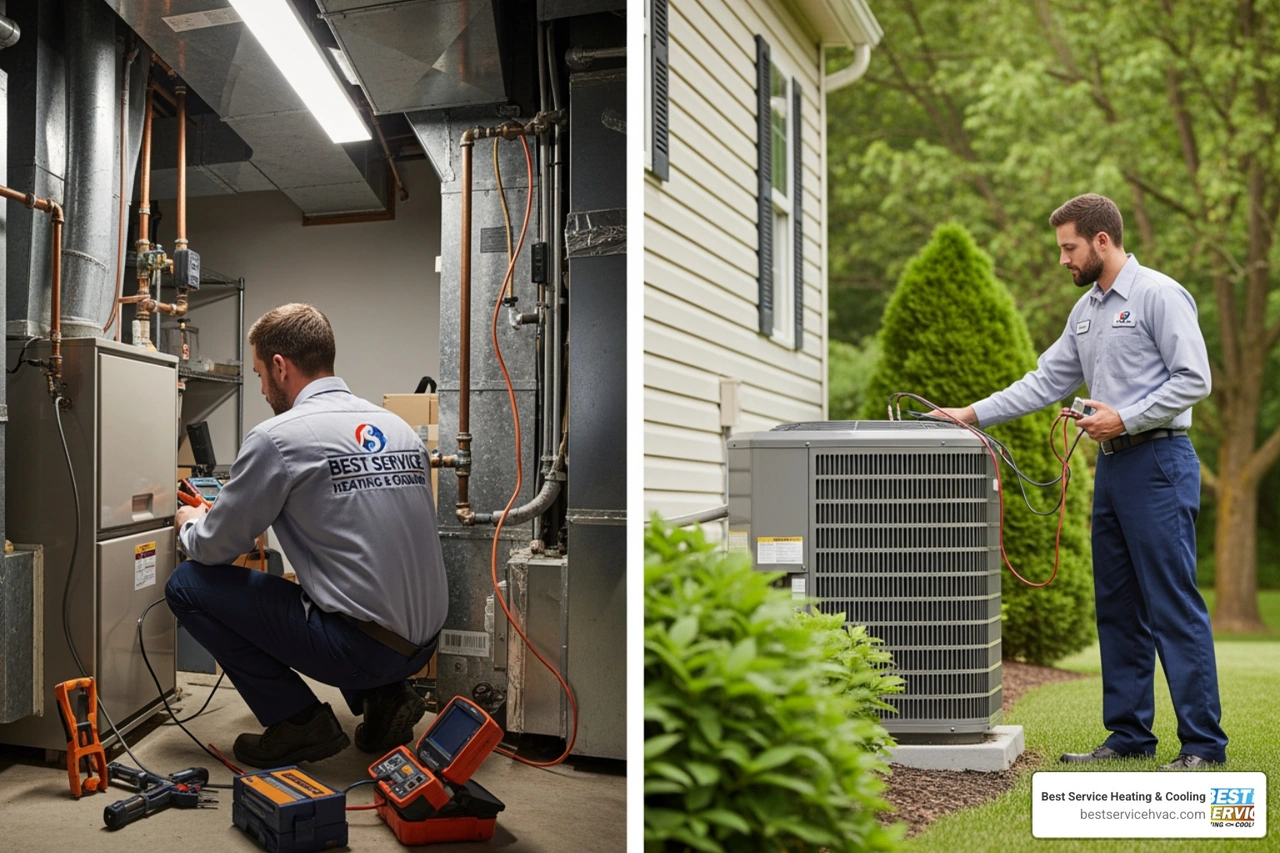
Age alone does not decide everything. A better question is whether the system is old and showing the classic signs of decline.
Frequent repairs and breakdowns are a major red flag
If your HVAC system needs service once in a blue moon, that is one thing. If you feel like your technician is becoming part of the family, that is another.
Frequent breakdowns are one of the clearest indicators that an aging system is nearing the end. This is especially true if the unit has been maintained and is still failing repeatedly.
Watch for patterns like:
- Multiple repairs in one season
- The same part failing again
- A major repair followed by another problem soon after
- More emergency calls during weather extremes
This matters even more during summer peaks. Repair wait times can increase dramatically in high-demand periods, and homeowners can end up without AC for several days. When an older system fails during a Columbus heat wave, it is not just inconvenient. It can disrupt the whole household.
If your system keeps limping from one service call to the next, review When Your Home Needs Immediate HVAC Repair and When to Upgrade Aging AC Unit Than Repair.
Rising energy bills and lower efficiency over time
Higher utility bills are often one of the first hints that older equipment is slipping. If your usage habits have stayed mostly the same but your energy bills keep climbing for three to six months, your HVAC system may be losing efficiency.
Relevant benchmarks from industry research include:
- By year 10, many central AC systems operate at only 80% to 85% of original efficiency
- A 12-year-old AC often loses 20% to 30% efficiency
- Older systems may use 25% to 35% more electricity to deliver the same cooling
That loss shows up in real life as:
- Longer run times
- More cycling
- Less cooling or heating for the same thermostat setting
- The system struggling during very hot or very cold days
One unusually high bill is not enough to diagnose a failing system. But a steady upward trend often means the equipment is working harder to do less.
Performance and safety issues you should not ignore
Older HVAC systems often tell on themselves before they completely fail.
Common warning signs include:
- Uneven temperatures between rooms
- Weak airflow
- Excess indoor humidity
- More dust than usual
- Short cycling
- Strange noises like rattling, squealing, buzzing, or banging
- Difficulty keeping up with the thermostat
These are not just comfort issues. Sometimes they point to aging motors, duct problems, blower issues, refrigerant trouble, or failing controls.
Safety concerns matter too, especially with older furnaces. A cracked heat exchanger, damaged wiring, or deteriorating components can create risks that go beyond comfort and efficiency.
For more on what these warning signs mean, visit Performance Issues for HVAC System Replacement and HVAC Noises That Signal Professional Service.
Repair or Replace? How to Make the Right Call
This is the part every homeowner wants a simple answer to, and unfortunately the honest answer is: it depends. But it depends on a short list of practical things, not mystery.
When repair still makes sense
Repair is often the right move when:
- The system is under 10 years old
- The issue is minor
- Utility bills are stable
- The equipment has a good maintenance record
- The system is still under warranty
- Overall comfort and reliability have been good
For example, a younger system with one isolated electrical or control issue is often worth fixing. Age and pattern matter more than panic.
When replacement is usually the smarter move
Replacement usually becomes the better long-term decision when:
- The system is over 15 years old
- A major component has failed
- Breakdowns are becoming frequent
- Energy bills keep rising
- Comfort is getting worse
- Parts are obsolete or hard to source
- The unit uses outdated refrigerant
This is especially true if the system is failing in stages. One repair this year and another next year can create a cycle where you keep investing in equipment that never regains its reliability.
Evaluating the long-term value of your system
Homeowners often look at the age of the system alongside the frequency of service calls. If the system is reaching the end of its expected lifespan and requires significant intervention to stay operational, replacement often provides better peace of mind and long-term performance.
Also look at cumulative repairs, not just the next one. A series of minor repairs can add up quickly while leaving you with the same old equipment.
Why replacing before a breakdown can be the better choice
Waiting until the system dies completely feels logical, but it is often the most stressful option.
Proactive replacement gives you:
- Time to compare options
- Better scheduling flexibility
- Less chance of peak-season delays
- Less time without heating or cooling
- More control over the decision
Emergency replacements rarely happen at a convenient time. They tend to happen on the hottest or coldest day when everyone else needs service too. Planning ahead is almost always better than making a rushed decision while sweating indoors and bargaining with a thermostat.
You can learn more about proactive system care in Regular HVAC Service Essential for Home.
Benefits of Replacing an Old HVAC System
If your current system is aging out, replacement is not just about avoiding breakdowns. It is also about improving daily comfort.
Efficiency, comfort, and humidity control improvements
Modern HVAC systems are much better at managing comfort than many older units.
Depending on the equipment, upgrades may include:
- Higher SEER2 cooling efficiency
- Improved furnace AFUE ratings
- Variable-speed compressors
- Variable-speed blower motors
- Two-stage or modulating operation
- Better airflow management
- Improved humidity control
For homeowners, that usually means:
- More even temperatures
- Fewer hot and cold spots
- Better humidity control in summer
- Quieter operation
- Less system strain
- Lower energy use
ENERGY STAR-qualified systems can reduce annual heating and cooling energy use, and newer high-efficiency systems often outperform older units by a wide margin. A 15-year-old system and a modern one may both technically "work," but they are not playing the same game.
Refrigerant changes: what R-22 means for older systems
If your air conditioner was manufactured before 2010, there is a good chance it uses R-22 refrigerant. That matters.
The EPA banned production of new R-22 on January 1, 2020. Since then, available supply has come from recycled or recovered refrigerant, which makes repairs involving refrigerant leaks much harder to justify on older systems.
If your older unit uses R-22 and develops a leak, replacement often makes more sense than continuing to invest in outdated equipment. Even if it is still running today, we usually recommend planning for replacement within the next few years rather than waiting for an emergency.
Most modern systems use newer refrigerants and are built around current efficiency standards.
What homeowners gain from modern systems in 2026
In 2026, replacement systems offer more than just basic heating and cooling. Homeowners can gain:
- Better efficiency
- Improved humidity control
- Quieter performance
- Smart thermostat compatibility
- More consistent temperatures
- Better indoor air quality support
- Fewer repairs and less downtime
A new matched system can also help your equipment operate as designed. Mixing very old indoor and outdoor components often reduces efficiency and can create reliability issues.
Frequently Asked Questions About How Old Is Too Old for an HVAC System
Can an HVAC system last more than 20 years?
Yes, some systems can last more than 20 years, especially boilers, electric furnaces, and very well-maintained gas furnaces. But "can last" is not the same as "should keep running without concern."
Once equipment reaches or passes 20 years, efficiency, reliability, and part availability usually become bigger concerns. Even if the system still works, it may be using more energy to operate and maintain than a newer system would.
Does a 10-year-old system need to be replaced now?
Not necessarily. A 10-year-old system is not automatically too old. But it is the right time to start paying closer attention.
If the system is:
- Well maintained
- Cooling and heating evenly
- Keeping bills stable
- Not breaking down often
then repair and continued maintenance may still make sense.
If it is already showing signs like efficiency loss, frequent repairs, humidity issues, or weak airflow, then replacement planning should begin sooner rather than later.
How can I tell the exact age of my HVAC system?
You can usually find the age by checking:
- The manufacturer label or nameplate
- The serial number
- Installation paperwork
- Service records
Many manufacturers encode the manufacture date in the serial number, but the format varies by brand. If you are not sure what you are looking at, we can help identify the age during a professional inspection.
Conclusion
The answer to how old is too old for an HVAC system is not just about the number of years. It is about age plus efficiency, reliability, safety, and comfort. In Columbus-area homes, many AC systems start entering the replacement conversation around 12 to 15 years, while furnaces and boilers may last longer depending on maintenance and condition.
The best move is to plan before your old system forces the issue. Annual maintenance, timely repairs, and honest inspections can help you get the most from your equipment without waiting for a mid-season breakdown to make the decision for you.
If you want to protect the life of your current system, read What Happens If You Skip HVAC Maintenance. If you are ready to explore your options, visit More info about HVAC services.
At Best Service Heating & Cooling, we have served Central Ohio homeowners since 1992 with repair, maintenance, and replacement solutions built around real comfort needs. If your system is getting up there in age, we can help you decide whether it still has good years left or whether it is time for a fresh start.
.webp)
.webp)

Service Areas
