
How to Get Paid for Upgrading Your Ohio HVAC System

How Ohio Homeowners Are Getting Paid to Upgrade Their HVAC Systems in 2026
Ohio energy rebates for hvac upgrades are available right now through a combination of federal tax credits, state-administered programs, and utility company incentives — and many Central Ohio homeowners are leaving thousands of dollars on the table simply because they don't know where to look.
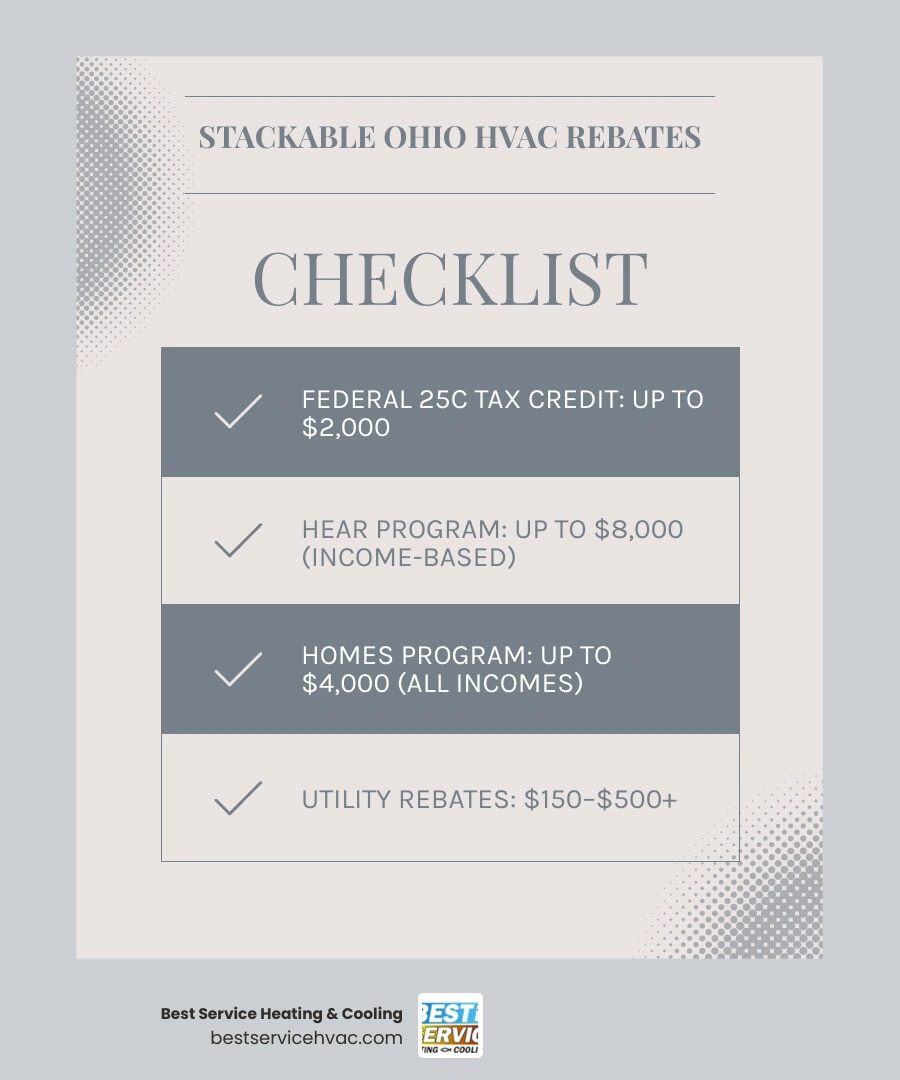
Here's a quick overview of what's available in 2026:
| Incentive Type | Program | Max Benefit |
|---|---|---|
| Federal Tax Credit | 25C Energy Efficient Home Improvement Credit | Up to $2,000 for heat pumps |
| State Rebate (Income-Based) | HEAR (formerly HEEHRA) | Up to $8,000 for heat pumps; $14,000 total |
| State Rebate (All Incomes) | HOMES Program | Up to $4,000 for whole-home energy savings |
| Utility Rebate | AEP Ohio, FirstEnergy, Duke Energy, Columbia Gas | $150–$500+ depending on equipment |
| Low-Income Assistance | HELP, HWAP, EPP | Free or deeply discounted upgrades |
Ohio was awarded $249 million through the Inflation Reduction Act specifically to fund the HOMES and HEAR rebate programs — money that's sitting there waiting for eligible homeowners to claim it. On top of that, your utility company almost certainly has its own rebate program running right now.
The catch? Each program has its own rules, deadlines, income limits, and equipment requirements. Miss a step — like skipping pre-approval before your installation — and you could lose the rebate entirely.
This guide breaks everything down so you know exactly what you qualify for, what equipment you need, and how to apply without leaving money behind.
I'm looking for ohio energy rebates for hvac upgrades. What's available in 2026?
As we move through 2026, the landscape of home incentives has shifted toward long-term sustainability. The primary driver for these savings remains the Inflation Reduction Act (IRA), which has funneled significant resources into the state of Ohio. Whether you live in the heart of Columbus or a surrounding community like Westerville or Gahanna, you have access to three main "buckets" of savings.
First, the Federal Tax Credits (25C) remain a cornerstone for many. While some legislative discussions occurred in 2025, the 25C credit continues to offer a 30% tax credit for qualifying energy-efficient improvements. This is a direct reduction in the amount of tax you owe, rather than a check in the mail.
Second, the state-administered programs—HOMES and HEAR (formerly known as HEEHRA)—are fully operational. Ohio’s $249 million allocation is being used to provide substantial rebates for everything from heat pumps to electrical panel upgrades.
Finally, local utility incentives from providers like AEP Ohio and Columbia Gas offer "instant" or "mail-in" rebates. These are often the easiest to access and can be combined with federal credits.
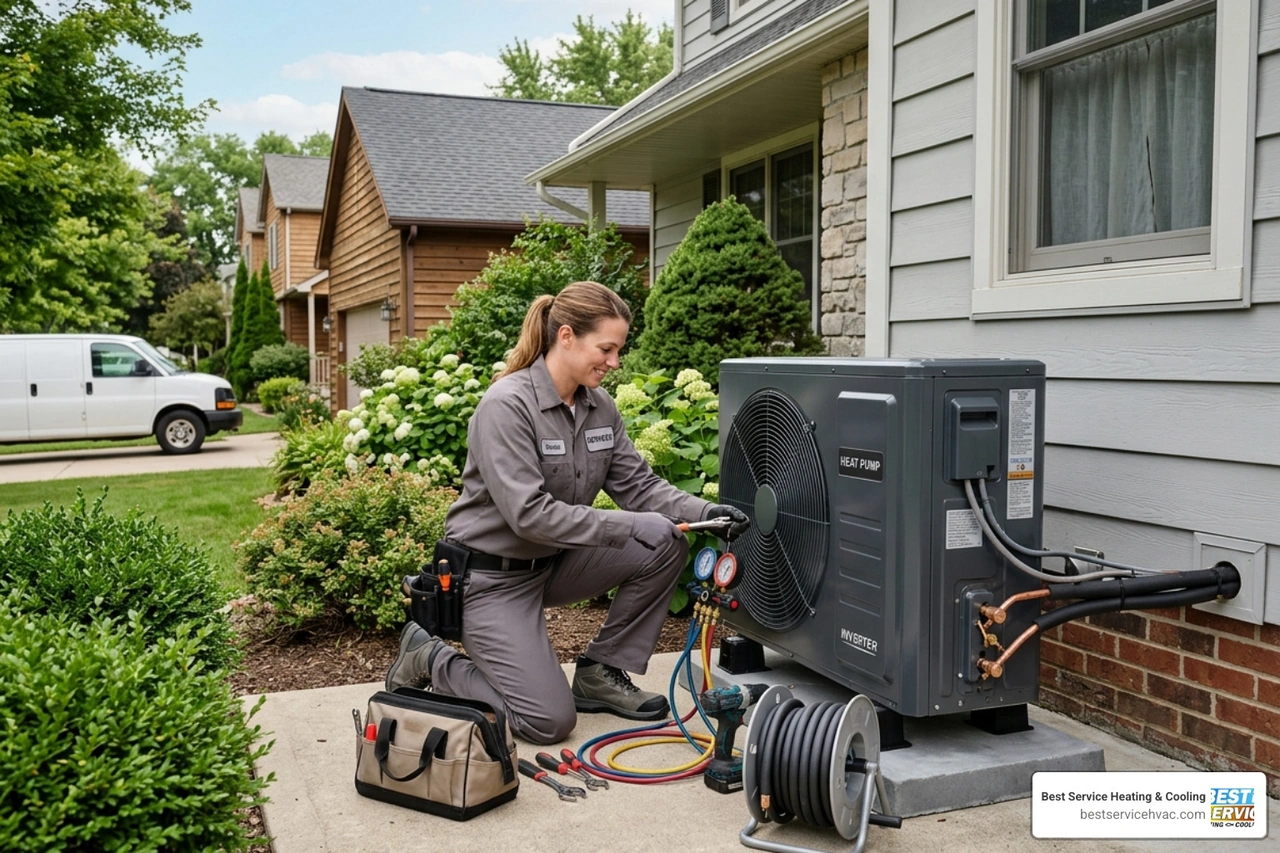
2026 Incentive Types at a Glance:
- Heat Pumps: The "MVP" of the 2026 programs, eligible for the highest rebate and tax credit amounts.
- Central Air Conditioners: High-efficiency units (meeting SEER2 standards) qualify for smaller, yet helpful, credits and utility rebates.
- Furnaces: Natural gas, propane, or oil furnaces with an AFUE of 95% or higher qualify for federal credits and gas utility rebates.
- Electrical Panels: If your new HVAC system requires a panel upgrade, you may qualify for up to $4,000 in rebates through the HEAR program.
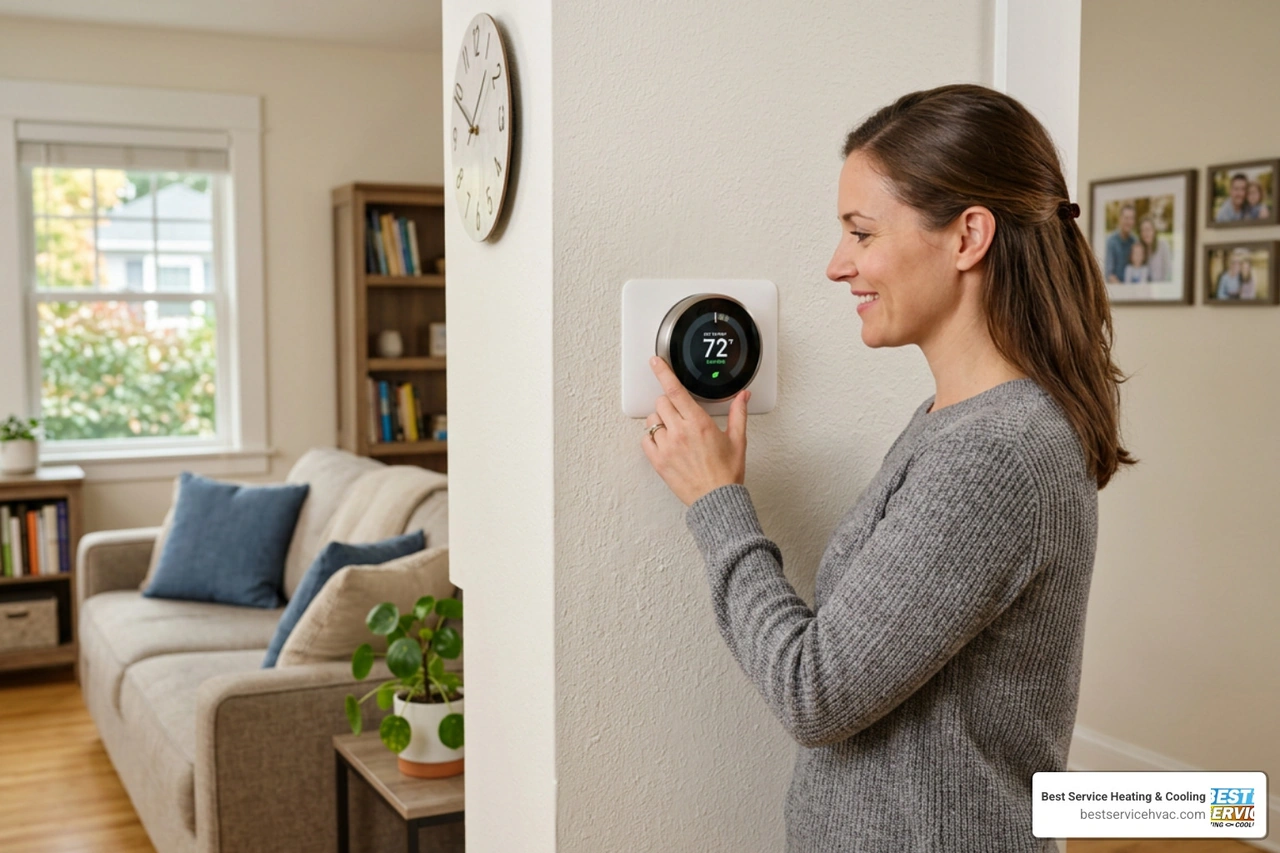
- Smart Thermostats: Often available at a near-zero cost through utility programs or as part of a larger HVAC upgrade package.
How can I maximize savings using the state-administered HOMES and HEAR programs?
The Ohio Department of Development manages the two most significant rebate programs funded by the federal government. Understanding the difference between them is the key to maximizing your return.
The HEAR (Home Electrification and Appliance Rebates) program is income-dependent. It is designed to help low-to-moderate-income households transition to electric appliances. If your household income is below 150% of the Area Median Income (AMI) for your county, you could receive a rebate covering a significant portion of your project, capped at $14,000 total. For those under 80% AMI, the program can cover up to 100% of the costs in some scenarios.
The HOMES (Home Owner Managing Energy Savings) program, on the other hand, is performance-based and open to all income levels. This program rewards you for the actual energy you save. If your HVAC upgrade and weatherization efforts reduce your home’s energy usage by 20% to 35% or more, you can earn rebates ranging from $2,000 to $4,000.
If you are wondering Is It Time for an AC Replacement, these programs make the decision much easier by significantly lowering the barrier to entry for high-tier equipment.
Comparison of HOMES vs. HEAR Programs in Ohio
| Feature | HOMES Program | HEAR Program |
|---|---|---|
| Primary Goal | Energy Efficiency (Performance) | Electrification (Income-Based) |
| Eligibility | All Income Levels | < 150% Area Median Income (AMI) |
| Max Heat Pump Rebate | Up to $4,000 | Up to $8,000 |
| Max Total Rebate | Varies by energy savings | Up to $14,000 |
| Required Step | Energy Audit (to prove savings) | Income Verification & Audit |
How do I qualify for ohio energy rebates for hvac upgrades on my new heat pump?
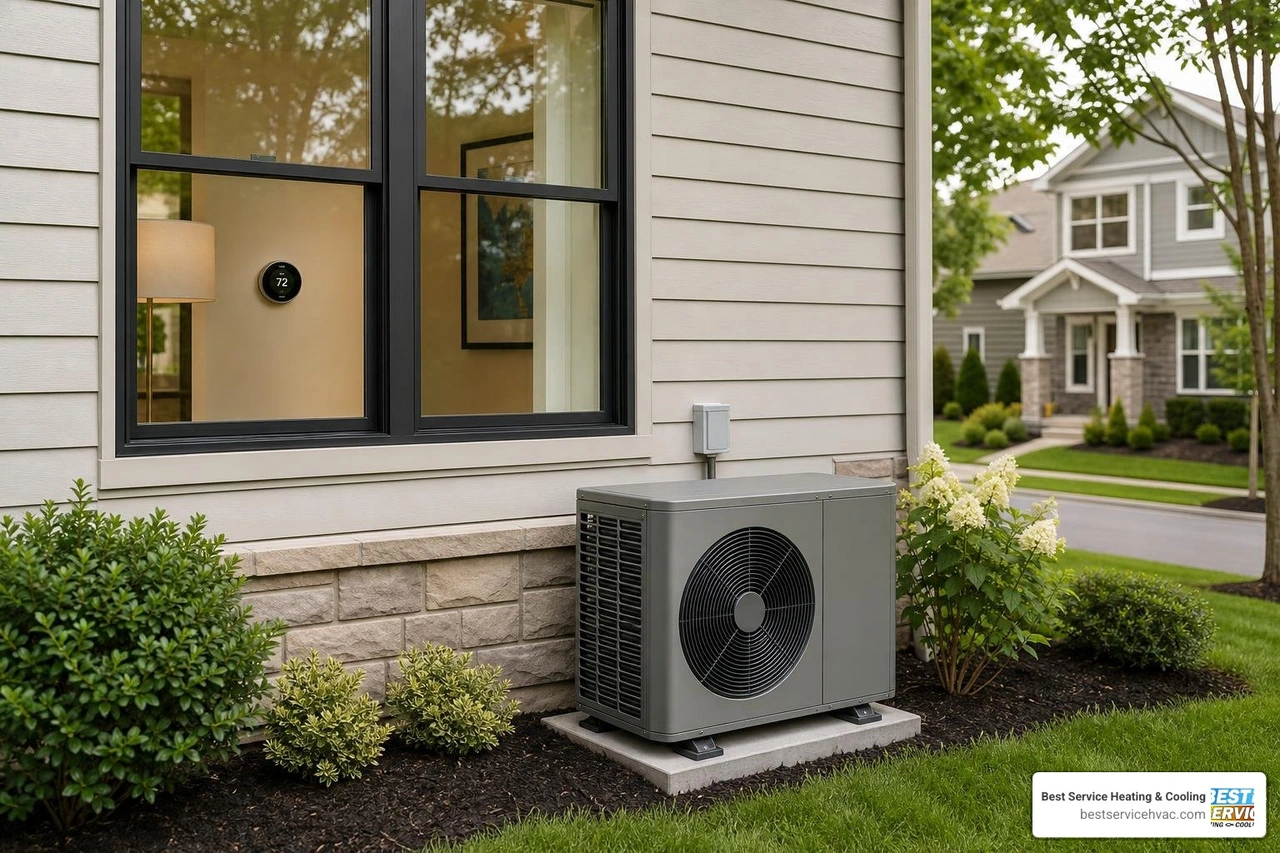
To secure ohio energy rebates for hvac upgrades, your equipment must meet specific technical standards. The industry moved to the SEER2 and HSPF2 rating systems in 2023, and these are the benchmarks used for 2026 eligibility.
In Ohio (which is part of the "North Region" for federal standards), a central air conditioner generally needs a minimum of 13.4 SEER2. However, to qualify for the more lucrative federal tax credits and state rebates, the bars are higher. Most programs require:
- SEER2: 16.0 or higher
- HSPF2: 9.0 or higher
- EER2: 12.0 or higher
For our Central Ohio climate, we strongly recommend "cold-climate" or "low-ambient" heat pumps. These units are designed to maintain heating capacity even when temperatures drop to 0°F or below, which is a common occurrence in Columbus winters. Beyond just the hardware, using AC Efficiency Maintenance and Smart Thermostats can help ensure your system operates at the peak efficiency required to maintain these savings over time.
Which Columbus utility companies offer the best incentives for energy-efficient systems?
While federal and state programs offer the largest dollar amounts, local utility companies provide rebates that are often processed much faster—sometimes within 4 to 6 weeks.
- AEP Ohio: Offers a variety of residential incentives, including rebates for air-source heat pumps and smart thermostats. Their HELP program specifically targets households at or below 300% of the federal poverty level, offering free or low-cost energy assessments and upgrades.
- Columbia Gas of Ohio: If you are sticking with high-efficiency gas heat, Columbia Gas offers rebates for furnaces with a 95% AFUE rating or higher. They also provide incentives for smart thermostats and home energy audits.
- FirstEnergy (Ohio Edison): Provides rebates for ENERGY STAR certified equipment. They emphasize that funds are limited and distributed on a first-come, first-served basis, so apply early in the year.
- Duke Energy: Their Smart $aver program provides rebates for heat pumps, central AC, and attic insulation, provided the work is done by a participating contractor.
Before you start your project, Spring AC and HVAC Maintenance for Central Ohio is a great time to evaluate your current system and check the latest rebate totals from these providers, as they can change quarterly.
What are the income requirements for ohio energy rebates for hvac upgrades and weatherization?
Many of the most generous programs are reserved for those who need them most. In Ohio, the thresholds are usually based on the Federal Poverty Level (FPL) or the Area Median Income (AMI).
- HELP (High Efficiency for Low-Income Program): Available to AEP Ohio customers with a household income at or below 300% of the FPL. For a family of four in 2026, this threshold is approximately $99,000.
- HWAP (Home Weatherization Assistance Program): Targets households at or below 200% of the FPL. This program focuses on "building shell" improvements like insulation and air sealing, which are critical before installing a new HVAC system.
- HEAR (HEEHRA): Uses AMI. Low-income is defined as < 80% AMI (eligible for 100% of costs up to caps), and moderate-income is 80%–150% AMI (eligible for 50% of costs up to caps).
If you’re interested in Going Green, these income-qualified programs are the most effective way to eliminate the upfront cost of high-efficiency technology.
I'm a renter in Ohio. Can I still get money back for energy-efficient improvements?
Yes! Renters are often overlooked in the energy efficiency conversation, but 2026 programs have specific provisions for you.
Under the federal Energy Efficient Home Improvement Credit, renters can claim credits for portable items they purchase themselves, such as portable heat pumps or window AC units that meet efficiency standards.
For permanent upgrades like a central heat pump or insulation, the state-administered rebates (HEAR and HOMES) allow renters to apply, but written landlord permission is mandatory. Landlords may be incentivized to participate because these upgrades increase property value and reduce maintenance calls. However, be aware that for a landlord to receive rebates through the state program, they must often agree to a "rental affordability" clause, promising not to raise rents excessively for a two-year period following the upgrades.
Knowing When to Upgrade Aging AC Unit Than Repair is just as important for renters and landlords to discuss, as a failing unit provides the perfect opportunity to leverage these incentives.
What steps should I take to apply for these incentives and verify my home's readiness?
Getting paid for your HVAC upgrade requires a bit of homework. You can't simply buy a unit and hope for a check; you must follow a specific process.
- The Energy Audit: For the HOMES and HEAR programs, a professional energy audit is often a mandatory first step. This audit identifies where your home is losing energy and ensures your new HVAC system is sized correctly.
- Verify Panel Capacity: Heat pumps require significant electrical "headroom." If you have an older 100-amp panel, you might need an upgrade to 200 amps. The HEAR program offers up to $4,000 specifically for this electrical work.
- Manual J Calculation: Ensure your contractor performs a Manual J load calculation. This prevents "oversizing" the system, which leads to short-cycling and reduced efficiency—factors that could disqualify you from certain performance-based rebates.
- Check Pre-Approval: Many utility rebates (like those from FirstEnergy or Duke Energy) require you to apply before the installation begins.
- Documentation: Keep every receipt, AHRI certificate, and contractor invoice. You will need these for your utility rebate applications and to file IRS Form 5695 with your federal taxes.
Regular maintenance is also a factor. Annual HVAC Maintenance - Is It Worth It? Absolutely—not only does it keep your system running at the efficiency levels required by these programs, but many manufacturer warranties and some rebate programs require proof of annual service to remain valid.
Frequently Asked Questions about Ohio HVAC Incentives
Can I stack federal tax credits with Ohio utility rebates?
Yes! This is the "secret sauce" of saving money on HVAC. You can typically claim the 30% federal tax credit (up to $2,000 for a heat pump), then apply for a state rebate (up to $8,000), and finally collect a utility rebate from a company like AEP Ohio. When stacked, these can cover a massive portion of the total project cost.
What efficiency ratings are required for 2026 HVAC upgrades?
For the highest incentives, look for equipment that is ENERGY STAR Cold Climate certified. Generally, this means a SEER2 of 16+, an HSPF2 of 9+, and an EER2 of 12+. Always verify the specific model number on the AHRI directory before signing a contract.
How long does it take to receive a rebate check in Ohio?
Utility rebates are the fastest, typically arriving as a check or bill credit in 4 to 8 weeks. State rebates (HOMES/HEAR) may take longer as they often require post-installation verification or energy audits, ranging from 8 to 12 weeks. Federal tax credits are realized when you file your annual tax return.
Conclusion
Navigating ohio energy rebates for hvac upgrades can feel like a full-time job, but the financial rewards are well worth the effort. By combining federal tax credits with state and utility programs, you can transform your home's comfort while significantly offsetting the investment.
At Best Service Heating & Cooling, we’ve been helping Central Ohio families stay comfortable since 1992. As a family-owned business with an A+ BBB rating, we pride ourselves on being more than just technicians—we're your partners in home efficiency. Whether you're in Columbus, Dublin, or Westerville, our team is trained to help you select the right equipment that meets all the necessary standards for these 2026 incentives.
Ready to see how much you can save? Visit our heat pump page to learn more about the technology or contact us today to schedule your home energy assessment. Let’s get your upgrade started and put that rebate money back where it belongs—in your pocket.
.webp)
.webp)

Service Areas
