
How to Calculate the Perfect Water Heater Size for Your Home

Why Proper Sizing Is Essential for Central Ohio Homeowners
What size water heater do I need? is one of the most common questions homeowners ask when their unit starts failing — and the answer depends on your household size, peak hot water demand, and whether you choose a tank or tankless system. Here's a quick reference to get you started:
Tank Water Heater Size by Household:
| Household Size | Recommended Tank Size ||---|---| | 1-2 people | 23-36 gallons || 2-4 people | 36-46 gallons || 3-5 people | 46-56 gallons || 5+ people | 56+ gallons |
Tankless Water Heater: Key Numbers to Know:
- Shower: ~2.5 GPM
- Sink faucet: ~1 GPM
- Dishwasher or clothes washer: ~3 GPM
- Example peak load (shower + dishwasher running at once): 5.5 GPM minimum
Picture this: your old 30-gallon tank worked fine for years, but your family has grown. Now someone always ends up with a cold shower. That's not just inconvenient — it's a sign your water heater is simply too small for your current needs.
Getting the right size matters more than most people realize. A unit that's too small leaves you without hot water during peak hours. One that's too large wastes energy heating water you never use — and that shows up on your monthly utility bill.
In Central Ohio, where winter groundwater temperatures can drop significantly, sizing your water heater correctly becomes even more critical. A unit that performs fine in a mild climate may struggle to keep up when cold water is entering the system at 45°F or lower.
At Best Service Heating & Cooling, we've been helping Columbus-area homeowners choose and install the right water heater since 1992. This guide walks you through exactly how to calculate the right capacity — whether you're replacing a tank unit or considering a tankless upgrade.
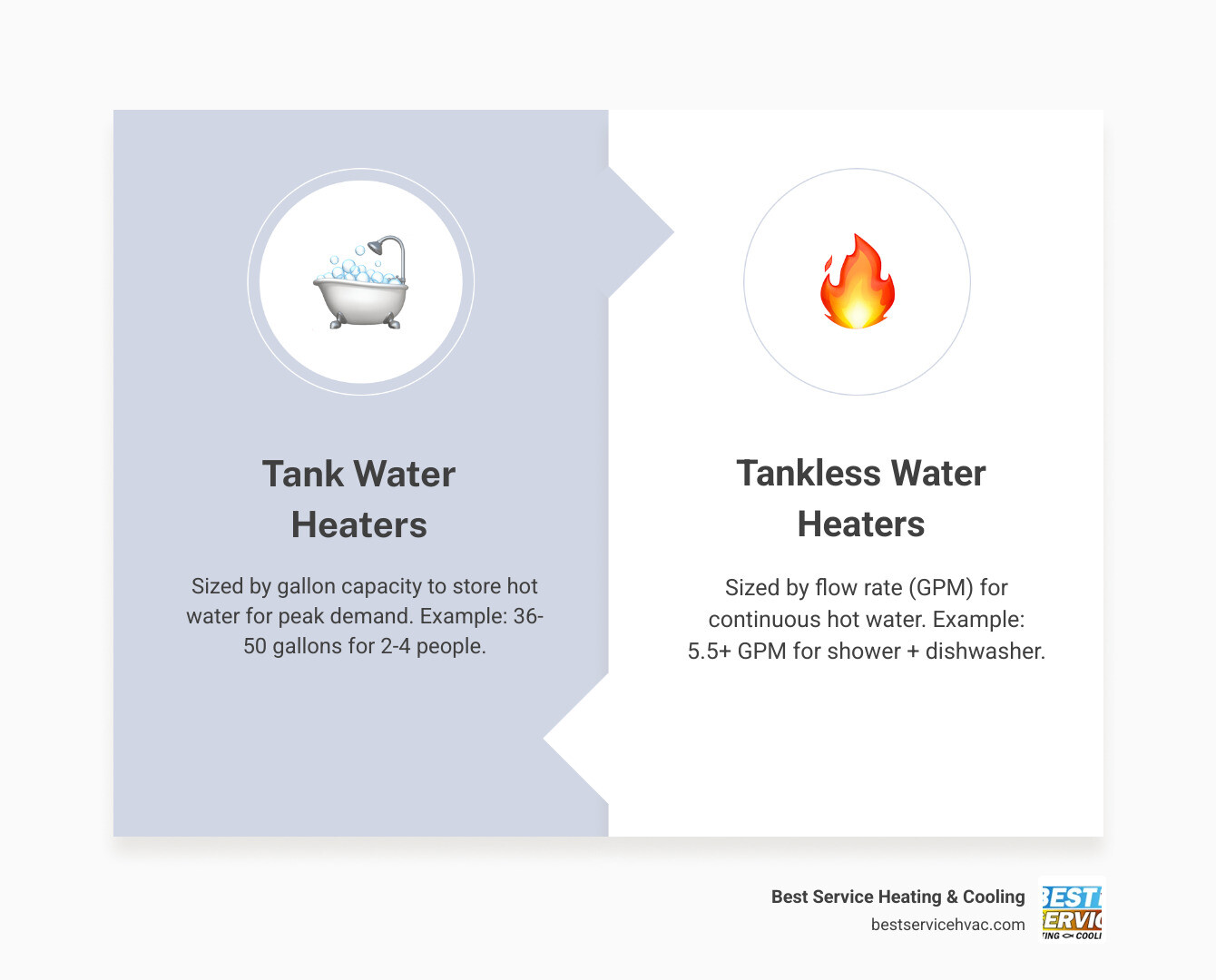
What Size Water Heater Do I Need for a Traditional Tank System?
When it comes to traditional storage tanks, the physical size of the tank—measured in gallons—is the most obvious factor. However, it isn't the only one. You need enough stored water to handle a sudden burst of activity, like two people showering while the dishwasher is running.
For a successful Water Heater Installation Columbus OH, we look at how many people live in the home and their specific habits. If you have a large soaking tub or teenagers who take 20-minute showers, those "standard" gallon counts might need a boost.
| Household Size | Typical Tank Capacity | High Demand Capacity |
|---|---|---|
| 1-2 People | 30 Gallons | 40 Gallons |
| 3 People | 40 Gallons | 50 Gallons |
| 4 People | 50 Gallons | 65-75 Gallons |
| 5+ People | 75 Gallons | 80+ Gallons |
What size water heater do I need for a family of 4?
For a typical family of four in April 2026, the industry standard is usually a 50-gallon electric water heater or a 40-gallon gas unit. Why the difference? Gas heaters generally have a faster "recovery rate," meaning they can heat cold water more quickly than electric elements.
If your family has high hot water demands—perhaps you have multiple bathrooms or a high-capacity washing machine—we often recommend stepping up to a 75-gallon tank to ensure no one gets a chilly surprise. If you are considering a Water Heater Replacement Hebron OH, it is worth evaluating if your current 40-gallon tank has been leaving you wanting more during the morning rush.
What size water heater do I need for 1-2 person households?
For smaller households, a 30-gallon tank is often sufficient. If you live alone or with one other person and use low-flow showerheads, you might even find that a 23-to-36-gallon unit meets your needs perfectly. This smaller footprint is excellent for condos or homes with limited utility closet space. When performing a Water Heater Installation Dublin OH, we often find that smaller, high-efficiency tanks are the perfect balance of comfort and energy savings for couples.
Calculating Peak Demand and First Hour Rating (FHR)
While gallon capacity is a good starting point, the First Hour Rating (FHR) is actually the most important number on the yellow EnergyGuide label. The FHR tells you exactly how many gallons of hot water the unit can deliver in one hour, starting with a full tank. It combines the tank's storage capacity with its ability to heat new water as it enters.
To find your required FHR, you need to estimate your "Peak Hour Demand." Think about the busiest hour in your house—usually the morning when everyone is getting ready for school and work.
Common Peak Hour Usage Estimates:
- Shower: 20 gallons
- Shaving: 2 gallons
- Hand dishwashing: 3 gallons
- Automatic dishwasher: 7 gallons
- Clothes washer (top-loader): 25 gallons
If your peak hour involves three showers (60 gal), one shave (2 gal), and a quick hand-wash of breakfast dishes (3 gal), your total demand is 65 gallons. You should look for a water heater with an FHR of at least 65 or higher. You can find more details on these calculations in our Water Heater Replacement Columbus OH Guide.
Understanding Recovery Rates
The recovery rate is the "secret sauce" of a water heater. It measures how many gallons the unit can heat by a certain temperature (usually 90°F) in one hour. This is determined by the BTU capacity of a gas burner or the wattage of electric heating elements.
For electric units, choosing a model with 5500W elements rather than the standard 4500W can significantly improve your recovery time, ensuring the tank stays hot even during back-to-back usage. This is a vital consideration for a Water Heater Replacement Brice OH, especially during those freezing Ohio winters.
Sizing Tankless Water Heaters by Flow Rate and Temperature Rise

Tankless water heaters are sized completely differently. Since they don't store water, we don't care about gallons—we care about Gallons Per Minute (GPM). To size a tankless unit, you must determine how many fixtures you want to run simultaneously.
If you want to be able to run a shower (2.5 GPM) and the dishwasher (3 GPM) at the same time, you need a unit that can handle at least 5.5 GPM. If you add a second shower into the mix, you’re looking at 8.0 GPM. For many in our area, a Tankless Water Heater Columbus OH provides an endless supply of hot water, provided the unit is sized for these peak flow moments. You can learn more about why these are becoming popular in our post on why Tankless Water Heaters: The Smart Choice.
Determining Your Required Temperature Rise
In Central Ohio, the "Temperature Rise" is the biggest hurdle for tankless systems. This is the difference between the cold water coming into your house and the 110°F to 120°F water you want at the tap.
During a cold January in Berwick, OH, your groundwater might be 45°F. To get that water to 110°F, the heater has to raise the temperature by 65 degrees. As the required temperature rise goes up, the GPM the unit can produce goes down. A unit rated for 10 GPM in Florida might only produce 5 or 6 GPM during an Ohio winter. This is why we always calculate for the "worst-case scenario" when installing a Tankless Water Heater Berwick OH.
How Fuel Type and Climate Affect Your Capacity Requirements
The fuel source you choose—natural gas or electricity—changes how you should think about sizing. Natural gas units typically have higher BTUs and faster recovery than electric ones, meaning you can often get away with a slightly smaller tank.
However, many homeowners are now looking at the Aerotherm Series Heat Pump Water Heater. These hybrid units are incredibly efficient, pulling heat from the surrounding air to warm the water. Because they heat water more slowly in their most efficient mode, we often recommend "sizing up" to an 80-gallon tank for a heat pump model to ensure you have a large enough reserve of pre-heated water.
Climate also plays a role. In our region, the extra insulation found in modern, high-efficiency units is a major plus. For more on this, check out our guide on Factors When Replacing Your Old Water Heater.
Space and Installation Requirements
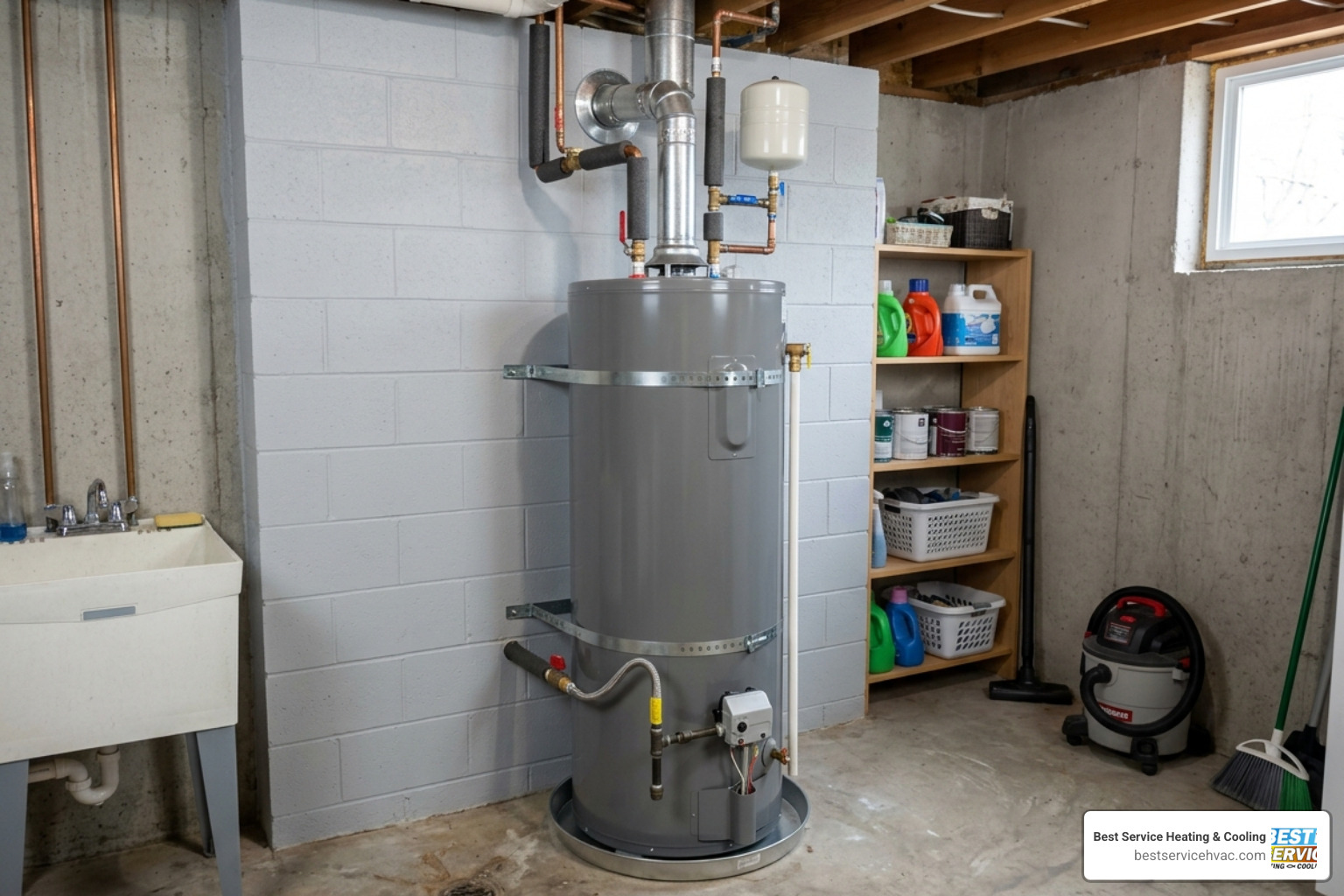
Before you fall in love with a massive 80-gallon tank, check your physical space. Modern units are often wider and taller than the ones built 15 years ago because they have much thicker insulation to meet energy standards.
A standard 50-gallon tank can be up to 6 feet tall and 22 inches wide. If your heater is tucked under a staircase or in a tight crawlspace, you might need a "lowboy" or "short" model. When we handle a Water Heater Installation Pickerington OH, we always measure the clearances for venting and maintenance access first.
Signs Your Current Unit is Undersized or Oversized
How do you know if you have the wrong size?
- Undersized: You consistently run out of hot water during the second shower of the morning.
- Undersized: You have to "schedule" laundry and dishwashing so they don't overlap with bath time.
- Oversized: Your utility bills are unusually high, but your usage is low. You’re essentially paying to keep a massive vat of water hot 24/7 that you never fully use.
If you notice these signs, or if your unit is showing its age with leaks or strange noises, it might be that your Tankless Water Heater is About to Break Down or your tank is simply failing. We provide expert assessments for Water Heater Replacement Minerva Park OH to help homeowners find that "Goldilocks" size—just right.
When to Consider a Supplementary Unit
Sometimes, the best solution isn't one giant heater, but a "point-of-use" unit. If you've added a new bathroom far away from the main heater, it can take forever for hot water to arrive. A small 6-to-10-gallon supplementary tank or a tiny electric tankless unit under the sink can solve this. We also frequently install mixing valves, which allow you to store water at a higher temperature in your tank (killing bacteria and increasing capacity) and then safely mix it with cold water before it reaches your skin. This is a popular option for Water Heater Installation Hilliard OH households with growing families.
Frequently Asked Questions about Water Heater Sizing
Is a 40-gallon water heater enough for a family of 4?
It can be, but it's "on the edge." For a gas unit with a high recovery rate, a family of four can make it work if they don't all shower at once. For an electric unit, a 40-gallon tank is often insufficient for four people, and we would typically recommend a 50-gallon model.
What is the difference between FHR and gallon capacity?
Gallon capacity is just the volume of the tank. FHR (First Hour Rating) is the total amount of hot water the unit can provide in one hour, including the water it heats while you're using it. Always prioritize FHR over gallon capacity when shopping.
How does groundwater temperature affect tankless GPM?
The colder the incoming water, the more energy the heater must use to reach your target temperature. In Ohio winters, a tankless heater’s effective GPM can drop by 30-50% compared to its summer performance.
Conclusion
Choosing a water heater isn't just about picking a box off a shelf; it's about matching a complex piece of machinery to your family's unique lifestyle and the specific climate of Central Ohio. Whether you are looking for a high-efficiency tank or an endless-stream tankless system, getting the sizing right is the difference between a relaxing morning and a cold wake-up call.
At Best Service Heating & Cooling, we’ve been the trusted choice for Columbus homeowners since 1992. As a family-owned business with an A+ BBB rating, we pride ourselves on providing honest advice and expert installations. If you’re tired of running out of hot water, let us help you find the perfect Water Heater for your home. Reach out to us today for a professional sizing consultation!
.webp)
.webp)

Service Areas
