
When to Replace Your Furnace or AC Filter for Peak Performance

How Often Should You Change Your HVAC Air Filter — Quick Answer for Central Ohio Homeowners
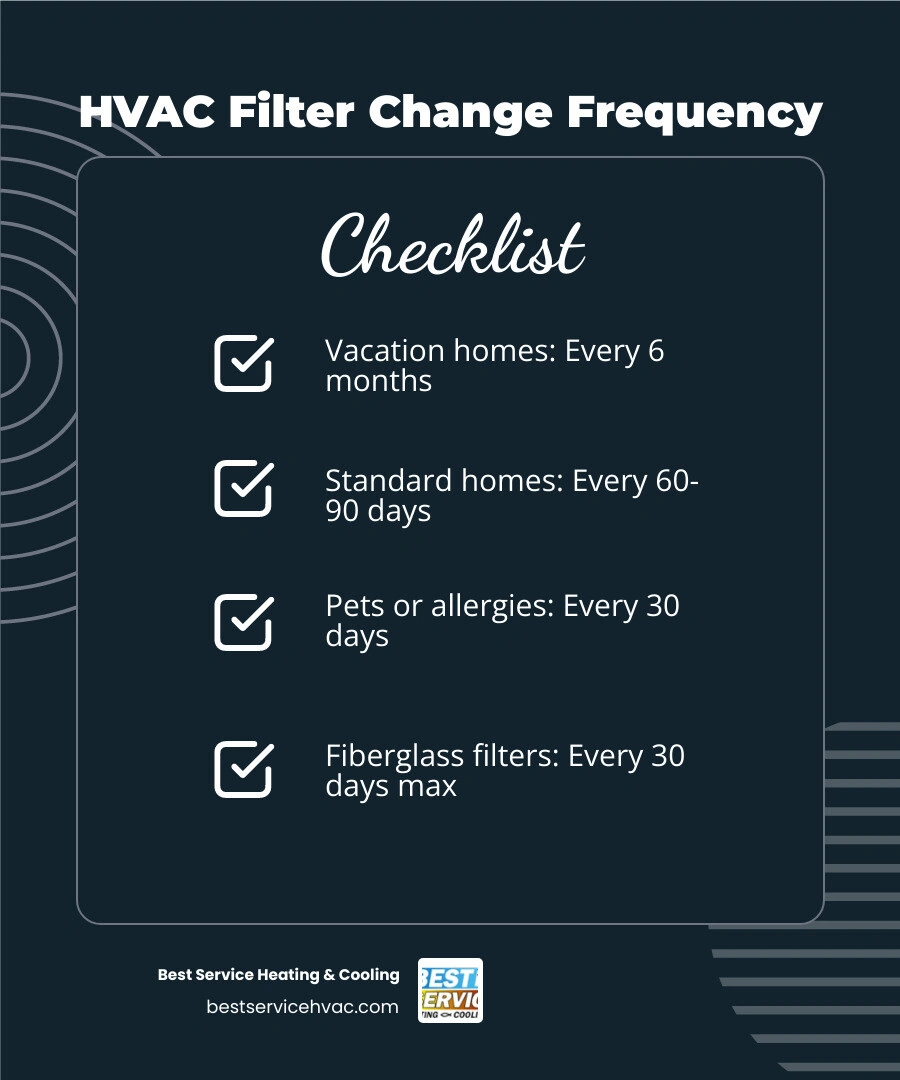
How often should you change your HVAC air filter is one of the most common questions homeowners ask — and the honest answer is: it depends. Filter type, household conditions, and how hard your system works all play a role. That said, here is a simple starting point:
| Household Situation | Recommended Change Frequency |
|---|---|
| Vacation home / rarely occupied | Every 6 months |
| Single occupant, no pets, no allergies | Every 90 days |
| Average home with 1-2 pets or mild allergies | Every 60 days |
| Multiple pets, allergy or asthma sufferers | Every 30 days |
| Fiberglass filters (any home) | Every 30 days or less |
| Pleated filters (standard home) | Every 60-90 days |
| Thick 4-5 inch media filters | Every 6-12 months |
| HEPA filters | Every 6-12 months |
Most homes fall somewhere in the 30-to-90-day range. At an absolute minimum, no filter should go longer than 90 days without being checked or replaced.
Staying on top of this one simple task protects your system, keeps your indoor air cleaner, and can even lower your monthly energy bills — the U.S. Department of Energy notes that replacing a clogged filter can improve system efficiency by 5 to 15%. For Central Ohio homeowners dealing with hot summers, cold winters, and seasonal pollen swings, a consistent filter schedule matters more than most people realize.
Why It Is Critical to Know How Often Should You Change Your HVAC Air Filter
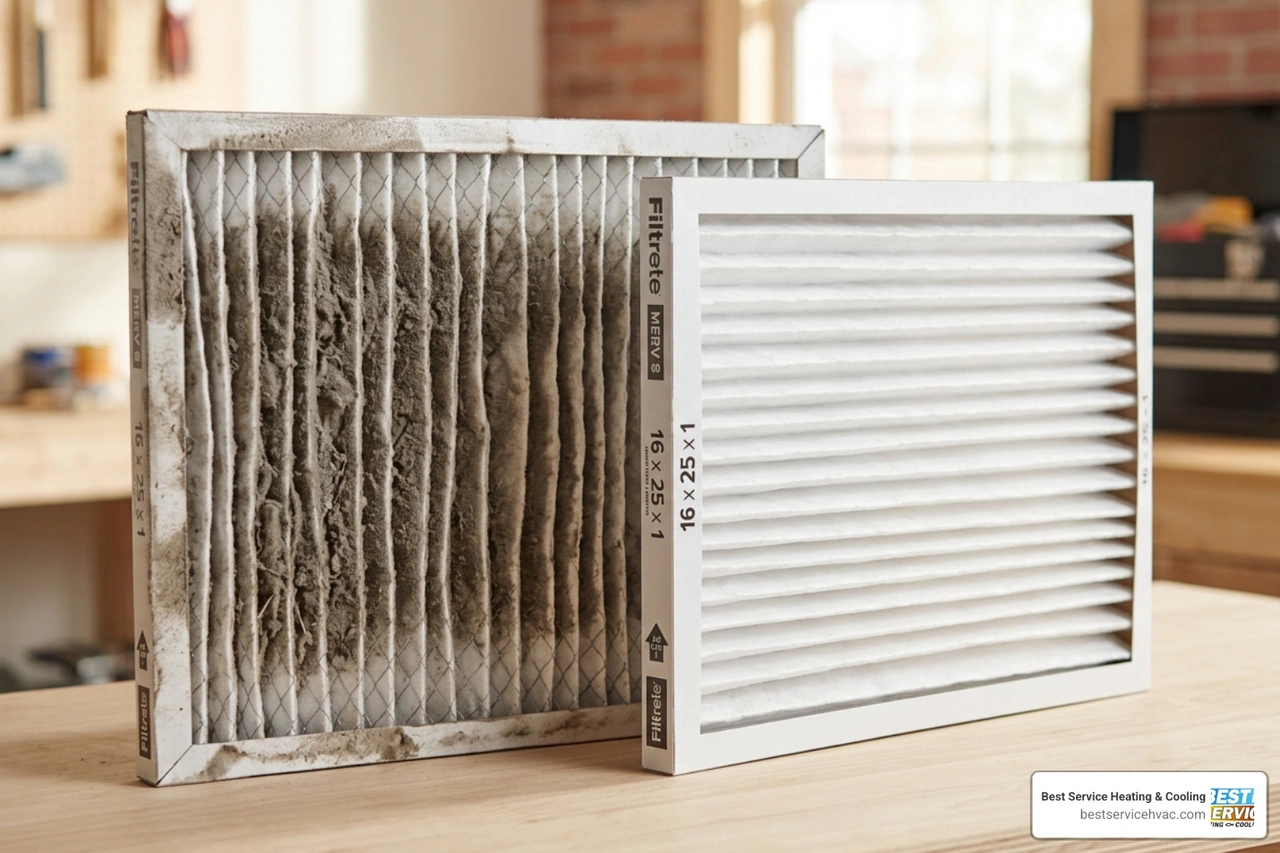
Think of your air filter as the "lungs" of your home. Just as you wouldn’t want to go for a jog while wearing a mask filled with dust, your hvac system shouldn't have to struggle to pull air through a wall of debris. When you understand exactly how often should you change your hvac air filter, you are doing more than just a chore; you are protecting one of the most expensive investments in your home.
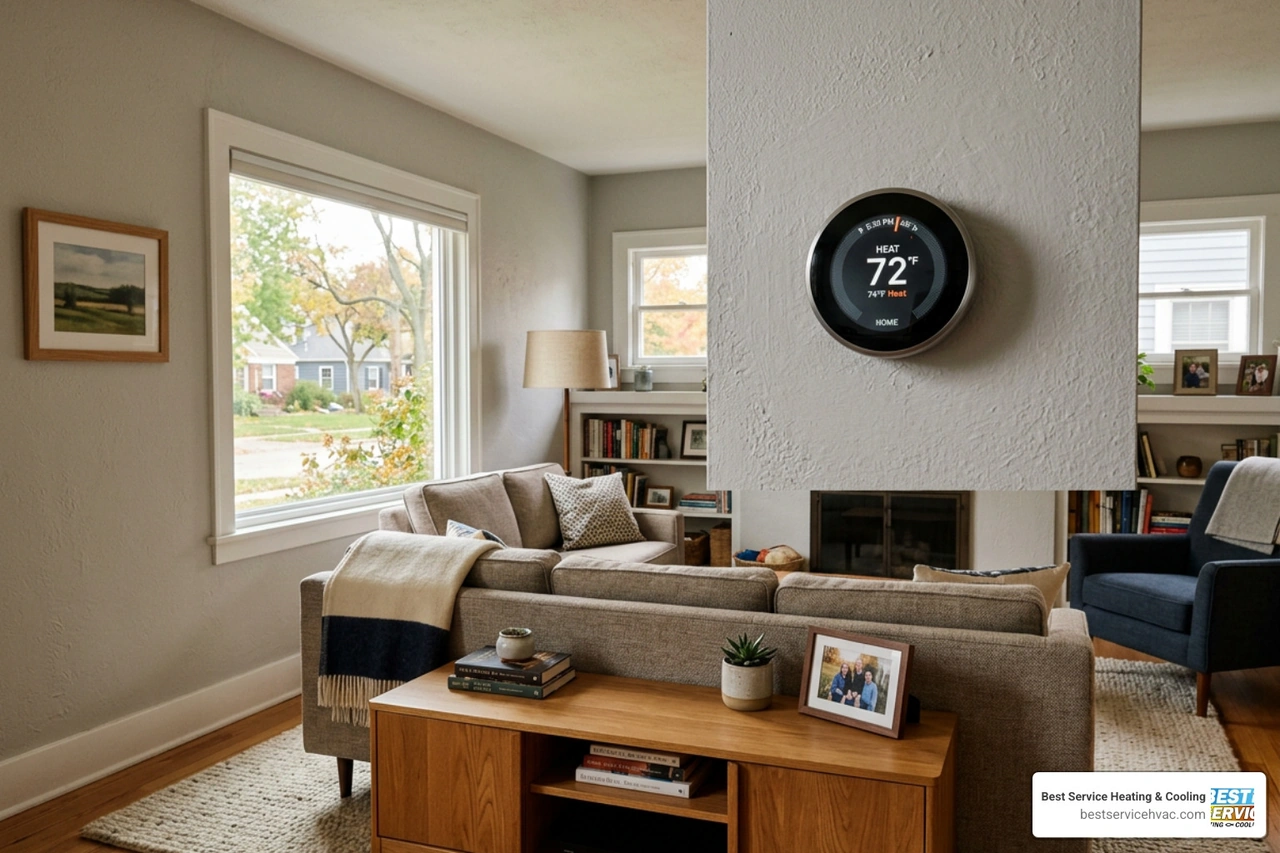
A clean filter ensures that air flows freely. When that filter becomes clogged, your blower motor has to work overtime to push air through the resistance. This leads to "static pressure" issues that strain every mechanical part of the unit. Beyond the mechanical stress, a dirty filter directly impacts your wallet. Clogged filters are a leading cause of spiked utility bills in Columbus because the system has to run longer cycles to reach the temperature set on your thermostat. By keeping up with Iaq/Ac Efficiency Maintenance And Smart Thermostats, you ensure your system operates at peak performance without wasting energy.
Impact on Indoor Air Quality and Health
The air filter's primary job is to protect the HVAC equipment, but it also serves as a frontline defense for your family’s health. In April 2026, as we see the usual spring pollen surge in Ohio, a neglected filter can become a source of pollution rather than a solution. Filters trap dust mites, pollen, and mold spores that would otherwise circulate through your living spaces.
If you neglect your filter, these particles can bypass the edges of the filter frame or be pushed through the saturated material, worsening respiratory health. For those sensitive to volatile organic compounds (VOCs) or common allergens, our Iaq/Filtration Services Columbus Oh can help identify the right high-efficiency filter to keep your indoor air crisp and clean.
Preventing Costly HVAC System Damage
We often see systems in areas like Dublin and Westerville that have suffered major breakdowns simply because of a five-dollar filter. A clogged filter restricts airflow so severely that the evaporator coils can actually freeze over, even in the middle of a hot Ohio summer. This happens because there isn't enough warm air passing over the coils to prevent the refrigerant from dropping below freezing temperatures.
Furthermore, restricted airflow can cause the heat exchanger to overheat and crack, or cause the blower motor to burn out prematurely. These are high-cost repairs that are entirely preventable. By prioritizing Iaq/Whole House Air Filtration Columbus Oh, you can avoid the "short cycling" that wears down your system and leads to total equipment failure.
General Guidelines for How Often Should You Change Your HVAC Air Filter
There is no "one-size-fits-all" number because every home in Central Ohio is unique. However, the material of the filter is the biggest determining factor.
| Filter Type | Typical Lifespan | Capture Efficiency |
|---|---|---|
| Fiberglass | 30 Days | Low (captures large debris only) |
| Pleated (1-inch) | 30 – 90 Days | Medium (good for dust and pollen) |
| Media (4-5 inch) | 6 – 12 Months | High (excellent for small particles) |
| HEPA | 6 – 12 Months | Superior (99.97% of particles) |
If you are looking for the gold standard in air cleaning, Iaq/Air Filtration Hepa Air Cleaners Columbus Oh offer the highest level of protection, though they require a system capable of handling the high airflow resistance.
Filter Thickness and Material Lifespans
The thickness of your filter changes the math on replacement. A standard 1-inch filter has very little surface area, meaning it clogs quickly. In contrast, a 4-inch or 5-inch media filter is "pleated" much more deeply, providing significantly more surface area to trap dust without restricting airflow.
While a 1-inch filter might need a swap every month during peak summer in New Albany, a 4-inch canister filter often lasts six months or even a full year. This is why many homeowners are moving toward Iaq/Whole House Air Filtration Westerville Oh systems—they offer better protection and require less frequent maintenance.
How Often Should You Change Your HVAC Air Filter in Columbus Homes
In Central Ohio, our weather is anything but consistent. During the "shoulder seasons" (spring and fall) when you might have your windows open and the HVAC turned off, your filter lasts longer. However, during the "peak seasons"—those humid 90-degree July days or the sub-zero January nights—your system runs nearly 24/7.
During these high-demand periods, we recommend checking your filter every 30 days. If you live in a high-pollen area like New Albany, Iaq/Whole House Air Filtration New Albany Oh becomes essential. Also, if you run your thermostat fan in the "ON" position rather than "AUTO" to keep air circulating, your filter is working 24 hours a day and will need to be replaced much sooner.
Key Factors That Influence Your Filter Replacement Schedule
Beyond the filter type, your lifestyle dictates the schedule. If you live alone in a brand-new, tightly sealed home in Downtown Columbus, your filter will stay clean much longer than a house full of kids and pets.
- Home Occupancy: More people mean more skin cells, hair, and dust generated from movement and foot traffic.
- Pets: Pet dander is microscopic and "sticky," meaning it clings to filter fibers and clogs them much faster than standard dust. One pet typically adds 30 days of load to a filter.
- Smoking/Cooking: If someone smokes indoors or if you do a lot of high-heat frying and cooking, those oils and particles end up in the air and, eventually, your filter. Iaq/Whole House Air Purifiers Downtown Columbus Oh can help mitigate these specific pollutants.
Managing Allergies and Pets with Frequent Changes
For families in Grove City dealing with asthma or severe allergies, the "standard" 90-day rule does not apply. You should be looking at high-efficiency pleated filters and changing them every 30 days.
Shedding pets introduce a constant stream of hair and dander into the return ducts. For these households, Iaq/Whole House Air Filtration Grove City Oh is a lifesaver. It captures those microscopic triggers before they can settle into your carpets and furniture. If you have two or more pets, you should assume your filter needs changing every single month.
Environmental Impacts on How Often Should You Change Your HVAC Air Filter
Outdoor air quality plays a surprisingly large role in your indoor filter's lifespan.
- Construction: If there is new housing development or roadwork near your home in Dublin, the fine masonry dust will find its way inside and can clog a filter in just a few days.
- Wildfire Smoke: Even smoke from distant wildfires can drift into the Ohio Valley, significantly increasing the particle load on your HVAC system.
- Urban Pollution: Homes near high-traffic areas in Columbus face more soot and smog.
In these scenarios, we recommend Iaq/Whole House Air Purifiers Dublin Oh to provide an extra layer of defense against outdoor contaminants.
Signs Your Air Filter Needs Immediate Replacement
If you aren't sure if it's time for a change, don't just guess. Look for these "red flags":
- The Light Test: This is the most reliable DIY method. Remove your filter and hold it up to a bright light or the sun. If you cannot see light passing through the fibers, it is too clogged and needs to be replaced immediately.
- Visible Dust: If you notice a "grey" coating on the filter or if dust is starting to accumulate on your supply registers and furniture more quickly than usual, the filter is likely saturated.
- Musty Odors: A dirty filter can trap moisture and organic debris, leading to a "dirty sock" smell when the unit kicks on.
- Reduced Airflow: If the air coming out of your vents feels weaker than usual, or if the unit is making whistling or rumbling noises, the system is struggling to breathe.
For those looking for a more "set it and forget it" approach, Iaq/Air Filtration Electronic Air Cleaners Columbus Oh can provide superior filtration with indicators that tell you exactly when maintenance is required.
Frequently Asked Questions About HVAC Filters
Is it safe to run my HVAC system without a filter?
Absolutely not. You should never run your system without a filter for more than a few minutes (perhaps while you run to the store for a replacement). Without a filter, dust, hair, and debris are sucked directly into the sensitive internal components. This debris coats the blower motor and the sticky evaporator coils, which can lead to total system failure and very expensive cleaning bills. For residents in Reynoldsburg, we always emphasize that Iaq/Whole House Air Filtration Reynoldsburg Oh is the best way to keep those internals pristine.
Do thicker filters always last longer?
Generally, yes. A 4-inch or 5-inch filter has significantly more surface area (media capacity) than a 1-inch filter. However, you must ensure your system is designed for a thicker filter. You cannot simply jam a 4-inch filter into a 1-inch slot. Furthermore, some high-efficiency filters create too much "static pressure" for older blower motors. If you are considering an upgrade, Iaq/Whole House Air Purifier Installation Pickerington Oh ensures that your system is properly modified to handle the increased filtration without straining the motor.
How do I know which direction the filter goes?
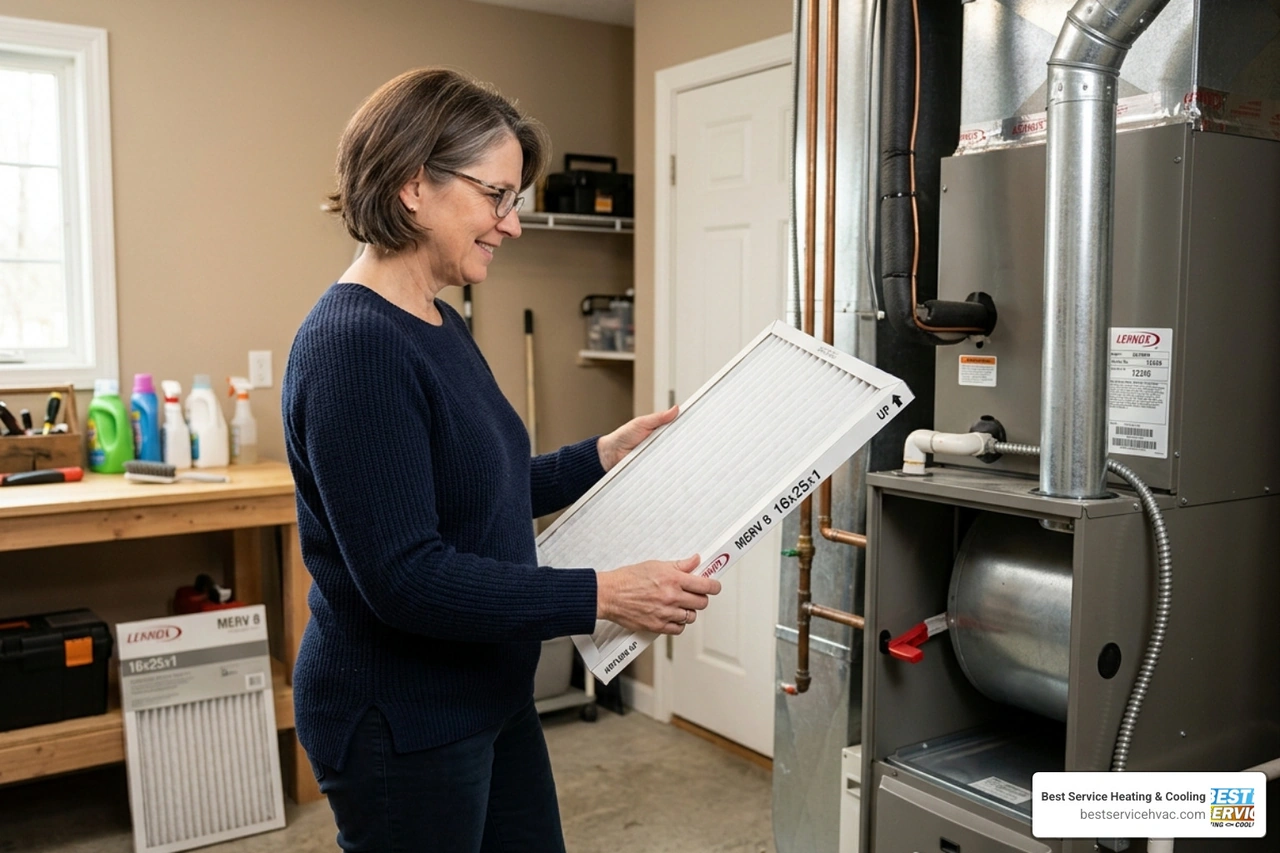
This is a critical detail! Almost all filters have a small arrow printed on the side of the frame. This arrow indicates the direction of airflow. It should always point toward the HVAC unit (the furnace or air handler) and away from the return duct. Installing a filter backward can cause the material to collapse or restrict airflow significantly. If you need help identifying your filter's location or direction, our team providing Iaq/Whole House Air Filtration Columbus Oh can show you exactly how it’s done during your next service visit.
Conclusion
Staying on top of your HVAC filter replacement is the simplest, most effective way to ensure your home remains a haven of comfort. Whether you are in Amlin, Gahanna, or Pickerington, the unique conditions of your home will dictate your specific schedule.
At Best Service Heating & Cooling, we have been the trusted choice for Central Ohio families since 1992. As a family-owned business with an A+ BBB rating, we take pride in helping our neighbors in Columbus, Dublin, and beyond maintain peak system efficiency. If you want to take the guesswork out of your home maintenance, consider joining our Maintenance Plan. We’ll ensure your filters are checked, your system is tuned, and your family is breathing easy all year long. Give us a call today to schedule your next comfort check-up!
.webp)
.webp)

Service Areas
