
How to Get HVAC Repair Help in Minutes

What to Do When Your HVAC Breaks Down Unexpectedly in Central Ohio
Knowing what to do when your HVAC breaks down unexpectedly can mean the difference between a quick fix and a stressful, costly ordeal — especially during a Central Ohio heat wave or a mid-winter cold snap. Here are the immediate steps to take:
- Do a quick safety check first — if you smell gas, burning, or see smoke, shut the system off and evacuate
- Check your thermostat — dead batteries or wrong settings cause about 40% of all HVAC "failures"
- Look at your circuit breaker — a tripped breaker is one of the most common and easiest fixes
- Replace a clogged air filter — a dirty filter can trigger a safety shutdown
- Call a professional if basic checks don't resolve it, or if any safety hazard is present
Whether it's the middle of July or a freezing January night, losing heat or cooling in your Columbus-area home never happens at a convenient time. In fact, 70% of homeowners experience an HVAC breakdown during peak seasons — exactly when the system is working hardest. The good news is that many of these failures start with something simple, and knowing the right steps keeps you safe and gets your system back on track faster.
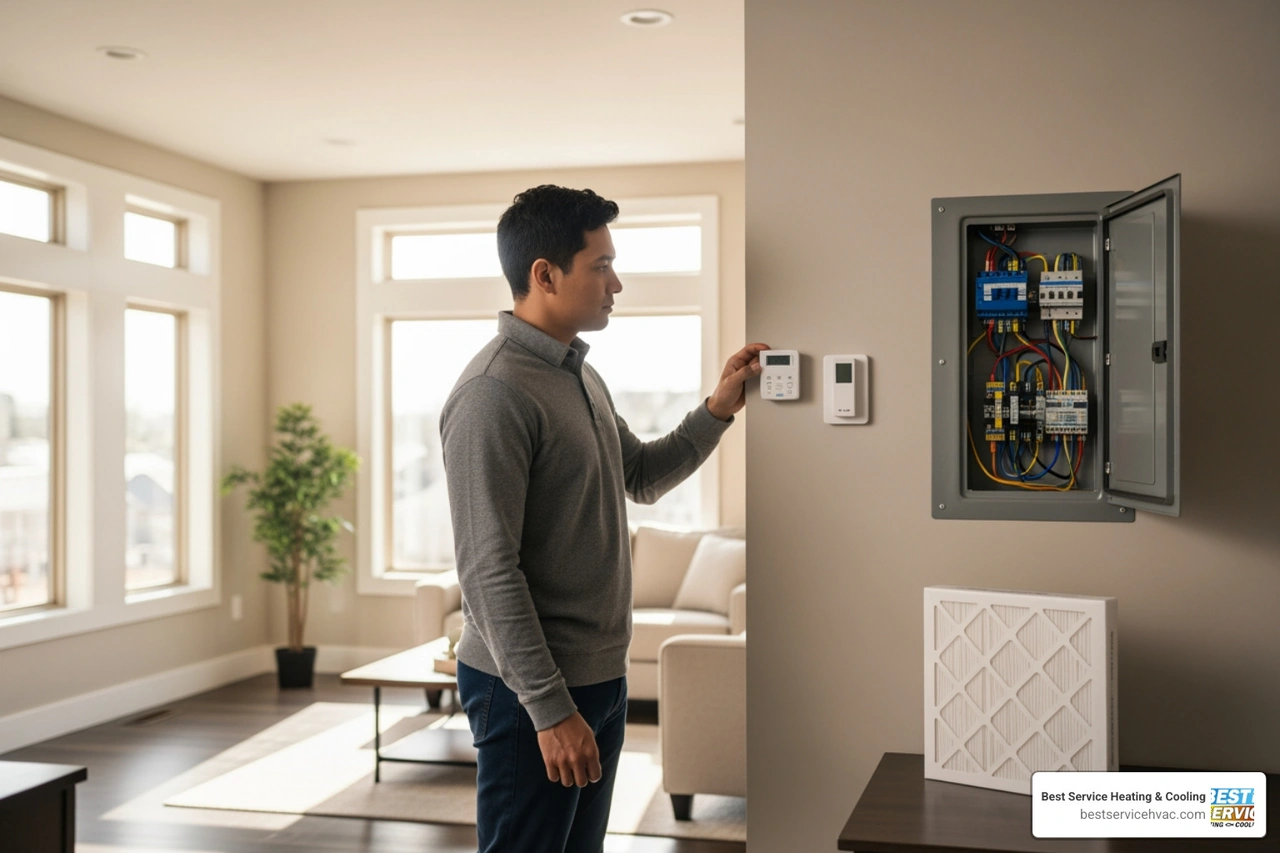
What to Do When Your HVAC Breaks Down Unexpectedly
The first goal is simple: protect people, protect your home, and avoid making the problem worse. HVAC systems involve electricity, moving parts, refrigerant, and in many homes, natural gas. That means a breakdown is sometimes just inconvenient - and sometimes a real emergency.
Start with a quick safety check before touching anything
Before pressing buttons like you're trying to win a game show, pause and use your senses.
Look for these warning signs:
- Rotten egg smell or hissing near a furnace or gas line
- Burning odor, melted-plastic smell, or visible smoke
- Sparks near the indoor or outdoor unit
- Carbon monoxide alarm sounding
- Water pooling around the unit or ceiling damage near vents
- Loud grinding, banging, or screeching noises
If you notice any of those, do this right away:
- Turn the HVAC system off at the thermostat.
- Shut off power at the breaker if it is safe to do so.
- If you smell gas or your carbon monoxide alarm goes off, leave the house immediately.
- Call the gas utility or emergency services from outside the home.
- Then arrange professional HVAC service.
If the issue seems urgent but you are not sure whether it counts as an emergency, our guide on when your home needs immediate HVAC repair can help you judge the situation.
Decide if what to do when your HVAC breaks down unexpectedly is an emergency
Not every no-cooling or no-heat call is a middle-of-the-night emergency. Some are. A good rule is to think about health risk, property damage risk, and safety hazards.
Call for immediate help if:
- Your home has no heat during freezing weather
- Your home has no cooling during dangerous heat, especially with infants, seniors, or anyone with medical needs
- Indoor temperatures are getting extreme
- You smell gas, burning, or see smoke
- A breaker trips repeatedly
- You see significant water leakage that could damage walls, ceilings, or floors
- Your system is making violent or metal-on-metal sounds
- You suspect carbon monoxide exposure
In winter, a heating failure can also threaten your plumbing. If indoor temperatures drop far enough, frozen pipes become a real concern. In summer, humidity and heat can make the home unsafe surprisingly fast, especially in airtight newer homes.
Troubleshoot the Most Common No-Heat or No-Cooling Problems
Once you've ruled out immediate danger, start with the basics. A surprising number of emergency calls come down to simple causes. Research consistently shows about 40% of HVAC emergencies begin with thermostat issues or incorrect settings.
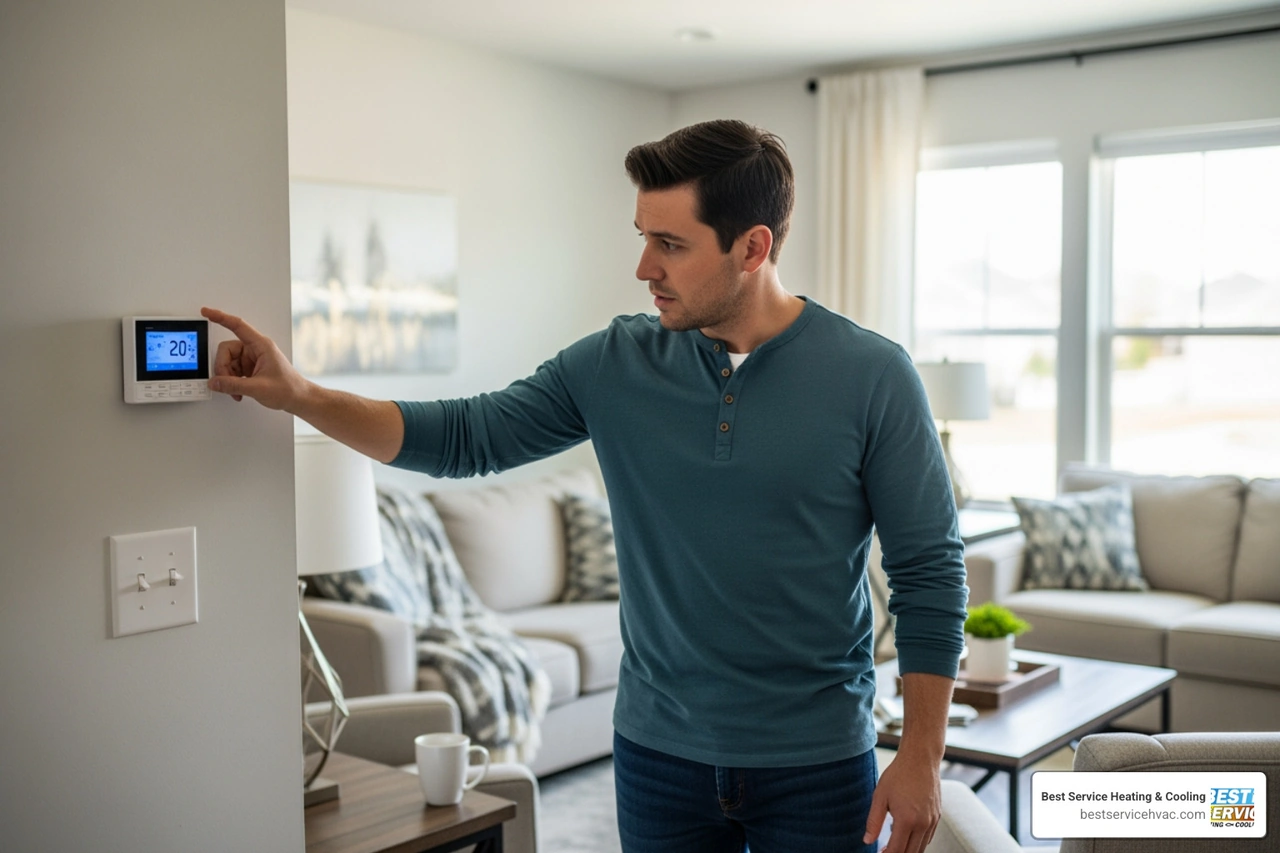
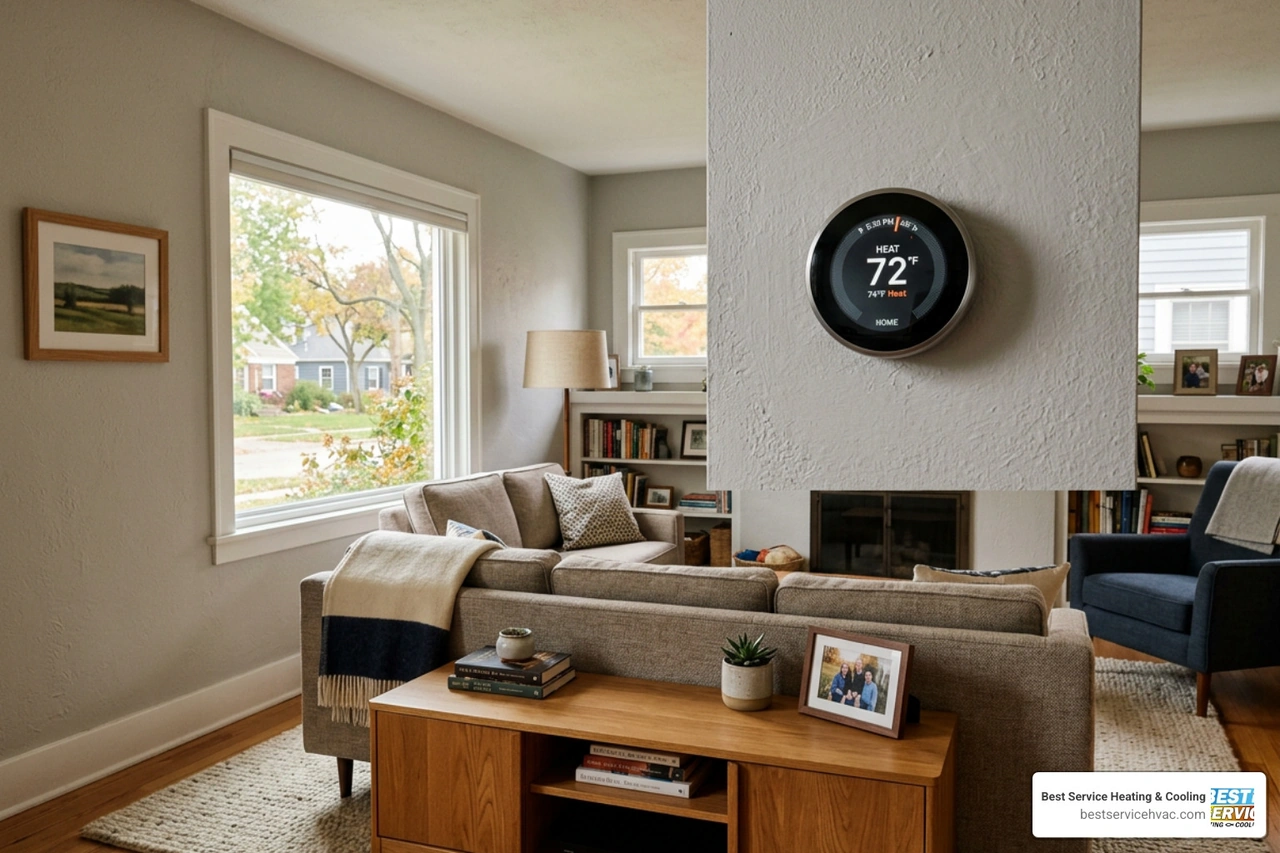
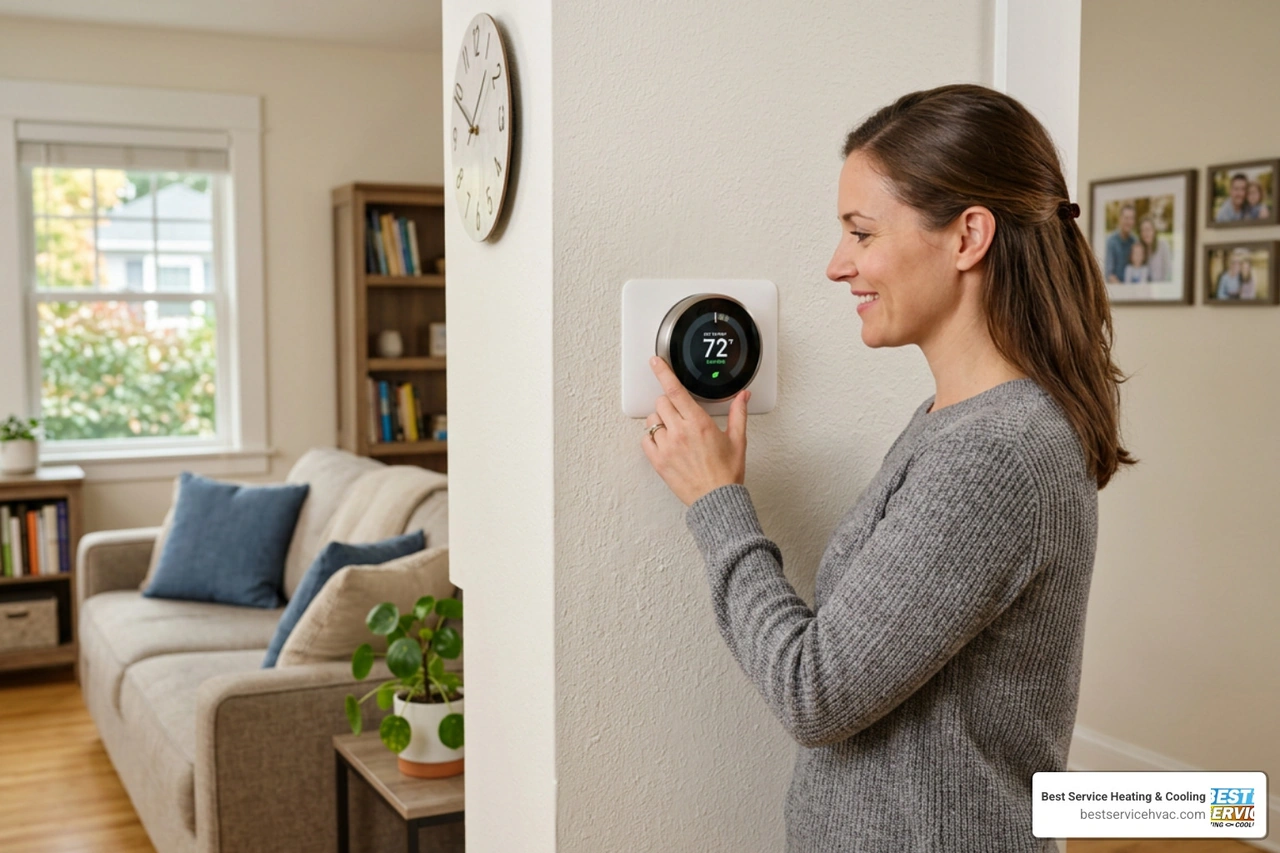
Check the thermostat first when what to do when your HVAC breaks down unexpectedly starts with "nothing is happening"
If your system seems completely dead, the thermostat is the best place to start.
Check these items:
- Is it set to Heat or Cool correctly?
- Is the set temperature actually above or below room temperature as needed?
- Is the fan set to Auto instead of On if you're troubleshooting comfort issues?
- Is the screen blank?
- Do the batteries need replacing?
It is more common than most of us would like to admit for the thermostat to get bumped into the wrong mode. We've seen "broken AC" situations that were really just a thermostat set to Heat on a warm day.
If your AC is running but not cooling correctly, our article on why your AC is blowing warm air covers more likely causes.
Inspect power, breaker, and furnace switch
Next, check whether the system has power.
Look at:
- The electrical panel for a tripped breaker
- The furnace or air handler service switch, which can look like a normal light switch
- Any nearby GFCI outlet if your setup uses one
- Whether there was a recent neighborhood power outage or surge
If a breaker is tripped, reset it once. Only once.
If it trips again, stop there. Repeated breaker trips often signal an electrical problem, overworked compressor, failing motor, or short circuit. Continuing to reset it can make the problem worse. For more on that issue, see solving frequent AC circuit breaker trips.
Replace the air filter and look for airflow restrictions
A clogged air filter is one of the most preventable reasons systems shut down. Research shows changing filters every 1 to 3 months can prevent many emergency failures, and a dirty filter may contribute to as much as 50% of avoidable breakdowns.
Check:
- The main air filter
- Return grilles for dust buildup
- Supply vents for closed or blocked registers
- Furniture or rugs blocking airflow
If the filter looks gray, packed with dust, or bowed inward, replace it. Restricted airflow can cause overheating in heating mode and frozen coils in cooling mode.
If you'd like to understand the chain reaction that neglect can cause, read what happens if you skip HVAC maintenance.
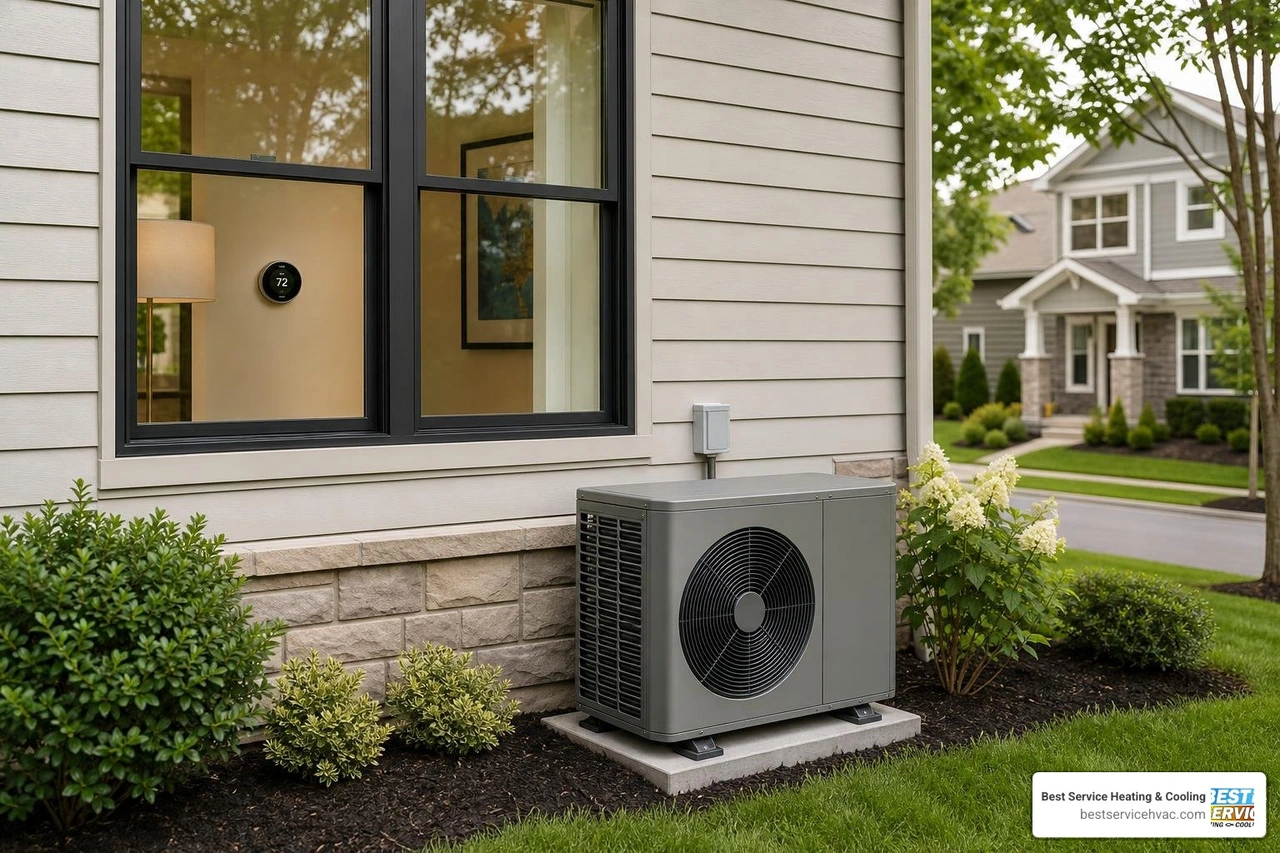
Check the outdoor unit for ice, debris, or blocked airflow
For air conditioners and heat pumps, go outside and inspect the condenser.
Look for:
- Leaves, grass clippings, or weeds crowding the unit
- Ice on the lines or coil
- A fan that is not spinning
- Obvious damage or unusual noises
- Objects stacked too close to the cabinet
Keep about 18 to 24 inches of clearance around the unit. If you see ice, turn the system off. Running a frozen system can damage the compressor. If your fan is not spinning or the system is icing up, these resources may help you understand the issue: AC compressor freezes during summer and troubleshooting AC fan motor issues.
Signs Your HVAC Was Failing Before the Breakdown
Most "sudden" breakdowns are not actually sudden. The system usually leaves clues first. The trick is noticing them before your house feels like a greenhouse or a meat locker.
Watch for:
- Short cycling
- Weak airflow
- Uneven temperatures between rooms
- Rising utility bills without lifestyle changes
- Strange smells
- New rattling, buzzing, banging, or screeching noises
Cooling warning signs homeowners often miss
AC systems often whisper before they scream.
Common early cooling warnings include:
- Warm air from vents
- Rooms taking much longer to cool
- Weak airflow
- Ice on refrigerant lines
- Musty smells from vents
- Hissing, buzzing, or rattling
Musty odors can point to moisture or drainage issues. Hissing can suggest airflow or refrigerant-related problems. Warm air can come from anything from thermostat settings to more serious failures. For deeper troubleshooting, see the Ultimate AC Repair Signs Guide and Strange AC Odors: What They Mean.
Heating warning signs that can turn urgent fast
Heating systems deserve extra caution because some failures involve combustion and venting.
Pay attention to:
- Repeated clicking without startup
- Furnace blowing cool air
- Frequent shutdowns
- Uneven heating
- New banging or popping
- A burner flame that looks abnormal
If your heater has been acting strange, these articles can help you identify the pattern early: Signs Your Heater Needs Heating Repair and Heating System Making Clicking Noises.
A note of caution: if you ever suspect a combustion issue, gas smell, or carbon monoxide concern, stop troubleshooting and get help immediately.
Stay Comfortable and Protect Your Home While You Wait
Sometimes the fix is simple. Sometimes you need professional repair and a little patience. While you wait, your focus should be comfort, safety, and damage prevention.
How to stay cooler during an AC outage
If your AC quits during a Central Ohio hot spell:
- Close blinds and curtains on sunny windows
- Stay on the lowest level of the home if possible
- Use ceiling fans and portable fans to move air
- Drink water regularly
- Avoid using the oven, dryer, and other heat-producing appliances
- Take cool showers if needed
- Use a dehumidifier if indoor humidity climbs above 60%
Fans do not actually lower room temperature, but they do help people feel cooler. That still counts as a win.
If someone in the home is medically vulnerable, consider relocating temporarily to a cooler place until repairs are complete.
How to stay warmer during a heating outage
If your furnace or heat pump stops working in winter:
- Dress in layers
- Gather everyone in one room and close off unused rooms
- Use blankets and sleeping bags
- Close curtains to reduce heat loss
- Open sink cabinet doors on exterior walls
- Let faucets drip slowly to help protect pipes
- Block drafts under doors with towels
If you use a space heater, keep it:
- At least 3 feet from anything flammable
- Plugged directly into a wall outlet
- Never unattended
- Away from kids and pets
- Equipped with tip-over and overheat protection
Never use an oven, grill, or other improvised heat source to warm the home.
Protect your HVAC system and home from added damage
When a system is not working properly, forcing it to run is rarely a good idea.
Turn the system off if you notice:
- Ice buildup
- Burning smell
- Loud mechanical noise
- Water leaking from the unit
- Repeated breaker trips
- Airflow that suddenly drops off
Why? Because continuing to run a failing system can turn a smaller repair into a much larger one. Frozen AC operation can stress the compressor. Heating equipment with a serious internal fault can overheat or shut down repeatedly. A clogged condensate drain can lead to overflow, water damage, and mold concerns.
Know When to Repair, Replace, and Call for Help
Once you have done the safe, basic checks, the next question is what comes next: repair, replacement, or service right now.
HVAC systems often last around 12 to 15 years. Age alone does not decide everything, but it matters. Maintenance history matters too. So do repeated breakdowns and declining comfort.
| Repair may make sense if... | Replacement may make more sense if... |
|---|---|
| The system is newer | The system is older and breaking down often |
| The issue appears isolated | Performance has been declining for years |
| Your home was comfortable before this failure | Rooms are always uneven or hard to heat/cool |
| The system has been maintained regularly | Energy use keeps rising despite maintenance |
| Parts and airflow issues are otherwise manageable | The equipment is outdated or no longer reliable |
What to tell the technician so you get faster help
A good service call starts before the technician arrives. The more clearly you describe the problem, the faster diagnosis usually goes.
Have this information ready:
- System type: furnace, AC, heat pump, mini-split, or boiler
- Model and serial number if visible
- What the system is or is not doing
- When the problem started
- Any strange sounds, smells, leaks, or ice
- Whether the breaker was tripped
- Whether you replaced the filter
- Any thermostat messages or blank screen
- Photos of ice, leaks, or error codes if you can safely take them
That information helps us arrive better prepared and avoid wasting time on guesswork.
When replacement makes more sense than another repair
Sometimes a breakdown is the moment homeowners realize the system has been struggling for a while.
Replacement often deserves serious consideration when:
- The system is around 12 to 15 years old or older
- Repairs are becoming frequent
- Comfort is poor even when the system runs
- Energy use has steadily increased
- The equipment is outdated
- Parts failures keep piling up
Some homeowners use the "$5,000 rule" as a rough starting point: multiply the unit's age by the repair cost, and if the number is high enough, replacement may be worth discussing. It is not a law of physics, just a decision shortcut.
If you're weighing options in Central Ohio, these pages can help:
- HVAC Replacement Columbus OH
- HVAC Installation Columbus OH
- Air Conditioning Replacement Columbus OH
- Furnace Installation Columbus OH
How maintenance prevents future surprise breakdowns
This is the least exciting part of the article and the most useful part in real life.
Homeowners who schedule regular maintenance are about 50% less likely to experience total failure. Well-maintained systems also tend to run more efficiently and last longer.
A smart prevention plan includes:
- Spring tune-up for cooling
- Fall tune-up for heating
- Filter checks every 30 days
- Filter replacement every 1 to 3 months as needed
- Keeping 2 feet of space around the outdoor unit
- Watching for warning signs instead of waiting for a total shutdown
For more on prevention, see Annual HVAC Maintenance: Is It Worth It, HVAC Maintenance Westerville OH, and HVAC Tune Up Westerville OH.
Frequently Asked Questions About What to Do When Your HVAC Breaks Down Unexpectedly
Is a broken AC or furnace always an emergency?
No, not always. It becomes an emergency when there is a safety hazard, dangerous indoor temperatures, vulnerable household members, risk of frozen pipes, major water leakage, smoke, burning odor, gas smell, or carbon monoxide concerns.
Should I keep resetting the breaker or restarting the system?
No. Reset a tripped breaker once. If it trips again, stop. Repeated trips usually point to an electrical or mechanical issue that needs professional diagnosis.
Can regular maintenance really prevent breakdowns?
Yes. It cannot prevent every failure, but it can reduce the risk significantly. Research in this topic consistently shows maintenance can cut the chance of major breakdowns by about 50%, especially when paired with regular filter changes.
Get Fast HVAC Help in Central Ohio
When you need help fast, we are here for homeowners across Columbus and surrounding Central Ohio communities. Best Service Heating & Cooling is a family-owned company trusted since 1992, and we take pride in delivering reliable residential repair, replacement, and maintenance support when comfort disappears without warning.
If your system has stopped working and basic troubleshooting did not solve it, or if you are dealing with a true HVAC emergency, visit our HVAC page to schedule service with our team.
And if you want to avoid the next surprise breakdown, now is the perfect time to put maintenance on the calendar. Your future summer self - and your winter pipes - will thank you.
.webp)
.webp)

Service Areas
